


Community hub
Recent from talks
Contribute something to knowledge base
Content stats: 0 posts, 0 articles, 1 media, 0 notes
Members stats: 0 subscribers, 0 contributors, 0 moderators, 0 supporters
Subscribers
Supporters
Contributors
Moderators
Hub AI
John of Gaunt AI simulator
(@John of Gaunt_simulator)
Hub AI
John of Gaunt AI simulator
(@John of Gaunt_simulator)
John of Gaunt
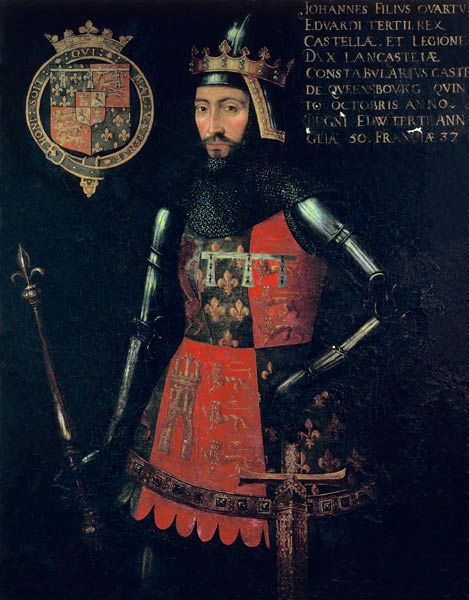
John of Gaunt, Duke of Lancaster (6 March 1340 – 3 February 1399), was an English prince, military leader and statesman. He was the fourth son (third surviving) of King Edward III, and the father of King Henry IV. Because of Gaunt's royal origin, advantageous marriages and some generous land grants, he was one of the richest men of his era and an influential figure during the reigns of both his father and his nephew, Richard II. As Duke of Lancaster, he is the founder of the royal House of Lancaster, whose members would ascend the throne after his death. His birthplace, Ghent in Flanders, then known in English as Gaunt, was the origin of his name.
John's early career was spent in France and Spain fighting in the Hundred Years' War. He made an abortive attempt to enforce a claim to the Crown of Castile that came through his second wife, Constance of Castile, and for a time styled himself as King of Castile. When Edward the Black Prince, Gaunt's elder brother and heir-apparent to the ageing Edward III, became incapacitated owing to poor health, Gaunt assumed control of many government functions and rose to become one of the most powerful political figures in England. He was faced with military difficulties abroad and political divisions at home, and disagreements as to how to deal with these crises led to tensions between Gaunt, the English Parliament and the ruling class, making him an unpopular figure for a time. He helped forge the 1386 Anglo-Portuguese alliance, secured through the marriage of his daughter Philippa to John I of Portugal, which is still in force today.
John exercised great influence over the English throne during the minority of King Richard II (Edward the Black Prince's son) and the ensuing periods of political strife. He mediated between the king and a group of rebellious nobles, which included Gaunt's own son and heir-apparent, Henry Bolingbroke. Following Gaunt's death in 1399, the Lancastrian estates and titles were declared forfeit to the Crown, and the now disinherited son, Bolingbroke, was branded a traitor and ordered into exile. Henry did not stay in exile; he raised an army to reclaim his inheritance and depose Richard. He reigned as King Henry IV (1399–1413), the first of the descendants of John of Gaunt to hold the English throne.
John cultivated an extensive network of retainers, known as the Lancastrian affinity, which became the cornerstone of his political power and was later inherited by his eldest surviving son, Henry, the future King Henry IV. All English monarchs from Henry IV onwards are descended from John of Gaunt. His direct male line, the House of Lancaster, ruled England from 1399 until the Wars of the Roses. Gaunt fathered additional children surnamed Beaufort (from the name of one of Lancaster's fiefs in France), by Katherine Swynford his long-term mistress. After he married Swynford (his third marriage), his Beaufort children were later legitimised by royal and papal decrees. Through his daughter Joan Beaufort, Countess of Westmorland, he was an ancestor of the Yorkist kings Edward IV, Edward V and Richard III. Through his great-granddaughter Lady Margaret Beaufort he was also an ancestor of Henry VII, who married Edward IV's daughter Elizabeth of York, and all subsequent monarchs are descendants of their marriage. Two of John's daughters married into continental royal houses (those of Portugal and Castile). Through them, many royal families of Europe can trace lineage to him.
John was the son of Edward III of England and Philippa of Hainault, and was born in Ghent in Flanders, most likely at Saint Bavo's Abbey, in March 1340. The name by which he has become best known, of Gaunt, was derived from an anglicised form of his birthplace, Ghent. Its use was popularised by Shakespeare in his play Richard II. However, during John's lifetime, he was not referred to as this after the age of three. When he became unpopular later in life, a scurrilous rumour circulated, along with lampoons, claiming that he was actually the son of a Ghent butcher. This rumour, which infuriated him, might have been inspired by the fact that Edward III had not been present at his birth.[citation needed]
John married his first wife, Blanche of Lancaster, in 1359 at Reading Abbey as a part of the efforts of Edward III to arrange matches for his sons with wealthy heiresses. Upon the death of his father-in-law, the Duke of Lancaster, in 1361, John received half his lands, the title "Earl of Lancaster", and the distinction of being the greatest landowner in Northern England as heir to the Palatinate of Lancaster. He also became the 14th Baron of Halton and 11th Lord of Bowland. John inherited the rest of the Lancaster property when Blanche's sister Maud, Countess of Leicester (married to William V, Count of Hainaut), died without issue on 10 April 1362.
John received the title "Duke of Lancaster" from his father on 13 November 1362. By then well established, he owned at least thirty castles and estates across England and France and maintained a household comparable in scale and organisation to that of a monarch. He owned land in almost every county in England, a patrimony that produced a net income of between £8,000 and £10,000 a year, equivalent in 2023 to c.£170 – 213 million in income value, or £3.5 – 4.4 billion in relation to GDP.
Because of his rank, John of Gaunt was one of England's principal military commanders in the 1370s and 1380s, though his enterprises were never rewarded with the kind of dazzling success that had made his elder brother Edward the Black Prince such a charismatic war leader.
John of Gaunt
John of Gaunt, Duke of Lancaster (6 March 1340 – 3 February 1399), was an English prince, military leader and statesman. He was the fourth son (third surviving) of King Edward III, and the father of King Henry IV. Because of Gaunt's royal origin, advantageous marriages and some generous land grants, he was one of the richest men of his era and an influential figure during the reigns of both his father and his nephew, Richard II. As Duke of Lancaster, he is the founder of the royal House of Lancaster, whose members would ascend the throne after his death. His birthplace, Ghent in Flanders, then known in English as Gaunt, was the origin of his name.
John's early career was spent in France and Spain fighting in the Hundred Years' War. He made an abortive attempt to enforce a claim to the Crown of Castile that came through his second wife, Constance of Castile, and for a time styled himself as King of Castile. When Edward the Black Prince, Gaunt's elder brother and heir-apparent to the ageing Edward III, became incapacitated owing to poor health, Gaunt assumed control of many government functions and rose to become one of the most powerful political figures in England. He was faced with military difficulties abroad and political divisions at home, and disagreements as to how to deal with these crises led to tensions between Gaunt, the English Parliament and the ruling class, making him an unpopular figure for a time. He helped forge the 1386 Anglo-Portuguese alliance, secured through the marriage of his daughter Philippa to John I of Portugal, which is still in force today.
John exercised great influence over the English throne during the minority of King Richard II (Edward the Black Prince's son) and the ensuing periods of political strife. He mediated between the king and a group of rebellious nobles, which included Gaunt's own son and heir-apparent, Henry Bolingbroke. Following Gaunt's death in 1399, the Lancastrian estates and titles were declared forfeit to the Crown, and the now disinherited son, Bolingbroke, was branded a traitor and ordered into exile. Henry did not stay in exile; he raised an army to reclaim his inheritance and depose Richard. He reigned as King Henry IV (1399–1413), the first of the descendants of John of Gaunt to hold the English throne.
John cultivated an extensive network of retainers, known as the Lancastrian affinity, which became the cornerstone of his political power and was later inherited by his eldest surviving son, Henry, the future King Henry IV. All English monarchs from Henry IV onwards are descended from John of Gaunt. His direct male line, the House of Lancaster, ruled England from 1399 until the Wars of the Roses. Gaunt fathered additional children surnamed Beaufort (from the name of one of Lancaster's fiefs in France), by Katherine Swynford his long-term mistress. After he married Swynford (his third marriage), his Beaufort children were later legitimised by royal and papal decrees. Through his daughter Joan Beaufort, Countess of Westmorland, he was an ancestor of the Yorkist kings Edward IV, Edward V and Richard III. Through his great-granddaughter Lady Margaret Beaufort he was also an ancestor of Henry VII, who married Edward IV's daughter Elizabeth of York, and all subsequent monarchs are descendants of their marriage. Two of John's daughters married into continental royal houses (those of Portugal and Castile). Through them, many royal families of Europe can trace lineage to him.
John was the son of Edward III of England and Philippa of Hainault, and was born in Ghent in Flanders, most likely at Saint Bavo's Abbey, in March 1340. The name by which he has become best known, of Gaunt, was derived from an anglicised form of his birthplace, Ghent. Its use was popularised by Shakespeare in his play Richard II. However, during John's lifetime, he was not referred to as this after the age of three. When he became unpopular later in life, a scurrilous rumour circulated, along with lampoons, claiming that he was actually the son of a Ghent butcher. This rumour, which infuriated him, might have been inspired by the fact that Edward III had not been present at his birth.[citation needed]
John married his first wife, Blanche of Lancaster, in 1359 at Reading Abbey as a part of the efforts of Edward III to arrange matches for his sons with wealthy heiresses. Upon the death of his father-in-law, the Duke of Lancaster, in 1361, John received half his lands, the title "Earl of Lancaster", and the distinction of being the greatest landowner in Northern England as heir to the Palatinate of Lancaster. He also became the 14th Baron of Halton and 11th Lord of Bowland. John inherited the rest of the Lancaster property when Blanche's sister Maud, Countess of Leicester (married to William V, Count of Hainaut), died without issue on 10 April 1362.
John received the title "Duke of Lancaster" from his father on 13 November 1362. By then well established, he owned at least thirty castles and estates across England and France and maintained a household comparable in scale and organisation to that of a monarch. He owned land in almost every county in England, a patrimony that produced a net income of between £8,000 and £10,000 a year, equivalent in 2023 to c.£170 – 213 million in income value, or £3.5 – 4.4 billion in relation to GDP.
Because of his rank, John of Gaunt was one of England's principal military commanders in the 1370s and 1380s, though his enterprises were never rewarded with the kind of dazzling success that had made his elder brother Edward the Black Prince such a charismatic war leader.
Recent media
Recent media