
Recent from talks
Cuban Assets Control Regulations
Knowledge base stats:
Talk channels stats:
Members stats:
Cuban Assets Control Regulations
The Cuban Assets Control Regulations (CACR), 31 CFR 515, are a set of federal regulations that serve as the primary enforcement mechanism of the United States embargo against Cuba. They impose restrictions on economic activity between the United States and Cuba, deriving legislative authority from the Trading with the Enemy Act of 1917. The regulations were enacted by U.S. President John F. Kennedy on July 8, 1963, following the prior year's Cuban Missile Crisis. The U.S. government has expanded these regulations in the 21st century due to evolving geopolitical issues between the two nations. Within the Treasury Department, the Office of Foreign Assets Control (OFAC) administers and enforces these economic sanctions. The OFAC has the authority to regulate and amend the CACR to be consistent with the policies and goals of the executive administration.
Broadly, the regulations prohibit any person subject to U.S. jurisdiction from dealing in any property in which Cuba or a Cuban national has an interest. All property of Cuba and Cuban nationals in the possession or control of persons subject to U.S. jurisdiction is "blocked." Payments, transfers, withdrawals, or other dealings are prohibited. The CACR prohibits all transactions dealing with property in which Cuba has any interest in whatsoever, direct or indirect. OFAC has broad authority to interpret these "trade" regulations to cover not just standard trade, but also to extend to travel-related expenditures that effectively make it illegal for an individual to travel to Cuba. The President has broad discretion to establish such categories and limitations on travel to Cuba. Through this codification only Congress retains the power to fully remove the embargo. The U.S. government passed the Helms–Burton Act in 1996, formally codifying the regulations such that only the United States Congress can fully lift the embargo.
Prior to the Cuban Revolution of 1959, the U.S. had a long history of seeking relations with Cuba for its own economic gain. By 1952, U.S. companies were the largest foreign investors in Cuba, owning much of the land and resources. The United States interest in Cuban land and resources continued to increase under Fulgencio Batista's rule, as 59% of exports went to, and 76% of the imports came from, the United States before 1959. After the Revolution, Fidel Castro consolidated power and declared Cuba a communist country. President Dwight D. Eisenhower formally recognized the new Cuban government led by Castro shortly after his coming to power. However, relations between the U.S and Cuba quickly turned as the Castro government began nationalizing U.S. companies in Cuba and took ownership over property previously held by U.S. investors. The first of many economic sanctions relating to the embargo against Cuba was enacted in 1960, and in January the following year President Eisenhower formally ended U.S. relations with Cuba.
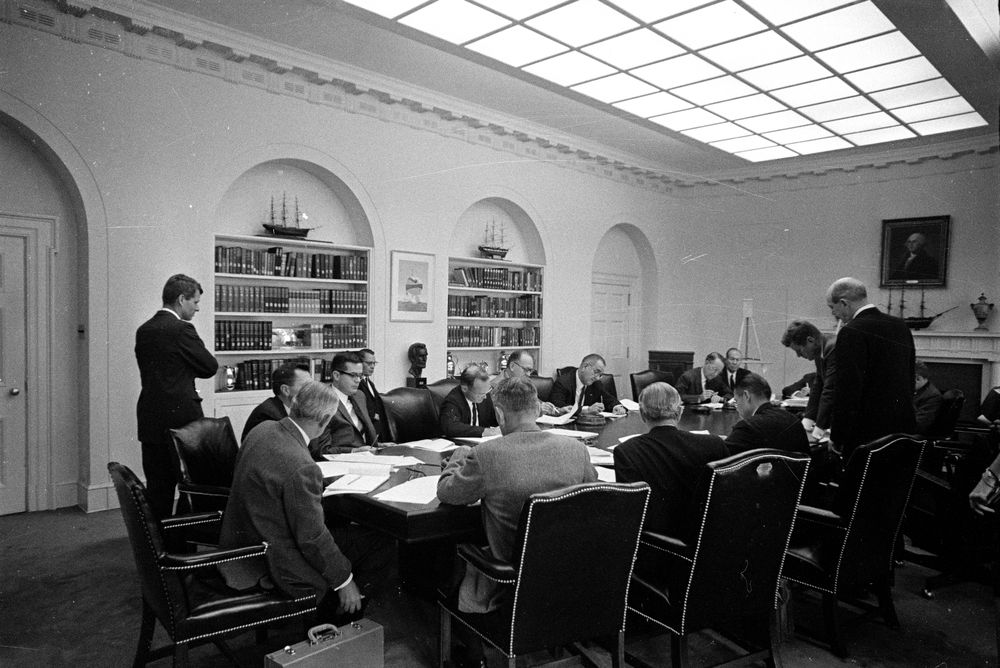
Tensions with Cuba rose after the Bay of Pigs invasion, where the CIA secretly trained and supported Cuban dissidents attempt to overthrow the Cuban government, but were captured and defeated in less than three days. In 1961, President John F. Kennedy, with support from legislation, issued further economic restrictions to strengthen the embargo. In 1962, U.S. relations reached an all time low as it was announced that the Soviet Union placed nuclear missiles in Cuba – commonly known as the Cuban Missile Crisis. Less than a year after the crisis was resolved, President Kennedy enacted the Cuban Assets Control Regulations in July 1963. The objective of the CACR was to strip Cuba of any U.S. revenue. Its provisions were comprehensive and effectively ended all economic exchange with Cuba, including travel.
Licenses and authorization dealing with travel and transactions under the CACR are available and regularly being amended in order to be consistent with the policies of the current President’s administration. A full list of travel licenses and travel-related transactions authorized by the Cuban Assets Control Regulation can be found under the Code of Federal Registration, title 31, subtitle B, chapter 5, part 515, section 560.
As of 2020, travel to Cuba may be authorized either by a general license or on a case-by-case basis by a specific license for travel related to the following activities:
Office of Foreign Assets Control amended the Cuban Assets Control Regulations to implement elements of the policy announced by the Biden Administration on May 16, 2022, to increase support for the Cuban people. The rule authorizes “group people-to-people educational travel to Cuba and removes certain restrictions on authorized academic educational activities, authorizes travel to attend or organize professional meetings or conferences in Cuba, removes the $1,000 quarterly limit on family remittances, and authorizes donative remittances to Cuba.”
The Trump Administration took a more conservative approach to U.S.-Cuba relations. Even before taking office, Trump promised to reverse the Obama administration's policies calling it a “completely one-sided deal with Cuba." The reversal included restricting most general licenses for people-to-people travel including individual people-to-people educational travel and group people-to-people educational travel. Restrictions on lodging, paying for lodging, or making reservations for lodging at certain properties in Cuba was also added. OFAC amended the CACR under Trump to eliminate U-Turn transactions. Finally, under Trump the OFAC eliminating nonfamily remittances.
Hub AI
Cuban Assets Control Regulations AI simulator
(@Cuban Assets Control Regulations_simulator)
Cuban Assets Control Regulations
The Cuban Assets Control Regulations (CACR), 31 CFR 515, are a set of federal regulations that serve as the primary enforcement mechanism of the United States embargo against Cuba. They impose restrictions on economic activity between the United States and Cuba, deriving legislative authority from the Trading with the Enemy Act of 1917. The regulations were enacted by U.S. President John F. Kennedy on July 8, 1963, following the prior year's Cuban Missile Crisis. The U.S. government has expanded these regulations in the 21st century due to evolving geopolitical issues between the two nations. Within the Treasury Department, the Office of Foreign Assets Control (OFAC) administers and enforces these economic sanctions. The OFAC has the authority to regulate and amend the CACR to be consistent with the policies and goals of the executive administration.
Broadly, the regulations prohibit any person subject to U.S. jurisdiction from dealing in any property in which Cuba or a Cuban national has an interest. All property of Cuba and Cuban nationals in the possession or control of persons subject to U.S. jurisdiction is "blocked." Payments, transfers, withdrawals, or other dealings are prohibited. The CACR prohibits all transactions dealing with property in which Cuba has any interest in whatsoever, direct or indirect. OFAC has broad authority to interpret these "trade" regulations to cover not just standard trade, but also to extend to travel-related expenditures that effectively make it illegal for an individual to travel to Cuba. The President has broad discretion to establish such categories and limitations on travel to Cuba. Through this codification only Congress retains the power to fully remove the embargo. The U.S. government passed the Helms–Burton Act in 1996, formally codifying the regulations such that only the United States Congress can fully lift the embargo.
Prior to the Cuban Revolution of 1959, the U.S. had a long history of seeking relations with Cuba for its own economic gain. By 1952, U.S. companies were the largest foreign investors in Cuba, owning much of the land and resources. The United States interest in Cuban land and resources continued to increase under Fulgencio Batista's rule, as 59% of exports went to, and 76% of the imports came from, the United States before 1959. After the Revolution, Fidel Castro consolidated power and declared Cuba a communist country. President Dwight D. Eisenhower formally recognized the new Cuban government led by Castro shortly after his coming to power. However, relations between the U.S and Cuba quickly turned as the Castro government began nationalizing U.S. companies in Cuba and took ownership over property previously held by U.S. investors. The first of many economic sanctions relating to the embargo against Cuba was enacted in 1960, and in January the following year President Eisenhower formally ended U.S. relations with Cuba.
Tensions with Cuba rose after the Bay of Pigs invasion, where the CIA secretly trained and supported Cuban dissidents attempt to overthrow the Cuban government, but were captured and defeated in less than three days. In 1961, President John F. Kennedy, with support from legislation, issued further economic restrictions to strengthen the embargo. In 1962, U.S. relations reached an all time low as it was announced that the Soviet Union placed nuclear missiles in Cuba – commonly known as the Cuban Missile Crisis. Less than a year after the crisis was resolved, President Kennedy enacted the Cuban Assets Control Regulations in July 1963. The objective of the CACR was to strip Cuba of any U.S. revenue. Its provisions were comprehensive and effectively ended all economic exchange with Cuba, including travel.
Licenses and authorization dealing with travel and transactions under the CACR are available and regularly being amended in order to be consistent with the policies of the current President’s administration. A full list of travel licenses and travel-related transactions authorized by the Cuban Assets Control Regulation can be found under the Code of Federal Registration, title 31, subtitle B, chapter 5, part 515, section 560.
As of 2020, travel to Cuba may be authorized either by a general license or on a case-by-case basis by a specific license for travel related to the following activities:
Office of Foreign Assets Control amended the Cuban Assets Control Regulations to implement elements of the policy announced by the Biden Administration on May 16, 2022, to increase support for the Cuban people. The rule authorizes “group people-to-people educational travel to Cuba and removes certain restrictions on authorized academic educational activities, authorizes travel to attend or organize professional meetings or conferences in Cuba, removes the $1,000 quarterly limit on family remittances, and authorizes donative remittances to Cuba.”
The Trump Administration took a more conservative approach to U.S.-Cuba relations. Even before taking office, Trump promised to reverse the Obama administration's policies calling it a “completely one-sided deal with Cuba." The reversal included restricting most general licenses for people-to-people travel including individual people-to-people educational travel and group people-to-people educational travel. Restrictions on lodging, paying for lodging, or making reservations for lodging at certain properties in Cuba was also added. OFAC amended the CACR under Trump to eliminate U-Turn transactions. Finally, under Trump the OFAC eliminating nonfamily remittances.
Recent media