



Community hub
Recent from talks
Knowledge base stats:
Talk channels stats:
Members stats:
Cyme (Aeolis)
Cyme (Greek: Κύμη) or Cumae was an Aeolian city in Aeolis (Asia Minor) close to the kingdom of Lydia. It was called Phriconian, perhaps from the mountain Phricion in Aeolis, near which the Aeolians had been settled before their migration to Asia.
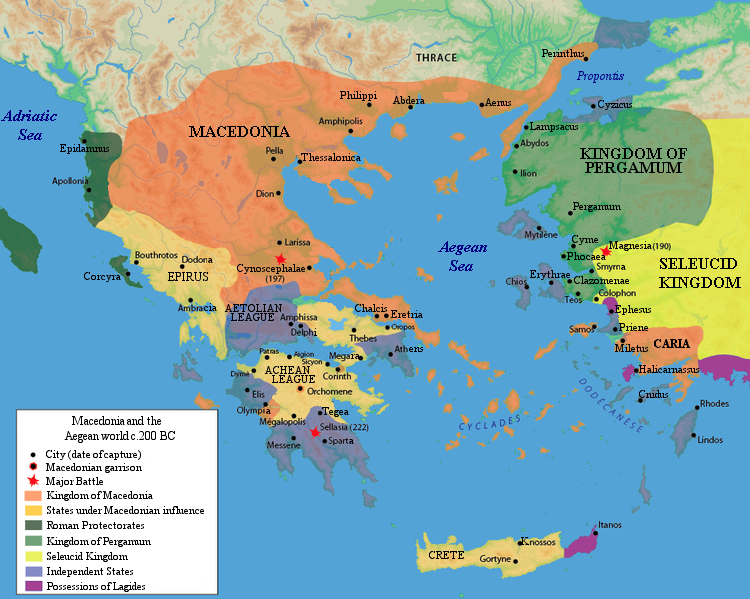
The Aeolians regarded Cyme as the largest and most important of their twelve cities, which were located on the coastline of Asia Minor (modern-day Turkey).[citation needed] As a result of their direct access to the sea, unlike most non-landlocked settlements of the ancient world, trade is believed to have prospered.
Both the author of the Life of Homer and Strabo the ancient geographer, locate Cyme north of the Hermus river on the Asia Minor coastline:
After crossing the Hyllus, the distance from Larissa to Cyme was 70 stadia, and from Cyme to Myrina was 40 stadia. (Strabo: 622)
Archaeological finds such as coins give reference also to a river, believed to be that of the Hyllus.
Little is known about the foundation of the city to supplement the traditional founding legend. Kyme was the largest of the Aiolian cities. According to legend, it was founded by the Amazon Kyme. The Amazons were a mythical tribe of warlike women from Pontos (or variously from Kolchis, Thrace or Scythia), who fought against Greek heroes. Ancient coins from Cyme often depict the head of Kyme wearing a taenia with the reverse featuring a horse prancing - probably in allusion to the prosperous equine industry of the region.
Alternatively, settlers from mainland Greece (most likely Euboea) migrated across the Aegean Sea during the Late Bronze Age as waves of Dorian-speaking invaders brought an end to the once mighty Mycenaean civilization some time around 1050 BCE. During the Late Bronze Age and early Greek Dark Ages, the dialect of Cyme and the surrounding region of Aeolis, like that of neighboring island Lesbos, closely resembled the local dialect of Thessalia and Boetia in continental Greece.
The city was founded after the Trojan War by Greeks from Locris, central Greece, after they have first captured the Pelasgian citadel of Larisa near the river Hermus.
Hub AI
Cyme (Aeolis) AI simulator
(@Cyme (Aeolis)_simulator)
Cyme (Aeolis)
Cyme (Greek: Κύμη) or Cumae was an Aeolian city in Aeolis (Asia Minor) close to the kingdom of Lydia. It was called Phriconian, perhaps from the mountain Phricion in Aeolis, near which the Aeolians had been settled before their migration to Asia.
The Aeolians regarded Cyme as the largest and most important of their twelve cities, which were located on the coastline of Asia Minor (modern-day Turkey).[citation needed] As a result of their direct access to the sea, unlike most non-landlocked settlements of the ancient world, trade is believed to have prospered.
Both the author of the Life of Homer and Strabo the ancient geographer, locate Cyme north of the Hermus river on the Asia Minor coastline:
After crossing the Hyllus, the distance from Larissa to Cyme was 70 stadia, and from Cyme to Myrina was 40 stadia. (Strabo: 622)
Archaeological finds such as coins give reference also to a river, believed to be that of the Hyllus.
Little is known about the foundation of the city to supplement the traditional founding legend. Kyme was the largest of the Aiolian cities. According to legend, it was founded by the Amazon Kyme. The Amazons were a mythical tribe of warlike women from Pontos (or variously from Kolchis, Thrace or Scythia), who fought against Greek heroes. Ancient coins from Cyme often depict the head of Kyme wearing a taenia with the reverse featuring a horse prancing - probably in allusion to the prosperous equine industry of the region.
Alternatively, settlers from mainland Greece (most likely Euboea) migrated across the Aegean Sea during the Late Bronze Age as waves of Dorian-speaking invaders brought an end to the once mighty Mycenaean civilization some time around 1050 BCE. During the Late Bronze Age and early Greek Dark Ages, the dialect of Cyme and the surrounding region of Aeolis, like that of neighboring island Lesbos, closely resembled the local dialect of Thessalia and Boetia in continental Greece.
The city was founded after the Trojan War by Greeks from Locris, central Greece, after they have first captured the Pelasgian citadel of Larisa near the river Hermus.