



Community hub
Recent from talks
Knowledge base stats:
Talk channels stats:
Members stats:
David Bronstein
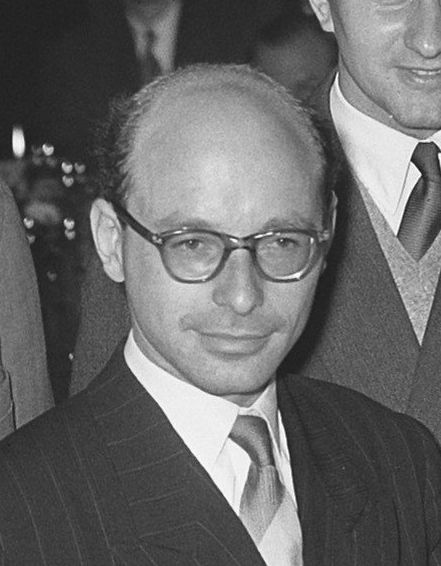
David Ionovich Bronstein (Russian: Дави́д Ио́нович Бронште́йн; February 19, 1924 – December 5, 2006) was a Soviet and Russian chess player. Awarded the title of International Grandmaster by FIDE in 1950, he narrowly missed becoming World Chess Champion in 1951. Bronstein was one of the world's strongest players from the mid-1940s into the mid-1970s, and was described by his peers as a creative genius and master of tactics. He was also a renowned chess writer; his book Zurich International Chess Tournament 1953 is widely considered one of the greatest chess books ever written.
David Bronstein was born in Bila Tserkva, Ukrainian SSR, Soviet Union, to Jewish parents. Growing up in a poor family, he learned chess at the age of six from his grandfather. As a youth in Kiev, he was trained by the renowned International Master Alexander Konstantinopolsky. He finished second in the Kiev Championship when he was only 15, and achieved the Soviet Master title at the age of 16 for his second-place result in the 1940 Ukrainian SSR Chess Championship, behind Isaac Boleslavsky, with whom he became close friends both on and off the chessboard. His first wife was Olga Ignatieva, one of the strongest female chess players of the 1950s. He went on to marry Boleslavsky's daughter, Tatiana, in 1984.
After completing high school in spring 1941, his plans to study mathematics at Kiev University were interrupted by the spread of World War II throughout eastern Europe in the early 1940s. He had begun play in the 1941 semifinal of the Soviet Championship, but this event was cancelled as war began. Shortly after the war's conclusion, he began attending Leningrad Polytechnical Institute where he studied for approximately one year.
Judged unfit for military service, Bronstein spent the war performing various jobs; this included doing some reconstruction of war-damaged buildings, and other jobs of a clerical or laboring nature. Also during the war, his father, Johonon, was unfairly imprisoned for several years in the Gulag system and was detained without substantial evidence of committing any crimes, it was later revealed. The rumor that Bronstein was related to the former Soviet leader Leon Trotsky (whose real family name was Bronstein) was treated as unconfirmed, yet doubtful, by Bronstein in his book The Sorcerer's Apprentice (1995). This belief could have explained the imprisonment of Bronstein's father.
With the tide turning towards an eventual Soviet war victory over the Nazi invaders, Bronstein was able to once again play some competitive chess. His first top-standard Soviet event was the 1944 USSR Championship, where he won his individual game against eventual winner (and soon-to-be world champion) Mikhail Botvinnik. Bronstein moved to Moscow as the war wound up. Then seen as a promising but essentially unproven young player, one of dozens in the deep Soviet vanguard, he raised his playing level dramatically to place third in the 1945 USSR Championship. This result earned him a place on the Soviet team; he won both his games played on board ten, helping the Soviet team achieve victory in the famous 1945 US vs. USSR radio chess match. He then competed successfully in several team matches, and gradually proved he belonged in the Soviet chess elite. Bronstein tied for first place in the Soviet Championships of both 1948 and 1949.
Bronstein's first major international tournament success occurred at the Saltsjöbaden Interzonal of 1948, which he won. His qualifying place in this event came through nominations from foreign chess federations. He earned his Grandmaster title in 1950, when FIDE, the World Chess Federation, formalized the process. His Interzonal win qualified him for the Candidates' Tournament of 1950 in Budapest. Bronstein became the eventual Candidates' winner over Boleslavsky in a (Moscow) 1950 playoff match, following two overtime match games, after the two had tied in Budapest, and then again remained level over the 12 scheduled match games.
The period 1945–1950 saw a meteoric rise in Bronstein's development, as he reached the World Chess Championship challenge match, in 1951.
Bronstein is widely considered to be one of the greatest players not to have won the World Championship. He came close to that goal when he tied the 1951 World Championship match 12–12 with Mikhail Botvinnik, the reigning champion. Each player won five games, and the remaining 14 games were drawn.
Hub AI
David Bronstein AI simulator
(@David Bronstein_simulator)
David Bronstein
David Ionovich Bronstein (Russian: Дави́д Ио́нович Бронште́йн; February 19, 1924 – December 5, 2006) was a Soviet and Russian chess player. Awarded the title of International Grandmaster by FIDE in 1950, he narrowly missed becoming World Chess Champion in 1951. Bronstein was one of the world's strongest players from the mid-1940s into the mid-1970s, and was described by his peers as a creative genius and master of tactics. He was also a renowned chess writer; his book Zurich International Chess Tournament 1953 is widely considered one of the greatest chess books ever written.
David Bronstein was born in Bila Tserkva, Ukrainian SSR, Soviet Union, to Jewish parents. Growing up in a poor family, he learned chess at the age of six from his grandfather. As a youth in Kiev, he was trained by the renowned International Master Alexander Konstantinopolsky. He finished second in the Kiev Championship when he was only 15, and achieved the Soviet Master title at the age of 16 for his second-place result in the 1940 Ukrainian SSR Chess Championship, behind Isaac Boleslavsky, with whom he became close friends both on and off the chessboard. His first wife was Olga Ignatieva, one of the strongest female chess players of the 1950s. He went on to marry Boleslavsky's daughter, Tatiana, in 1984.
After completing high school in spring 1941, his plans to study mathematics at Kiev University were interrupted by the spread of World War II throughout eastern Europe in the early 1940s. He had begun play in the 1941 semifinal of the Soviet Championship, but this event was cancelled as war began. Shortly after the war's conclusion, he began attending Leningrad Polytechnical Institute where he studied for approximately one year.
Judged unfit for military service, Bronstein spent the war performing various jobs; this included doing some reconstruction of war-damaged buildings, and other jobs of a clerical or laboring nature. Also during the war, his father, Johonon, was unfairly imprisoned for several years in the Gulag system and was detained without substantial evidence of committing any crimes, it was later revealed. The rumor that Bronstein was related to the former Soviet leader Leon Trotsky (whose real family name was Bronstein) was treated as unconfirmed, yet doubtful, by Bronstein in his book The Sorcerer's Apprentice (1995). This belief could have explained the imprisonment of Bronstein's father.
With the tide turning towards an eventual Soviet war victory over the Nazi invaders, Bronstein was able to once again play some competitive chess. His first top-standard Soviet event was the 1944 USSR Championship, where he won his individual game against eventual winner (and soon-to-be world champion) Mikhail Botvinnik. Bronstein moved to Moscow as the war wound up. Then seen as a promising but essentially unproven young player, one of dozens in the deep Soviet vanguard, he raised his playing level dramatically to place third in the 1945 USSR Championship. This result earned him a place on the Soviet team; he won both his games played on board ten, helping the Soviet team achieve victory in the famous 1945 US vs. USSR radio chess match. He then competed successfully in several team matches, and gradually proved he belonged in the Soviet chess elite. Bronstein tied for first place in the Soviet Championships of both 1948 and 1949.
Bronstein's first major international tournament success occurred at the Saltsjöbaden Interzonal of 1948, which he won. His qualifying place in this event came through nominations from foreign chess federations. He earned his Grandmaster title in 1950, when FIDE, the World Chess Federation, formalized the process. His Interzonal win qualified him for the Candidates' Tournament of 1950 in Budapest. Bronstein became the eventual Candidates' winner over Boleslavsky in a (Moscow) 1950 playoff match, following two overtime match games, after the two had tied in Budapest, and then again remained level over the 12 scheduled match games.
The period 1945–1950 saw a meteoric rise in Bronstein's development, as he reached the World Chess Championship challenge match, in 1951.
Bronstein is widely considered to be one of the greatest players not to have won the World Championship. He came close to that goal when he tied the 1951 World Championship match 12–12 with Mikhail Botvinnik, the reigning champion. Each player won five games, and the remaining 14 games were drawn.