Hubbry Logo
search
logo
2242694

David Bronstein

logo
Community Hub0 Subscribers
Read side by side
from Wikipedia

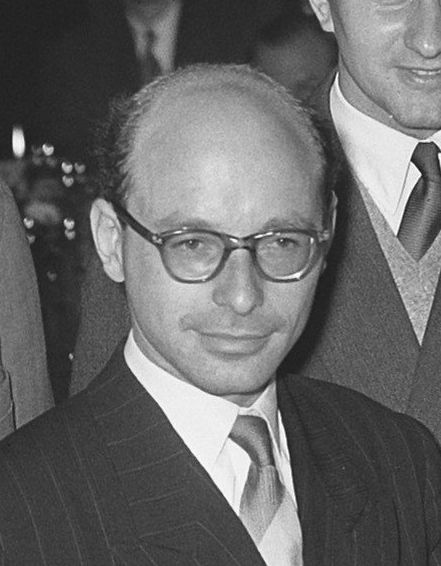
David Ionovich Bronstein (Russian: Дави́д Ио́нович Бронште́йн; February 19, 1924 – December 5, 2006) was a Soviet and Russian chess player. Awarded the title of International Grandmaster by FIDE in 1950, he narrowly missed becoming World Chess Champion in 1951. Bronstein was one of the world's strongest players from the mid-1940s into the mid-1970s, and was described by his peers as a creative genius and master of tactics. He was also a renowned chess writer; his book Zurich International Chess Tournament 1953 is widely considered one of the greatest chess books ever written.

Key Information

Early life

[edit]

David Bronstein was born in Bila Tserkva, Ukrainian SSR, Soviet Union, to Jewish parents. Growing up in a poor family, he learned chess at the age of six from his grandfather. As a youth in Kiev, he was trained by the renowned International Master Alexander Konstantinopolsky. He finished second in the Kiev Championship when he was only 15, and achieved the Soviet Master title at the age of 16 for his second-place result in the 1940 Ukrainian SSR Chess Championship, behind Isaac Boleslavsky, with whom he became close friends both on and off the chessboard. His first wife was Olga Ignatieva, one of the strongest female chess players of the 1950s. He went on to marry Boleslavsky's daughter, Tatiana, in 1984.

After completing high school in spring 1941, his plans to study mathematics at Kiev University were interrupted by the spread of World War II throughout eastern Europe in the early 1940s. He had begun play in the 1941 semifinal of the Soviet Championship, but this event was cancelled as war began. Shortly after the war's conclusion, he began attending Leningrad Polytechnical Institute where he studied for approximately one year.

Judged unfit for military service, Bronstein spent the war performing various jobs; this included doing some reconstruction of war-damaged buildings, and other jobs of a clerical or laboring nature. Also during the war, his father, Johonon, was unfairly imprisoned for several years in the Gulag system and was detained without substantial evidence of committing any crimes, it was later revealed.[1] The rumor that Bronstein was related to the former Soviet leader Leon Trotsky (whose real family name was Bronstein) was treated as unconfirmed, yet doubtful, by Bronstein in his book The Sorcerer's Apprentice (1995). This belief could have explained the imprisonment of Bronstein's father.

Towards Grandmaster

[edit]

With the tide turning towards an eventual Soviet war victory over the Nazi invaders, Bronstein was able to once again play some competitive chess. His first top-standard Soviet event was the 1944 USSR Championship, where he won his individual game against eventual winner (and soon-to-be world champion) Mikhail Botvinnik. Bronstein moved to Moscow as the war wound up. Then seen as a promising but essentially unproven young player, one of dozens in the deep Soviet vanguard, he raised his playing level dramatically to place third in the 1945 USSR Championship. This result earned him a place on the Soviet team; he won both his games played on board ten, helping the Soviet team achieve victory in the famous 1945 US vs. USSR radio chess match. He then competed successfully in several team matches, and gradually proved he belonged in the Soviet chess elite. Bronstein tied for first place in the Soviet Championships of both 1948 and 1949.

World Title Challenger (1948–1951)

[edit]

Bronstein's first major international tournament success occurred at the Saltsjöbaden Interzonal of 1948, which he won. His qualifying place in this event came through nominations from foreign chess federations. He earned his Grandmaster title in 1950, when FIDE, the World Chess Federation, formalized the process. His Interzonal win qualified him for the Candidates' Tournament of 1950 in Budapest. Bronstein became the eventual Candidates' winner over Boleslavsky in a (Moscow) 1950 playoff match, following two overtime match games, after the two had tied in Budapest, and then again remained level over the 12 scheduled match games.

The period 1945–1950 saw a meteoric rise in Bronstein's development, as he reached the World Chess Championship challenge match, in 1951.

1951 World Championship match against Botvinnik

[edit]

Bronstein is widely considered to be one of the greatest players not to have won the World Championship.[2] He came close to that goal when he tied the 1951 World Championship match 12–12 with Mikhail Botvinnik, the reigning champion. Each player won five games, and the remaining 14 games were drawn.

In a match where the lead swung back and forth several times, the two players tested each other in a wide variety of opening formations, and every game (except the 24th) was full-blooded and played hard to a clear finish. Bronstein often avoided lines he had favoured in earlier events, and frequently adopted Botvinnik's own preferred variations. This strategy seemed to catch Botvinnik by surprise; the champion had not played competitively for three years since winning the title in 1948. The quality of play was very high by both players, although Botvinnik would later complain of his own weak play. He only grudgingly acknowledged Bronstein's huge talent.[3] Bronstein claimed four of his five match wins by deep combinational play, winning before adjournment in highly complex fashion. He led by one point with two games to go, but lost the 23rd game and drew the final (24th) game. Under FIDE rules, the title remained with the holder, and Bronstein was never to come so close again.

Botvinnik wrote that Bronstein's failure was caused by a tendency to underestimate endgame technique, and a lack of ability in simple positions.[4] Botvinnik won four virtually level endgames after the adjournments, and his fifth win came in an endgame that Bronstein resigned at move 40. These adjourned games made up four of Botvinnik's five match wins; Botvinnik had no more than a minimal advantage in these games when they were adjourned at move 40.

Bronstein's father was sometimes secretly in the audience during the 1951 title match games, at a time when he was not officially permitted in Moscow.[5]

1953 Candidates

[edit]

Bronstein challenged throughout at the 1953 Candidates Tournament in Switzerland and finished tied for second-through-fourth places, together with Paul Keres and Samuel Reshevsky, two points behind the winner Vasily Smyslov. Bronstein's book on the tournament is considered a classic.

It has been speculated that there was pressure on the Soviet players to collude, to ensure that a Soviet player would win. Even in the wake of glasnost, however, Bronstein only partially confirmed these rumors in his public statements or writings, admitting only to 'strong psychological pressure' being applied, and that it was up to Bronstein himself whether to decide to give in to this pressure. In his final book Secret Notes, published in 2007, shortly after his death,[6] Bronstein went further and alleged that he and Keres were pressured to draw their games with Smyslov, in order to ensure that Smyslov would win ahead of Reshevsky (see World Chess Championship 1954 § Allegations of Soviet collusion).

Career after 1953

[edit]
Bronstein in 1963

The 1953 Candidates result qualified him directly for the 1955 Gothenburg Interzonal, which he won with an unbeaten score. From there it was on to another near miss in the 1956 Candidates' tournament in Amsterdam, where he wound up in a large tie for third through seventh places, behind winner Smyslov and runner-up Keres.

Bronstein had to qualify for the 1958 Interzonal, and did so by placing third at the USSR Championship, Riga, 1958. At the 1958 Interzonal in Portorož, Bronstein, who had been picked as clear pre-event favourite by Bobby Fischer, missed moving on to the 1959 Candidates' by half a point, dropping a last-round game to the much weaker Filipino Rodolfo Tan Cardoso, when the electrical power failed due to a thunderstorm during the game, and he was unable to regain concentration. Bronstein missed qualification at the Soviet Zonal stage for the 1962 cycle. Then at the Amsterdam 1964 Interzonal, Bronstein scored very well, but only three Soviets could advance, by a FIDE rule, and he finished behind countrymen Smyslov, Mikhail Tal, and Boris Spassky, who finished as the joint winners, along with Larsen. His last Interzonal was at age 49 when he finished sixth at Petropolis 1973.

Bronstein took many first prizes in tournaments, among the most notable being the Soviet Chess Championships of 1948 (jointly with Alexander Kotov) and 1949 (jointly with Smyslov). He also tied for second place at the Soviet Championships of 1957 and 1964–65. He tied first with Mark Taimanov at the World Students' Championship in 1952 at Liverpool. Bronstein was also a six-time winner of the Moscow Championships, and represented the USSR at the Olympiads of 1952, 1954, 1956 and 1958, winning board prizes at each of them, and losing just one of his 49 games in those events. Along the way he won four Olympiad team gold medals. In the 1954 team match against the US (held in New York), Bronstein scored an almost unheard-of sweep at this level of play, winning all four of his games on second board.

Further major tournament victories were achieved at Hastings 1953–54, Belgrade 1954, Gotha 1957, Moscow 1959, Szombathely 1966, East Berlin 1968, Dnepropetrovsk 1970, Sarajevo 1971, Sandomierz 1976, Iwonicz Zdrój 1976, Budapest 1977, and Jūrmala 1978.

Legacy and later years

[edit]
Bronstein in 1968

David Bronstein wrote many chess books and articles, and had a regular chess column in the Soviet newspaper Izvestia for many years. He was perhaps most highly regarded for his famous authorship of Zurich International Chess Tournament 1953 (English translation 1979). This book was an enormous seller in the USSR, going through many reprints, and is regarded among the very best chess books ever written.[7] In 1995, he co-authored the autobiographical The Sorcerer's Apprentice, with his friend Tom Fürstenberg. Both have become landmarks in chess publishing history; Bronstein sought to amplify the ideas behind the players' moves rather than burdening the reader with pages of analysis of moves that never made it onto the scoresheet. Bronstein's romantic vision of chess was shown with his very successful adoption of the rarely seen King's Gambit in top-level competition. His pioneering theoretical and practical work (along with Boleslavsky and Efim Geller) in transforming the King's Indian Defence from a distrusted, obscure variation into a popular major system should be remembered, and is evidenced in his key contribution to the 1999 book Bronstein on the King's Indian. Bronstein played an exceptionally wide variety of openings during his long career, on a scale comparable with anyone else who ever reached the top level.

Bronstein's grave in Minsk, Belarus

Two more variations are named after him. In the Caro–Kann Defence, the Bronstein–Larsen Variation goes 1.e4 c6 2.d4 d5 3.Nc3 dxe4 4.Nxe4 Nf6 5.Nxf6+ gxf6. In the Scandinavian Defence, the Bronstein Variation goes 1.e4 d5 2.exd5 Qxd5 3.Nc3 Qd8.

Bronstein refused to sign a group letter denouncing the 1976 defection of Viktor Korchnoi,[8] and he paid a personal price for this independence, as his state-paid Master's stipend was suspended, and he was also barred from major tournaments for more than a year. He was virtually banned from high-class events for several years in the mid-1980s.

Bronstein was a chess visionary. He was an early advocate of speeding up competitive chess.[9] In 1973 he introduced the idea of adding a small time increment for each move made,[10] a variant of which has become very popular and is implemented on almost all digital chess clocks. He challenged computer programs at every opportunity, usually achieving good results.[11]

Bronstein enjoyed experimenting with unusual and offbeat openings such as the King's Gambit and Latvian Gambit; however, he generally did not play them in serious games. Like most grandmasters of the 1950s–1960s, he favoured Queen's pawn openings such as the queen Gambit, King's indian defense and nimzo- indian defense, but also played e4 openings, especially the Ruy Lopez, French Defence, and Sicilian Defence. Although he had an extensive knowledge of openings and opening theory, his endgame technique was considered less reliable.

In later years Bronstein continued to stay active in tournament play, often in Western Europe after the breakup of the USSR. He maintained a very good standard (jointly winning the Hastings Swiss of 1994–95 at the age of 70), wrote several important chess books, and inspired young and old alike with endless simultaneous displays, a warm, gracious attitude, and glorious tales of his own rich chess heritage. Bronstein died on December 5, 2006, in Minsk, Belarus, of complications from high blood pressure.

His final book, nearly complete when he died, was published in 2007: Secret Notes, by David Bronstein and Sergei Voronkov, Zürich 2007, Edition Olms, ISBN 978-3-283-00464-4. In its introduction, Garry Kasparov, a fervent admirer of Bronstein's chess contributions, offers his opinion that Bronstein, based on his play, should have won the 1951 match against Botvinnik.

Books

[edit]

Best combination

[edit]

During the 1962 Moscow vs. Leningrad Match Bronstein played the top board for the Moscow team. With the white pieces he defeated Viktor Korchnoi in a game that ended with a tactic he later described as "one of the best combinations in my life, if not the best".[12]

abcdefgh
8
b8 white queen
g7 black pawn
g6 black king
h6 white rook
g4 white pawn
b3 black pawn
f3 black queen
b2 white pawn
d2 black rook
g2 white pawn
h2 white king
8
77
66
55
44
33
22
11
abcdefgh
Final position after 39.Rxh6+
1.e4 e5 2.Nf3 Nc6 3.Bb5 a6 4.Ba4 Nf6 5.0-0 Nxe4 6.d4 b5 7.Bb3 d5 8.dxe5 Be6 9.c3 Be7 10.Bc2 0-0 11.Qe2 f5 12.exf6 Bxf6 13.Nbd2 Bf5 14.Nxe4 Bxe4 15.Bxe4 dxe4 16.Qxe4 Qd7 17.Bf4 Rae8 18.Qc2 Bh4 19.Bg3 Bxg3 20.hxg3 Ne5 21.Nxe5 Rxe5 22.Rfe1 Rd5 23.Rad1 c5 24.a4 Rd8 25.Rxd5 Qxd5 26.axb5 axb5 27.Qe2 b4 28.cxb4 cxb4 29.Qg4 b3 30.Kh2 Qf7 31.Qg5 Rd7 32.f3 h6 33.Qe3 Rd8 34.g4 Kh8 35.Qb6 Rd2 36.Qb8+ Kh7 37.Re8 Qxf3 38.Rh8+ Kg6 39.Rxh6+ (diagram)
Bronstein:[12]

Korchnoi remained unruffled. He wrote down my move on his scoresheet and began carefully studying the position. I think it seemed incredible to him that White could sacrifice his last rook (I myself could not believe my eyes!). And only when he had convinced himself, did he stop the clocks. These are the variations: A) 39...Kf7 40.Qc7+ Kg8 41.Qc8+ Kf7 42.Qe6+ Kf8 43.Rh8 mate; B) 39...Kg5 40.Qe5+ Kxg4 41.Rg6+ Kh4 42.Qg5 mate; C) 39...gxh6 40.Qg8+ Kf6 41.Qf8+; D) 39...Kxh6 40.Qh8+ Kg6 41.Qh5+ Kf6 42.g5+!

1–0[13]

Notable games

[edit]

See also

[edit]

References

[edit]

Further reading

[edit]
[edit]
Revisions and contributorsEdit on WikipediaRead on Wikipedia
from Grokipedia
David Ionovich Bronstein (19 February 1924 – 5 December 2006) was a Ukrainian-born Soviet chess grandmaster noted for his imaginative and aggressive playing style.[1][2] Born in Bila Tserkva, Ukraine, he learned chess at age six from his grandfather and rose to prominence after World War II, earning the international grandmaster title from FIDE in 1950.[3][4] Bronstein tied for first in the 1950 Candidates Tournament, qualifying him to challenge Mikhail Botvinnik for the world championship the following year; the match ended in a 12–12 draw after 24 games, with each player winning five and drawing the rest, allowing Botvinnik to retain the title.[5][6] A top contender for three decades, he excelled in tournaments like the 1953 Zurich Candidates event, where his innovative opening ideas and dynamic middlegame strategies influenced generations of players.[1][4] Beyond competition, Bronstein contributed to chess literature with books such as his acclaimed analysis of the Zurich tournament, emphasizing creativity over rote memorization, and advocated for faster time controls to promote attacking play.[1] He died in Minsk, Belarus, at age 82.[7][8]

Early Life

Birth and Family Background

David Ionovich Bronstein was born on February 19, 1924, in Bila Tserkva, a town in the Ukrainian Soviet Socialist Republic (now Ukraine).[9][10] His family soon relocated to Kyiv, where he spent much of his early childhood.[11] Bronstein's father, whose first name was Ion (reflected in his patronymic), worked as an engineer but faced severe repercussions during the Stalinist purges; he was arrested in 1937 on charges of being an "enemy of the people" and sentenced to seven years in a Soviet labor camp, from which he was released only in 1944.[12][13] Little is documented about his mother's occupation or role, though the family's circumstances were marked by the political repression common to many Soviet intellectuals and professionals of the era. Bronstein learned the basics of chess at age six from his grandfather, an introduction that occurred amid the disruptions caused by his father's imprisonment.[13][10]

Introduction to Chess and Education

David Bronstein, born on February 19, 1924, in Bila Tserkva, Ukraine, was introduced to chess at the age of six by his grandfather, who taught him the basic rules of the game amid a family background marked by modest circumstances.[13][10] This early exposure occurred before the Stalinist purges of 1937, which led to his father's arrest and seven-year imprisonment, leaving Bronstein in the care of relatives and prompting deeper engagement with chess as a personal pursuit.[13] Bronstein further developed his skills through structured training at the Kiev Palace of Young Pioneers, a Soviet institution dedicated to youth activities, where he transitioned from casual play to competitive study.[1] By 1940, at age 16, he earned the master title from the Soviet Chess Federation, recognized as one of the youngest players to achieve this distinction in the USSR, reflecting his rapid progress despite limited resources.[1] In terms of formal education, Bronstein completed secondary school in spring 1941, with aspirations to study mathematics at Kyiv University.[14] However, the German invasion of the Soviet Union that year halted these plans, denying him higher education; he later expressed regret over this interruption, stating that the war forced him to acquire knowledge independently rather than through academic channels.[15]

World War II Experiences and Post-War Recovery

During the German invasion of the Soviet Union in June 1941, Bronstein, then 17 years old and residing in Bila Tserkva, Ukraine, fled with his family ahead of the advancing Wehrmacht forces.[16] They were evacuated eastward to Tashkent, Uzbekistan, where Bronstein continued his secondary education amid wartime disruptions.[16] Exempted from frontline military service due to poor eyesight, he avoided combat and instead devoted time to intensive chess study, analyzing games and participating in local matches during the evacuation period from 1941 to 1943.[1] The conflict halted his planned university enrollment, forcing him to acquire knowledge independently, a limitation he later lamented as depriving him of structured academic depth.[15] With the Soviet victory in May 1945, Bronstein resettled in Kiev and recommenced organized competition, debuting in the USSR Chess Championship in 1944 after a three-year hiatus in major events caused by the war.[6] His performance there, followed by a shared 5th-6th place (11/17 points) in the 1945 edition, demonstrated rapid adaptation and skill consolidation, signaling effective post-war recovery in his nascent career.[6] This phase laid groundwork for his emergence as a master-level player, unhindered by physical wartime toll but shaped by the isolation that intensified his independent analytical approach to the game.[1]

Rise to International Prominence

Early Tournament Victories

Bronstein first gained national attention in the 1944 USSR Chess Championship, held in Moscow from February 1 to March 13, where he upset the eventual winner Mikhail Botvinnik in round 10 but finished 15th overall with 7 points from 17 games.[17][18] His performance marked an emergence from wartime constraints, showcasing aggressive play including victories with the King's Gambit.[1] In the 1945 USSR Championship (the 14th edition), also in Moscow, Bronstein improved markedly to secure third place with 11.5 points from 17 games, behind Botvinnik (15) and Vasily Smyslov (12), earning selection to the Soviet team for the USSR-USA radio match where he won both his games on board 10 against Sidney Bernstein and Anthony Santasiere.[19][6][1] This result highlighted his rapid progress, with three wins employing the King's Gambit.[1] Bronstein claimed his first major tournament victory outright by winning the 1946 Moscow Championship with 10.5 points from 12 games, finishing ahead of Vladimir Simagin while Smyslov, Vladimir Alatortsev, Pyotr Kotov, and others shared third.[20] He also excelled in the 1946 Moscow-Prague team match-tournament, scoring 10.5/12.[20] Subsequent successes included tying for first in the 1948 USSR Championship (16th edition) in Moscow-Leningrad with Alexander Kotov, both on 14/18 points, and winning the 1948 Interzonal Tournament in Saltsjöbaden, Sweden (July 20 to August 12), with 12 points from 17 games ahead of László Szabó.[6] These achievements, repeated with another shared USSR title in 1949, propelled him toward international contention.[6]

Path to Master and Grandmaster Titles

Bronstein first gained official recognition in Soviet chess by earning the Master title in 1940 at the age of 16, after finishing second in the 12th Ukrainian Chess Championship behind Isaac Boleslavsky.[21][20] This early success marked him as one of the youngest players to achieve the national Master norm, reflecting his rapid development from local Kiev competitions where he had begun competing as a teenager.[22] Post-World War II disruptions limited his opportunities until 1944, when he debuted in the USSR Championship with a modest but promising result of 9/19 for a shared 11th-13th place.[14] He steadily improved, tying for first in the 15th USSR Championship in 1948 with 12/19 and repeating the feat in the 16th edition in 1949, also with 12/19, which solidified his status among the Soviet elite.[10] These domestic triumphs qualified him for international events, including a dominant win at the Saltsjöbaden Interzonal Tournament in 1948, where he scored 11/16 to secure clear first place ahead of competitors like Gligoric and Najdorf.[23] The culmination of these results came in the 1950 Candidates Tournament in Budapest, where Bronstein tied for first with Boleslavsky at 12/18, advancing to challenge Mikhail Botvinnik for the world title.[6] FIDE, formalizing its grandmaster title system that year based on prior achievements including interzonal and candidates performances, awarded Bronstein the International Grandmaster distinction in 1950, recognizing his consistent excellence against top opposition.[24][25]

Key Pre-1950 Achievements

Bronstein secured the Soviet Master title at age 16 by placing second in the 1940 Ukrainian Chess Championship, behind Isaac Boleslavsky, with a score of 11.5/15.[6] This marked his emergence as a top regional talent amid limited opportunities during the pre-war period.[19] Post-World War II, Bronstein's progress accelerated. In the 1945 USSR Championship held in Moscow from February 11 to March 8, he finished third with 12/17, defeating several established masters and showcasing aggressive play, including three wins with the King's Gambit.[1] He followed this with a dominant victory in the 1946 Moscow City Championship, scoring 10.5/12 to claim first place ahead of competitors like Simagin.[20] By 1948, Bronstein had reached elite status, tying for first in the USSR Championship (November 10 to December 13 in Moscow) with Alexander Kotov at 12/18, a result that highlighted his consistency against Soviet rivals like Botvinnik and Keres.[10] That year, he also won the Saltsjöbaden Interzonal Tournament in Sweden (August-September), achieving 15/20 (+11=8-1) to outpace international contenders including Szabo and Gligoric, thereby qualifying for the 1950 Candidates Tournament in the FIDE World Championship cycle.[16] In 1949, he repeated his USSR Championship success, again tying for first at 12/19 in Leningrad (November 5 to December 6).[6] These results established Bronstein as one of the Soviet Union's premier players, bridging domestic dominance with emerging global recognition.

World Championship Challenge

Qualification via Interzonals and Candidates

Bronstein secured qualification for the 1950 Candidates Tournament by winning the first post-World War II FIDE Interzonal at Saltsjöbaden, Sweden, held from July 16 to August 14, 1948. In the 20-player single round-robin, he amassed 13.5 points from 20 games, edging out László Szabó's 12.5 points for clear first place, with Isaac Boleslavsky and Alexander Kotov tying for third at 11.5 each.[26] This performance, among the top six finishers, earned him one of the slots allocated from the Interzonal to the Candidates, alongside other qualifiers such as Boleslavsky, Kotov, and Szabó, joined by seeded players including prior World Championship participants Paul Keres and Vasily Smyslov, U.S. Champion Samuel Reshevsky, and others.[27] The Candidates Tournament convened in Budapest from April 9 to May 16, 1950, as a double round-robin among 10 contenders. Bronstein tied for first with Boleslavsky at 12 points from 18 games (8 wins, 4 draws, 6 losses for each), half a point ahead of Smyslov in third.[28] Their head-to-head results were even, with each winning one game and drawing the other two.[27] FIDE resolved the tie with a playoff match in Moscow during July and August 1950. Bronstein prevailed 5.5–4.5 over 10 games against Boleslavsky, capturing wins in the 1st and 7th games before Boleslavsky responded with victories in the 8th and 10th, the remainder ending drawn. This outcome designated Bronstein as the official challenger to reigning champion Mikhail Botvinnik.[29]

1951 Match Against Botvinnik: Analysis and Outcome

The 1951 World Chess Championship match between reigning champion Mikhail Botvinnik and challenger David Bronstein was contested in Moscow from March 15 to May 11, consisting of up to 24 games under FIDE rules, with the first player to reach 12.5 points declared the winner; in the event of a tie, the champion retained the title.[30] Bronstein, having won the 1950 Candidates Tournament, adopted an aggressive and innovative style throughout, securing victories in games 5, 9, 14, 17, and 21, while Botvinnik countered with wins in games 2, 7, 12, 18, and 23, resulting in 12 draws and a final score of 12–12.[31] This outcome allowed Botvinnik to retain the title without needing a rematch, despite Bronstein's near-miss in holding a lead into the closing stages.[32] Bronstein entered the final two games with a 11.5–10.5 advantage after 22 games, requiring just one point to claim the championship.[31] In the decisive 23rd game, played on May 8 with Botvinnik holding White, Botvinnik sealed his 42nd move as Bd6 in an adjourned endgame position that analysis later revealed was inferior to alternatives like 42. Bb1, which would have maintained a winning edge.[33] Resuming on May 9, Bronstein (Black) erred on move 44 with ...fxe4, entering zugzwang and allowing Botvinnik to force resignation after 57. Bg5; post-match scrutiny by analysts including Jan Timman indicated Bronstein could have drawn via 52...Ne7 or earlier with 43...Na7, potentially securing the title in a 12–12 tie.[34][33] The 24th game ended in a draw, sealing Botvinnik's retention of the crown. Analyses of the match highlight Bronstein's creative aggression—exemplified in his King's Indian Defense experiments and dynamic middlegame initiatives—against Botvinnik's methodical preparation and endgame precision, which proved decisive in converting slim advantages.[31] Bronstein later reflected on psychological pressures, including Soviet establishment expectations favoring Botvinnik, though he rejected conspiracy claims; contemporary rumors suggested external influence, but no verifiable evidence supports interference beyond competitive intensity.[33] The match's 50% draw rate underscored the era's defensive solidity, with Botvinnik's resilience in adjourned sessions tipping the balance, as Bronstein failed to capitalize on multiple winning chances across the contest.[34]

Later Tournament Career

1953 Candidates Tournament Performance

Bronstein entered the 1953 FIDE Candidates Tournament, a double round-robin event with 15 grandmasters held in Neuhausen and Zurich, Switzerland, as one of the top contenders following his 1951 world championship match appearance.[35][36] He achieved a score of 16 out of 28 points, consisting of several wins, numerous draws, and losses that prevented a higher finish.[37] This placed him in a three-way tie for second through fourth with Paul Keres and Samuel Reshevsky, trailing the winner Vasily Smyslov by half a point at 18 points.[37][36] Among his notable results were victories against strong opponents, including a win over Reshevsky in round 13 employing the King's Indian Defense, fianchetto variation, and another against Keres in a Sicilian Defense.[38][37] Bronstein also defeated Svetozar Gligorić and Mark Taimanov, demonstrating his tactical acumen in complex middlegames.[37] However, setbacks such as a loss to László Szabó contributed to his inability to challenge for first, with his play reflecting aggressive creativity but occasional inconsistencies under pressure.[37] The tournament's high level of competition, featuring nine Soviet players among the field's elite, underscored Bronstein's sustained elite status, though it marked his last serious contention for the world championship cycle.[36] Smyslov's victory propelled him to the title match against Mikhail Botvinnik, while Bronstein's tied score affirmed his prowess without advancing him further.[36] The event's games, including Bronstein's contributions, later received analysis in his own writings and those of participants like Miguel Najdorf, highlighting the tournament's enduring analytical value.[36]

Peak and Sustained Successes in the 1950s-1960s

Following his world championship match draw against Mikhail Botvinnik in 1951, Bronstein maintained a high level of performance in major competitions throughout the 1950s. In the 1953 Candidates Tournament held in Neuhausen and Zurich, he tied for second place with Paul Keres, scoring 12 out of 18 points behind Vasily Smyslov's 16 points.[39] This result reaffirmed his status among the elite, though it did not secure another title challenge. He also achieved outright victory in the 1955 Gothenburg Interzonal Tournament with a score of 15 out of 20, qualifying for the subsequent Candidates event where he placed fourth.[40] Bronstein's successes extended to national championships and international events. In the 1957 USSR Championship, he tied for first with Mikhail Tal before losing the playoff, finishing second overall.[41] He secured third place in the 1958 USSR Championship and repeated strong contention with a third-place finish in 1961. Additionally, he won or shared first in tournaments such as Belgrade in 1954, demonstrating his competitive edge in open international play.[23] On the international team stage, Bronstein contributed significantly to the Soviet Union's dominance in Chess Olympiads. Representing the USSR on third or fourth boards, he earned an individual bronze medal on third board at the 1952 Helsinki Olympiad and a silver on third board at the 1954 Amsterdam Olympiad. He claimed gold medals on fourth board at both the 1956 Moscow and 1958 Munich Olympiads, with the Soviet team winning team gold in each event.[23] These performances underscored his reliability in high-stakes matches. Into the 1960s, Bronstein sustained his prowess despite emerging younger talents, placing second in the 1964/65 USSR Championship behind Viktor Korchnoi.[23] He shared first place in the 1966 Szombathely International Tournament, highlighting his enduring creativity and tactical acumen in individual events.[23] Overall, his consistent top finishes in USSR Championships—rarely dropping below the top five in the 1950s—and medal-winning Olympiad contributions marked a period of sustained excellence, even as world championship contention shifted to newer generations.[23]

Declining Participation and Final Tournaments

In the 1970s and 1980s, Bronstein's participation in major chess events diminished significantly compared to his earlier career, with extended periods of inactivity attributed to a lack of invitations from organizers, whom he linked to financial disincentives for selecting older or less commercially appealing players.[15] This decline aligned with shifts in Soviet chess priorities, where top spots increasingly favored younger talents like Boris Spassky and Anatoly Karpov, sidelining figures like Bronstein who had not secured the world title despite his 1951 challenge.[7] Despite this, he competed sporadically in domestic events, such as the 1971 USSR Chess Championship, where he scored 7/9 for a tied 7th-8th place finish in his group, and the 1972 edition, achieving 5/9 for 7th place.[39] In 1973, he secured a notable victory over Ljubomir Ljubojević in an international tournament, demonstrating retained sharpness.[23] Following the Soviet Union's dissolution in 1991, Bronstein's opportunities expanded in Western Europe, where he engaged in opens and team events into his 70s, though at a reduced frequency and against younger fields.[7] His involvement included computer chess exhibitions, participating in all Aegon Tournaments from 1990 to 1997, reflecting his openness to innovative formats amid traditional play's constraints.[2] These later appearances underscored a shift toward advisory and exhibitory roles rather than contention for elite titles, with results varying but often competitive for his age—such as wins in simultaneous exhibitions and select over-the-board games. Bronstein's final competitive outings occurred in 1997: the VAM Policy Hoogeveen Open in October, followed by the Belgian Team Championship (1997-1998 season), marking the end of his tournament career three years before his death in 2006.[42] By then, physical health and the dominance of computerized preparation had further limited his engagement, though he remained active in analysis and writing until the end.[7]

Playing Style and Innovations

Core Elements of Bronstein's Aggressive Creativity

Bronstein's playing style was defined by a relentless pursuit of the initiative, often achieved through material sacrifices that prioritized dynamic advantages over static equality. In his annotations to the 1953 Zurich International Tournament, he frequently endorsed pawn or piece offerings to expose the opponent's king or maintain attacking pressure, such as sacrificing a pawn to undermine structural weaknesses and activate pieces (Game 5). This approach extended to calculated risks like temporarily accepting a rook deficit for long-term attacking prospects (Game 76), reflecting his belief that bold concessions could disrupt passive defenses and create threats unresolvable by precise calculation.[43][43] Central to his aggression was a preference for complex, unbalanced positions where creativity could flourish, avoiding simplified equilibria that favored routine play. Bronstein valued the "fire of imagination" and initiative, drawing inspiration from players like Morphy who excelled in rich, intuitive scenarios over exhaustive computation.[44][44] He advocated rapid development and central control to seize tactical opportunities (Game 38), distinguishing aggressive strategies like driving the enemy king forward for flank shelter from mere hemming maneuvers (Game 39).[43] This dynamic orientation integrated hypermodern flexibility with Soviet daring, fostering adaptive play in tensions across the board.[45][43] Creativity underpinned his intuitive decision-making, emphasizing unorthodox moves and combinative alertness in positions demanding fantasy over dogma. Bronstein praised innovative openings and logical yet unexpected tactics, such as zwischenzugs or imaginative king maneuvers in defenses like the Queen's Indian (Bronstein-Stahlberg).[43][43] He critiqued passive or overly theoretical approaches, favoring the player with superior courage and logic in dynamic imbalances (Game 180), and highlighted the psychological edge of sacrifices to unsettle foes (Gligoric-Euwe).[43][43] This romantic flair, blending attack with defensive harmony (Game 196), positioned him as a forerunner of modern tactical depth, where artistry trumped mere results.[43][46]

Specific Opening and Strategic Contributions

Bronstein, alongside Isaac Boleslavsky and Efim Geller, pioneered the transformation of the King's Indian Defence into a dynamic, aggressive opening for Black during the late 1940s and early 1950s. Their key innovations involved rapid kingside pawn storms with moves like ...f5 followed by ...g5, creating direct threats against White's castled king while accepting structural weaknesses on the queenside. This approach shifted the opening from a passive, distrusted sideline to a mainstream weapon, emphasizing hypermodern control of the center through fianchettoed bishops and piece activity over immediate occupation.[10][14] In the Ruy Lopez, Bronstein contributed original ideas that challenged conventional lines, such as those demonstrated in his 1953 game against Paul Keres at the Candidates Tournament in Neuhausen-Zurich, where he employed flexible pawn structures and piece maneuvers to generate counterplay.[10] The Bronstein–Larsen Variation of the Caro-Kann Defence, typically reached via 1.e4 c6 2.d4 d5 3.Nc3 dxe4 4.Nxe4 Nf6 5.Nxf6+ gxf6, reflects his preference for asymmetrical pawn structures and the fianchettoed king's bishop to exert long-range pressure, though the line is co-attributed to Bent Larsen for parallel development in the 1950s.[7] Strategically, Bronstein emphasized exploiting dynamic imbalances over material equality, frequently initiating sacrifices—such as pawns or exchanges—to secure initiative and attacking motifs, as seen in his 1950 victory over Miguel Najdorf where he traded queens early for enduring pressure. This method integrated thorough positional preparation with tactical improvisation, prioritizing causal chains of development and king safety disruptions.[14][47]

Advocacy for Time Controls and Game Reforms

Bronstein proposed reforms to chess time controls in the early 1970s to address the limitations of traditional fixed-time systems, which often led to rushed decisions or forfeits due to time pressure in the final stages of games. In 1973, he introduced the concept of adding a small, fixed increment—typically 10 to 30 seconds—after each move, but with the condition that the added time could not exceed the player's remaining clock time before the move was made.[48] This mechanism, now known as the Bronstein delay or Bronstein mode, aimed to encourage consistent pacing throughout the game while preventing players from artificially extending their total time through rapid moves early on. Unlike pure delay systems, it ensured the base time allocation remained capped, promoting fairness and reducing the risk of one-sided time advantages.[49] The reform was motivated by Bronstein's observation that conventional controls, such as 2.5 hours for 40 moves, frequently resulted in artificial endings where time scarcity overshadowed strategic depth, particularly in complex middlegames. He advocated for this increment as a way to "speed up" competitive chess without sacrificing quality, allowing players more reflection time cumulatively while keeping overall games shorter than ultra-long adjournable formats. Bronstein tested and promoted the system in informal settings and tournaments, influencing later FIDE adoptions of similar hybrid controls. His proposal predated and paralleled Bobby Fischer's 1980s increment advocacy, though Bronstein's version emphasized non-cumulative addition to avoid clock inflation.[50] Bronstein also expressed reservations about the proliferation of ultra-rapid formats like blitz chess, arguing they undermined the game's intellectual rigor by compressing decision-making into mere seconds per move. He recommended a minimum of 15 minutes per player for non-exhibition games to allocate roughly equal time to opening preparation, middlegame planning, and endgame precision, warning that shorter controls fostered superficial play over profound creativity. This stance reflected his broader critique of modern chess trends toward commercialization and haste, favoring reforms that preserved chess as a contest of sustained thought rather than reflex.[51]

Writings and Intellectual Contributions

Principal Books and Their Impact

Bronstein's seminal publication, Zurich International Chess Tournament, 1953, originally released in Russian in 1955 and translated into English in 1979, offers exhaustive annotations of the event's 210 games, prioritizing middlegame strategies, psychological nuances, and thematic ideas over exhaustive variation analysis.[52] This approach transformed tournament game collections into instructional tools, drawing on Bronstein's firsthand participation where he tied for first with 12 points out of 30.[53] The book achieved massive commercial success in the Soviet Union, with numerous reprints, and established a benchmark for narrative-driven chess literature that emphasized creativity and intuition.[54] Another cornerstone work, 200 Open Games (published in English in 1970 as a selection from his Russian original), compiles 200 annotated games—predominantly 1.e4 openings—featuring Bronstein's victories, draws, and notably his defeats, which provide rare candid insights into errors and recovery tactics.[55] Accompanied by diagrams and his characteristic witty, philosophical commentary, it illustrates dynamic play in lines such as the Ruy Lopez and King's Gambit, underscoring principles like initiative over material equality.[56] The Zurich volume profoundly shaped chess pedagogy, cited by numerous grandmasters as a formative influence for its focus on positional fluidity and anti-dogmatic thinking, often ranked among the field's pinnacles for bridging practical play and theoretical depth.[57] Its enduring appeal lies in fostering improvisational skills amid the era's rising Soviet emphasis on preparation, countering rote memorization with vivid game narratives that informed players like Fischer and Kasparov.[53] In contrast, 200 Open Games exerted targeted instructional impact, particularly for intermediate players seeking to grasp open positions' tactical vitality, though its lighter tone drew some critique for occasional subjectivity over rigor.[55] Collectively, these texts elevated Bronstein's reputation as a literary innovator, promoting chess as an artistic pursuit and influencing subsequent authors to integrate personal reflection with analysis.[52]

Essays, Columns, and Broader Chess Commentary

Bronstein contributed regularly to Izvestia, a major Soviet newspaper, maintaining a chess column for many years that analyzed contemporary games, critiqued playing styles, and discussed tournament events.[58] In these pieces, he emphasized the artistic and improvisational aspects of chess, often using annotated games to illustrate dynamic strategies over mechanical preparation.[19] His columns reflected a commitment to accessibility, blending technical analysis with anecdotal insights drawn from his experiences against top players.[7] Beyond Izvestia, Bronstein published articles in Shakhmaty v SSSR, the Soviet Union's premier chess journal, where he provided detailed commentaries on major events like the USSR Championships and international matches.[15] These contributions frequently highlighted innovative ideas in openings and middlegame tactics, drawing from his own games to advocate for aggressive, non-dogmatic approaches.[20] In standalone essays such as "On the Way to the Electronic Grandmaster" and "Chess of the Third Millennium," Bronstein offered forward-looking commentary on chess's evolution, predicting the advent of computer-assisted play and its potential to redefine human creativity in the game.[4] He argued that technological advances would shift focus from exhaustive opening theory to intuitive decision-making under time pressure, a view informed by his observations of emerging computational tools in the 1970s and 1980s.[13] These writings, published in chess periodicals, underscored his broader critique of over-reliance on memorized lines, positioning chess as an ever-adapting intellectual pursuit rather than a static science.[59]

Personal Life and Views

Family Dynamics and Relationships

Bronstein's first marriage was to Olga Ignatieva, a prominent Soviet Woman International Master active in the 1940s and 1950s, whom he wed in 1945.[60] The couple had one son, though specifics about the child's life or relationship with Bronstein are not widely documented. The marriage ended in divorce, influenced in part by Bronstein's internal conflicts over potential defection from the Soviet Union; he later recounted contemplating the union's dissolution while involved with another woman, but chose to remain due to obligations toward his son and aging parents still in the USSR.[1] Little public information exists on Bronstein's second marriage, which occurred between his first and third unions, reflecting the relatively private nature of his personal affairs amid his chess-focused life. In 1984, following the 1977 death of his longtime friend and fellow grandmaster Isaac Boleslavsky, Bronstein married Boleslavsky's daughter, Tatiana Boleslavskaya, a Minsk-based academic specializing in music history.[1] This relationship marked a stable later-life partnership; Tatiana often traveled with Bronstein to Western tournaments, supporting his participation despite Soviet restrictions and his declining official status. Bronstein died in her arms in Minsk on December 5, 2006, at age 82.[61] Their bond underscored Bronstein's enduring ties to the chess community, as Tatiana's familial connection to Boleslavsky—a key influence and collaborator—blended personal and professional spheres.[12]

Stance Against Soviet Chess Orthodoxy

David Bronstein's approach to chess emphasized individual creativity and intuition over the dogmatic, preparation-driven methodology prevalent in the Soviet system, which prioritized collective theoretical research and positional solidity under state patronage. This divergence positioned him as a critic of the establishment's orthodoxy, where players were expected to conform to Botvinnik-inspired routines of exhaustive opening analysis and risk-averse play to uphold national prestige. Bronstein, by contrast, celebrated the game's artistic potential, often improvising in games to prioritize dynamic possibilities, a style he defended against the mechanized training regimens that dominated Soviet chess academies from the 1930s onward.[13] His nonconformity extended to political allegiance; Bronstein never joined the Communist Party or affiliated groups like the Communist Youth League or USSR Writers' Union, decisions atypical for top Soviet grandmasters and which limited his foreign travel after the early 1970s, confining him largely to domestic events.[10] This independence stemmed from a broader aversion to the politicization of chess, where victories served ideological ends, such as propaganda claims of Soviet superiority that Bronstein dismissed outright.[13] In a 1990s interview, Bronstein recounted state pressures, including a Central Committee directive at the 1954 Belgrade tournament to secure first place to improve diplomatic ties with Yugoslavia post-Tito-Stalin rift, underscoring how chess was subordinated to foreign policy. He rejected guarantees of success demanded by officials, as before a match against Samuel Reshevsky, retorting, "How can I give any guarantees?"—a refusal that risked event cancellation but affirmed his principled stand against performative obligations.[13] Bronstein traced the erosion of chess's vitality to Mikhail Botvinnik's 1936 article promoting systematic preparation, arguing that "the art apparently existed before Botvinnik introduced the system," and attributing to him the death of Soviet chess's spirit through a "school of hatred stirrers" that instilled adversarial rigidity over joyful invention.[13] These views, expressed post-Soviet collapse, reflected his lifelong frustration with bureaucratic controls that sidelined mavericks like himself in favor of compliant functionaries.[16]

Key Controversies Involving Defections and Independence

In July 1976, Viktor Korchnoi defected from the Soviet Union while participating in a tournament in Amsterdam, prompting the Soviet chess federation and authorities to organize a collective denunciation portraying the act as betrayal of the state. A letter circulated among Soviet grandmasters condemning Korchnoi as a traitor was signed by nearly all prominent figures, including world champions, but David Bronstein refused to endorse it, joining a rare minority of holdouts such as Boris Spassky.[12] [1] [61] Bronstein's refusal led to immediate sanctions from Soviet officials, who suspended him from international play and effectively barred him from most foreign tournaments for about 13 years, until the late 1980s.[7] His state pension was reduced by 10% on grounds of disloyalty, and he forfeited the official salary provided to elite chess masters, imposing financial and professional hardships.[62] [22] These measures reflected the Soviet system's intolerance for public deviation from orthodoxy, even from a figure of Bronstein's renown, who had co-challenged for the world title in 1951. Unlike Korchnoi, Bronstein never sought to emigrate or defect, maintaining residence in the USSR until its dissolution, but the incident epitomized his broader resistance to coerced ideological conformity in chess governance.[7] This independence, while costing him participation in elite events during his prime later years, preserved his reputation among Western observers as a principled nonconformist amid the Cold War-era politicization of the sport.[12] No verified accounts exist of Bronstein attempting unauthorized travel or defection plots, distinguishing his controversies from those of actual émigrés like Korchnoi or earlier figures such as Igor Platonov.[61]

Legacy

Influence on Chess Theory and Players

Bronstein's innovative approach to chess openings emphasized dynamic counterplay and hypermodern principles, significantly shaping mid-20th-century theory. Alongside Isaac Boleslavsky, he co-developed the modern form of the King's Indian Defense, elevating it from obscurity to a formidable response against 1.d4 by advocating aggressive pawn structures and kingside attacks, as demonstrated in key games such as against Frantisek Zita in 1949 and Ludek Pachman in 1953.[4][10] He also revived the King's Gambit at elite levels, securing three victories with it in the 1945 USSR Championship, thereby challenging dogmatic avoidance of gambits in favor of unbalanced, tactical positions.[6] In the Caro-Kann Defense, Bronstein co-authored the Bronstein-Larsen Variation (1.e4 c6 2.d4 d5 3.Nc3 dxe4 4.Nxe4 Nf6 5.Nxf6+ gxf6), introducing the bold recapture with the pawn to retain bishop activity and central tension, exemplified in his 1967 win over Istvan Bilek.[63][10] Additional contributions included fresh ideas in the Ruy Lopez against Paul Keres in 1948, the Nimzo-Indian, and Queen's Gambit Declined, prioritizing combinational potential over static equalization.[10][4] His writings further disseminated these theoretical advances, with the 1956 book on the 1953 Zurich Candidates Tournament providing deep annotations that illuminated strategic nuances in openings like the King's Indian and Nimzo-Indian, influencing generations of players to value creativity over rote preparation.[6] Bronstein's advocacy for sacrificial and imaginative middlegame plans contrasted with the Soviet emphasis on rigorous, scientific analysis, promoting a "beautiful and furious" style that encouraged risk-taking to generate imbalances.[4] Bronstein's stylistic influence extended to prominent players, notably Mikhail Tal, whose aggressive tactics echoed Bronstein's pawn sacrifices for initiative, as in Bronstein's 1950 Budapest Candidates game against Keres, which Tal emulated in his 1957 encounters.[64] The two shared a close mentorship-like bond, frequently rooming together at tournaments and indulging in marathon blitz sessions that reinforced Tal's passion for dynamic, attacking chess.[64] This emphasis on intuition and combinative flair rippled through the post-war era, inspiring a shift toward more fluid, less formulaic play among Soviet grandmasters who sought to transcend orthodox preparation.[6]

Selected Notable Games

Bronstein's victory over Miguel Najdorf in the 1950 FIDE Candidates Tournament in Budapest showcased his aggressive handling of the Nimzo-Indian Defense as White. After 1.d4 Nf6 2.c4 e6 3.Nc3 Bb4 4.e3 0-0 5.Bd3 c5 6.Ne2 d5 7.cxd5 exd5, Bronstein built a kingside initiative with f4 and Qd2, eventually breaking through Black's position in a complex middlegame to win on the 37th move.[65] This game contributed to Bronstein's shared first-place finish with 12 points from 18 games, qualifying him for the World Championship match.[28] In the 1962 Moscow-Leningrad match, Bronstein defeated Viktor Korchnoi as White in a Sicilian Defense, employing a rook sacrifice on the 24th move to shatter Black's pawn structure and launch a decisive attack on the king. The game concluded after 39 moves with Korchnoi resigning amid overwhelming threats.[66] This encounter highlighted Bronstein's tactical acuity at age 38, against a rising star rated among the world's elite.[67] Bronstein's 1957 Moscow Championship game against Boris Khasin featured one of his most acclaimed combinations, culminating in the 25.Qa3 move, which Irving Chernev described as potentially "the most remarkable" in chess literature for its geometric precision and forcing win. Playing White in a Queen's Gambit Declined, Bronstein maneuvered to expose Khasin's king, securing victory after Black's defenses crumbled.[68] The position's depth influenced subsequent analysis by grandmasters and authors.[69] During the 1951 World Championship match against Mikhail Botvinnik in Moscow, Bronstein's second-game win as Black in a Ruy Lopez demonstrated his defensive resourcefulness. After equalizing early, he countered White's initiative with precise counterplay, winning on move 42 to level the score at 1-1 in the 24-game contest, which ultimately ended in a 12-12 draw.[70] This result preserved Botvinnik's title but underscored Bronstein's ability to compete at the highest level.[30]

Posthumous Assessments and Recent Recognition

Following Bronstein's death on December 5, 2006, chess analysts and historians have consistently assessed him as one of the most inventive grandmasters of the 20th century, emphasizing his role in the 1951 World Championship match against Mikhail Botvinnik, which ended in a 12–12 tie, and his authorship of enduring works like the annotations to the 1953 Zurich tournament.[71][7] His stylistic preference for dynamic, risk-laden play over positional solidity influenced post-Soviet chess aesthetics, though some evaluations note his later career inconsistencies, attributing them to Soviet bureaucratic pressures and personal nonconformity rather than diminished talent.[54] In 2016, Bronstein received formal posthumous recognition through induction into the World Chess Hall of Fame in Saint Louis, Missouri, alongside Howard Staunton and others, honoring his contributions to chess innovation and his 1950 Candidates' Tournament victory.[71] Biographies published after 2010, such as Genna Sosonko's The Rise and Fall of David Bronstein (2017), provide detailed accounts of his intellectual independence and tensions with Soviet chess authorities, portraying him as a principled dissenter whose writings anticipated computer-era developments like engine-assisted analysis.[54] These works underscore his lasting impact on opening theory, particularly in gambit lines, while critiquing the era's politicized environment without endorsing unsubstantiated personal anecdotes. Recent commemorations peaked around the centennial of his birth on February 19, 2024, with ChessBase publishing retrospectives that highlighted his predictive essays on "electronic grandmasters" and third-millennium chess, aligning his foresight with contemporary engine dominance.[72] FIDE also acknowledged his legacy on that date via official channels, reaffirming his status as a near-world champion whose creative legacy persists in training repertoires for players valuing intuition over rote computation.[73] By 2025, assessments continue to position Bronstein as a benchmark for uncompromised artistry, with his games cited in analyses of anti-dogmatic play amid the data-driven shifts in professional chess.[58]

References

User Avatar
No comments yet.