



Community hub
Recent from talks
Knowledge base stats:
Talk channels stats:
Members stats:
David Milne (artist)
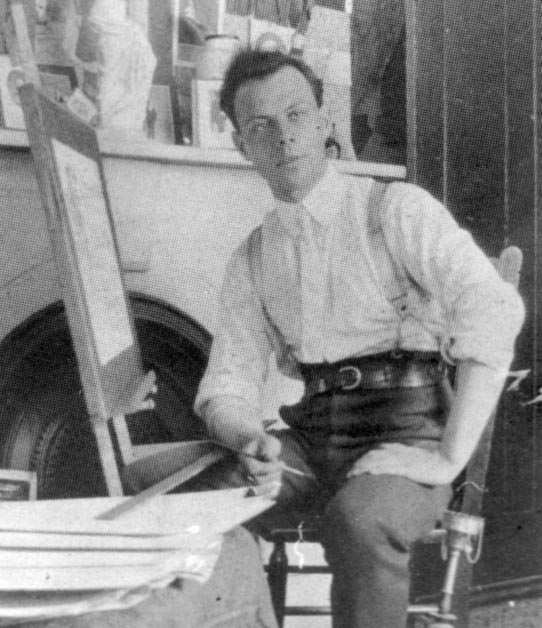
David Milne (January 8, 1882 – December 26, 1953) was a Canadian painter, printmaker, and writer. He is sometimes referred to as the Master of Absence and known for his ability to reduce a painting to its bare essentials.
David Milne was born near Paisley in 1882. He was the last of 10 children born to Scottish immigrant parents. His early education was in Paisley, followed by high school in Walkerton; he performed well in school and soon after graduation began teaching in a country school near Paisley. During 1902 and 1903, he studied art through correspondence, eventually deciding to move to New York City in 1903 at the age of 21.
In New York, he spent two years (and a third year of night school) studying at the Art Students League. He came to know both American and European Impressionism, Post Impressionism, and Fauvism, modern approaches that helped shape his own style. A significant measure of this early success was his participation in two of North America's most important exhibitions of art of the early 20th century: the famous Armory Show in 1913 (seen in New York, Boston, and Chicago) where he had five paintings exhibited and the Panama-Pacific International Exposition held in San Francisco in 1915. He was represented by the N. E. Montross Gallery (the same gallery showed 'The Eight' or Ashcan School artists).
In 1912, he married Frances May (known as Patsy) and later they moved to Boston Corners, a small hamlet where Milne painted with oils and watercolours. Milne left Boston Corners in 1917 for basic training in Toronto for World War I. He was stationed in Quebec and then quarantined in England for a month, during which time World War I ended. Because of his background as an artist, he was asked to complete paintings and drawings as a war artist. Milne produced artworks of battlefields in France and Belgium as well as of soldiers in Kinmel Park Camp in England.
Between the years of 1919 and 1929, Milne lived in Boston Corners and the surrounding areas, focusing his artistic work on the landscape. He spent the winter of 1923–1924 in Ottawa in hopes of finding government patronage and a position. During his six months in the city, Milne produced several paintings and watercolours. Six of his works were purchased by the National Gallery of Canada. However, Milne was unable to secure a job in the federal government and returned to Upper New York State. In 1929, Milne returned to Canada to paint in Temagami, Weston and Palgrave. He separated from his wife in 1933, moved to Port Severn, Ontario, and sold many of his paintings to prominent art patrons Vincent Massey and Alice Massey. In the late 1930s, Milne settled down in Uxbridge, Ontario, with Kathleen Pavey, a nurse, and the two had a son (also David) in 1941. During the later years of his life, Milne worked again in watercolours, and changed his subject matter to more whimsical, fantasy and childlike inspirations. He continued to travel to Algonquin Park and Baptiste Lake to paint the Canadian landscape.
On November 14, 1952, Milne had a stroke. Over the next year he continued to suffer from small strokes and died in the hospital in Bancroft, Ontario, on December 26, 1953.
David Milne worked predominantly in oil paint, watercolour and drypoint printmaking. Like the Group of Seven, Milne primarily chose landscape as his subject matter; however, his approach to this subject was considerably less "impressionistic" than the Group's and had a more "modernist" feel. Milne was influenced in part by the European and American modernists exhibited through Alfred Stieglitz's gallery, 291. He also pushed himself to develop his own particular style that was stark yet beautiful and very expressively realized.
Milne chose simple, ordinary subjects which he imbued with dignity and significance. His landscapes and still lifes reveal a decorative sense and fluidity of touch. His frequent use of black in his paintings is a characteristic trait. Often one type of object, trees for example, would be depicted in black in one part of the image and white in another creating an intriguing internal tension in the work. For Milne, white was an extension of the palette – a way to express the stillness of the landscape he was viewing. In both his watercolour and oil painting techniques, Milne was experimental in his approach. He paid careful attention to composition but also to the qualities of line, colour and texture that were revealed in his work.
Hub AI
David Milne (artist) AI simulator
(@David Milne (artist)_simulator)
David Milne (artist)
David Milne (January 8, 1882 – December 26, 1953) was a Canadian painter, printmaker, and writer. He is sometimes referred to as the Master of Absence and known for his ability to reduce a painting to its bare essentials.
David Milne was born near Paisley in 1882. He was the last of 10 children born to Scottish immigrant parents. His early education was in Paisley, followed by high school in Walkerton; he performed well in school and soon after graduation began teaching in a country school near Paisley. During 1902 and 1903, he studied art through correspondence, eventually deciding to move to New York City in 1903 at the age of 21.
In New York, he spent two years (and a third year of night school) studying at the Art Students League. He came to know both American and European Impressionism, Post Impressionism, and Fauvism, modern approaches that helped shape his own style. A significant measure of this early success was his participation in two of North America's most important exhibitions of art of the early 20th century: the famous Armory Show in 1913 (seen in New York, Boston, and Chicago) where he had five paintings exhibited and the Panama-Pacific International Exposition held in San Francisco in 1915. He was represented by the N. E. Montross Gallery (the same gallery showed 'The Eight' or Ashcan School artists).
In 1912, he married Frances May (known as Patsy) and later they moved to Boston Corners, a small hamlet where Milne painted with oils and watercolours. Milne left Boston Corners in 1917 for basic training in Toronto for World War I. He was stationed in Quebec and then quarantined in England for a month, during which time World War I ended. Because of his background as an artist, he was asked to complete paintings and drawings as a war artist. Milne produced artworks of battlefields in France and Belgium as well as of soldiers in Kinmel Park Camp in England.
Between the years of 1919 and 1929, Milne lived in Boston Corners and the surrounding areas, focusing his artistic work on the landscape. He spent the winter of 1923–1924 in Ottawa in hopes of finding government patronage and a position. During his six months in the city, Milne produced several paintings and watercolours. Six of his works were purchased by the National Gallery of Canada. However, Milne was unable to secure a job in the federal government and returned to Upper New York State. In 1929, Milne returned to Canada to paint in Temagami, Weston and Palgrave. He separated from his wife in 1933, moved to Port Severn, Ontario, and sold many of his paintings to prominent art patrons Vincent Massey and Alice Massey. In the late 1930s, Milne settled down in Uxbridge, Ontario, with Kathleen Pavey, a nurse, and the two had a son (also David) in 1941. During the later years of his life, Milne worked again in watercolours, and changed his subject matter to more whimsical, fantasy and childlike inspirations. He continued to travel to Algonquin Park and Baptiste Lake to paint the Canadian landscape.
On November 14, 1952, Milne had a stroke. Over the next year he continued to suffer from small strokes and died in the hospital in Bancroft, Ontario, on December 26, 1953.
David Milne worked predominantly in oil paint, watercolour and drypoint printmaking. Like the Group of Seven, Milne primarily chose landscape as his subject matter; however, his approach to this subject was considerably less "impressionistic" than the Group's and had a more "modernist" feel. Milne was influenced in part by the European and American modernists exhibited through Alfred Stieglitz's gallery, 291. He also pushed himself to develop his own particular style that was stark yet beautiful and very expressively realized.
Milne chose simple, ordinary subjects which he imbued with dignity and significance. His landscapes and still lifes reveal a decorative sense and fluidity of touch. His frequent use of black in his paintings is a characteristic trait. Often one type of object, trees for example, would be depicted in black in one part of the image and white in another creating an intriguing internal tension in the work. For Milne, white was an extension of the palette – a way to express the stillness of the landscape he was viewing. In both his watercolour and oil painting techniques, Milne was experimental in his approach. He paid careful attention to composition but also to the qualities of line, colour and texture that were revealed in his work.