Hubbry Logo
David PountneyDavid PountneyMain
Open search
David Pountney
Community hub
David Pountney
logo
8 pages, 0 posts
0 subscribers
Be the first to start a discussion here.
David Pountney
David Pountney
from Wikipedia

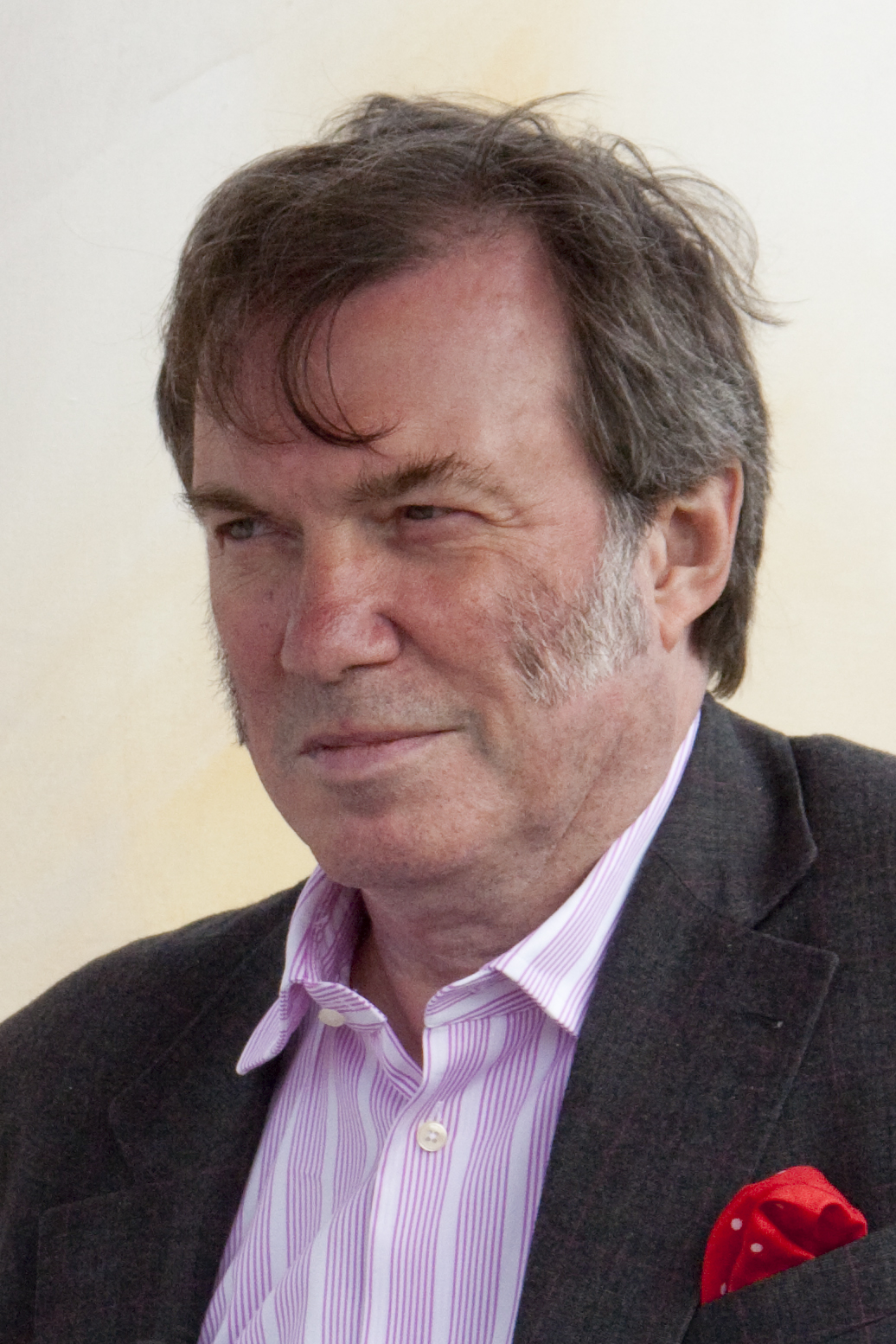
Sir David Willoughby Pountney CBE (born 10 September 1947) is a British-Polish[1][2] theatre and opera director and librettist internationally known for his productions of rarely performed operas and new productions of classic works. He has directed over ten world premières, including three by Sir Peter Maxwell Davies for whom he wrote the librettos of The Doctor of Myddfai, Mr Emmet Takes a Walk and Kommilitonen![3]

Key Information

Biography

[edit]

Pountney was born in Oxford and was a chorister at St John's College, Cambridge (1956–61). He was then educated near Oxford at Radley College (1961–66) before returning to St John's College, Cambridge to read for his degree.[4][5]

His first major breakthrough came in 1972 with his production of Káťa Kabanová for the Wexford Festival.[3] From 1975 to 1980, he was the Director of Productions at Scottish Opera, and, from 1982 to 1993, Director of Productions at English National Opera, where he directed over twenty operas.[6] From 1993 to 2004, he worked as a free-lance director at the Zurich Opera, the Vienna State Opera, the Bavarian State Opera in Munich, and other houses in America, Japan, and the United Kingdom. He has also directed at De Nederlandse Opera and Opera Australia. In December 2003 he became the Intendant of the Bregenz Festival, a post he held until 2014. In April 2011 he was named head of the Welsh National Opera with his appointment as chief executive and artistic director to begin in September 2011.[6]

He has worked as a librettist for Sir Peter Maxwell Davies on The Doctor of Myddfai, Mr Emmet Takes a Walk and Kommilitonen!, and has translated opera librettos into English from Russian, Czech, German, and Italian.[7]

He wrote the libretto for and directed Elena Langer's opera Figaro Gets a Divorce, which was premiered at the Welsh National Opera in February 2016.[8] To great critical acclaim he directed Zandonai's Francesca da Rimini at La Scala Opera House, Milan in 2018. Later that year at Strasbourg he directed Kurt Weill and Arnold Schoenberg in Das Mahagonny Songspiel, Pierrot Lunaire and Die 7 Todsunden.

Honours

[edit]

Pountney is a Chevalier of the Ordre des Arts et des Lettres (a French civilian honour), has the Cavalier's Cross of the Order of Merit of the Republic of Poland and was awarded the Ehrenkreuz des Bundes Österreich in 2014.[9]

He was appointed Commander of the Order of the British Empire (CBE) in 1994[10] and was knighted in the 2019 Birthday Honours for services to opera.[11][12]

He is a Patron of Bampton Classical Opera.

Selected productions

[edit]

References

[edit]

Sources

[edit]
[edit]
Revisions and contributorsEdit on WikipediaRead on Wikipedia
from Grokipedia
''Sir David Pountney'' (born 10 September 1947) is a British opera director, librettist, and translator known for his innovative and theatrical approach to staging 20th-century and contemporary operas, particularly those of Leoš Janáček, as well as his leadership of major companies including Scottish Opera, English National Opera, the Bregenz Festival, and Welsh National Opera. Born in Oxford on 10 September 1947, Pountney gained early international recognition with his 1972 production of Janáček’s Kátya Kabanová at the Wexford Festival. He subsequently served as Director of Productions at Scottish Opera from 1975 to 1980, where he staged a complete Janáček cycle in collaboration with Welsh National Opera, and at English National Opera from 1980, directing over 20 productions and establishing the company as a hub for theatrical innovation in opera. From 2003 to 2013 he was Intendant of the Bregenzer Festspiele in Austria, overseeing large-scale productions on the lake stage, and from 2011 to 2019 he served as Artistic Director of Welsh National Opera. Pountney has directed numerous world premieres, including operas by Peter Maxwell Davies for which he wrote the librettos, and has translated librettos from Czech, German, Italian, and Russian into English. His work has earned him the Janáček Medal, the Martinů Medal, Olivier Awards, and state honors from Austria, Poland, and France, in addition to his appointment as CBE and knighthood in 2019 for services to opera.

Early life and education

David Pountney was born on 10 September 1947 in Oxford, United Kingdom. Growing up in an Anglo-Polish family, he developed a passion for music from an early age. From 1956 to 1961, he served as a chorister at St John's College, Cambridge, receiving early musical training through the choir school that fostered his enduring interest in opera. He subsequently attended Radley College. He later studied at St John's College, Cambridge. These formative experiences in choral music and formal education shaped his deep engagement with the operatic form.

Career

Early career and breakthrough

David Pountney entered professional opera directing in the early 1970s, achieving his breakthrough with a production of Leoš Janáček's Káťa Kabanová at the Wexford Festival Opera in 1972. This staging marked his international emergence as a director, drawing widespread attention for its interpretation of Janáček's work and establishing his reputation in the opera world. The 1972 Wexford production of Káťa Kabanová is consistently cited across opera institutions as the key moment that propelled Pountney's career forward, highlighting his early affinity for Janáček's operas and innovative staging approaches. No notable prior professional directing credits are documented in major sources before this engagement, positioning it as his significant entry point into the field.

Director of Productions at Scottish Opera

David Pountney served as Director of Productions at Scottish Opera from 1975 to 1980. In this role, he initiated a significant collaboration with Welsh National Opera to stage a cycle of Leoš Janáček's operas, marking an important contribution to the promotion of the composer's works in the UK. The cycle featured productions of key Janáček operas, including Jenůfa, From the House of the Dead, The Makropulos Case, Káťa Kabanová, and The Cunning Little Vixen. Pountney directed Jenůfa himself as a co-production with Welsh National Opera during this period. This collaborative effort helped establish a framework for shared stagings of the Czech composer's repertoire between the two companies.

Director of Productions at English National Opera

David Pountney served as Director of Productions at English National Opera from 1980 to 1993, following his earlier role in a similar position at Scottish Opera. During this period, he directed over twenty operas and played a leading role in establishing the company as a dynamic centre of theatrical innovation. His productions during this tenure included Dvořák's Rusalka, Janáček's Osud (The Fate), Tippett's The Midsummer Marriage, Busoni's Doktor Faust, Shostakovich's Lady Macbeth of Mtsensk, Humperdinck's Königskinder, Humperdinck's Hänsel und Gretel, Janáček's The Adventures of Mr Brouček, and Purcell's The Fairy Queen. Earlier in his association with the company, he had directed the world premiere of David Blake's Toussaint at English National Opera in 1977. These works exemplified his commitment to a broad repertoire spanning Czech, British, German, Russian, and Baroque opera, contributing to ENO's reputation for bold and innovative stagings.

Freelance directing

After his departure from English National Opera in 1993, David Pountney worked as a freelance director for a decade, staging productions at major international opera companies. His engagements during this period (1993–2003) included Zurich Opera, Vienna State Opera, Bavarian State Opera, De Nederlandse Opera, Opera Australia, and various companies in America, Japan, and Britain. Among his notable freelance works was a production of Verdi's Macbeth at Zurich Opera in 2001, which featured Thomas Hampson in the title role alongside Paoletta Marrocu and Michele Pertusi, with Daniele Callegari conducting. This staging was recorded live and later released on video, noted for its postmodern approach and visual elements including recurring riot police imagery. Pountney's freelance career allowed him to work across diverse repertoires and international venues before taking on leadership roles at major festivals and companies.

Intendant of Bregenz Festival

David Pountney served as Intendant of the Bregenz Festival from 2003 to 2014. His tenure was marked by adventurous artistic direction, including spectacular stagings on the festival's renowned Lake Stage and a focus on rarely performed works alongside innovative interpretations of classics. Among the notable productions he directed at Bregenz were Bohuslav Martinů's The Greek Passion, Carl Nielsen's Masquerade (a co-production with the Royal Opera House, where it was presented in 2005), Kurt Weill's Der Kuhhandel (also known as Arms and the Cow), Karol Szymanowski's King Roger in 2009, and Mieczysław Weinberg's The Passenger in 2010. From 2011 onward, his responsibilities at Bregenz overlapped with his new role as Chief Executive and Artistic Director of Welsh National Opera.

Chief Executive and Artistic Director at Welsh National Opera

In September 2011, David Pountney assumed the positions of Chief Executive and Artistic Director at Welsh National Opera, having been announced as the company's head in April 2011. In this dual role, he led both the artistic programming and administrative operations of the organization, succeeding previous leadership and bringing his extensive experience from prior international positions. Among the notable achievements during his tenure was the world premiere of Figaro Gets a Divorce, a new opera composed by Elena Langer with a libretto and direction by Pountney himself. The production, which reimagined characters from Mozart's The Marriage of Figaro in a modern political context, debuted at Welsh National Opera in February 2016 to critical attention for its innovative approach and Pountney's creative contributions as librettist and director. His leadership at Welsh National Opera emphasized ambitious repertoire choices and new commissions, building on his reputation for distinctive interpretations of opera.

Notable productions

Janáček cycle

David Pountney directed a complete cycle of Leoš Janáček's operas as a co-production between Scottish Opera and Welsh National Opera. The project began in 1975 with his staging of Jenůfa and continued over the following seven years until 1982. The cycle encompassed all five of Janáček's major mature operas: Jenůfa, The Makropulos Case, The Cunning Little Vixen, Kátya Kabanová, and From the House of the Dead. These productions marked Pountney's introduction to Welsh National Opera and helped bring Janáček's Czech-language works, previously rare in British opera houses, to wider audiences across the United Kingdom. The cycle contributed to establishing a lasting Janáček performance tradition in the UK. Pountney's production of The Cunning Little Vixen has endured particularly well, remaining in Welsh National Opera's repertoire and seeing regular revivals.

World premieres and collaborations

Pountney has played a pivotal role in the creation and staging of several contemporary operas through his work on world premieres, frequently as both librettist and director. He forged a significant long-term collaboration with composer Sir Peter Maxwell Davies, writing the librettos for three of Davies's operas and directing their initial productions. Their first joint project was The Doctor of Myddfai, with music by Davies and libretto by Pountney, which premiered on 5 July 1996 at the New Theatre in Cardiff performed by Welsh National Opera, where Pountney also directed. This commission marked the beginning of their partnership, incorporating Welsh folk elements into a modern narrative. The collaboration continued with Mr Emmet Takes a Walk, again featuring a libretto by Pountney, which premiered on 16 June 2000 at the Pickaquoy Centre in Kirkwall, Orkney, during the St Magnus Festival, directed by Pountney. Their third opera together, Kommilitonen! (Young Blood!), saw Pountney provide the libretto and direct the premiere in March 2011 at the Royal Academy of Music in London, co-commissioned with the Juilliard School; Davies noted his confidence in Pountney's direction from prior collaborations. Pountney extended his engagement with new works by writing the libretto for Elena Langer's Figaro Gets a Divorce, which he also directed in its world premiere on 21 February 2016 at Welsh National Opera in Cardiff. This project reflected his ongoing interest in commissioning and staging original operas during his tenure at WNO.

Other significant productions

David Pountney directed the first full staging of Mieczysław Weinberg's opera The Passenger at the Bregenz Festival in 2010. This production featured a two-level set design by Johan Engels that juxtaposed the opulent deck of an ocean liner with the grim reality of a concentration camp below, highlighting the work's themes of memory and atrocity. In 2018, Pountney staged Riccardo Zandonai's Francesca da Rimini at Teatro alla Scala in Milan, marking the opera's return to the house after decades of absence. The production was noted for its complex symbolism and poetical approach, incorporating artistic references to Pre-Raphaelite painters such as Edward Burne-Jones and Lawrence Alma-Tadema, with scenography by Leslie Travers that included a dazzling white "brilliant garden." That same year, Pountney created an innovative triptych at the Opéra national du Rhin in Strasbourg, combining Kurt Weill's Mahagonny Songspiel and Die sieben Todsünden with Arnold Schoenberg's Pierrot Lunaire. The staging unified the works through a circular moon-like stage and 1920s artistic references, including Dadaist and cinematic elements such as Louise Brooks and Charlie Chaplin imagery, with choreography by Amir Hosseinpour enhancing the physical expressiveness across the evening. In 2023, Pountney devised The Masque of Might for Opera North, a contemporary masque that recycles music by Henry Purcell to satirize dictatorship and address the climate crisis. The production was praised for its inventive approach to musical recycling and its timely ecological and political commentary.

Work as librettist and translator

Honours and awards

Personal life

References

Add your contribution
Related Hubs
User Avatar
No comments yet.