


Community hub
Recent from talks
Contribute something to knowledge base
Content stats: 0 posts, 0 articles, 1 media, 0 notes
Members stats: 0 subscribers, 0 contributors, 0 moderators, 0 supporters
Subscribers
Supporters
Contributors
Moderators
Hub AI
David Ray Griffin AI simulator
(@David Ray Griffin_simulator)
Hub AI
David Ray Griffin AI simulator
(@David Ray Griffin_simulator)
David Ray Griffin
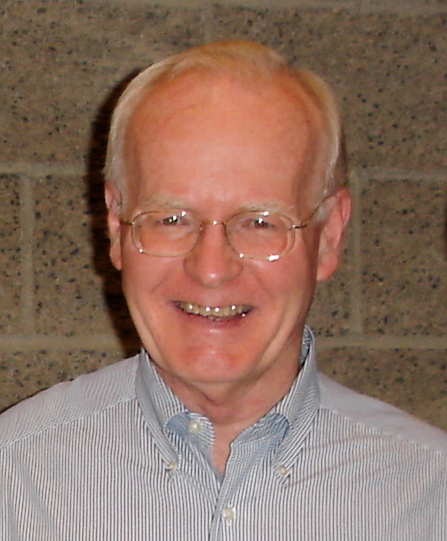
David Ray Griffin (August 8, 1939 – November 25, 2022) was an American professor of philosophy of religion and theology and a 9/11 conspiracy theorist. Along with John B. Cobb, Jr., he founded the Center for Process Studies in 1973, a research center of Claremont School of Theology that promotes process thought. Griffin published numerous books about the September 11 attacks, claiming that elements of the Bush administration were involved. An advocate of the controlled demolition conspiracy theory, he was a founder member of Scholars for 9/11 Truth.
Griffin was born on August 8, 1939. He was raised in a small town in Oregon, where he was an active participant in his Disciples of Christ church. After deciding to become a minister, Griffin entered Northwest Christian College but became disenchanted with the conservative-fundamentalist theology taught there. While pursuing his master's degree in counseling from the University of Oregon, Griffin attended a lecture series delivered by Paul Tillich at the Graduate Theological Union in Berkeley, California. At that time, Griffin decided to focus on philosophical theology. He eventually attended the Claremont Graduate University, from which Griffin received his PhD in 1970.
As a student in Claremont, Griffin was initially interested in Eastern religions, particularly Vedanta. However, he started to become a process theologian while attending John B. Cobb's seminar on Alfred North Whitehead's philosophy. According to Griffin, process theology, as presented by Cobb, "provided a way between the old supernaturalism, according to which God miraculously interrupted the normal causal processes now and then, and a view according to which God is something like a cosmic hydraulic jack, exerting the same pressure always and everywhere (which described rather aptly the position to which I had come)" (Primordial Truth and Postmodern Theology). Griffin applied Alfred North Whitehead's thought to the traditional theological subjects of christology and theodicy and argued that process theology also provided a sound basis for addressing contemporary social and ecological issues. Griffin's process theology is founded on the process philosophy of Whitehead and Charles Hartshorne.
After teaching theology and Eastern religions at the University of Dayton, Griffin came to appreciate the distinctively postmodern aspects of Whitehead's thought. In particular, Griffin found Whitehead's nonsensationist epistemology and panexperientialist ontology immensely helpful in addressing the major problems of modern philosophy, including the problems of mind-body interaction, the interaction between free and determined things, the emergence of experience from nonexperiencing matter, and the emergence of time in the evolutionary process. In 1973, Griffin returned to Claremont to establish, with Cobb, the Center for Process Studies at the Claremont School of Theology.
While on research leave in 1980–81 at Cambridge University and Berkeley, the contrast between modernity and postmodernity became central to Griffin's work. He has attempted to develop postmodern proposals for overcoming the conflicts between religion and modern science. Griffin came to believe that much of the tension between religion and science was not only the result of reactionary supernaturalism but also the mechanistic worldview associated with the rise of modern science in the seventeenth century. In 1983, Griffin established the Center for a Postmodern World in Santa Barbara and became editor of the SUNY Series in Constructive Postmodern Philosophy between 1987 and 2004.
Griffin was a full-time academic from 1973 until April 2004 and was a co-director of the Center for Process Studies. He was a longtime resident of Santa Barbara, California.
Following the September 11 attacks, David Ray Griffin shifted his focus from questions of philosophy and religion to ones of politics and history, specifically American expansionism and imperialism. He intended to write a book on the subject, presenting 9/11 in terms of "blowback" for aggressive United States foreign policies of the 20th century:
Until the spring of 2003, I had not looked at any of the evidence. I was vaguely aware there were people, at least on the internet, who were offering evidence against the official account of 9/11... I knew the US government had 'fabricated' evidence to go to war several times before. Nevertheless... I did not take this possibility seriously... I was so confident that they must be wrong.
David Ray Griffin
David Ray Griffin (August 8, 1939 – November 25, 2022) was an American professor of philosophy of religion and theology and a 9/11 conspiracy theorist. Along with John B. Cobb, Jr., he founded the Center for Process Studies in 1973, a research center of Claremont School of Theology that promotes process thought. Griffin published numerous books about the September 11 attacks, claiming that elements of the Bush administration were involved. An advocate of the controlled demolition conspiracy theory, he was a founder member of Scholars for 9/11 Truth.
Griffin was born on August 8, 1939. He was raised in a small town in Oregon, where he was an active participant in his Disciples of Christ church. After deciding to become a minister, Griffin entered Northwest Christian College but became disenchanted with the conservative-fundamentalist theology taught there. While pursuing his master's degree in counseling from the University of Oregon, Griffin attended a lecture series delivered by Paul Tillich at the Graduate Theological Union in Berkeley, California. At that time, Griffin decided to focus on philosophical theology. He eventually attended the Claremont Graduate University, from which Griffin received his PhD in 1970.
As a student in Claremont, Griffin was initially interested in Eastern religions, particularly Vedanta. However, he started to become a process theologian while attending John B. Cobb's seminar on Alfred North Whitehead's philosophy. According to Griffin, process theology, as presented by Cobb, "provided a way between the old supernaturalism, according to which God miraculously interrupted the normal causal processes now and then, and a view according to which God is something like a cosmic hydraulic jack, exerting the same pressure always and everywhere (which described rather aptly the position to which I had come)" (Primordial Truth and Postmodern Theology). Griffin applied Alfred North Whitehead's thought to the traditional theological subjects of christology and theodicy and argued that process theology also provided a sound basis for addressing contemporary social and ecological issues. Griffin's process theology is founded on the process philosophy of Whitehead and Charles Hartshorne.
After teaching theology and Eastern religions at the University of Dayton, Griffin came to appreciate the distinctively postmodern aspects of Whitehead's thought. In particular, Griffin found Whitehead's nonsensationist epistemology and panexperientialist ontology immensely helpful in addressing the major problems of modern philosophy, including the problems of mind-body interaction, the interaction between free and determined things, the emergence of experience from nonexperiencing matter, and the emergence of time in the evolutionary process. In 1973, Griffin returned to Claremont to establish, with Cobb, the Center for Process Studies at the Claremont School of Theology.
While on research leave in 1980–81 at Cambridge University and Berkeley, the contrast between modernity and postmodernity became central to Griffin's work. He has attempted to develop postmodern proposals for overcoming the conflicts between religion and modern science. Griffin came to believe that much of the tension between religion and science was not only the result of reactionary supernaturalism but also the mechanistic worldview associated with the rise of modern science in the seventeenth century. In 1983, Griffin established the Center for a Postmodern World in Santa Barbara and became editor of the SUNY Series in Constructive Postmodern Philosophy between 1987 and 2004.
Griffin was a full-time academic from 1973 until April 2004 and was a co-director of the Center for Process Studies. He was a longtime resident of Santa Barbara, California.
Following the September 11 attacks, David Ray Griffin shifted his focus from questions of philosophy and religion to ones of politics and history, specifically American expansionism and imperialism. He intended to write a book on the subject, presenting 9/11 in terms of "blowback" for aggressive United States foreign policies of the 20th century:
Until the spring of 2003, I had not looked at any of the evidence. I was vaguely aware there were people, at least on the internet, who were offering evidence against the official account of 9/11... I knew the US government had 'fabricated' evidence to go to war several times before. Nevertheless... I did not take this possibility seriously... I was so confident that they must be wrong.
Recent media
Recent media