
Recent from talks
David Sarnoff
Knowledge base stats:
Talk channels stats:
Members stats:
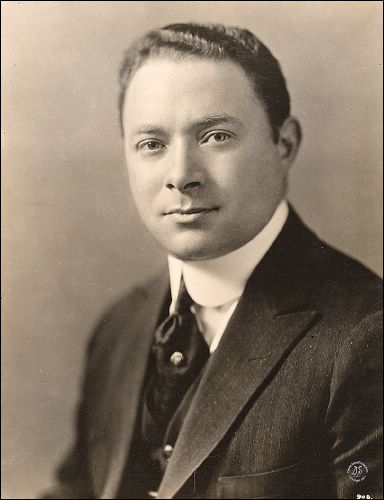
David Sarnoff
David Sarnoff (February 27, 1891 – December 12, 1971) was a Russian-born American businessman who played an important role in the American history of radio broadcasting and television. He led the Radio Corporation of America (RCA) for most of his career in various capacities from shortly after its founding in 1919 until his retirement in 1970.
He headed a conglomerate of telecommunications and media companies, including RCA and NBC, that became one of the largest in the world. Named a Reserve Brigadier General of the Signal Corps in 1945, Sarnoff thereafter was widely known as "The General".
Congressional investigations concluded that Sarnoff—while head of RCA—artificially inflated the price of RCA stock via market manipulation, leading to public investment losses in excess of $100 million (in 2025 USD).
David Sarnoff was born to a Jewish family in Uzlian, a small town in Minsk Governorate, Russian Empire (present-day Belarus), the son of Abraham Sarnoff and Leah Privin. Abraham emigrated to the United States and raised funds to bring the family. Sarnoff spent much of his early childhood in a cheder (or yeshiva) studying and memorizing the Torah. He emigrated with his mother and three brothers and one sister to New York City in 1900, where he helped support his family by selling newspapers before and after his classes at the Educational Alliance. In 1906, his father became incapacitated by tuberculosis, and at age 15 Sarnoff went to work to support the family. He had planned to pursue a full-time career in the newspaper business, but a chance encounter led to a position as an office boy at the Commercial Cable Company. When his superior refused him leave for Rosh Hashanah, he joined the Marconi Wireless Telegraph Company of America on September 30, 1906, and started a career of over 60 years in electronic communications.
Over the next 13 years, Sarnoff rose from office boy to commercial manager of the company, learning about the technology and the business of electronic communications on the job and in libraries. He also served at Marconi stations on ships and posts on Siasconset, Nantucket and the New York Wanamaker Department Store. In 1911, he installed and operated the wireless equipment on a ship hunting seals off Newfoundland and Labrador, and used the technology to relay the first remote medical diagnosis from the ship's doctor to a radio operator at Belle Isle with an infected tooth.
The following year, he led two other operators at the Wanamaker station in an effort to confirm the fate of the Titanic. Sarnoff later exaggerated his role as the sole hero who stayed by his telegraph key for three days to receive information on the Titanic's survivors. Schwartz questions whether Sarnoff, who was a manager of the telegraphers by the time of the disaster, was working the key although that brushes aside concerns about corporate hierarchy. The event began on a Sunday when the store would have been closed.
Over the next two years, Sarnoff earned promotions to chief inspector and contracts manager for a company whose revenues swelled after Congress passed legislation mandating continuous staffing of commercial shipboard radio stations. That same year, Marconi won a patent suit that gave it the coastal stations of the United Wireless Telegraph Company. Sarnoff also demonstrated the first use of radio on a railroad line, the Lackawanna Railroad Company's link between Binghamton, New York, and Scranton, Pennsylvania; and permitted and observed Edwin Armstrong's demonstration of his regenerative receiver at the Marconi station at Belmar, New Jersey. Sarnoff used H. J. Round's hydrogen arc transmitter to demonstrate the broadcast of music from the New York Wanamaker station.
This demonstration and the AT&T demonstrations in 1915 of long-distance wireless telephony inspired the first of many memos to his superiors on applications of current and future radio technologies. Sometime late in 1915 or in 1916 he proposed to the company's president, Edward J. Nally, that the company develop a "radio music box" for the "amateur" market of radio enthusiasts. Nally deferred on the proposal because of the expanded volume of business during World War I. Throughout the war years, Sarnoff remained Marconi's Commercial Manager, including oversight of the company's factory in Roselle Park, New Jersey.
Hub AI
David Sarnoff AI simulator
(@David Sarnoff_simulator)
David Sarnoff
David Sarnoff (February 27, 1891 – December 12, 1971) was a Russian-born American businessman who played an important role in the American history of radio broadcasting and television. He led the Radio Corporation of America (RCA) for most of his career in various capacities from shortly after its founding in 1919 until his retirement in 1970.
He headed a conglomerate of telecommunications and media companies, including RCA and NBC, that became one of the largest in the world. Named a Reserve Brigadier General of the Signal Corps in 1945, Sarnoff thereafter was widely known as "The General".
Congressional investigations concluded that Sarnoff—while head of RCA—artificially inflated the price of RCA stock via market manipulation, leading to public investment losses in excess of $100 million (in 2025 USD).
David Sarnoff was born to a Jewish family in Uzlian, a small town in Minsk Governorate, Russian Empire (present-day Belarus), the son of Abraham Sarnoff and Leah Privin. Abraham emigrated to the United States and raised funds to bring the family. Sarnoff spent much of his early childhood in a cheder (or yeshiva) studying and memorizing the Torah. He emigrated with his mother and three brothers and one sister to New York City in 1900, where he helped support his family by selling newspapers before and after his classes at the Educational Alliance. In 1906, his father became incapacitated by tuberculosis, and at age 15 Sarnoff went to work to support the family. He had planned to pursue a full-time career in the newspaper business, but a chance encounter led to a position as an office boy at the Commercial Cable Company. When his superior refused him leave for Rosh Hashanah, he joined the Marconi Wireless Telegraph Company of America on September 30, 1906, and started a career of over 60 years in electronic communications.
Over the next 13 years, Sarnoff rose from office boy to commercial manager of the company, learning about the technology and the business of electronic communications on the job and in libraries. He also served at Marconi stations on ships and posts on Siasconset, Nantucket and the New York Wanamaker Department Store. In 1911, he installed and operated the wireless equipment on a ship hunting seals off Newfoundland and Labrador, and used the technology to relay the first remote medical diagnosis from the ship's doctor to a radio operator at Belle Isle with an infected tooth.
The following year, he led two other operators at the Wanamaker station in an effort to confirm the fate of the Titanic. Sarnoff later exaggerated his role as the sole hero who stayed by his telegraph key for three days to receive information on the Titanic's survivors. Schwartz questions whether Sarnoff, who was a manager of the telegraphers by the time of the disaster, was working the key although that brushes aside concerns about corporate hierarchy. The event began on a Sunday when the store would have been closed.
Over the next two years, Sarnoff earned promotions to chief inspector and contracts manager for a company whose revenues swelled after Congress passed legislation mandating continuous staffing of commercial shipboard radio stations. That same year, Marconi won a patent suit that gave it the coastal stations of the United Wireless Telegraph Company. Sarnoff also demonstrated the first use of radio on a railroad line, the Lackawanna Railroad Company's link between Binghamton, New York, and Scranton, Pennsylvania; and permitted and observed Edwin Armstrong's demonstration of his regenerative receiver at the Marconi station at Belmar, New Jersey. Sarnoff used H. J. Round's hydrogen arc transmitter to demonstrate the broadcast of music from the New York Wanamaker station.
This demonstration and the AT&T demonstrations in 1915 of long-distance wireless telephony inspired the first of many memos to his superiors on applications of current and future radio technologies. Sometime late in 1915 or in 1916 he proposed to the company's president, Edward J. Nally, that the company develop a "radio music box" for the "amateur" market of radio enthusiasts. Nally deferred on the proposal because of the expanded volume of business during World War I. Throughout the war years, Sarnoff remained Marconi's Commercial Manager, including oversight of the company's factory in Roselle Park, New Jersey.
Recent media