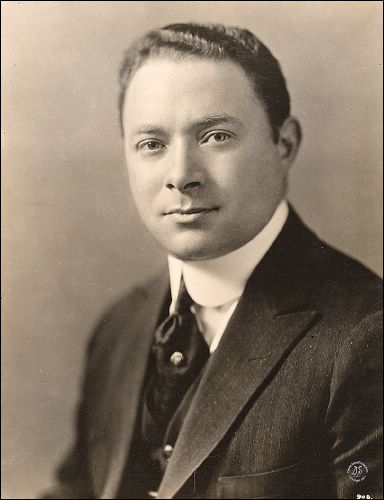
David Sarnoff
David Sarnoff
Main page
2250090

David Sarnoff

logo
Community Hub0 subscribers
Read side by side
from Wikipedia

David Sarnoff (February 27, 1891 – December 12, 1971) was a Russian-born[a] American businessman who played an important role in the American history of radio broadcasting and television. He led the Radio Corporation of America (RCA) for most of his career in various capacities from shortly after its founding in 1919 until his retirement in 1970.

Key Information

He headed a conglomerate of telecommunications and media companies, including RCA and NBC, that became one of the largest in the world. Named a Reserve Brigadier General of the Signal Corps in 1945, Sarnoff thereafter was widely known as "The General".[3]

Congressional investigations concluded that Sarnoff—while head of RCA—artificially inflated the price of RCA stock via market manipulation, leading to public investment losses in excess of $100 million (in 2025 USD).[7]

Early life and career

[edit]

David Sarnoff was born to a Jewish family in Uzlian, a small town in Minsk Governorate, Russian Empire (present-day Belarus),[4] the son of Abraham Sarnoff and Leah Privin. Abraham emigrated to the United States and raised funds to bring the family. Sarnoff spent much of his early childhood in a cheder (or yeshiva) studying and memorizing the Torah. He emigrated with his mother and three brothers and one sister to New York City in 1900, where he helped support his family by selling newspapers before and after his classes at the Educational Alliance. In 1906, his father became incapacitated by tuberculosis, and at age 15 Sarnoff went to work to support the family.[8] He had planned to pursue a full-time career in the newspaper business, but a chance encounter led to a position as an office boy at the Commercial Cable Company. When his superior refused him leave for Rosh Hashanah, he joined the Marconi Wireless Telegraph Company of America on September 30, 1906, and started a career of over 60 years in electronic communications.

Over the next 13 years, Sarnoff rose from office boy to commercial manager of the company, learning about the technology and the business of electronic communications on the job and in libraries. He also served at Marconi stations on ships and posts on Siasconset, Nantucket and the New York Wanamaker Department Store. In 1911, he installed and operated the wireless equipment on a ship hunting seals off Newfoundland and Labrador, and used the technology to relay the first remote medical diagnosis from the ship's doctor to a radio operator at Belle Isle with an infected tooth.

The following year, he led two other operators at the Wanamaker station in an effort to confirm the fate of the Titanic.[1] Sarnoff later exaggerated his role as the sole hero who stayed by his telegraph key for three days to receive information on the Titanic's survivors.[8][9] Schwartz questions whether Sarnoff, who was a manager of the telegraphers by the time of the disaster, was working the key although that brushes aside concerns about corporate hierarchy. The event began on a Sunday when the store would have been closed.[10]

Over the next two years, Sarnoff earned promotions to chief inspector and contracts manager for a company whose revenues swelled after Congress passed legislation mandating continuous staffing of commercial shipboard radio stations. That same year, Marconi won a patent suit that gave it the coastal stations of the United Wireless Telegraph Company. Sarnoff also demonstrated the first use of radio on a railroad line, the Lackawanna Railroad Company's link between Binghamton, New York, and Scranton, Pennsylvania; and permitted and observed Edwin Armstrong's demonstration of his regenerative receiver at the Marconi station at Belmar, New Jersey. Sarnoff used H. J. Round's hydrogen arc transmitter to demonstrate the broadcast of music from the New York Wanamaker station.

This demonstration and the AT&T demonstrations in 1915 of long-distance wireless telephony inspired the first of many memos to his superiors on applications of current and future radio technologies. Sometime late in 1915 or in 1916 he proposed to the company's president, Edward J. Nally, that the company develop a "radio music box" for the "amateur" market of radio enthusiasts.[9][11] Nally deferred on the proposal because of the expanded volume of business during World War I. Throughout the war years, Sarnoff remained Marconi's Commercial Manager,[3] including oversight of the company's factory in Roselle Park, New Jersey.

Business career

[edit]

RCA

[edit]
Sarnoff with Albert Einstein and other noted scientists and engineers on a tour of the RCA wireless station in New Brunswick, New Jersey in 1921. Charles Proteus Steinmetz is next to Einstein.

Unlike many who were involved with early radio communications, who often viewed radio as point-to-point, Sarnoff saw the potential of radio as point-to-mass. One person (the broadcaster) could speak to many (the listeners).

When Owen D. Young of General Electric arranged the purchase of American Marconi and reorganized it as the Radio Corporation of America, a radio patent monopoly, Sarnoff realized his dream and revived his proposal in a lengthy memo on the company's business and prospects. Although his superiors again ignored him, he contributed to the rising postwar radio boom by helping arrange for the broadcast of a heavyweight boxing match between Jack Dempsey and Georges Carpentier in July 1921. Up to 300,000 people listened to the broadcast of the fight, and demand for home radio equipment bloomed that winter.[12] By the spring of 1922, Sarnoff's prediction of popular demand for radio broadcasting had come to pass and over the next few years, he gained much stature and influence.

In 1925, RCA purchased its first radio station (WEAF, New York) and launched the National Broadcasting Company (NBC), the first radio network in America. Four years later, Sarnoff became president of RCA. NBC had by that time split into two networks, the Red and the Blue. The Blue Network eventually became ABC Radio.[1] Sarnoff is often inaccurately referred to as the founder of both RCA and NBC, but he was in fact founder of only NBC.[8]

Sarnoff was instrumental in building and establishing the AM broadcasting radio business that became the preeminent public radio standard for the majority of the 20th century.

RCA Stock price manipulation

[edit]

Via the Pecora Commission, congressional investigations revealed that when Sarnoff was in charge of the RCA, he participated in pool operations (market manipulation) of RCA stock. In one noted instance, Sarnoff used his housewife as a proxy in order to try and hide his involvement in the operations, which were considered highly unethical even at the time. Using Sarnoff’s large sums of money, and that of other leading executives of the era, the pool started to artificially inflate the price of RCA stock on March 12, 1929 and concluded operations seven calendar days later. This short market manipulation netted the pool a gross profit of $5,563,198.48 ($105,198,447.02 in May 2025). Sarnoff’s actions, and similar ones of other leading executives at the time, led to public and congressional outcry and stricter securities-related regulations.[7]

RKO

[edit]

Sarnoff negotiated successful contracts to form Radio-Keith-Orpheum (RKO), a film production and distribution company.[8] Essential elements in that new company were RCA, the Film Booking Offices of America (FBO), and the Keith-Albee-Orpheum (KAO) theater chain.[13]

Early history of television

[edit]
Sarnoff with the first RCA videotape recorder in 1954

When Sarnoff was put in charge of radio broadcasting at RCA, he soon recognized the potential for television, i.e., the combination of motion pictures with electronic transmission. Schemes for television had long been proposed (well before World War I) but with no practical outcome. Sarnoff was determined to lead his company in pioneering the medium and met with Westinghouse engineer Vladimir Zworykin in 1928. At the time Zworykin was attempting to develop an all-electronic television system at Westinghouse, but with little success. Zworykin had visited the laboratory of the inventor Philo T. Farnsworth, who had developed an Image Dissector, part of a system that could enable a working television. Zworykin was sufficiently impressed with Farnsworth's invention that he had his team at Westinghouse make several copies of the device for experimentation.[14]

Zworykin pitched the concept to Sarnoff, claiming a viable television system could be realized in two years with a mere $100,000 investment. Sarnoff opted to fund Zworkyin's research, most likely well-aware that Zworykin was underestimating the scope of his television effort. Seven years later, in late 1935, Zworykin's photograph appeared on the cover of the trade journal Electronics, holding an early RCA photomultiplier prototype. The photomultiplier, subject of intensive research at RCA and in Leningrad, Russia, would become an essential component within sensitive television cameras. On April 24, 1936, RCA demonstrated to the press a working iconoscope camera tube and kinescope receiver display tube (an early cathode-ray tube), two key components of all-electronic television.

The final cost of the enterprise was closer to $50 million. On the road to success they encountered a legal battle with Farnsworth, who had been granted patents in 1930 for his solution to broadcasting moving pictures. Despite Sarnoff's efforts to prove that he was the inventor of the television, he was ordered to pay Farnsworth $1,000,000 in royalties, a small price to settle the dispute for an invention that would profoundly revolutionize the world. However this sum was never paid to Farnsworth.

In 1929, Sarnoff engineered the purchase of the Victor Talking Machine Company, the nation's largest manufacturer of gramophone records and phonographs, merging radio-phonograph production at Victor's large manufacturing facility in Camden, New Jersey. The acquisition became known as the RCA Victor Division, later RCA Records.

On January 3, 1930, Sarnoff became president of RCA, succeeding General James Harbord. On May 30, the company became involved in an antitrust case concerning the original radio patent pool. Sarnoff negotiated an outcome where RCA was no longer partially owned by Westinghouse and General Electric, giving him final say in the company's affairs.

Initially, the Great Depression of the early 1930s caused RCA to cut costs, but Zworykin's project was protected. After nine years of Zworykin's hard work, Sarnoff's determination, and legal battles with Farnsworth (in which Farnsworth was proved in the right), they had a commercial system ready to launch. Finally, in April 1939, regularly scheduled, electronic television in America was initiated by RCA under the name of their broadcasting division at the time, The National Broadcasting Company (NBC). The first television broadcast aired was the dedication of the RCA pavilion at the 1939 New York World's Fairgrounds and was introduced by Sarnoff himself. Later that month on April 30, opening day ceremonies at The World's Fair were telecast in the medium's first major production, featuring a speech by President Franklin D. Roosevelt, the first US president to appear on television. These telecasts were seen only in New York City and the immediate vicinity, since NBC television had only one station at the time, W2XBS Channel 1, now WNBC Channel 4. The broadcast was seen by an estimated 1,000 viewers from the roughly 200 television sets which existed in the New York City area at the time.

The standard approved by the National Television System Committee (the NTSC) in 1941 differed from RCA's standard, but RCA quickly became the market leader of manufactured sets and NBC became the first television network in the United States, connecting their New York City station to stations in Philadelphia and Schenectady for occasional programs in the early 1940s.

According to the book Global Communication Since 1844[15] by Peter J. Hughill, Sarnoff was part of a group of Russian Jewish scientists in the 1930s who wanted their research to advance military technology with the possibility of a forthcoming war with Germany. The account, credited to British government scientist Brian Callick, is supported by other contemporary evidence.[16][17] The group, also comprising Simeon Aisenstein, Vladimir Zworykin and Isaac Shoenberg, knew each other well from Russia and saw possible military applications for their work on television. The group is said to have raised one million pounds sterling (about $5 million at the time) from US donors. The specific work took place at EMI-Marconi in the U.K. and resulted in Britain becoming significantly advanced in television development and able to launch a public service on 2 November 1936. The military applications helped the development of radio-location (later named radar). In addition the design and production in quantity of television equipment and sets allowed the similar military technology (cathode ray tubes, VHF transmission and reception and wideband circuits to be advanced. A former British defence minister, Lord Orr-Ewing, referred to the work in a 1979 BBC interview and stated “that’s how we won the Battle of Britain”.

Meanwhile, a system developed by EMI based on Russian research and Zworykin's work was adopted in the United Kingdom and the BBC had a regular television service from 1936 onwards. However, World War II put a halt to a dynamic growth of the early television development stages.

World War II

[edit]
Sarnoff receiving his brigadier general's star from Major General Harry C. Ingles, chief signal officer of the US Army.

At the onset of World War II, Sarnoff served on Eisenhower's communications staff, arranging expanded radio circuits for NBC to transmit news from the invasion of France in June 1944. In France, Sarnoff arranged for the restoration of the Radio France station in Paris that the Germans destroyed and oversaw the construction of a radio transmitter powerful enough to reach all of the allied forces in Europe, called Radio Free Europe. In recognition of his achievements, Sarnoff was decorated with the Legion of Merit on October 11, 1944.[18]

Thanks to his communications skills and support he received the Brigadier General's star in December 1945, and thereafter was known as "General Sarnoff."[19] The star, which he proudly and frequently wore, was buried with him.

Sarnoff anticipated that post-war America would need an international radio voice explaining its policies and positions. In 1943, he tried to influence Secretary of State Cordell Hull to include radio broadcasting in post-war planning. In 1947, he lobbied Secretary of State George Marshall to expand the roles of Radio Free Europe and Voice of America. His concerns and proposed solutions were eventually seen as prescient.[20] In 1947, he became chairman of RCA.[21]

Post-war expansion

[edit]

After the war, monochrome TV production began in earnest. Color TV was the next major development, and NBC once again won the battle. CBS had their electro-mechanical color television system approved by the FCC on October 10, 1950, but Sarnoff filed an unsuccessful suit in the United States district court to suspend that ruling. Subsequently, he made an appeal to the Supreme Court which eventually upheld the FCC decision. Sarnoff's tenacity and determination to win the "Color War" pushed his engineers to perfect an all-electronic color television system that used a signal that could be received on existing monochrome sets that prevailed. CBS was now unable to take advantage of the color market, due to lack of manufacturing capability and color programming, a system that could not be seen on the millions of black and white receivers and sets that were triple the cost of monochrome sets. A few days after CBS had its color premiere on June 14, 1951, RCA demonstrated a fully functional all-electronic color TV system and became the leading manufacturer of color TV sets in the US.

CBS system color TV production was suspended in October 1951 for the duration of the Korean War. As more people bought monochrome sets, it was increasingly unlikely that CBS could achieve any success with its incompatible system. Few receivers were sold, and there were almost no color broadcasts, especially in prime time, when CBS could not run the risk of broadcasting a program which few could see. The NTSC was reformed and recommended a system virtually identical to RCA's in August 1952. On December 17, 1953, the FCC approved RCA's system as the new standard.

Later years

[edit]
Sarnoff's mausoleum at Kensico Cemetery.

In 1955, Sarnoff received The Hundred Year Association of New York's Gold Medal Award "in recognition of outstanding contributions to the City of New York."

In 1959, Sarnoff was a member of the Rockefeller Brothers Fund panel to report on U.S. foreign policy. As a member of that panel and in a subsequent essay published in Life as part of its "The National Purpose" series, he was critical of the tentative stand being taken by the United States in fighting the political and psychological warfare being waged by Soviet-led international Communism against the West. He strongly advocated an aggressive, multi-faceted fight in the ideological and political realms with a determination to decisively win the Cold War.[22] In 1966, David's son Robert was named president and chief operating officer of RCA and two years later also became chief executive officer.[21]

Sarnoff retired in 1970, at the age of 79 and died the following year, aged 80. He is interred in a mausoleum featuring a stained-glass vacuum tube in Kensico Cemetery in Valhalla, New York. Robert succeeded him as chairman of RCA.[21]

After his death, Sarnoff left behind an estate estimated to be worth over $1 million. The majority of the estate went to his widow, Lizette Hermant Sarnoff, who received $300,000, personal and household effects in addition to the Sarnoff home, located on 44 East 71st Street.[23]

Family life

[edit]

On July 4, 1917, Sarnoff married Lizette Hermant, the daughter of a French immigrant family of Jewish descent who settled in the Bronx as one of his family's neighbors.[24][3] The Museum of Broadcast Communications describes their 54-year marriage as the bedrock of his life.[8] Lizette was often the first person to hear her husband's new ideas as radio and television became integral to American home life.[3]

The couple had three sons. Eldest son Robert W. Sarnoff (1918–1997)[25] succeeded his father at the helm of RCA in 1970.[26] Robert's third wife was operatic soprano Anna Moffo.[25] Edward Sarnoff, the middle child, headed Fleet Services of New York.[27] Thomas W. Sarnoff, the youngest, was NBC's West Coast President.[28]

Sarnoff was the maternal uncle of screenwriter Richard Baer.[29] Sarnoff was credited with sparking Baer's interest in television.[29] According to Baer's 2005 autobiography, Sarnoff called a vice president at NBC at 6 A.M. and ordered him to find Baer "a job by 9 o'clock" that same morning.[29] The NBC vice president complied with Sarnoff's request.

David Sarnoff was initiated to the Scottish Rite Freemasonry[30][31] in the Renovation Lodge No. 97, Albion, NY.[32][33]

Honors

[edit]

Sarnoff museum

[edit]

The David Sarnoff Library, a library and museum open to the public containing many historical items from David Sarnoff's life was in Princeton Junction, NJ. The David Sarnoff Library now exists as a virtual museum online. When the Library was operating, The David Sarnoff Radio Club composed of local amateur radio operators used to meet there, as did the New Jersey Antique Radio Club and other community organizations. The exhibits are now on display in Roscoe L. West Hall at The College of New Jersey.

Sarnoff's Law

[edit]

In 1999, computer scientist David P. Reed coined Sarnoff's Law, which states that "the value of a network grows in proportion to the number of viewers."[38] Sarnoff's Law, Metcalfe's Law and Reed's Law are frequently used in tandem in discussions of the value of networks.

Portrayals

[edit]

See also

[edit]

References

[edit]

Further reading

[edit]
[edit]
Revisions and contributorsEdit on WikipediaRead on Wikipedia
from Grokipedia
David Sarnoff (February 27, 1891 – December 12, 1971) was a Russian-born American broadcasting executive who immigrated to the United States as a child and rose to lead the Radio Corporation of America (RCA), serving as its president from 1930 to 1947 and chairman of the board from 1947 to 1966.[1][2] He founded the National Broadcasting Company (NBC) in 1926, establishing the first major commercial radio network and pioneering the mass-market model for radio and television broadcasting.[3][4] Sarnoff's vision, articulated in his 1916 "Radio Music Box" memo, anticipated radio receivers in millions of homes delivering music, news, and entertainment, transforming wireless technology from point-to-point communication into a household utility.[5] Beginning as a messenger boy for the Commercial Cable Company and later at the Marconi Wireless Telegraph Company of America in 1906, Sarnoff gained prominence during the 1912 Titanic disaster by coordinating wireless reports from the Carpathia, which propelled his career within the nascent radio industry.[1] Following the 1919 formation of RCA from assets of Marconi, General Electric, and others, he advanced to vice president and commercial manager, steering the company toward broadcasting dominance amid antitrust pressures that necessitated NBC's creation.[2] Under his direction, RCA invested heavily in television development, supporting Vladimir Zworykin's electronic camera tube in 1929, launching experimental TV broadcasts at the 1939 New York World's Fair, and prevailing in standards battles to introduce compatible color television in the 1950s.[2][1] During World War II, Sarnoff served as a communications consultant to the U.S. Army Signal Corps, rising to brigadier general and overseeing radio and radar advancements for military use.[1][2] His tenure at RCA, marked by aggressive patent acquisitions and cross-licensing deals—such as settling disputes with inventor Philo Farnsworth—involved navigating regulatory scrutiny over market dominance but cemented the company's role in 20th-century electronics innovation.[2] Sarnoff retired in 1970, leaving a legacy of commercializing technologies that reshaped global information dissemination.[1]

Early Life and Entry into Communications

Immigration from Russia and Formative Years

David Sarnoff was born on February 27, 1891, in the Jewish shtetl of Uzlian near Minsk in the Russian Empire (now Belarus), to Abraham and Leah Sarnoff.[6][7] His father emigrated to New York City in 1896 seeking economic opportunities, leaving Sarnoff, his mother, and two younger brothers behind amid widespread poverty in the Pale of Settlement.[6][7] From 1896 to 1900, Sarnoff received traditional religious education in a kheder supervised by his granduncle, a rabbi, where he memorized extensive passages from the Talmud, initially preparing for a scholarly path common among Jewish boys of the era.[6] On July 2, 1900, at age nine, Sarnoff immigrated to the United States with his mother and brothers, arriving in New York City after a circuitous journey via Minsk, Liepaja (Latvia), Liverpool (England), Montreal (Canada), and the Barge Office in Manhattan.[6] The family reunited with Abraham on the crowded Lower East Side, where they lived in abject poverty typical of Eastern European Jewish immigrants fleeing pogroms and economic hardship.[1][7] Sarnoff quickly adapted by selling Yiddish newspapers on street corners within days of arrival and, by age 13, had saved $200 to purchase and operate his own newsstand, demonstrating early entrepreneurial drive amid familial financial strain exacerbated by his father's illness.[1] To supplement income, Sarnoff sang in a synagogue choir from 1900 to 1907 while attending public schools and evening classes to master English, rapidly transitioning from Yiddish monolingualism to fluency.[6][1] He graduated from eighth grade at the Educational Alliance, a settlement house on the Lower East Side providing vocational and cultural education to immigrants, in June 1906, marking the end of his formal schooling as family necessities demanded he become the primary breadwinner at age 15.[6] These years instilled self-reliance and a relentless work ethic, as Sarnoff later reflected on the transformative pressures of immigrant survival in urban America.[1]

Initial Positions in Telegraphy and Wireless

In 1906, at the age of 15, Sarnoff entered the communications field as an office boy at the Commercial Cable Company in lower Manhattan, earning $5.50 per week amid his family's financial hardships following his father's illness.[8] There, he rapidly self-taught Morse code through observation of operators and was promoted to telegraph operator, gaining foundational skills in wired telegraphy.[9] Shortly afterward, on September 30, 1906, he transitioned to the Marconi Wireless Telegraph Company of America as an office boy, marking his entry into wireless technology.[7] [6] Sarnoff's aptitude for wireless operations led to swift promotions at Marconi; by 1909, he had become manager of the company's station at Sea Gate, Brooklyn, handling ship-to-shore transmissions and demonstrating proficiency in long-distance signaling.[10] [11] His skills were prominently displayed during the RMS Titanic disaster on April 14, 1912, when, as a senior operator at Marconi's station atop Wanamaker's Department Store in New York, he intercepted the ship's distress signals via the call sign MGY and relayed updates continuously for 72 hours, coordinating with other stations and earning public recognition for his endurance and accuracy.[8] [12] This event underscored the reliability of wireless telegraphy for maritime safety, though it also exposed limitations in transatlantic coverage that Sarnoff later sought to address through technological advocacy.[13] By 1912, Sarnoff was overseeing Marconi's new high-power station at Wanamaker's, managing a team and experimenting with receiver improvements, such as crystal detectors, to enhance signal clarity amid urban interference.[12] These early roles honed his expertise in both telegraphy protocols and emerging wireless applications, positioning him as a key operator in an industry transitioning from point-to-point messaging to broader signaling networks.[14] His progression from low-wage entry-level tasks to supervisory wireless duties reflected not only personal diligence but also the era's demand for skilled operators amid expanding global cable and radio infrastructure.[15]

Pioneering Commercial Radio Broadcasting

The 1916 Radio Music Box Memo and Vision

In November 1916, David Sarnoff, then commercial manager at the Marconi Wireless Telegraph Company of America, authored an internal memorandum to Edward J. Nally, the company's commercial superintendent, proposing a novel application for radio technology.[16] The document outlined a plan to transform radio from its primary role in point-to-point maritime and military communications into a consumer-oriented "household utility," akin to the piano or phonograph, by enabling wireless reception of music and other programming in private homes.[5] Sarnoff envisioned manufacturing simple, affordable receiving devices he termed "Radio Music Boxes," each capable of tuning into transmitted concerts, lectures, and sermons via dials adjustable by a single knob, thereby democratizing access to entertainment without mechanical records.[5] The memo projected significant commercial potential, estimating sales of one million units at $75 each—yielding $75 million in revenue—supplemented by annual royalties from performers and broadcasters, potentially reaching $60 million more, based on prevailing phonograph industry benchmarks.[5] Sarnoff's vision extended to diverse content streams, including news bulletins, stock market reports, fashion updates, and even bedtime stories for children, all distributed centrally from high-powered transmitters to eliminate the need for individual subscriptions or wired connections.[1] This proposal anticipated one-way mass broadcasting to passive receivers, a departure from radio's established two-way or specialized uses, and foresaw scalability through centralized programming hubs that could serve urban and rural audiences alike.[7] Nally acknowledged receipt but offered no endorsement, reflecting the era's industry priorities on ship-to-shore telegraphy amid World War I constraints and regulatory limits on amateur transmissions.[16] Historians have scrutinized the memo's dating, with some early skepticism attributing it to postwar backdating for promotional purposes, though archival evidence, including Nally's contemporary reply, confirms its 1916 origin as a concise prospectus rather than the elaborated 1920 business plan Sarnoff later submitted to RCA leadership.[17] Sarnoff's foresight proved prescient, as commercial broadcasting emerged post-1920 with stations like KDKA, validating the shift to receiver sales driving receiver manufacturing dominance, though initial rejection underscored radio's prewar technological and economic immaturity for mass entertainment.[7]

Founding of NBC and Network Expansion

In 1926, David Sarnoff, serving as RCA's commercial manager, negotiated a resolution to a dispute with AT&T regarding radio broadcasting operations, leading RCA to acquire AT&T's New York station WEAF and establish the National Broadcasting Company (NBC) as the first major U.S. radio network.[7][18] On September 9, 1926, RCA incorporated NBC, with Sarnoff playing a pivotal role in its structuring as a chain of interconnected stations to distribute programming nationally.[19] The network launched its inaugural broadcast on November 15, 1926, originating from WEAF and transmitted over 19 affiliated stations extending from the East Coast to Kansas City, Missouri.[20] NBC initially operated two semi-independent divisions: the Red Network, anchored by WEAF for high-profile entertainment and sponsored content, and the Blue Network, flagshipped by RCA's WJZ station in Newark for experimental and public-interest programming.[21] Sarnoff advocated for this dual structure to maximize coverage and advertiser appeal, with the Red Network prioritizing commercial viability while the Blue emphasized educational broadcasts.[22] This setup allowed NBC to offer advertisers access to broader audiences through dedicated telephone lines linking affiliates, marking a shift from local to national broadcasting.[23] Under Sarnoff's direction, NBC expanded aggressively in the late 1920s, adding affiliates to reach coast-to-coast transmission by 1928 and growing to over 40 stations by 1929, which enabled synchronized delivery of events like political speeches and sports to millions of receivers.[24] By 1930, following GE's divestiture due to antitrust concerns, RCA assumed full ownership of NBC, solidifying Sarnoff's control and fueling further growth amid rising radio ownership—reaching 40% of U.S. households by that year.[25] This expansion transformed radio into a unified national medium, with NBC affiliates aggregating significant transmission power and dominating sponsored programming, though it drew early scrutiny for concentrating media influence.[4]

Leadership at RCA

Ascension to Presidency and Corporate Restructuring

On January 3, 1930, David Sarnoff was elected president of the Radio Corporation of America (RCA), succeeding General James G. Harbord, amid the onset of the Great Depression.[26][14] Sarnoff's prior roles, including general manager since April 1921 and vice president, had positioned him to assume broader strategic control, particularly after his prudent avoidance of the 1929 stock market crash, which weakened competitors and board members reliant on speculative investments.[6][14] As president, he consolidated operational authority, emphasizing vertical integration across manufacturing, broadcasting via the National Broadcasting Company (NBC), and research to sustain RCA's dominance in radio technology despite economic contraction, with radio set sales dropping from 842,548 units in 1929 to lower volumes in subsequent years.[11] Sarnoff's leadership prompted internal reorganizations to enhance efficiency and innovation. In the early 1930s, he supported the centralization of research efforts, approving proposals to establish RCA Laboratories as a dedicated organization for coordinated development, moving away from fragmented project-based work at facilities like the Camden plant.[27] This restructuring aimed to accelerate advancements in electronics, including early television prototypes, by pooling talent and resources under unified direction. Additionally, Sarnoff navigated external pressures by advocating for RCA's independence from parent entities General Electric and Westinghouse, proposing severed business ties and a two-year non-compete period to refocus on core competencies.[1] A pivotal external restructuring arose from a 1930 antitrust lawsuit by the U.S. Department of Justice, which accused RCA of monopolizing radio patents through exclusive cross-licensing agreements that stifled competition.[28] Sarnoff negotiated a 1932 consent decree requiring RCA to license over 2,000 patents to rivals at nominal fees, dismantling the restrictive pool while retaining manufacturing leadership; this compelled diversification into broadcasting and appliances, with RCA's revenue streams shifting as patent royalties declined but set sales and NBC affiliations grew.[28] The decree, while diluting RCA's control, enabled broader industry expansion, aligning with Sarnoff's vision of mass-market electronics over insulated dominance.[2]

Dominance in Radio Manufacturing and Patents

Under Sarnoff's leadership as RCA's commercial manager from 1921 and later as president from January 3, 1930, the company consolidated control over essential radio patents through strategic cross-licensing agreements with firms including AT&T, Westinghouse, and United Fruit Company, forming a comprehensive patent pool that centralized intellectual property for broadcast radio commercialization.[25][29] This pool encompassed foundational technologies such as vacuum tubes and transmission methods originally held by predecessors like the Marconi Wireless Telegraph Company of America, which Sarnoff expanded aggressively to prevent rivals from entering the market.[30] By leveraging these holdings, RCA enforced "package licensing," requiring manufacturers to acquire access to all necessary patents via a single agreement, which Sarnoff instituted to maintain RCA's gatekeeping role over radio production.[28] RCA's patent dominance translated into manufacturing supremacy, positioning the company as the leading producer of radio receivers in the United States during the 1920s, with initial policies rejecting independent licensing to monopolize receiver output.[31] Sarnoff directed the development and marketing of branded sets like the Radiola line, introduced in 1927, which capitalized on the burgeoning consumer market for home radios amid rising household adoption rates.[32] This control extended to broadcasting equipment, where RCA supplied stations nationwide, reinforcing vertical integration from components to end-user devices and enabling the company to dictate industry standards.[25] By the late 1920s, RCA's market position was such that it effectively barred unlicensed competition, though antitrust scrutiny later compelled licensing expansions in 1927 to other manufacturers under RCA patents.[33] The aggressive patent strategy, while fostering RCA's preeminence, drew legal challenges for stifling innovation; for instance, Sarnoff's team pursued litigation against independents like Edwin Armstrong over frequency modulation rights, prioritizing amplitude modulation alignment with RCA's infrastructure.[34] Federal antitrust actions in the 1930s and culminating in a 1958 consent decree dismantled the full package licensing model, diluting RCA's radio patent monopoly and allowing greater entry for competitors in manufacturing.[28] Nonetheless, during the interwar period, Sarnoff's oversight ensured RCA's patents underpinned its status as the virtual arbiter of radio technology, driving revenues from licensing fees alongside direct sales that peaked with stock values reflecting manufacturing booms before the 1929 crash.[34][35]

Advancements in Television Technology

Pre-War Experiments and Prototype Development

In 1929, David Sarnoff, as RCA's general manager, committed significant resources to television development following a demonstration by Vladimir Zworykin, a Russian émigré engineer who had patented an early electronic camera tube concept in 1923 while at Westinghouse.[36] Zworykin convinced Sarnoff that an all-electronic system—contrasting with prevailing mechanical scanning methods—could be commercially viable, leading RCA to acquire his services and relocate him to its newly established Camden, New Jersey laboratories in 1930, where Sarnoff frequently visited to oversee progress.[27] That year, Sarnoff ascended to RCA presidency amid corporate reorganization, prioritizing television alongside radio amid the Great Depression, funding Zworykin's team despite initial skepticism from board members concerned about diverting resources from profitable radio sets.[25] Early prototypes emphasized electronic scanning tubes: Zworykin refined his 1923 iconoscope—a camera tube using photoelectric cells to capture images via electron storage on a mosaic target—for higher resolution, achieving operational versions by 1931 after secretive iterations at RCA Labs.[37] Complementing this, the kinescope (Zworykin's cathode-ray tube receiver) evolved from low-line mechanical displays; RCA built a 60-line mechanical prototype camera in 1929 as a stopgap, but shifted to all-electronic systems, demonstrating a 120-line, 24-frame-per-second kinescope receiver in May 1932.[36] These efforts culminated in the U.S.'s first experimental all-electronic television broadcast in 1932, overseen by RCA engineers under Sarnoff's directive to validate the system's superiority over mechanical rivals like those from Baird or Farnsworth.[38] By 1933, Zworykin publicly announced the iconoscope after RCA lifted secrecy, enabling field tests; prototypes integrated with 180- to 240-line transmitters for closed-circuit trials, though image quality remained rudimentary due to low light sensitivity and persistence issues.[37] Sarnoff's strategy involved cross-licensing patents and suppressing competitors via legal acquisitions, such as Zworykin's Westinghouse rights, to consolidate RCA's technical lead. Regular experimental broadcasts commenced in 1936 from Empire State Building transmitters, using 343-line prototypes to showcase outdoor events and studio productions to select audiences, refining synchronization and bandwidth for eventual 441-line standards.[38] These pre-war efforts, backed by Sarnoff's allocation of over $1 million annually by the mid-1930s (equivalent to tens of millions today), positioned RCA prototypes as the foundation for commercial television, though full consumer viability awaited wartime halts.[36]

Standardization Battles and Commercial Rollout

In the late 1930s, David Sarnoff directed RCA's efforts to establish electronic television standards amid competition from mechanical scanning systems and rival electronic developers like Philco and DuMont.[39] Sarnoff prioritized a high-resolution, all-electronic system based on Vladimir Zworykin's iconoscope camera tube and kinescope receiver, rejecting lower-definition mechanical alternatives as inferior for commercial viability.[36] This positioned RCA against FCC Chairman James Lawrence Fly, who sought broader industry input and potentially lower line counts to foster competition, leading to contentious hearings in 1940 where Sarnoff advocated for RCA-compatible specifications.[40] The National Television Systems Committee (NTSC), formed in 1940 under FCC guidance but heavily influenced by RCA and NBC representatives, recommended a 525-line, 60-field interlaced scanning standard on March 13, 1941, aligning closely with RCA's prototypes.[41] The FCC approved these black-and-white standards on April 30, 1941, enabling commercial operations from July 1, 1941, despite protests from DuMont favoring alternative parameters.[42] Sarnoff's strategy secured RCA's dominance in patents and manufacturing, as the adopted system required iconoscope-derived cameras and licensed technologies, marginalizing non-compatible rivals.[30] World War II suspended widespread rollout after initial broadcasts by NBC's WNBT and WRGB, with only about 7,000 sets in use by late 1941.[43] Postwar, Sarnoff accelerated commercialization; RCA introduced the 630-TS model on September 17, 1946, a 7-inch tabletop set priced at $295, marking the first mass-produced postwar receiver.[36] Sales surged, reaching approximately 800,000 units industry-wide in 1948, driven by NBC's expanding New York-to-Washington coaxial cable network activated in 1948 and RCA's marketing emphasizing compatibility with existing radio infrastructure.[39] By 1950, cumulative U.S. TV households exceeded 6 million, solidifying television's consumer adoption under the NTSC framework Sarnoff championed.[39]

World War II Contributions

Development of Radar and Military Electronics

Under David Sarnoff's leadership as president of RCA, the company's laboratories advanced radar technology for military applications, drawing on foundational research initiated in 1932. This early work laid the groundwork for wartime innovations in detection and tracking systems, recognized for their potential in early warning against enemy aircraft and ships by the outbreak of war in Europe in 1939.[44] RCA engineers, including Dr. Irving Wolff, contributed to the design and initial installation of radar equipment on U.S. Navy combat ships, enabling improved detection capabilities that influenced subsequent radar sets deployed throughout the conflict. The firm also developed airborne radar systems to enhance bombing accuracy and automatic control, alongside slot antennas for high-speed military aircraft that preserved aerodynamic performance.[45][46] Beyond radar, RCA produced infrared devices such as the Sniperscope and Snooperscope for night combat and reconnaissance, utilized by American forces in the Pacific theater. Sarnoff, commissioned in the U.S. Army Signal Corps, served as a communications consultant on General Dwight D. Eisenhower's staff, coordinating electronics and signal efforts that supported Allied operations, culminating in his promotion to brigadier general in the reserves in 1945.[46][1][47]

Strategic Role in Allied Communications Victory

In 1944, David Sarnoff, a reserve officer in the U.S. Army Signal Corps, was called to active duty and assigned to General Dwight D. Eisenhower's staff as a communications consultant. He played a key role in organizing and overseeing Allied communications infrastructure ahead of the Normandy invasion on June 6, 1944, including the reestablishment of vital radio links between London and Paris following the liberation of the French capital. His efforts extended to scouting and securing radio transmitters across Italy, North Africa, and the Middle East, as well as supporting radio networks essential for disseminating propaganda and coordinating shuttle bombing operations between the UK, Italy, and the Soviet Union.[48] Sarnoff's coordination proved strategically critical for D-Day operations, where he established dedicated media communication channels, such as the full-duplex shortwave "FAX" link from Supreme Headquarters Allied Expeditionary Force (SHAEF) via the London Signal Center to relay communiques to American networks. This setup enabled pooled radio reporting among competitors, including arrangements with figures like Edward R. Murrow, ensuring rapid and reliable dissemination of battlefield intelligence and news to maintain public support and operational secrecy. By addressing shortcomings from earlier campaigns like the 1942 North African invasion, these measures facilitated seamless information flow across Allied commands, naval, and air elements, underpinning the synchronized execution of the largest amphibious assault in history.[49][48] Beyond immediate invasion support, Sarnoff bolstered logistical communications along the Persian Corridor, securing the flow of Lend-Lease materials to the Soviet Union, which sustained Eastern Front operations against German forces. These multifaceted contributions enhanced Allied command-and-control capabilities, enabling real-time coordination across theaters and contributing to the disruption of Axis defenses through superior informational and logistical integration. In recognition of his service, Sarnoff was promoted to brigadier general on December 7, 1944, and awarded the Legion of Merit.[48][50][51]

Post-War Business Expansion and Challenges

Reconversion to Consumer Electronics

Following his release from active military duty in December 1945, David Sarnoff, as president of RCA, prioritized the company's transition from wartime production of radar, communications equipment, and other military electronics to peacetime consumer goods, capitalizing on pent-up public demand after years of restricted civilian manufacturing.[26] RCA facilities, which had shifted to defense contracts shortly after the U.S. entry into World War II in December 1941, faced logistical hurdles including material shortages and government wage-price controls that delayed full reconversion.[52] Sarnoff advocated for rapid retooling, emphasizing electronics like radios and emerging televisions to restore RCA's prewar dominance in home entertainment, with initial efforts yielding RCA Victor's first postwar radio models announced in late 1945.[53] By mid-1946, RCA had resumed broader consumer radio production amid a postwar economic boom, though output was initially constrained by supply chain issues and labor adjustments common across the industry.[54] Sarnoff's strategy integrated wartime technological advances, such as improved vacuum tubes and circuits, into civilian sets to enhance performance and affordability, helping RCA achieve gross revenues of $236.98 million in 1946, with net profits at 4.6% of sales.[55] This phase also saw reintroduction of phonograph-radios and other home appliances, positioning RCA to capture market share as competitors like Philco and General Electric similarly reconverted.[56] A cornerstone of the reconversion was television, where Sarnoff directed mass production of sets to establish RCA's NTSC-compatible standard. On September 17, 1946, RCA Victor launched postwar receivers, including the model 630TS with a 10-inch screen priced at approximately $375, freely licensing designs to manufacturers to accelerate adoption and preempt rivals.[36][57] By year's end, U.S. television ownership reached about 44,000 households, setting the stage for explosive growth to 4.2 million by 1949, with RCA's output—hundreds of thousands of units through 1949—driving industry sales and affirming Sarnoff's vision of television as the next mass medium.[58][59] This shift not only boosted RCA's consumer electronics revenues but also solidified its role in shaping postwar American living rooms.[60]

Push for Color Television Adoption

Following World War II, David Sarnoff directed RCA Laboratories to prioritize development of an all-electronic color television system compatible with the existing monochrome standard, aiming to avoid rendering millions of black-and-white receivers obsolete.[41] RCA first demonstrated such a system publicly in 1946, with Sarnoff personally advocating its superiority over mechanical alternatives during FCC deliberations on commercialization.[61] This compatibility was central to his strategy, as he publicly derided incompatible systems as shortsighted and detrimental to widespread adoption, investing RCA's resources—totaling approximately $130 million by the early 1950s—to refine the technology amid competition from CBS's field-sequential mechanical approach.[39][61] Sarnoff's lobbying intensified when the FCC approved CBS's incompatible system on October 11, 1950, prompting him to denounce the decision as "scientifically unsound and against the public interest," citing its poor picture quality and incompatibility with over 12 million existing sets.[62] RCA filed lawsuits challenging the approval, which, combined with the Korean War's restrictions on manufacturing non-military goods, stalled CBS's rollout despite its first commercial broadcast on June 25, 1951.[62] Sarnoff leveraged RCA's engineering prowess and legal efforts to reform the National Television System Committee (NTSC), which petitioned the FCC for a compatible standard on July 22, 1953; the FCC adopted RCA's NTSC-compatible system on December 17, 1953, enabling backward compatibility and positioning RCA as the dominant manufacturer.[41] Post-approval, Sarnoff accelerated adoption by mandating NBC—RCA's owned network—to expand color programming, culminating in an order for all primetime shows to air in color by the early 1960s, despite initial high costs limiting sales to around 5,000 sets in 1954.[63] This push overcame early hurdles, as color set prices fell from $1,000 in 1954 to under $500 by 1960, driving household penetration from negligible levels to over 50% by 1970, though critics noted RCA's market dominance delayed alternatives like improved CBS systems.[64] Sarnoff's insistence on compatibility ensured color television's integration without disrupting the monochrome infrastructure, solidifying its long-term viability despite slower initial uptake compared to black-and-white adoption.[41]

Antitrust Suits and Monopoly Accusations

In the early 1930s, the U.S. Department of Justice initiated antitrust proceedings against RCA and its parent companies, General Electric (GE) and Westinghouse, alleging that their cross-licensing agreements on radio patents constituted an unlawful restraint of trade in radio apparatus and communications.[65] The suit, filed in 1930 after years of investigation, targeted the Radio Patent Pool formed in 1926, which centralized control over key vacuum tube and receiver technologies, enabling RCA to dominate manufacturing and sales while limiting independent innovation.[66] Sarnoff, as RCA's managing director, defended the pool as essential for resolving patent disputes and fostering industry growth, arguing it prevented chaotic litigation that had previously stifled radio development.[15] The case culminated in a 1932 consent decree requiring GE and Westinghouse to divest their RCA holdings, transforming RCA into an independent entity while preserving its patent licensing framework.[67] This settlement, negotiated under Sarnoff's leadership, allowed RCA to retain operational control and continue licensing patents to competitors, though critics contended it perpetuated de facto monopoly influence through royalty structures that favored RCA's designs.[35] Subsequent accusations persisted, including a 1931 Federal Trade Commission probe into RCA's tube contracts with rivals, ruled by a district judge as violating the Clayton Antitrust Act by tending toward monopoly creation.[68] During the 1940s, monopoly charges extended to broadcasting when the Federal Communications Commission (FCC) investigated NBC—RCA's radio networks—for chain practices that allegedly suppressed competition.[69] Launched in 1939, the inquiry focused on NBC's Red and Blue networks' dominance in affiliates and advertising, prompting Sarnoff to testify in 1941 that no monopoly existed and that FCC overreach threatened free enterprise.[70] The FCC's 1941 ruling ordered divestiture of one network, leading NBC to sell the Blue Network (which became ABC), a decision upheld by the Supreme Court in 1943 despite Sarnoff's arguments that integrated operations drove efficiencies.[71] In the television era, antitrust scrutiny intensified over RCA's patent accumulation, with accusations that Sarnoff's strategy of acquiring and pooling TV technologies restrained market entry.[30] A landmark 1958 consent decree with the Justice Department required RCA to license its color television patents royalty-free to competitors, aiming to dismantle perceived barriers to industry-wide adoption.[28] Sarnoff viewed such actions as politically motivated impediments to innovation, noting in internal reflections that repeated suits reflected bureaucratic hostility toward concentrated research efforts that had propelled radio and TV forward.[15] Private litigation, such as Philco's 1940s suit alleging RCA collusion with GE to exclude rivals via cross-licenses, further highlighted tensions, though courts often found insufficient evidence of outright conspiracy.[72] These episodes underscored RCA's central role in electronics but fueled ongoing debates over whether patent stewardship equated to monopolistic control or necessary coordination amid fragmented early technologies.

RCA Stock Manipulation Investigations

In the aftermath of the 1929 Wall Street crash, the U.S. Senate Committee on Banking and Currency conducted hearings into stock market manipulations, including pool operations that temporarily inflated share prices through coordinated trading. These probes uncovered a "Radio pool" active from March 12 to 20, 1929, orchestrated by brokers M.J. Meehan & Co. and W.W. Hutton & Co., which propelled RCA common stock from $79 per share to a peak of $109.25 before it declined to $87.25.[73] Participants included industrialists such as John J. Raskob and Charles M. Schwab; the pool generated total profits of $4,924,078.68 after commissions.[73] Lizette Sarnoff, wife of RCA president David Sarnoff, served as a nominee in the pool, acquiring 10,000 shares without any capital deposit and earning $58,342.15 upon liquidation.[73] Sarnoff himself received a $58,000 gratuity from a connected syndicate, which Senate testimony suggested may have involved advisory roles on market timing or run-ups, though no direct evidence of illegality was established.[73] The Sarnoffs maintained they were unaware of the account's use, as they were traveling in Europe during the operation; this was publicly disclosed in committee hearings.[74] Sarnoff also appeared on J.P. Morgan's "preferred lists," granting insiders discounted access to shares ahead of public offerings—a practice Ferdinand Pecora's inquiries condemned as favoring elites but not resulting in personal sanctions against Sarnoff.[73] At RCA's 1933 annual stockholders' meeting, a former employee proposed a resolution questioning Sarnoff's pool involvement, prompting his detailed rebuttal; the measure was tabled by voice vote as extraneous to corporate business.[74] Senator Carter Glass interrogated the pool's mechanics during hearings, likening them to gambling, but no fraud charges ensued against Sarnoff or RCA executives.[73] The disclosures underscored prevalent pre-crash practices that fueled speculation, informing reforms such as the Securities Exchange Act of 1934, which curtailed pools and mandated disclosures, without implicating Sarnoff in criminal conduct.[73]

Suppression of Competing Innovations like FM Radio

David Sarnoff, as president of the Radio Corporation of America (RCA), oversaw efforts to prioritize amplitude modulation (AM) broadcasting and television development over frequency modulation (FM) radio, which threatened RCA's established networks and infrastructure investments. Edwin Howard Armstrong, who patented core FM technologies in 1933, demonstrated the system to Sarnoff at Alpine, New Jersey, in late 1933, showcasing superior audio quality and static resistance compared to AM.[75] Despite initial demonstrations, Sarnoff informed Armstrong in 1935 that RCA would halt further FM research and development to concentrate resources on television.[76] RCA's opposition intensified post-World War II, as FM's line-of-sight propagation and wide-area coverage potential challenged the viability of RCA's AM stations affiliated with the National Broadcasting Company (NBC). In 1945, amid spectrum reallocation pressures, the Federal Communications Commission (FCC), influenced by RCA lobbying, shifted the FM band from 42–50 MHz to 88–108 MHz to accommodate television channels, obsoleting hundreds of thousands of pre-war FM receivers and stalling commercial rollout.[77][78] This decision, proposed by the FCC on January 15, 1945, aligned with RCA's strategic pivot to television, rendering Armstrong's early FM infrastructure economically unviable and requiring costly redesigns.[77] RCA further contested Armstrong's dominance by developing its own FM receiver designs, such as the "ratio detector," and refusing royalty payments, asserting these circumvented Armstrong's wideband FM patents.[77] The company encouraged competitors to withhold royalties, exacerbating Armstrong's financial strain. In July 1948, Armstrong sued RCA and NBC in federal court, charging patent infringement, conspiracy to monopolize radio licensing, and deliberate suppression of FM to protect AM interests.[79][80] The ensuing legal battles, prolonged by RCA's resources, consumed Armstrong's fortune and health; he died by suicide on January 31, 1954.[75] RCA settled the suit with Armstrong's estate in December 1954 for approximately $1 million, without admitting liability, allowing FM to gain traction later in the decade as transistor technology reduced costs.[81] These actions under Sarnoff's tenure reflected RCA's calculation that FM's superior fidelity did not justify disrupting its AM revenue streams and television ambitions, though they delayed FM's market penetration until the 1960s.[25]

Anti-Communist Positions and Industry Practices

Advocacy Against Communist Infiltration

In April 1955, David Sarnoff submitted a memorandum to the White House titled "Program for a Political Offensive Against World Communism," advocating aggressive countermeasures to Soviet infiltration strategies discussed during his March 15 meeting with President Dwight D. Eisenhower.[82] Sarnoff detailed how the communist apparatus systematically infiltrated free societies through "colonization" by dedicated communists, fellow travelers, and peripheral sympathizers embedded in governments, labor unions, educational institutions, and cultural organizations to erode loyalties and manipulate policies.[82] He emphasized that these "reserves"—often idealists or intellectuals exploited via front groups and propaganda—served as renewable assets despite high defection rates, enabling sustained subversion without relying solely on overt party members.[82] Sarnoff urged a shift from defensive containment to an offensive posture, proposing the creation of a presidential "Strategy Board for Political Defense" to coordinate psychological warfare, including massive dissemination of pro-freedom broadcasts via airdropped radios, phonographs, and television signals into communist territories to foster internal dissent and passive resistance.[82][1] He argued that such tactics would "turn Moscow's favorite weapons against world Communism," supporting insurrections in vulnerable satellites like Albania while exposing sympathizer networks through targeted information campaigns.[82] President Eisenhower publicly endorsed elements of Sarnoff's framework on May 12, 1955, affirming the inadequacy of prior anti-communist efforts and the need for intensified non-military offensives.[83] Sarnoff's advocacy extended to leveraging broadcasting's reach for ideological counteroffensives, warning that unchecked infiltration in media and communications could amplify communist narratives domestically and abroad. He recommended exploiting personal aspirations under communist rule—such as freedom from terror and private property rights—to erode regime legitimacy from within, positioning technology as a tool to bypass official censorship and reach isolated populations.[82] This memorandum, declassified and archived, reflected Sarnoff's broader Cold War realism, prioritizing empirical disruption of subversion over diplomatic restraint.[82]

Support for Blacklisting in Broadcasting

David Sarnoff, as chairman of the Radio Corporation of America (RCA) and overseer of the National Broadcasting Company (NBC), condoned the blacklisting of individuals suspected of communist sympathies or affiliations within the broadcasting industry during the early Cold War era, particularly in the 1950s. This practice involved networks and advertisers avoiding employment of those named on lists such as Red Channels (published in 1950), which identified over 150 entertainers, writers, and producers in radio and television as potential security risks due to alleged ties to communist organizations. Sarnoff's endorsement aligned with broader industry efforts to purge perceived subversive influences from airwaves, driven by fears of Soviet propaganda infiltration amid escalating U.S.-Soviet tensions following World War II.[1] Sarnoff's support for blacklisting was intertwined with his vocal anti-communist advocacy, including explicit backing of Senator Joseph McCarthy's investigations into alleged communist penetration of government and media institutions from 1950 to 1954. He viewed broadcasting as a frontline in the ideological struggle, urging aggressive countermeasures such as prosecuting the Cold War "to the point of victory" through lectures and writings in the 1950s and 1960s. Within RCA and NBC, this manifested as compliance with advertiser demands to sideline blacklisted talent, though NBC under Sarnoff adhered less rigidly than competitors like CBS, partly due to personal relationships with some industry figures. His stance reflected a causal prioritization of national security over individual employment rights, prioritizing empirical threats of communist subversion evidenced by documented espionage cases like those of Alger Hiss (convicted 1950) and the Venona decrypts revealing Soviet agents in U.S. institutions.[1][84] This policy contributed to a chilling effect on creative content, with blacklisted writers and performers resorting to pseudonyms or exile from major networks, yet Sarnoff maintained it safeguarded broadcasting's role in promoting democratic values against totalitarian alternatives. He extended his anti-communist efforts beyond blacklisting by proposing aerial drops of millions of radios and phonographs into the Soviet Bloc for pro-freedom broadcasts and influencing the expansion of the Voice of America network. Critics, including later historians, have noted the overreach in McCarthy-era tactics, but Sarnoff's position drew from firsthand observations of pre-war communist organizing in unions and media guilds, which he deemed empirically verifiable risks to free enterprise and expression.[1][85]

Later Years and Succession

Retirement and Board Influence

Sarnoff relinquished the presidency of RCA in 1965 after 35 years in the role, transitioning to chairman of the board while his son, Robert W. Sarnoff, assumed the position of president and later chief executive officer.[86][87] Despite this shift, he maintained active involvement in RCA's strategic direction, leveraging his long tenure to guide board decisions on technological priorities and corporate expansion.[26] A severe bout of shingles in 1968 curtailed his physical participation, rendering him bedridden at times, though he persisted in demanding regular updates from RCA executives to stay abreast of operations.[2] As chairman, Sarnoff exerted a firm influence over the board until his resignation, effective December 31, 1969, at age 79, prompted by medical advice that he could no longer effectively preside.[88][89] The board accepted his departure with regret, acknowledging his foundational role in transforming RCA into a multibillion-dollar enterprise.[88] Post-retirement, Sarnoff's direct board influence ceased as he stepped down from all directorial and executive capacities, with his health deteriorating further until his death on December 12, 1971.[86] His earlier chairmanship ensured continuity of his vision for RCA's focus on broadcasting and electronics innovation, even as operational leadership passed to the next generation.[26]

Family Involvement in RCA Leadership

Robert W. Sarnoff, David Sarnoff's eldest son, was groomed for leadership within RCA and its subsidiary NBC, eventually succeeding his father in top executive roles. Born in 1918, Robert joined NBC in 1941 and rose to become its president in 1956, overseeing broadcast operations during a period of television expansion.[90] On January 1, 1966, he was appointed president and chief operating officer of RCA, marking the beginning of the family's direct control over the parent company.[91] David Sarnoff relinquished the CEO position to Robert in 1966 while retaining influence as chairman until 1970, when health issues prompted his full retirement from the board chairmanship.[26] Robert then served as RCA's CEO from 1968 and chairman from 1970 to 1975, navigating diversification into computers, rentals, and other ventures amid financial challenges.[92] His tenure emphasized aggressive growth but faced criticism for overexpansion, contributing to RCA's later acquisition by GE in 1986.[93] The younger sons had operational roles but not the same executive pinnacle. Thomas W. Sarnoff, born in 1927, spent over 25 years at NBC in production, business affairs, and West Coast operations, rising to executive vice president before retiring in the 1980s.[94] Edward Sarnoff, the middle son, pursued a less prominent path within the family enterprises, with no records of assuming major RCA leadership positions. This dynastic succession reflected David Sarnoff's intent to perpetuate his vision through family, though Robert's strategies diverged from his father's focus on core electronics and broadcasting.[2]

Personal Life

Marriage and Family Dynamics

David Sarnoff married Lizette Hermant, the daughter of a French-Jewish immigrant family, on July 4, 1917, in the Bronx, New York.[95] Hermant, born November 30, 1894, in Paris, immigrated to the United States in 1916 shortly before the wedding.[95] The couple resided primarily in New York, where Sarnoff's rising career at RCA kept him focused on professional endeavors, with Hermant managing household affairs amid his frequent absences for business travel and wartime service.[96] They had three sons: Robert W. Sarnoff, born July 2, 1918; Edward Sarnoff; and Thomas W. Sarnoff, the youngest.[96] [6] Robert, the eldest, pursued a career in the family business, eventually becoming president of RCA in 1966 and chief executive officer in 1968, reflecting a pattern of paternal influence and succession planning.[92] Thomas also entered broadcasting, serving in executive roles at NBC for over six decades, including as vice president of programs for the West Coast division until 1977.[94] Edward maintained a lower public profile, residing in New York without prominent involvement in RCA or NBC documented in major accounts.[96] The marriage endured until Sarnoff's death on December 12, 1971, after which Hermant inherited a significant portion of his estate, including $300,000 and household effects, underscoring financial stability and mutual reliance built over 54 years.[96] Hermant passed away on January 8, 1974, at Lenox Hill Hospital in New York.[97] Family dynamics appeared oriented toward professional legacy, with sons Robert and Thomas integrating into Sarnoff's media empire, though no public records indicate conflicts or unconventional arrangements beyond standard executive nepotism common in family-led corporations of the era.[94] [92]

Philanthropy and Jewish Heritage Involvement

David Sarnoff participated in fundraising efforts for Jewish vocational training organizations, notably serving as chairman of the New York committee for a $1,000,000 national drive organized by the ORT (Obschestvennoe Remeslennoe i Zemledelcheskoe Obshchestvo), a global Jewish entity focused on technical education and economic rehabilitation in Europe.[98] This role, undertaken during his tenure as vice president of the Radio Corporation of America, underscored his support for initiatives aiding Jewish communities through skill-building programs amid post-World War I reconstruction needs.[15] In his will, probated following his death on December 12, 1971, Sarnoff directed a bequest of $5,000 to the Federation of Jewish Philanthropies of New York, alongside equivalent sums to Catholic and Protestant charitable federations in the region, reflecting a balanced approach to interfaith giving from his estate valued in excess of $1 million.[96] The Federation, a key umbrella organization funding social services, education, and health programs for New York City's Jewish population, benefited from this contribution as part of Sarnoff's limited but targeted philanthropic allocations, with the bulk of his assets passing to his widow.[96] Sarnoff's engagement with Jewish heritage emphasized cultural preservation over political advocacy, rooted in his early life in a Belarusian shtetl where he studied Talmudic scholarship before immigrating to the United States in 1900.[99] As one of the few Jewish executives in early 20th-century American broadcasting, he exemplified success as a counter to anti-Semitism through professional achievement rather than overt activism, prioritizing business innovation while occasionally lending his prominence to heritage-linked causes like ORT.[24] His involvement remained episodic, aligning with a personal identity tied more to Jewish traditions and family values than to expansive institutional leadership in communal affairs.[100]

Legacy and Honors

Enduring Impact on Media and Technology

Sarnoff's vision transformed radio from point-to-point communication into a mass entertainment and information medium through the establishment of the National Broadcasting Company (NBC) in 1926, creating the first major commercial radio network that linked stations nationwide for simultaneous programming.[25] This network model enabled advertisers to reach millions via sponsored content, setting the template for modern broadcast advertising and content distribution that persists in television and digital streaming.[11] By 1930, with 40% of American homes equipped with radios, Sarnoff's initiatives at RCA had democratized access to news, music, and drama, fundamentally altering daily information consumption.[25] Under Sarnoff's leadership as RCA president from 1930 to 1966, the company pioneered electronic television broadcasting, inaugurating regular service with NBC at the 1939 New York World's Fair, where he declared the addition of "radio sight to sound."[2] RCA introduced the first commercially viable electronic monochrome television system in 1939 and the world's first electronic color television system in 1946, influencing the adoption of the NTSC standard that dominated U.S. broadcasting until digital transition.[101] Post-World War II, Sarnoff directed RCA's mass production of television sets starting in 1946, fueling explosive growth in household adoption from fewer than 10,000 sets in 1946 to over 5 million by 1950, embedding television as a central household technology.[2] Sarnoff extended RCA's innovations beyond broadcasting into consumer electronics, advocating applications of radio technology to phonographs, portable radios, facsimile transmission, and sound motion pictures, which laid groundwork for integrated media devices.[12] His wartime leadership in electronics, including radar and proximity fuses, informed postwar advancements in communication systems, while RCA's research under his oversight produced seminal technologies like the videotape recorder in the 1950s, revolutionizing content storage and replay in media production.[102] These developments collectively established the infrastructure for the electronic media ecosystem, where network effects amplify content value, a principle Sarnoff articulated as the value of a broadcast network growing proportionally to the number of users.[103]

Awards, Institutions, and Sarnoff's Law

David Sarnoff received the Legion of Merit from the U.S. Army in 1944 for exceptionally meritorious conduct during his wartime service leading the Communications Company of the Armed Forces.[104] President Harry S. Truman awarded him the Medal for Merit in recognition of his contributions to national defense through radio communications advancements.[105] In 1953, the National Association of Broadcasters presented him with its Distinguished Service Award for his role in establishing network radio.[106] Sarnoff was honored with the Trustees Award Emmy by the National Academy of Television Arts and Sciences in 1962 for pioneering developments in television technology.[107] He accumulated over 20 honorary degrees, including a Doctor of Commercial Science from Oglethorpe University in 1938 and a Doctor of Laws from Yeshiva University in 1957.[108][105] Foreign honors included the Knight of the Cross of Lorraine from France in 1951.[109] In 1965, the Rotary Club of New York bestowed its Distinguished Service Award upon him for leadership in broadcasting.[110] Sarnoff held leadership roles in key institutions shaping American broadcasting and electronics. He served as president of the Radio Corporation of America (RCA) from 1930 to 1966 and chairman until 1970, overseeing its expansion into radio, television, and defense technologies.[12] Under his direction, RCA established the National Broadcasting Company (NBC) in 1926 as the first major U.S. radio network.[23] He founded RCA Laboratories in 1942, later renamed the David Sarnoff Research Center in 1951, which advanced innovations in electronics and became a cornerstone of corporate R&D.[111] Sarnoff also contributed to the National Association of Broadcasters and influenced standards bodies, with the IEEE establishing the David Sarnoff Award in 1959 to recognize electronics achievements, sponsored initially by RCA.[112] Sarnoff's Law posits that the value of a broadcast network grows linearly with the number of viewers or connected endpoints (V ∝ N), distinguishing it from interactive networks where value scales with the square of participants, as in Metcalfe's Law.[103] This principle, attributed to Sarnoff's advocacy for one-to-many broadcasting models during his RCA tenure, underscores the economics of mass media distribution, where audience size directly determines advertising revenue and influence without requiring pairwise connections.[113] It was later formalized by David Reed in contrast to other network effects, reflecting Sarnoff's vision of radio and television as centralized dissemination tools.[114]

References

User Avatar
No comments yet.