
Recent from talks
David Unaipon
Knowledge base stats:
Talk channels stats:
Members stats:
David Unaipon
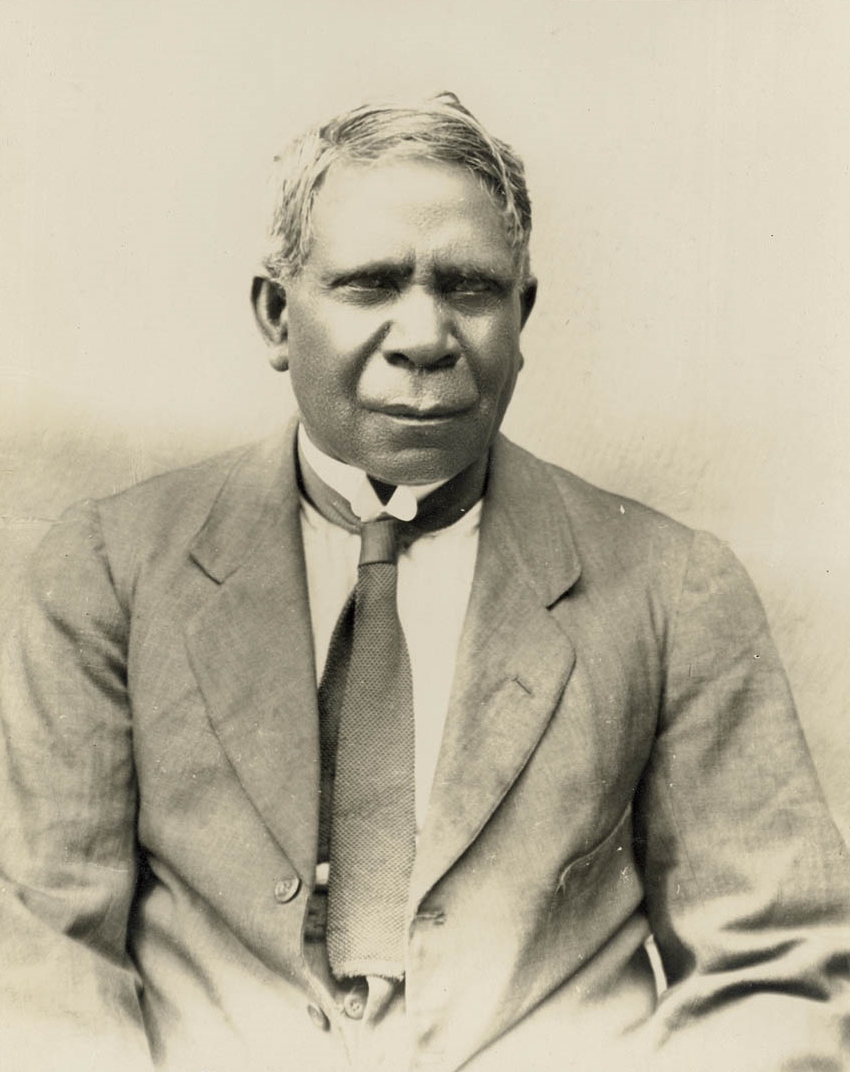
David Unaipon was an Aboriginal Australian preacher, inventor, and author who has been widely credited as the first Aboriginal published author. Born at the Point McLeay Mission in South Australia in 1872, he was the son of the Ngarrindjeri preacher James Ngunaitponi and his wife Nymbulda. Unaipon spent much of his life working as a preacher and public speaker, touring Australia to speak at schools and churches about Aboriginal culture. Unaipon was also an inventor and registered 10 patents for his inventions between 1909 and 1944.
Unaipon authored a large body of essays and stories, many of which were based on oral traditions that he had gathered from Aboriginal communities across Australia. He published his writing in newspapers and in pamphlets that he sold to fund his travels. In 1925 he authored a manuscript that he titled Legendary Tales of the Australian Aborigines. Unaipon sold the copyright for the manuscript to the publisher Angus & Robertson, which led to its appropriation by the anthropologist William Ramsay Smith. The manuscript was published in 1930 under Ramsay Smith's name with no mention of Unaipon's authorship.
During the late 1920s Unaipon was frequently described as among the best-known Aboriginal people in Australia and was often called upon by the Australian government to act as the sole spokesperson for the country's Indigenous population. A devout Christian and supporter of missionary efforts, Unaipon was a supporter of assimilationist policies and clashed with more progressive Aboriginal activists in his later life. Since 1995, Unaipon has featured on the Australian $50 note.
David Unaipon was born on 28 September 1872 at the Point McLeay Mission in South Australia. He was a member of the Ngarrindjeri people, an Aboriginal nation made up of eighteen tribes residing in the lower Murray River region. By the time of his birth, the Ngarrindjeri population had been decimated by disease and many had been displaced from their land. The Ngarrindjeri population, which had been estimated at 8000 in 1834, had been reduced to just 2000 by 1860. The Point McLeay Mission had been established in 1860 by the Aborigines' Friends Association (AFA), an interdenominational Christian missionary group, with the goal of converting the surviving Ngarrindjeri to Christianity and training them for domestic labour.
Unaipon was the son of James Ngunaitponi and his wife Nymbulda, the daughter of the senior man of the Karatindjeri clan. James Ngunaitponi had arrived at the Point McLeay Mission in 1864 and was the first Aboriginal man at the mission to convert to Christianity. He became a Congregational lay preacher and worked with the mission's superintendent to produce books on the Ngarrindjeri's culture and language. Unaipon was the fourth of his parents' nine children.
From a young age, Unaipon was regarded as an intelligent child with strong academic potential, particularly due to his status as the son of the mission's first Aboriginal convert to Christianity. At the age of seven he began attending the mission school, and at thirteen he was sent to Adelaide to work as a servant for the secretary of the AFA, the farmer and winemaker Charles Burney Young. Young encouraged Unaipon's interest in music, science, and philosophy, while Young's wife taught him to play the piano. Unaipon returned to the mission in 1890, where he continued to read widely, learned Latin and Greek, and trained as a bootmaker. He also pursued his interest in music and was eventually selected as the mission's church organist.
Unaipon began working for a bootmaker in Adelaide in the late 1890s, and then returned to the mission to begin working as a bookkeeper at the mission store. He married Katherine Carter (née Sumner), a Tangani woman who was employed as a servant, on 4 January 1902; they had one son named Talmage de Witt. According to Unaipon's later writing, around this time he became restless at the lack of opportunities available to him on the mission and developed a fascination with perpetual motion after hearing a lecture from a visiting scientist.
In 1909 Unaipon accompanied the mission's Glee Club on a tour of Adelaide, where he spoke to audiences about Indigenous knowledge of astronomy and botany, as well as about Ngarrindjeri traditions and folklore. He began publicly to predict scientific advances, leading him to be labelled in the press as "Australia's Leonardo" and a "black genius". In 1909 he registered a patent for a new sheep shearing mechanism, and in 1914 he predicted that an aeroplane could be developed based on the same aerodynamic principles as a boomerang.
Hub AI
David Unaipon AI simulator
(@David Unaipon_simulator)
David Unaipon
David Unaipon was an Aboriginal Australian preacher, inventor, and author who has been widely credited as the first Aboriginal published author. Born at the Point McLeay Mission in South Australia in 1872, he was the son of the Ngarrindjeri preacher James Ngunaitponi and his wife Nymbulda. Unaipon spent much of his life working as a preacher and public speaker, touring Australia to speak at schools and churches about Aboriginal culture. Unaipon was also an inventor and registered 10 patents for his inventions between 1909 and 1944.
Unaipon authored a large body of essays and stories, many of which were based on oral traditions that he had gathered from Aboriginal communities across Australia. He published his writing in newspapers and in pamphlets that he sold to fund his travels. In 1925 he authored a manuscript that he titled Legendary Tales of the Australian Aborigines. Unaipon sold the copyright for the manuscript to the publisher Angus & Robertson, which led to its appropriation by the anthropologist William Ramsay Smith. The manuscript was published in 1930 under Ramsay Smith's name with no mention of Unaipon's authorship.
During the late 1920s Unaipon was frequently described as among the best-known Aboriginal people in Australia and was often called upon by the Australian government to act as the sole spokesperson for the country's Indigenous population. A devout Christian and supporter of missionary efforts, Unaipon was a supporter of assimilationist policies and clashed with more progressive Aboriginal activists in his later life. Since 1995, Unaipon has featured on the Australian $50 note.
David Unaipon was born on 28 September 1872 at the Point McLeay Mission in South Australia. He was a member of the Ngarrindjeri people, an Aboriginal nation made up of eighteen tribes residing in the lower Murray River region. By the time of his birth, the Ngarrindjeri population had been decimated by disease and many had been displaced from their land. The Ngarrindjeri population, which had been estimated at 8000 in 1834, had been reduced to just 2000 by 1860. The Point McLeay Mission had been established in 1860 by the Aborigines' Friends Association (AFA), an interdenominational Christian missionary group, with the goal of converting the surviving Ngarrindjeri to Christianity and training them for domestic labour.
Unaipon was the son of James Ngunaitponi and his wife Nymbulda, the daughter of the senior man of the Karatindjeri clan. James Ngunaitponi had arrived at the Point McLeay Mission in 1864 and was the first Aboriginal man at the mission to convert to Christianity. He became a Congregational lay preacher and worked with the mission's superintendent to produce books on the Ngarrindjeri's culture and language. Unaipon was the fourth of his parents' nine children.
From a young age, Unaipon was regarded as an intelligent child with strong academic potential, particularly due to his status as the son of the mission's first Aboriginal convert to Christianity. At the age of seven he began attending the mission school, and at thirteen he was sent to Adelaide to work as a servant for the secretary of the AFA, the farmer and winemaker Charles Burney Young. Young encouraged Unaipon's interest in music, science, and philosophy, while Young's wife taught him to play the piano. Unaipon returned to the mission in 1890, where he continued to read widely, learned Latin and Greek, and trained as a bootmaker. He also pursued his interest in music and was eventually selected as the mission's church organist.
Unaipon began working for a bootmaker in Adelaide in the late 1890s, and then returned to the mission to begin working as a bookkeeper at the mission store. He married Katherine Carter (née Sumner), a Tangani woman who was employed as a servant, on 4 January 1902; they had one son named Talmage de Witt. According to Unaipon's later writing, around this time he became restless at the lack of opportunities available to him on the mission and developed a fascination with perpetual motion after hearing a lecture from a visiting scientist.
In 1909 Unaipon accompanied the mission's Glee Club on a tour of Adelaide, where he spoke to audiences about Indigenous knowledge of astronomy and botany, as well as about Ngarrindjeri traditions and folklore. He began publicly to predict scientific advances, leading him to be labelled in the press as "Australia's Leonardo" and a "black genius". In 1909 he registered a patent for a new sheep shearing mechanism, and in 1914 he predicted that an aeroplane could be developed based on the same aerodynamic principles as a boomerang.
Recent media