
Recent from talks
Dayr al-Shaykh
Knowledge base stats:
Talk channels stats:
Members stats:
Dayr al-Shaykh
Dayr al-Shaykh (Arabic: دير الشيخ), also spelt Deir esh Sheikh, was a Palestinian Arab village in the Jerusalem Subdistrict, also known as the Jerusalem corridor. It was located 16 kilometers (9.9 mi) west of Jerusalem.
In the Mamluk period, Dayr al-Shaykh, originally a Christian village, transformed into a Sufi center associated with an influential Muslim dynasty founded by Sheikh Badr al-Din. Having arrived in Palestine in the 13th century, al-Din eventually settled in Dayr al-Shaykh, attracting disciples and visitors for ziyara. The village's Christian inhabitants either converted to Islam or were displaced over time.
In the 16th century, Dayr al-Shaykh became part of the Ottoman Empire, with an estimated population of 113 in 1596. In 1834, during Ibrahim Pasha's invasion, local tradition held that Shaykh Badr defended the village by summoning a swarm of bees. The population fluctuated over the years, reaching around 400 in the early 1870s. By 1883, it was described as deserted, possibly due to migration or a typhus epidemic.
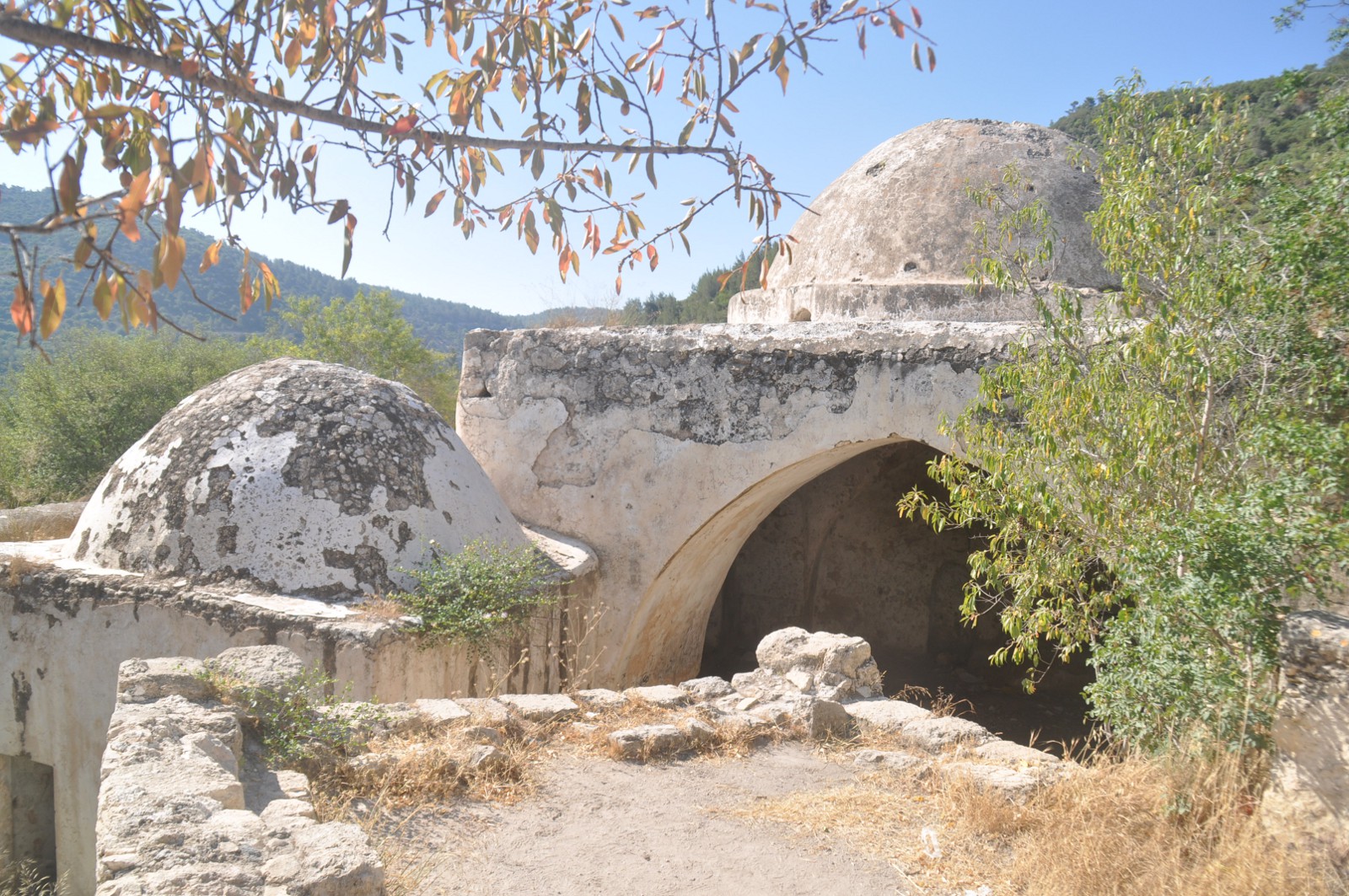
In the British Mandate period, the population grew, reaching 220 in 1945. However, Dayr al-Shaykh was depopulated during the 1948 Arab-Israeli War. The village lands saw no establishment of a Jewish settlement. Today, its ruins, including the zawiya of Sheikh Sultan Badr, stand as a historical and tourist attraction.
During Mamluk times, Dayr al-Shaykh, originally a Christian village, became home to one of the most famous local dynasties of local religious Shaykhs in the area. The founder was al-Sayyid Badr-al Din Muhammed who came to Palestine either from Iraq, Khurasan, or the Hijaz. He first settled in Shuafat, but after the death of one of his daughters, whose tomb can still be seen in the village, he moved westwards.
According to the Mamluk-era historian Mujīr al-Dīn al-'Ulaymī, Badr-al Din probably arrived in Palestine around 1229-1244, and eventually he settled at Dayr al-Shaykh. According to the same source, Badr-al Din was a man of great virtue, with a reputation of being close to God. He died 1253 (650 AH), and was buried at his zawiya at Dayr al-Shaykh. Because of him, Dayr al-Shaykh attracted many disciples and other people who came for ziyara. Over time, Dayr al-Seikh became Muslim as its Christian inhabitants were either forced to leave or converted to Islam.
Badr-al Din had eight sons; the oldest, al-Sayyid Muhammed (died 1264-65 (663 AH)), is also described as a guide and leader. Abd al-Afiz (died 1296-97 (696 AH), another of his sons to attain leadership status, returned to Jerusalem to a village that was subsequently renamed Sharafat for this family of Ashraf ("nobles").
Dayr al-Shaykh, like the rest of Palestine, was incorporated into the Ottoman Empire in 1517, and according to an Ottoman census of 1596, the village had a population of 26 households and 3 bachelors, an estimated 113 person. All were Muslim. The village was a part of the nahiya ("subdistrict") of Jerusalem which was under the administration of the liwa ("district") of Jerusalem. The villagers paid a fixed tax rate of 16,6% on wheat, barley, olives, fruits, beehives, goats, and vineyards, a total of 3,300 akçe.
Hub AI
Dayr al-Shaykh AI simulator
(@Dayr al-Shaykh_simulator)
Dayr al-Shaykh
Dayr al-Shaykh (Arabic: دير الشيخ), also spelt Deir esh Sheikh, was a Palestinian Arab village in the Jerusalem Subdistrict, also known as the Jerusalem corridor. It was located 16 kilometers (9.9 mi) west of Jerusalem.
In the Mamluk period, Dayr al-Shaykh, originally a Christian village, transformed into a Sufi center associated with an influential Muslim dynasty founded by Sheikh Badr al-Din. Having arrived in Palestine in the 13th century, al-Din eventually settled in Dayr al-Shaykh, attracting disciples and visitors for ziyara. The village's Christian inhabitants either converted to Islam or were displaced over time.
In the 16th century, Dayr al-Shaykh became part of the Ottoman Empire, with an estimated population of 113 in 1596. In 1834, during Ibrahim Pasha's invasion, local tradition held that Shaykh Badr defended the village by summoning a swarm of bees. The population fluctuated over the years, reaching around 400 in the early 1870s. By 1883, it was described as deserted, possibly due to migration or a typhus epidemic.
In the British Mandate period, the population grew, reaching 220 in 1945. However, Dayr al-Shaykh was depopulated during the 1948 Arab-Israeli War. The village lands saw no establishment of a Jewish settlement. Today, its ruins, including the zawiya of Sheikh Sultan Badr, stand as a historical and tourist attraction.
During Mamluk times, Dayr al-Shaykh, originally a Christian village, became home to one of the most famous local dynasties of local religious Shaykhs in the area. The founder was al-Sayyid Badr-al Din Muhammed who came to Palestine either from Iraq, Khurasan, or the Hijaz. He first settled in Shuafat, but after the death of one of his daughters, whose tomb can still be seen in the village, he moved westwards.
According to the Mamluk-era historian Mujīr al-Dīn al-'Ulaymī, Badr-al Din probably arrived in Palestine around 1229-1244, and eventually he settled at Dayr al-Shaykh. According to the same source, Badr-al Din was a man of great virtue, with a reputation of being close to God. He died 1253 (650 AH), and was buried at his zawiya at Dayr al-Shaykh. Because of him, Dayr al-Shaykh attracted many disciples and other people who came for ziyara. Over time, Dayr al-Seikh became Muslim as its Christian inhabitants were either forced to leave or converted to Islam.
Badr-al Din had eight sons; the oldest, al-Sayyid Muhammed (died 1264-65 (663 AH)), is also described as a guide and leader. Abd al-Afiz (died 1296-97 (696 AH), another of his sons to attain leadership status, returned to Jerusalem to a village that was subsequently renamed Sharafat for this family of Ashraf ("nobles").
Dayr al-Shaykh, like the rest of Palestine, was incorporated into the Ottoman Empire in 1517, and according to an Ottoman census of 1596, the village had a population of 26 households and 3 bachelors, an estimated 113 person. All were Muslim. The village was a part of the nahiya ("subdistrict") of Jerusalem which was under the administration of the liwa ("district") of Jerusalem. The villagers paid a fixed tax rate of 16,6% on wheat, barley, olives, fruits, beehives, goats, and vineyards, a total of 3,300 akçe.
Recent media