
Recent from talks
De La Salle Brothers
Knowledge base stats:
Talk channels stats:
Members stats:
De La Salle Brothers
The De La Salle Brothers, officially named the Institute of the Brothers of the Christian Schools (Latin: Fratres Scholarum Christianarum; French: Frères des Écoles Chrétiennes; Italian: Fratelli delle Scuole Cristiane) abbreviated FSC, is a Catholic lay religious congregation of pontifical right for men founded in France by Jean-Baptiste de La Salle (1651–1719), now based in Rome, Italy. The De La Salle Brothers are also known as the Christian Brothers (sometimes by Lasallian organisations themselves), French Christian Brothers, or Lasallian Brothers. The Lasallian Christian Brothers are distinct from the Congregation of Christian Brothers, often also referred to as simply the Christian Brothers, or Irish Christian Brothers. The Lasallian Brothers use the post-nominal abbreviation FSC to denote their membership of the order, and the honorific title Brother, abbreviated "Br."
The Lasallian order stated that as of December 2023[update] the Institute had 2,883 Brothers, who helped in running 1,154 education centers in 78 countries with 1,160,328 students, together with 107,827 teachers and lay associates. There are La Salle educational institutions in countries ranging from impoverished nations such as Nigeria to post-secondary institutions such as Bethlehem University (Bethlehem, Palestine), Manhattan University (New York City, US), College Mont La Salle (Ain Saadeh, Lebanon), and La Salle University (Philadelphia, Pennsylvania, US). The central administration of the Brothers operates out of the Generalate in Rome and is made up of the Superior General and his councillors.[citation needed]
A number of Lasallian institutions in several countries have been accused of, and have admitted and apologised for, long-standing and serious physical and sexual abuse against their charges.
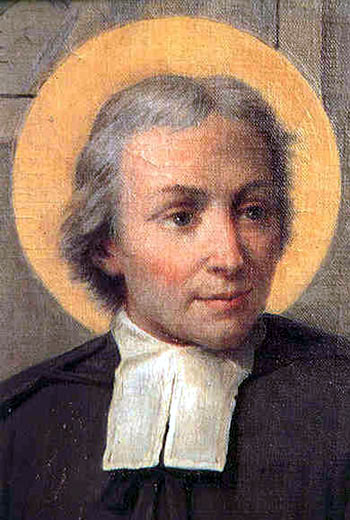
In March 1679, Jean-Baptiste de La Salle met the teacher Adrian Nyel in a chance encounter at the Convent of the Sisters of the Infant Jesus. Nyel asked for La Salle's help in opening free schools for the poor boys in Reims. A novitiate and normal school were established in Paris in 1694. Then the brothers decided collectively to take what is called a "vow of association" that is still performed today. This initial vow required the brothers to stay together and interact with their community, instead of living in separate monasteries or isolated convents such as in the priesthood. La Salle spent his life teaching poor children in parish charity schools. The school flourished and widened in scope; in 1725, six years after La Salle's death, the society was recognised by the pope, under the official title of "Brothers of the Christian Schools". La Salle was canonised as a saint on 15 May 1900. In 1950, Pope Pius XII declared him to be the "Special Patron of All Teachers of Youth in the Catholic Church".
The order, approved by Pope Benedict XIII in 1725, rapidly spread over France. It was dissolved by a decree of the National Assembly set up after the French Revolution in February 1790, but recalled by Napoleon I in 1804 and formally recognised by the French government in 1808. Since then its members penetrated into nearly every country of Europe, Africa, America, Asia and Australia.
As religious, members take the three usual vows of poverty, chastity, and obedience. The Institute's headquarters is in Rome, Italy. The order has five global regions: North America (Région Lasallienne de l’Amérique du Nord, RELAN), Asia/Oceania (Pacific-Asia Regional Conference, PARC), Europe/Mediterranean (Région Lasallienne Européenne-Méditerranéenne, RELEM), Africa (Région Lasallienne Africano-Malgache, RELAF), and Latin America (Region Latinoamericana Lasallista, RELAL).
During the International Year of Literacy/Schooling (1990), the UNESCO awarded the Noma Literacy Prize to Lasallian Institutions.
The order says that its key principles are faith in the presence of God, concern for the poor and social justice, inclusive community, respect for all people, and quality education.
Hub AI
De La Salle Brothers AI simulator
(@De La Salle Brothers_simulator)
De La Salle Brothers
The De La Salle Brothers, officially named the Institute of the Brothers of the Christian Schools (Latin: Fratres Scholarum Christianarum; French: Frères des Écoles Chrétiennes; Italian: Fratelli delle Scuole Cristiane) abbreviated FSC, is a Catholic lay religious congregation of pontifical right for men founded in France by Jean-Baptiste de La Salle (1651–1719), now based in Rome, Italy. The De La Salle Brothers are also known as the Christian Brothers (sometimes by Lasallian organisations themselves), French Christian Brothers, or Lasallian Brothers. The Lasallian Christian Brothers are distinct from the Congregation of Christian Brothers, often also referred to as simply the Christian Brothers, or Irish Christian Brothers. The Lasallian Brothers use the post-nominal abbreviation FSC to denote their membership of the order, and the honorific title Brother, abbreviated "Br."
The Lasallian order stated that as of December 2023[update] the Institute had 2,883 Brothers, who helped in running 1,154 education centers in 78 countries with 1,160,328 students, together with 107,827 teachers and lay associates. There are La Salle educational institutions in countries ranging from impoverished nations such as Nigeria to post-secondary institutions such as Bethlehem University (Bethlehem, Palestine), Manhattan University (New York City, US), College Mont La Salle (Ain Saadeh, Lebanon), and La Salle University (Philadelphia, Pennsylvania, US). The central administration of the Brothers operates out of the Generalate in Rome and is made up of the Superior General and his councillors.[citation needed]
A number of Lasallian institutions in several countries have been accused of, and have admitted and apologised for, long-standing and serious physical and sexual abuse against their charges.
In March 1679, Jean-Baptiste de La Salle met the teacher Adrian Nyel in a chance encounter at the Convent of the Sisters of the Infant Jesus. Nyel asked for La Salle's help in opening free schools for the poor boys in Reims. A novitiate and normal school were established in Paris in 1694. Then the brothers decided collectively to take what is called a "vow of association" that is still performed today. This initial vow required the brothers to stay together and interact with their community, instead of living in separate monasteries or isolated convents such as in the priesthood. La Salle spent his life teaching poor children in parish charity schools. The school flourished and widened in scope; in 1725, six years after La Salle's death, the society was recognised by the pope, under the official title of "Brothers of the Christian Schools". La Salle was canonised as a saint on 15 May 1900. In 1950, Pope Pius XII declared him to be the "Special Patron of All Teachers of Youth in the Catholic Church".
The order, approved by Pope Benedict XIII in 1725, rapidly spread over France. It was dissolved by a decree of the National Assembly set up after the French Revolution in February 1790, but recalled by Napoleon I in 1804 and formally recognised by the French government in 1808. Since then its members penetrated into nearly every country of Europe, Africa, America, Asia and Australia.
As religious, members take the three usual vows of poverty, chastity, and obedience. The Institute's headquarters is in Rome, Italy. The order has five global regions: North America (Région Lasallienne de l’Amérique du Nord, RELAN), Asia/Oceania (Pacific-Asia Regional Conference, PARC), Europe/Mediterranean (Région Lasallienne Européenne-Méditerranéenne, RELEM), Africa (Région Lasallienne Africano-Malgache, RELAF), and Latin America (Region Latinoamericana Lasallista, RELAL).
During the International Year of Literacy/Schooling (1990), the UNESCO awarded the Noma Literacy Prize to Lasallian Institutions.
The order says that its key principles are faith in the presence of God, concern for the poor and social justice, inclusive community, respect for all people, and quality education.
Recent media