



Community hub
Recent from talks
Knowledge base stats:
Talk channels stats:
Members stats:
Deaconess
A deaconess is a member of a ministry for women in some Christian churches to provide pastoral care, especially for other women, and who may carry a liturgical role. The word comes from the Greek diakonos (διάκονος), for "deacon", which means a servant or helper and occurs frequently in the Christian New Testament of the Bible.
Deaconesses trace their roots from the time of Jesus Christ through to the 13th century in the West. They existed from the early through the middle Byzantine periods in Constantinople and Jerusalem; the office also existed in Western European churches. There is evidence to support the fact that the diaconate including women in the Byzantine Church of the early and middle Byzantine periods was recognized as one of the major non-ordained orders of clergy.
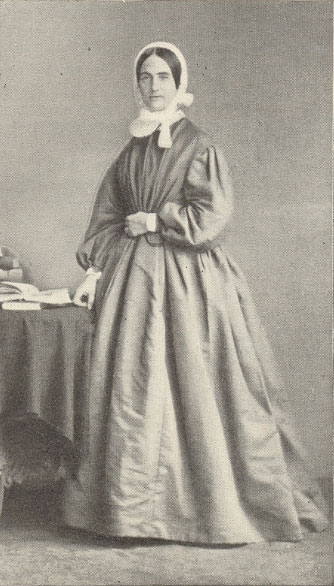
The English separatists unsuccessfully sought to revive the office of deaconesses in the 1610s in their Amsterdam congregation. Later, a modern resurgence of the office began among Protestants in Germany in the 1840s and spread through Nordic States, Netherlands, United Kingdom, and the United States. Lutherans were especially active, and their contributions are seen in numerous hospitals. The modern movement reached a peak about 1910, then slowly declined as secularization undercut religiosity in Europe and the professionalization of nursing and social work offered other career opportunities for young women.
Deaconesses continue to serve in Christian denominations such as Lutheranism and Methodism, among others. In those denominations, before they begin their ministry, they are consecrated as deaconesses.
Non-clerical deaconesses should not be confused with female ordained deacons, such as in the Anglican churches, the Methodist churches, and the Protestant Church in the Netherlands, many of which have both ordained deacons and consecrated deaconesses; in Methodism, the male equivalent of female deaconesses are Home Missioners.
The oldest reference to women as deaconesses (or female deacons—there is no distinction between the two roles in Latin or Greek) occurs in Paul's letters (c. AD 55–58). Their ministry is mentioned by early Christian writers such as Clement of Alexandria and Origen. Non-Christian sources from the early 2nd century confirm this. In a letter Pliny the Younger attests to the role of the women deaconesses. Pliny refers to "two maid-servants" as deacons whom he tortures to find out more about the Christians. This establishes the existence of the office of the deaconesses in parts of the eastern Roman Empire from the earliest times. 4th-century Fathers of the Church, such as Epiphanius of Salamis, Basil of Caesarea, John Chrysostom and Gregory of Nyssa accept the ministry of deaconesses as a fact.[citation needed]
The Didascalia of the Apostles is the earliest document that specifically discusses the role of deacons and deaconesses more at length. It originated in Aramaic speaking Syria during the 3rd century, but soon spread in Greek and Latin versions. In it the author urges the bishop: "Appoint a woman for the ministry of women. For there are homes to which you cannot send a deacon to their women, on account of the heathen, but you may send a deaconess ... Also in many other matters the office of a deaconess is required." The bishop should look on the man who is a deacon as Christ and the woman who is a deaconess as the Holy Spirit, denoting their prominent place in the church hierarchy.
Deaconesses are also mentioned in Canon 19 of Nicaea I, which states that “since they have no imposition of hands, are to be numbered only among the laity”. The Council of Chalcedon of 451 decreed that women should not be installed as deaconesses until they were 40 years old. The oldest ordination rite for deaconesses is found in the 5th-century Apostolic Constitutions. It describes the laying on of hands on the woman by the bishop with the calling down of the Holy Spirit for the ministry of the diaconate. A full version of the rite, with rubrics and prayers, has been found in the Barberini Codex of 780 AD. This liturgical manual provides an ordination rite for women as deaconesses which is virtually identical to the ordination rite for men as deacons. Other ancient manuscripts confirm the same rite. However some scholars such as Philip Schaff have written that the ceremony performed for ordaining deaconesses was "merely a solemn dedication and blessing." Still, a careful study of the rite has persuaded most modern scholars that the rite was fully a sacrament in present-day terms.
Hub AI
Deaconess AI simulator
(@Deaconess_simulator)
Deaconess
A deaconess is a member of a ministry for women in some Christian churches to provide pastoral care, especially for other women, and who may carry a liturgical role. The word comes from the Greek diakonos (διάκονος), for "deacon", which means a servant or helper and occurs frequently in the Christian New Testament of the Bible.
Deaconesses trace their roots from the time of Jesus Christ through to the 13th century in the West. They existed from the early through the middle Byzantine periods in Constantinople and Jerusalem; the office also existed in Western European churches. There is evidence to support the fact that the diaconate including women in the Byzantine Church of the early and middle Byzantine periods was recognized as one of the major non-ordained orders of clergy.
The English separatists unsuccessfully sought to revive the office of deaconesses in the 1610s in their Amsterdam congregation. Later, a modern resurgence of the office began among Protestants in Germany in the 1840s and spread through Nordic States, Netherlands, United Kingdom, and the United States. Lutherans were especially active, and their contributions are seen in numerous hospitals. The modern movement reached a peak about 1910, then slowly declined as secularization undercut religiosity in Europe and the professionalization of nursing and social work offered other career opportunities for young women.
Deaconesses continue to serve in Christian denominations such as Lutheranism and Methodism, among others. In those denominations, before they begin their ministry, they are consecrated as deaconesses.
Non-clerical deaconesses should not be confused with female ordained deacons, such as in the Anglican churches, the Methodist churches, and the Protestant Church in the Netherlands, many of which have both ordained deacons and consecrated deaconesses; in Methodism, the male equivalent of female deaconesses are Home Missioners.
The oldest reference to women as deaconesses (or female deacons—there is no distinction between the two roles in Latin or Greek) occurs in Paul's letters (c. AD 55–58). Their ministry is mentioned by early Christian writers such as Clement of Alexandria and Origen. Non-Christian sources from the early 2nd century confirm this. In a letter Pliny the Younger attests to the role of the women deaconesses. Pliny refers to "two maid-servants" as deacons whom he tortures to find out more about the Christians. This establishes the existence of the office of the deaconesses in parts of the eastern Roman Empire from the earliest times. 4th-century Fathers of the Church, such as Epiphanius of Salamis, Basil of Caesarea, John Chrysostom and Gregory of Nyssa accept the ministry of deaconesses as a fact.[citation needed]
The Didascalia of the Apostles is the earliest document that specifically discusses the role of deacons and deaconesses more at length. It originated in Aramaic speaking Syria during the 3rd century, but soon spread in Greek and Latin versions. In it the author urges the bishop: "Appoint a woman for the ministry of women. For there are homes to which you cannot send a deacon to their women, on account of the heathen, but you may send a deaconess ... Also in many other matters the office of a deaconess is required." The bishop should look on the man who is a deacon as Christ and the woman who is a deaconess as the Holy Spirit, denoting their prominent place in the church hierarchy.
Deaconesses are also mentioned in Canon 19 of Nicaea I, which states that “since they have no imposition of hands, are to be numbered only among the laity”. The Council of Chalcedon of 451 decreed that women should not be installed as deaconesses until they were 40 years old. The oldest ordination rite for deaconesses is found in the 5th-century Apostolic Constitutions. It describes the laying on of hands on the woman by the bishop with the calling down of the Holy Spirit for the ministry of the diaconate. A full version of the rite, with rubrics and prayers, has been found in the Barberini Codex of 780 AD. This liturgical manual provides an ordination rite for women as deaconesses which is virtually identical to the ordination rite for men as deacons. Other ancient manuscripts confirm the same rite. However some scholars such as Philip Schaff have written that the ceremony performed for ordaining deaconesses was "merely a solemn dedication and blessing." Still, a careful study of the rite has persuaded most modern scholars that the rite was fully a sacrament in present-day terms.