



Community hub
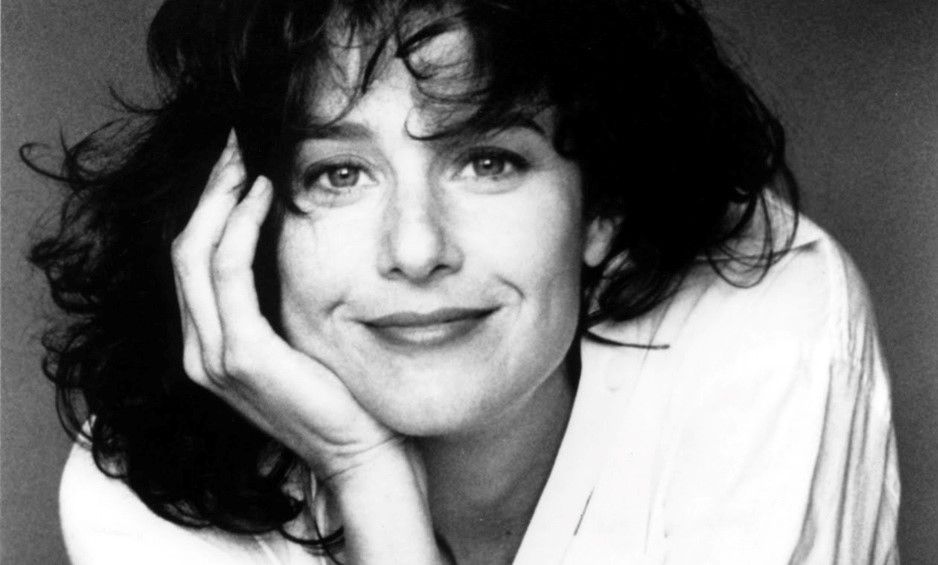
Debra Winger
View on Wikipedia
Mary Debra Winger (born May 16, 1955) is an American actress. She starred in the films An Officer and a Gentleman (1982), Terms of Endearment (1983), and Shadowlands (1993), each of which earned her a nomination for the Academy Award for Best Actress. Winger won the National Society of Film Critics Award for Best Actress for Terms of Endearment, and the Tokyo International Film Festival Award for Best Actress for A Dangerous Woman (1993).
Key Information


Winger's other films include Urban Cowboy (1980), Legal Eagles (1986), Black Widow (1987), Betrayed (1988), The Sheltering Sky (1990), Forget Paris (1995), and Rachel Getting Married (2008). In 2012, she made her Broadway debut in the original production of David Mamet's play The Anarchist. She starred in the Netflix original television series The Ranch from 2016 to 2020. She received a lifetime achievement award at the Transilvania International Film Festival in 2014.
Early life and education
[edit]Mary Debra Winger[1] was born on May 16, 1955[1][2] in Cleveland Heights, Ohio, into a Jewish family, to Robert Winger, a meat packer, and Ruth (née Felder), an office manager.[3][4]
She started studying criminology and sociology at California State University, Northridge, but did not complete a degree.[5] She told many interviewers in later years that she volunteered on an Israeli kibbutz, sometimes even saying she had trained with the Israel Defense Forces,[5][6] but in a 2008 interview she said she was merely on a typical youth tour that visited the kibbutz.[7]
At age 18, after returning to the U.S.,[8] she fell off a truck and suffered a cerebral hemorrhage; as a result, she was left partially paralyzed and blind for 10 months,[1] initially being told that she would never see again. With time on her hands to think about her life, she decided that, if she recovered, she would move to California and become an actress.[8]
Career
[edit]Acting
[edit].jpg)
Winger's first acting role was as "Debbie" in the 1976 sexploitation film Slumber Party '57. Her next role was as Diana Prince's younger sister Drusilla (Wonder Girl) in three episodes of ABC's TV series Wonder Woman. The producers wanted her to appear more often, but she refused, fearing that the role would hurt her fledgling career. This was followed by a guest role in season 4 of the TV drama Police Woman in 1978.[9] Winger played a supporting role in Willard Huyck's 1979 comic coming-of-age film French Postcards.
Winger's first major role was in Thank God It's Friday, followed by Urban Cowboy in 1980, for which she received a BAFTA nomination and a pair of Golden Globe nominations (for Best Performance by an Actress in a Supporting Role, and Best New Star). In 1982 she co-starred with Nick Nolte in Cannery Row and with Richard Gere in An Officer and a Gentleman, for which she was nominated for the Academy Award for Best Actress. She was nominated for the Academy Award for Best Actress twice more: for Terms of Endearment in 1983 (which was awarded to her co-star, Shirley MacLaine, who played her mother in the film) and for Shadowlands in 1993, for which she also received her second BAFTA nomination. Her performance in A Dangerous Woman earned a Golden Globe nomination for Best Actress.[10]
Over the years Winger acquired a reputation for being outspoken and difficult to work with.[11][12][13] She has expressed her dislike of An Officer and a Gentleman, for which she refused to do any publicity,[13] and several of her other films, and has been dismissive of some of her co-stars and directors. When Barbara Walters interviewed Bette Davis in 1986, Davis said, "I see a great deal of myself in Debra Winger, who has already acquired a reputation for being difficult, because she cares about the project."
Winger was to play Peggy Sue in the film Peggy Sue Got Married but was forced to back out just before production began after injuring her back in a bicycle accident. The role went to Kathleen Turner. The injury affected Winger's ability to work for several months. She was cast in A League of Their Own but dropped out and was replaced by Geena Davis. It was later reported that Winger dropped out of the film because she refused to work with Madonna, whom Winger did not consider a serious actress.[14] Other starring roles during this period included Legal Eagles, Made in Heaven, Everybody Wins, The Sheltering Sky, Leap of Faith, Black Widow, Betrayed, Wilder Napalm, and A Dangerous Woman.
In 1995, Winger decided to take a hiatus from acting. In 2002, she said, "I wanted out for years. I got sick of hearing myself say I wanted to quit. It's like opening an interview with 'I hate interviews!' Well, get out! I stopped reading scripts and stopped caring. People said, 'We miss you so much.' But in the last six years, tell me a film that I should have been in. The few I can think of the actress was so perfect".[15] After making Forget Paris in 1995, she was absent from the screen for six years before returning in 2001 with Big Bad Love, written and directed by her husband, Arliss Howard. The film was also Winger's debut as a producer.[16]
During her film hiatus, Winger had the female lead in the American Repertory Theater's stage production of Anton Chekhov's play Ivanov from November 1999 to January 2000.[17]
Rosanna Arquette made a critically acclaimed documentary film, Searching for Debra Winger, that was released in 2002 after Winger returned to film acting. Winger subsequently starred in the films Radio, Eulogy, and Sometimes in April, and received positive reviews for portraying Anne Hathaway's estranged mother in Rachel Getting Married.[18]

Winger earned an Emmy Award nomination for her title role as the mother of a Columbine shooting victim in the 2005 television film Dawn Anna, directed by her husband. In 2010 she returned to television, making a guest appearance as a high school principal in an episode of Law & Order.[19] She also joined the cast of HBO's In Treatment as one of the three patients featured in the third season.[20]
In 2013, Winger starred in three episodes of In the Woods,[21] the first installment of Jennifer Elster's multimedia, experimental film series The Being Experience, also including Terrence Howard, Dave Matthews, Rufus Wainwright, Karen Black, Will Shortz, Liya Kebede, Questlove, Famke Janssen, Moby, Gale Harold, Paz de la Huerta, Jorgen Leth, Rosie Perez, Aubrey de Grey, and Alan Cumming.[22] From 2016 to 2020, Winger starred opposite Sam Elliott and Ashton Kutcher in the Netflix multi-cam comedy The Ranch.
In 2017, Winger had a cameo as Supreme Court Justice Elena Kagan in the TV miniseries When We Rise.[23] The same year, she starred in her first romantic lead after many years in The Lovers.[24] She has continued to acquire roles in other feature films, such as Tiger City, released in 2018.[25]
In 1995, Winger performed in The Wizard of Oz in Concert: Dreams Come True, a television musical performance of the popular 1939 MGM film at Lincoln Center to benefit the Children's Defense Fund. Her roles in that special were the "Cyclone" narrator and the Wicked Witch of the West. It was originally broadcast on both TBS and TNT.
Other pursuits
[edit]During her hiatus from the film industry, Winger spent a semester as a teaching fellow at Harvard University.[26] In 2008, she wrote a book, Undiscovered, based on her personal recollections.[27] She has shown her support for reconciliation between Arabs and Jews in Israel by visiting the bilingual Hand in Hand schools (Galilee Jewish-Arab School, Gesher al HaWadi School) where, in 2008, she said she would "dedicate the next bit of my life to these schools".[28]
In 2010, Winger was co-executive producer of the Academy Award-nominated documentary Gasland.[29] She was also the executive producer of the 2012 documentary Bel Borba Aqui, about the life and works of Brazilian graphic artist Bel Borba.[30][31]
Recognition and awards
[edit]Winger received a lifetime achievement award at the Transilvania International Film Festival in 2014.[32]
Personal life
[edit]Winger's three-year relationship with actor Andrew Rubin ended in 1980.[33] From 1983 to 1985 she dated Bob Kerrey, at the time the governor of Nebraska, whom she met while filming Terms of Endearment in Lincoln, Nebraska.[34] Winger also dated her Cannery Row and Everybody Wins co-star Nick Nolte.[35]
From 1986 to 1990, Winger was married to actor Timothy Hutton, with whom she had a son, Noah Hutton, a documentary filmmaker born in 1987. The marriage ended in divorce.[1][35]
In 1996, Winger married actor/director Arliss Howard,[1] whom she met on the set of the film Wilder Napalm. Their son was born in 1997. She is also stepmother to Arliss's son from his prior marriage.[35]
Activism
[edit]In March 2025, Winger protested against the detention of Mahmoud Khalil at Trump Tower. She accused the Trump administration of having "no interest in Jewish safety" and "co-opting antisemitism."[36] In an interview, she stated "I have a debt for what I grew up with and believed on what the state of Israel has done and what they haven’t done, and how they’re conflating Judaism with Zionism."[37]
Winger is a signatory of the Film Workers for Palestine boycott pledge that was published in September 2025.[38]
Filmography
[edit]Film
[edit]Television
[edit]| Year | Title | Role | Notes |
|---|---|---|---|
| 1976–1977 | Wonder Woman | Drusilla / Wonder Girl | 3 episodes: "The Feminum Mystique" (Parts 1 & 2), "Wonder Woman in Hollywood" |
| 1977 | Szysznyk | Jenny | Episode: "Run, Jenny, Run" |
| Tattletales | Herself | 5 episodes | |
| 1978 | Special Olympics | Sherrie Hensley | TV movie |
| Police Woman | Phyllis Baxter | Episode: "Battered Teachers" | |
| James at 16 | Alicia | Episode: "Hunter Country" | |
| 1992 | Sesame Street | Herself | Episode 2934: "A day with Debra" |
| 2005 | Dawn Anna | Dawn Anna | TV movie Nominated—Primetime Emmy Award for Outstanding Lead Actress – Miniseries or a Movie |
| Sometimes in April | Prudence Bushnell | TV movie | |
| 2010 | Law & Order | Mrs. Woodside | Episode: "Boy on Fire" |
| In Treatment | Frances | 7 episodes | |
| 2014 | The Red Tent | Rebecca | 2 episodes |
| 2016–2020 | The Ranch | Maggie Bennett | Main role |
| 2017 | When We Rise | Elena Kagan | |
| Comrade Detective | Iona Anghel (voice) | Episode: "No Exit" | |
| 2018 | Patriot | Bernice Tavner | Main role (season 2) |
| 2021 | Ultra City Smiths | Trish McSapphire (voice) | 5 episodes |
| Mr. Corman | Ruth Corman | 4 episodes | |
| 2024 | Accused | Margot | Episode: "Margot's Story" |
References
[edit]- ^ a b c d e Winger, Debra (December 28, 2008). "Rachel Cooke interviews Debra Winger". The Guardian (Interview). Interviewed by Cooke, Rachel. Archived from the original on November 27, 2024. Retrieved October 28, 2025.
- ^ "Famous birthdays list for today, May 16, 2025 includes celebrities Janet Jackson, Pierce Brosnan". cleveland.com. May 16, 2025.
- ^ Jan Hoffman (January 9, 1994). "FILM; Debra Winger: Caught on a Winter Afternoon". The New York Times. p. 211. Archived from the original on November 13, 2013. Retrieved December 27, 2009.
- ^ Naomi Pfefferman (March 7, 2002). "'Big Bad' Debra". The Jewish Journal. Archived from the original on April 17, 2009. Retrieved December 27, 2009.
- ^ a b Allen, Henry (December 13, 1983). "Debra Winger, Coming to Terms". The Washington Post. Archived from the original on August 18, 2016. Retrieved June 24, 2016.
She tried studying criminology and sociology at Cal State-Northridge, and went to Israel to spend time on a kibbutz, but by 17, she'd moved away from home and she was making it in commercials.
- ^ Thomas, Bob (December 25, 1983). "Don't Try to 'Type' Debra Winger". The Gainesville Sun. The Associated Press. Retrieved June 24, 2016.
After high school, she worked on an Israeli kibbutz, trained with the Israeli army, and then returned to the United States to study sociology at California State University at Northridge.
- "Debra Winger". People. December 26, 1983. Archived from the original on August 28, 2016. Retrieved June 24, 2016.
At 16, she ran off to a kibbutz and did her basic training in the Israeli Army.
- Klein, Uri (July 14, 2006). "On Her Own Terms". Haaretz. Archived from the original on August 10, 2016. Retrieved June 24, 2016.
Exaggerated reports about her also concern her biography. For example, at one of the Internet sites devoted to her it is stated that she spent part of her youth on a kibbutz in Israel and even served for several months in the Israel Defense Forces. Winger laughs. Indeed, when she was 17, she spent four months at Kibbutz Beit Zera, but she never enlisted in the IDF. She took part in Gadna (youth cadet) activities, and apparently once told this to someone who told it to someone and it developed into an urban legend, according to which Debra Winger was once a soldier in the IDF.
- Arfa, Orit (April 24, 2008). "Debra Winger Explores Jewish/Arab Day Schools". The Jewish Journal of Greater Los Angeles. Archived from the original on September 19, 2016. Retrieved June 24, 2016.
Raised in a secular Jewish household in Cleveland, Winger volunteered on a kibbutz in 1972 and has maintained her connection ever since.
- "Debra Winger". People. December 26, 1983. Archived from the original on August 28, 2016. Retrieved June 24, 2016.
- ^ Lopate, Leonard (June 10, 2008). "Debra Winger on Life Beyond Hollywood". The Leonard Lopate Show. WNYC. Archived from the original on September 17, 2016. Retrieved June 24, 2016.
- ^ a b Farber, Stephen (July 6, 1986). "Where There's Smoke, There's A Fiery Actress Named Debra Winger". The New York Times. Retrieved May 1, 2010.
- ^ "Battered Teachers". January 1, 2000. Archived from the original on October 31, 2017 – via IMDb.
- ^ "Debra Winger bio". American Repertory Theater. Archived from the original on July 18, 2011. Retrieved October 8, 2009.
- ^ Debra Winger : Dangerous Woman Archived November 2, 2009, at the Wayback Machine, Time, article by Richard Corliss and Elizabeth L. Bland, January 24, 1994
- ^ Debra Winger: a star is re-born Archived December 3, 2017, at the Wayback Machine, Daily Telegraph, December 19, 2008
- ^ a b Farber, Stephen (July 6, 1986). "Where There's Smoke, There's A Fiery Actress Named Debra Winger". The New York Times. Archived from the original on January 25, 2017.
- ^ "Penny Marshall: Debra Winger Dropped out of "League" Because of Madonna". September 4, 2012. Archived from the original on October 21, 2013.
- ^ Does Debra Winger Still Have Legs? Archived February 25, 2009, at the Wayback Machine, New York, article by Holly Millea, February 25, 2002
- ^ Wilmington, Michael (March 15, 2002). "'Bad Love' portrays a writer's anguish". Chicago Tribune. Archived from the original on July 28, 2012. Retrieved July 28, 2012.
- ^ "Ivanov". Experience the A.R.T. American Repertory Theater. Archived from the original on December 2, 2010. Retrieved October 8, 2009.
- ^ Scott, A. O. (October 3, 2008). "Out of Rehab, Wreaking Havoc". The New York Times. Archived from the original on March 1, 2010.
- ^ "Law & Order "Boy on Fire" Episode Information". All Things Law and Order. blog. January 12, 2010. Archived from the original on July 30, 2012. Retrieved July 28, 2012.
- ^ Fretts, Bruce (October 22, 2010). "Cheers & Jeers: Debra Winger Gets the VIP Treatment". TVGuide.com. Retrieved October 29, 2010.
- ^ "The Being Experience: The Prologue". IMDb.
- ^ Matheson, Whitney, "Moby, Questlove, others endure puzzling 'Experience'" Archived April 15, 2018, at the Wayback Machine, "USA TODAY", June 17, 2013
- ^ "Everything You Need To Know About 'When We Rise'". BuzzFeed. Archived from the original on April 26, 2017. Retrieved April 23, 2017.
- ^ "Debra Winger and Tracy Letts are 'The Lovers' in New Film's First Trailer". Entertainment Weekly. January 4, 2017. Archived from the original on January 5, 2017.
- ^ "Brick Whisperer: Architect Louis Kahn's magnum opus now in cinemas near you". Architectural Digest India. November 29, 2017. Retrieved April 28, 2018.
- ^ Solomon-Schwartz, Benjamin P. (September 28, 1999). "Winger Trades Silver Screen for Section". The Harvard Crimson. Archived from the original on June 5, 2015. Retrieved February 23, 2014.
- ^ "Debra Winger, Actor—Blue Flower Arts: An Agency Representing Poets, Authors and Speakers". Archived from the original on May 17, 2008.
- ^ Kupfer, Ruta (March 28, 2008). "Weighing their words with care". Ha'aretz. reprinted in Hand in Hand: Learning Together Living Together. Retrieved October 8, 2009.[permanent dead link]
- ^ Koehler, Robert (January 25, 2010). "Gasland Movie Review from the Sundance Film Festival". Variety. Archived from the original on December 16, 2010. Retrieved October 17, 2013.
- ^ Rohter, Larry (September 18, 2012). "Brazil's Pied Piper of Street Art". The New York Times. Archived from the original on September 21, 2013. Retrieved October 17, 2013.
- ^ "Debra Winger". IMDb.com. Archived from the original on July 15, 2013. Retrieved October 17, 2013.
- ^ "Debra Winger – Recipient of the Lifetime Achievement Award at Transilvania IFF". Film New Europe. May 20, 2014. Retrieved February 20, 2019.
- ^ "Two Sexy 'Urban Cowgirls'—One Called Debra Winger—Give Travolta a Run for His Movie – Vol. 14 No. 7". August 18, 1980. Archived from the original on October 22, 2013.
- ^ "SHORT TAKES : Debra Winger Is Not for Politics". Los Angeles Times. September 12, 1990. Archived from the original on July 30, 2012. Retrieved July 28, 2012.
- ^ a b c Flynn, Gaynor (October 24, 2008). "Debra Winger: The return of a class act". The Independent.
- ^ Attanasio, Cedar (March 13, 2025). "Jewish protesters flood Trump Tower's lobby to demand Mahmoud Khalil's release". AP News. Retrieved March 16, 2025.
- ^ Kaloi, Stephanie (March 16, 2025). "Debra Winger Protests Mahmoud Khalil Detention, Says She Has 'A Debt to Pay' After Falsehoods of Jewish Upbringing". TheWrap. Retrieved March 16, 2025.
- ^ Betts, Anna (September 10, 2025). "Actors and directors pledge not to work with Israeli film groups 'implicated in genocide'". The Guardian. ISSN 0261-3077. Retrieved September 16, 2025.
- ^ Brode, Douglas. Fantastic Planets, Forbidden Zones, and Lost Continents. University of Texas Press (2015). p. 215
External links
[edit]- Debra Winger at IMDb
- Debra Winger at the TCM Movie Database
- Film star Debra Winger talks about her personal experience of being blind (Transcript of Radio 4 interview, 2004)
- Texas Monthly Talks: Debra Winger, video posted on November 3, 2008 on YouTube

Debra Winger
View on GrokipediaEarly life
Family background and childhood
Debra Winger was born Mary Debra Winger on May 16, 1955, in Cleveland Heights, Ohio, to Robert Jack Winger, a meat packer, and Ruth Felder Winger, an office manager.[8] [9] Her father named her after his favorite actress, Debra Paget.[10] The family was Jewish, with some accounts describing it as Orthodox.[9] [11] When Winger was five years old, her family relocated from Ohio to Southern California.[10] [12] This move marked a shift to a larger school environment, where junior high classes exceeded 65 students.[12] Details on her early childhood experiences remain limited in public records, though the cross-country relocation itself stood out as a vivid memory for her.[13] No confirmed siblings are documented in biographical sources.[14]Education and formative experiences
Winger graduated from James Monroe High School in Sepulveda, California, in 1973.[15] She subsequently enrolled at California State University, Northridge, to study criminology but left without earning a degree.[16] Following her high school graduation, Winger volunteered on a kibbutz in Israel around age 16, immersing herself in communal agricultural work and briefly participating in basic military training as part of the program, though she emphasized her role was limited to volunteer service rather than formal enlistment.[17] A defining formative event occurred at age 17 while employed at a California amusement park, where Winger was thrown from a moving truck during a performance, resulting in a cerebral hemorrhage, temporary blindness, and paralysis on one side of her body.[18][19] Her recovery spanned nearly a year, including time in a light coma during which she reported vivid, non-linear perceptions of time and space that lingered as enduring impressions.[18] This near-fatal injury instilled a heightened awareness of mortality and personal resilience, redirecting her ambitions toward acting, which she pursued intuitively without structured training.[18][19]Acting career
Initial roles and breakthrough (1970s–early 1980s)
Winger's acting career commenced in the mid-1970s with minor television appearances and her debut film role. She guest-starred in episodes of series such as Task Force in 1976.[8] Her first credited film role came in the 1976 sexploitation comedy Slumber Party '57, where she portrayed Debbie, a character in a nostalgic high school party setting.[20] From 1977 to 1979, Winger gained early recognition playing Drusilla, the younger sister of Lynda Carter's Wonder Woman, in the television series Wonder Woman, appearing in multiple episodes as the superheroine alter ego Wonder Girl.[21] This role marked her initial sustained exposure on network television, contributing to her development as a performer capable of action-oriented parts.[22] Transitioning to feature films, Winger appeared in Thank God It's Friday (1978), a disco-themed comedy, and The Seduction of Joe Tynan (1979), a political drama opposite Alan Alda.[23] She also starred in the ensemble comedy French Postcards (1979), playing an American student abroad. These roles established her in supporting capacities within the industry.[8] Her breakthrough arrived with Urban Cowboy (1980), directed by James Bridges, where she co-starred as Sissy opposite John Travolta's Bud Davis in a story centered on mechanical bull riding and Texas honky-tonk culture at Gilley's nightclub.[24] The film, which grossed over $93 million domestically against a $10 million budget, propelled Winger to stardom through her portrayal of a feisty, independent woman, earning her nominations for a BAFTA Award for Best Actress and a Golden Globe Award for Best Actress in a Motion Picture – Drama.[25] This performance showcased her raw intensity and authenticity, distinguishing her from more conventional leading ladies of the era.[26] Building on this success, Winger starred in Cannery Row (1982), an adaptation of John Steinbeck's works co-starring Nick Nolte, followed by An Officer and a Gentleman (1982), where she played Paula, the factory worker love interest to Richard Gere's naval aviator.[8] The latter film's box office triumph, exceeding $129 million worldwide, and its cultural impact via the hit song "Up Where We Belong" further solidified her as a bankable star.[26] Her early 1980s momentum culminated in Terms of Endearment (1983), earning her the first of three consecutive Academy Award nominations for Best Actress.[8]Commercial peak and critical acclaim (mid-1980s)
Winger's portrayal of Emma Green in Terms of Endearment (1983), directed by James L. Brooks, marked a high point in her commercial and critical success. The film grossed $108.4 million domestically against a production budget estimated at $8 million, ranking as the second-highest-grossing film of 1983 in North America.[27] For her performance as the headstrong daughter navigating family conflicts and personal tragedies, Winger earned her second Academy Award nomination for Best Actress at the 56th Oscars.[28] She also received the National Society of Film Critics Award for Best Actress, recognizing her emotional depth and intensity in the role.[29] Building on this momentum, Winger starred as attorney C.C. Ryan in the romantic thriller Legal Eagles (1986), directed by Ivan Reitman and co-starring Robert Redford. The production, involving a district attorney entangled in a high-profile arson and murder case, generated $49.9 million in domestic box office receipts.[30] While the film received mixed reviews, with critics noting its formulaic plot but praising Winger's spirited performance, it demonstrated her appeal in mainstream studio fare blending comedy, romance, and suspense.[31] In Black Widow (1987), directed by Bob Rafelson, Winger took on the role of FBI agent Alexandra "Alex" Barnes investigating a serial seductress portrayed by Theresa Russell. The neo-noir thriller earned positive notices for Winger's portrayal of the determined investigator, contributing to her reputation for versatile, strong female characters during this period.[32] These mid-1980s projects collectively elevated Winger's profile, with Terms of Endearment in particular cementing her as a box-office draw capable of delivering critically lauded dramatic work.[33]Career challenges, hiatus, and return (late 1980s–present)
In the late 1980s and early 1990s, Winger encountered professional setbacks linked to her reputation for intensity on set, which strained relationships with collaborators and limited role opportunities. She publicly clashed with co-stars like Shirley MacLaine during the production of Terms of Endearment (1983), a tension that lingered in industry perceptions, and later cited frustrations with unfulfilling scripts that reduced female characters to supportive archetypes.[34] In 1991, Winger withdrew from A League of Their Own shortly before filming, stating she refused to work with Madonna, whose casting she viewed as emblematic of superficial Hollywood priorities over substantive acting.[35] These incidents, compounded by a back injury that forced her exit from Peggy Sue Got Married (1986), contributed to a perception of her as difficult, though Winger maintained her demands stemmed from pursuing authentic performances rather than compromising for commercial viability.[36] By 1995, after roles in films like The Sheltering Sky (1990), Leap of Faith (1992), Shadowlands (1993), A Dangerous Woman (1993), and Forget Paris (1995), Winger opted for an extended hiatus from acting. She explained the decision as a response to creative stagnation, noting, "I stopped [acting] because I ceased being challenged," and expressing boredom with repetitive portrayals of wives and mothers that lacked depth.[37] This break, lasting approximately six years, allowed her to prioritize family and explore non-acting pursuits, amid industry shifts favoring younger talent and formulaic narratives over the complex characters she sought.[38] Winger returned to acting in 2001, starring in Big Bad Love, a film written and directed by her husband Arliss Howard, marking a deliberate re-entry on terms aligned with her artistic standards.[39] Subsequent projects included the documentary Searching for Debra Winger (2002), which examined her career and hiatus; the biographical TV film Dawn Anna (2005), earning her praise for portraying a mother's resilience; and Radio (2003). Her performance as the estranged mother in Rachel Getting Married (2008) received critical acclaim, with reviewers highlighting her raw emotional intensity as a return to form.[40] Later work encompassed Eulogy (2004), voice narration in documentaries, and a recurring role in the Netflix series The Ranch (2016–2020), blending comedy with family dynamics.[41] In 2020, she appeared in Kajillionaire, directed by Miranda July, portraying a scheming matriarch in a heist family, demonstrating her continued selectivity for unconventional roles. Post-hiatus, Winger has averaged fewer than one major project annually, focusing on quality over quantity while occasionally critiquing Hollywood's evolving emphasis on market-driven content.[36]Other professional endeavors
Producing, narration, and non-acting projects
Winger co-produced the independent drama Big Bad Love (2001), directed by her husband Arliss Howard, marking her return to film involvement after a period of reduced acting.[8] The film, adapted from stories by Larry Brown, featured Winger in a leading role alongside Howard and Angus Macfadyen.[42] As executive producer, Winger supported the documentary Gasland (2010), directed by Josh Fox, which investigated the environmental and health consequences of hydraulic fracturing for natural gas extraction in the United States.[43] The film received an Academy Award nomination for Best Documentary Feature and contributed to public discourse leading to a fracking moratorium in New York State in 2014.[7] She continued in this capacity for the sequel Gasland Part II (2013), which addressed regulatory responses and ongoing industry practices post-Gasland.[44] In voice work, Winger provided the distinctive throaty vocalizations for the title character in E.T. the Extra-Terrestrial (1982), directed by Steven Spielberg, supplementing the primary voice performance by Pat Welsh.[8] She also narrated the animated anthology Plymptoons: The Complete Early Works of Bill Plympton (1989), introducing and voicing over segments of the animator's short films.[2] Winger has narrated several audiobooks, delivering performances noted for their gravelly, emotive timbre. These include Gloria Steinem's memoir My Life on the Road (2015), Kathleen Norris's The Cloister Walk (1997), Tom Robbins's Wild Ducks Flying Backward (2005), and Lisa Lutz's The Passenger (under the series title Spellman Files).[45][46] Her readings emphasize raw intensity and subtle character differentiation, as observed in reviews of works blending narrative and epistolary elements.[47]Academic and literary pursuits
Winger briefly pursued higher education at California State University, Northridge, enrolling to study criminology with additional coursework in sociology; she attended for approximately two years but did not complete a degree, ultimately leaving to focus on her emerging acting career following a serious injury from a horseback riding accident.[48][10] In the mid-1990s, during a period of professional transition, she engaged in academia as a teaching fellow at Harvard University, contributing to General Education 105, "The Literature of Social Reflection," under psychiatrist and author Robert Coles; this role involved leading sections and seminars exploring literary works through lenses of ethics, empathy, and social issues, marking a deliberate intellectual pivot amid her acting hiatus.[49][50] Complementing these academic endeavors, Winger ventured into writing with the publication of Undiscovered in 2008 by Simon & Schuster, a meditative memoir blending personal narrative, artistic introspection, and philosophical musings on creativity, loss, and self-discovery drawn from her life's experiences beyond Hollywood. The book eschews conventional celebrity autobiography for lyrical essays that probe spiritual and relational transformations, reflecting her interest in underexplored facets of human experience; it received modest attention for its introspective tone but did not spawn further literary output from Winger.[51]Personal life
Marriages, relationships, and family
Winger married actor Timothy Hutton on March 16, 1986.[1] The couple had one son, Noah Hutton, born in 1987.[1] They separated in 1988 and Hutton filed for divorce in December 1989, citing irreconcilable differences after a seven-month separation; the divorce was finalized on March 1, 1990.[52][1] In 1996, Winger married actor and director Arliss Howard.[53] The couple welcomed a son, Gideon "Babe" Ruth Howard, in 1997.[54] Noah Hutton has pursued a career as a documentary filmmaker.[55] Winger and Howard have maintained their marriage for nearly three decades as of 2025.[53]Health issues and personal struggles
In 1970, at age 18, Winger experienced a cerebral hemorrhage after falling from a truck while employed at an amusement park in California, where she was costumed as a troll.[39] She subsequently awoke in a hospital, afflicted with temporary total blindness and partial paralysis on one side of her body, entering a light coma during which she reported hearing her mother's voice urging her to recover and resume work.[18] The condition persisted for approximately 10 months, confining her to partial paralysis and blindness, with full recovery spanning nearly a year.[56] Alternative accounts attribute the injury to a car accident at age 17 that induced a multi-week coma, similarly resulting in extended sensory and motor impairments.[57] Winger has disclosed struggles with substance abuse, including cocaine use spanning nearly 20 years, alongside a reputation for temperamental behavior on set, though she has asserted that these factors did not disrupt her ability to fulfill professional obligations.[58] These challenges coincided with periods of career reevaluation but lacked direct causal linkage to her health crises in available records. No verified diagnoses of chronic illnesses such as cancer pertain to Winger personally, despite her portrayals of such conditions in films like Terms of Endearment (1983).[59]Public image, controversies, and activism
On-set conflicts and professional reputation
Debra Winger developed a reputation in Hollywood for being outspoken and demanding, often clashing with co-stars, directors, and producers over creative decisions, which contributed to perceptions of her as difficult to work with.[36][60] This stemmed from her insistence on script revisions and authentic performances, but it frequently escalated into on-set tensions that impacted collaborations.[61] During the production of An Officer and a Gentleman (1982), Winger experienced friction with co-star Richard Gere, whom she later described as insecure about her acting abilities, leading to a lack of rapport off-camera despite their on-screen chemistry.[61] She also reportedly clashed with director Taylor Hackford over creative choices and his directing approach, highlighting her resistance to perceived stylistic impositions.[62] On Terms of Endearment (1983), Winger's rebellious style contrasted sharply with Shirley MacLaine's reserved demeanor, resulting in frequent arguments; Winger has acknowledged the discord, including unsubstantiated rumors of provocative acts like intentional flatulence during disputes, though both actresses maintained professional output amid the rivalry.[6][63] Further conflicts arose on Legal Eagles (1986), where director Ivan Reitman characterized Winger's approach as driven by "nervous tension," making her historically challenging for directors to manage, as echoed by accounts from prior collaborators.[64] Winger's dissatisfaction with casting choices prompted her to exit A League of Their Own (1992) after Madonna's involvement, which she criticized as transforming the project into a vehicle prioritizing celebrity over substance, effectively derailing her participation.[65] These incidents solidified Winger's professional image as uncompromising, deterring some industry figures; for instance, Richard Attenborough noted her "difficult" reputation prior to casting her in Shadowlands (1993), opting to proceed despite reservations.[39] While this assertiveness yielded critically acclaimed performances, it correlated with a career slowdown in the late 1980s and 1990s, as producers and directors increasingly favored more pliable talent amid Hollywood's preference for harmony over confrontation.[36][60] Winger has defended her stance as principled advocacy for artistic integrity rather than mere temperament, attributing much of the narrative to gendered expectations in the industry.[61]Political views and public statements
Debra Winger has advocated for campaign finance reform, particularly supporting a constitutional amendment to overturn the Supreme Court's 2010 Citizens United v. FEC decision, which she views as enabling undue corporate influence in elections.[44] As a board member of American Promise, an organization pushing for such reforms, Winger has participated in events with Democratic lawmakers like Congressman Jamie Raskin and Jim McGovern to promote the 28th Amendment, emphasizing nonpartisan efforts to limit money in politics.[66][67][68] In March 2025, Winger joined Jewish activists protesting outside Trump Tower against the detention of Mahmoud Khalil, a Columbia University graduate student and pro-Palestinian organizer facing deportation proceedings under the Trump administration.[69][70] She stated that her participation stemmed from a "debt to pay" for her Jewish upbringing, expressing a need to "unlearn" Zionism and accusing the administration of showing "no interest in Jewish safety" while "co-opting antisemitism" to justify policies.[69][71] Winger described Khalil as a "political prisoner" amid broader activism framing his case as an example of suppression of pro-Palestinian voices.[72] Winger has also endorsed calls for a Gaza ceasefire, signing an open letter in October 2025 with figures including director Jonathan Glazer and filmmaker Nina Menkes, expressing relief over an initial phase of hostage releases and prisoner exchanges between Israel and Palestinian groups.[73] Her statements reflect a shift toward critiquing Israeli policies from her Jewish perspective, though she has not publicly detailed broader partisan affiliations or endorsements of specific candidates.[74]Legacy and assessment
Awards, influence, and cultural impact
Winger received three Academy Award nominations for Best Actress, for her performances in An Officer and a Gentleman (1982), Terms of Endearment (1983), and Shadowlands (1993), though she did not win any Oscars.[4][28] She earned three Golden Globe nominations in the Best Actress – Drama category for the same films, in 1983, 1984, and 1994.[75] Additionally, Winger won the National Society of Film Critics Award for Best Actress for Terms of Endearment in 1983.[2]| Award | Category | Film | Year | Outcome |
|---|---|---|---|---|
| Academy Award | Best Actress | An Officer and a Gentleman | 1983 | Nominated |
| Academy Award | Best Actress | Terms of Endearment | 1984 | Nominated |
| Academy Award | Best Actress | Shadowlands | 1994 | Nominated |
| Golden Globe | Best Actress – Drama | An Officer and a Gentleman | 1983 | Nominated |
| Golden Globe | Best Actress – Drama | Terms of Endearment | 1984 | Nominated |
| Golden Globe | Best Actress – Drama | Shadowlands | 1994 | Nominated |
| National Society of Film Critics | Best Actress | Terms of Endearment | 1983 | Won |