



Community hub
Recent from talks
Knowledge base stats:
Talk channels stats:
Members stats:
Ethiopian aristocratic and court titles
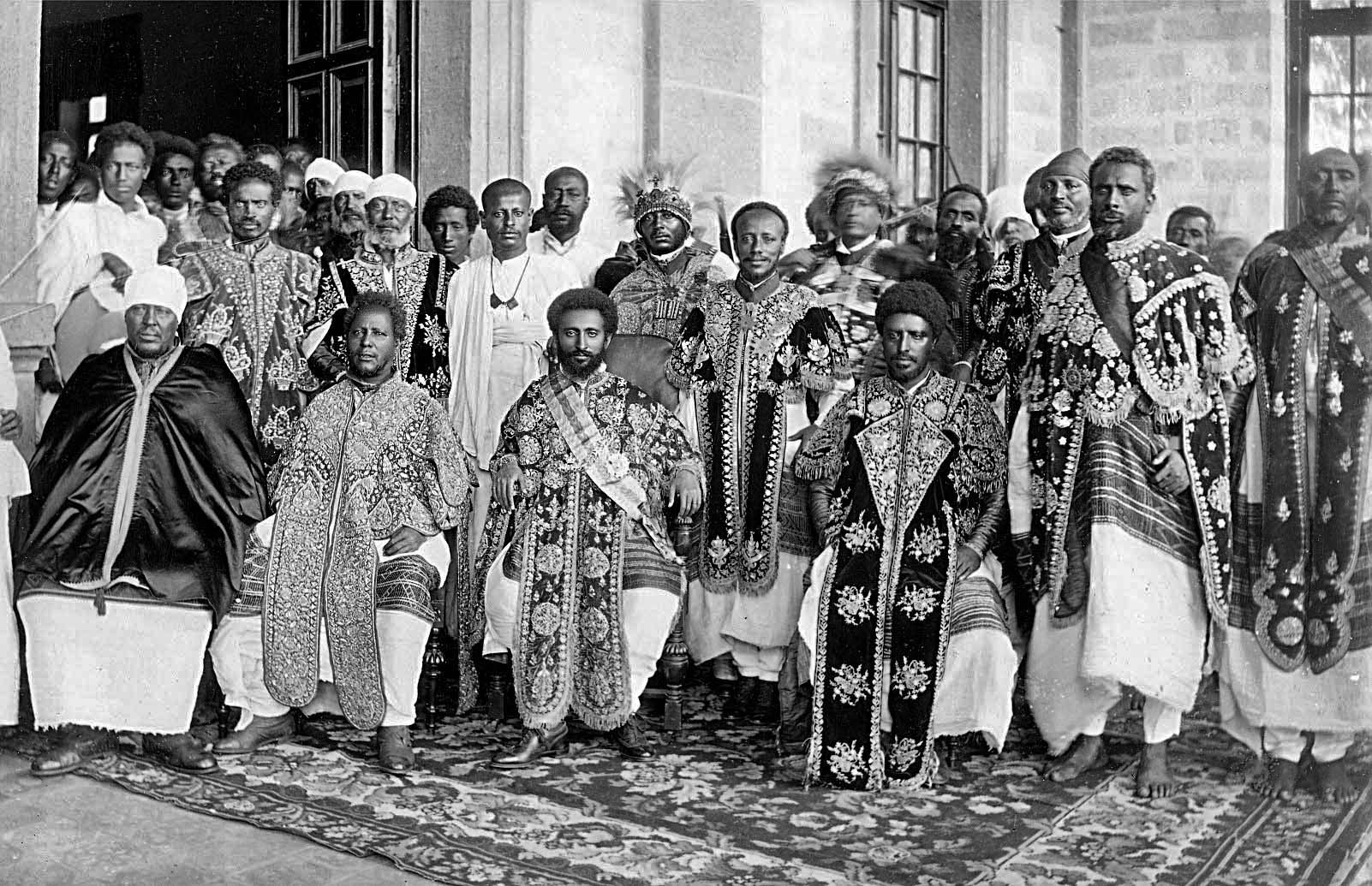
Until the end of the Ethiopian monarchy in 1974, there were two categories of nobility in Ethiopia and Eritrea. The Mesafint (Ge'ez: መሳፍንት masāfint, modern transcription mesāfint, singular መስፍን masfin, modern mesfin, "prince"), the hereditary royal nobility, formed the upper echelon of the ruling class. The Mekwanint (Ge'ez: መኳንንት makʷanint, modern mekʷanint, singular መኰንን makʷanin, modern mekʷanin or Amharic: መኮንን mekonnen, "officer") were the appointed nobles, often of humble birth, who formed the bulk of the aristocracy. Until the 20th century, the most powerful people at court were generally members of the Mekwanint appointed by the monarch, while regionally, the Mesafint enjoyed greater influence and power. Emperor Haile Selassie greatly curtailed the power of the Mesafint to the benefit of the Mekwanint, who by then were essentially coterminous with the Ethiopian government.
The Mekwanint were officials who had been granted specific offices in the Abyssinian government or court. Higher ranks from the title of Ras descending through to Balambaras were also bestowed upon members of the Mekwanint. A member of the Mesafint, however, would traditionally be given precedence over a member of the Mekwanint of the same rank. For example, Ras Mengesha Yohannes, son of Emperor Yohannes IV and thus a member of the Mesafint, would have outranked Ras Alula Engida, who was of humble birth and therefore a member of the Mekwanint, even though their ranks were equal.
There were also parallel rules of precedence, primarily seniority based on age, on offices held, and on when they each obtained their titles, which made the rules for precedence rather complex. Combined with the ambiguous position of titled heirs of members of the Mekwanint, Emperor Haile Selassie, as part of his programme of modernising reforms, and in line with his aims of centralising power away from the Mesafint, replaced the traditional system of precedence with a simplified, Western-inspired system that gave precedence by rank, and then by seniority based when the title had been assumed – irrespective of how the title was acquired.
Although several kings of Aksum as far back as Ezana of Axum (320's–360 CE/AD) used this style, rulers of Ethiopia generally used the style of Negus, until the accession of the Solomonic dynasty under Yekuno Amlak.
The full title of the Emperor of Ethiopia was Negusa Nagast and Seyoume Igziabeher (Ge'ez: ሥዩመ እግዚአብሔር; 'Elect of God'). The title Moa Anbessa Ze Imnegede Yehuda ("Conquering Lion of the Tribe of Judah") always preceded the titles of the Emperor. It was not a personal title but rather referred to the title of Jesus and placed the office of Christ ahead of the Emperor's name in an act of Imperial submission. Until the reign of Yohannes IV, the Emperor was also Neguse Tsion (Ge'ez: ንጉሠ ጽዮን, nəgusä tsiyon, "King of Zion"), whose seat was at Axum, and which conferred Hegemony over much of the north of the Empire.
The Emperor was referred to by the dignities of the formal Girmawi (Ge'ez: ግርማዊ, gərəmawi, "His Imperial Majesty"), in common speech as Janhoy (Ge'ez: ጃንሆይ janihoy, "Your [Imperial] Majesty", or lit. "sire"), in his own household and family as Getochu (our Master in the plural), and when referred to by name in the third person with the suffix[clarification needed] of Atse (effectively "Emperor", i.e. Atse Menelik).
All formal speech concerning the Emperor was in the plural, as was his own speech; Haile Selassie, for instance, referred to himself in the first-person plural at all times, even in casual conversation and when speaking in French (however this was not the case when he spoke in English, in which he was not fully fluent).
The Negesta Nagastat (Ge’ez: ንግሥተ ነገሥታት nəgəstä nägästât) was Empress Regnant in her own right, literally "Queen of Kings", or "Queen of Queens", or "female ruler of an empire."
Hub AI
Ethiopian aristocratic and court titles AI simulator
(@Ethiopian aristocratic and court titles_simulator)
Ethiopian aristocratic and court titles
Until the end of the Ethiopian monarchy in 1974, there were two categories of nobility in Ethiopia and Eritrea. The Mesafint (Ge'ez: መሳፍንት masāfint, modern transcription mesāfint, singular መስፍን masfin, modern mesfin, "prince"), the hereditary royal nobility, formed the upper echelon of the ruling class. The Mekwanint (Ge'ez: መኳንንት makʷanint, modern mekʷanint, singular መኰንን makʷanin, modern mekʷanin or Amharic: መኮንን mekonnen, "officer") were the appointed nobles, often of humble birth, who formed the bulk of the aristocracy. Until the 20th century, the most powerful people at court were generally members of the Mekwanint appointed by the monarch, while regionally, the Mesafint enjoyed greater influence and power. Emperor Haile Selassie greatly curtailed the power of the Mesafint to the benefit of the Mekwanint, who by then were essentially coterminous with the Ethiopian government.
The Mekwanint were officials who had been granted specific offices in the Abyssinian government or court. Higher ranks from the title of Ras descending through to Balambaras were also bestowed upon members of the Mekwanint. A member of the Mesafint, however, would traditionally be given precedence over a member of the Mekwanint of the same rank. For example, Ras Mengesha Yohannes, son of Emperor Yohannes IV and thus a member of the Mesafint, would have outranked Ras Alula Engida, who was of humble birth and therefore a member of the Mekwanint, even though their ranks were equal.
There were also parallel rules of precedence, primarily seniority based on age, on offices held, and on when they each obtained their titles, which made the rules for precedence rather complex. Combined with the ambiguous position of titled heirs of members of the Mekwanint, Emperor Haile Selassie, as part of his programme of modernising reforms, and in line with his aims of centralising power away from the Mesafint, replaced the traditional system of precedence with a simplified, Western-inspired system that gave precedence by rank, and then by seniority based when the title had been assumed – irrespective of how the title was acquired.
Although several kings of Aksum as far back as Ezana of Axum (320's–360 CE/AD) used this style, rulers of Ethiopia generally used the style of Negus, until the accession of the Solomonic dynasty under Yekuno Amlak.
The full title of the Emperor of Ethiopia was Negusa Nagast and Seyoume Igziabeher (Ge'ez: ሥዩመ እግዚአብሔር; 'Elect of God'). The title Moa Anbessa Ze Imnegede Yehuda ("Conquering Lion of the Tribe of Judah") always preceded the titles of the Emperor. It was not a personal title but rather referred to the title of Jesus and placed the office of Christ ahead of the Emperor's name in an act of Imperial submission. Until the reign of Yohannes IV, the Emperor was also Neguse Tsion (Ge'ez: ንጉሠ ጽዮን, nəgusä tsiyon, "King of Zion"), whose seat was at Axum, and which conferred Hegemony over much of the north of the Empire.
The Emperor was referred to by the dignities of the formal Girmawi (Ge'ez: ግርማዊ, gərəmawi, "His Imperial Majesty"), in common speech as Janhoy (Ge'ez: ጃንሆይ janihoy, "Your [Imperial] Majesty", or lit. "sire"), in his own household and family as Getochu (our Master in the plural), and when referred to by name in the third person with the suffix[clarification needed] of Atse (effectively "Emperor", i.e. Atse Menelik).
All formal speech concerning the Emperor was in the plural, as was his own speech; Haile Selassie, for instance, referred to himself in the first-person plural at all times, even in casual conversation and when speaking in French (however this was not the case when he spoke in English, in which he was not fully fluent).
The Negesta Nagastat (Ge’ez: ንግሥተ ነገሥታት nəgəstä nägästât) was Empress Regnant in her own right, literally "Queen of Kings", or "Queen of Queens", or "female ruler of an empire."