
Recent from talks
Eritrea
Knowledge base stats:
Talk channels stats:
Members stats:
Eritrea
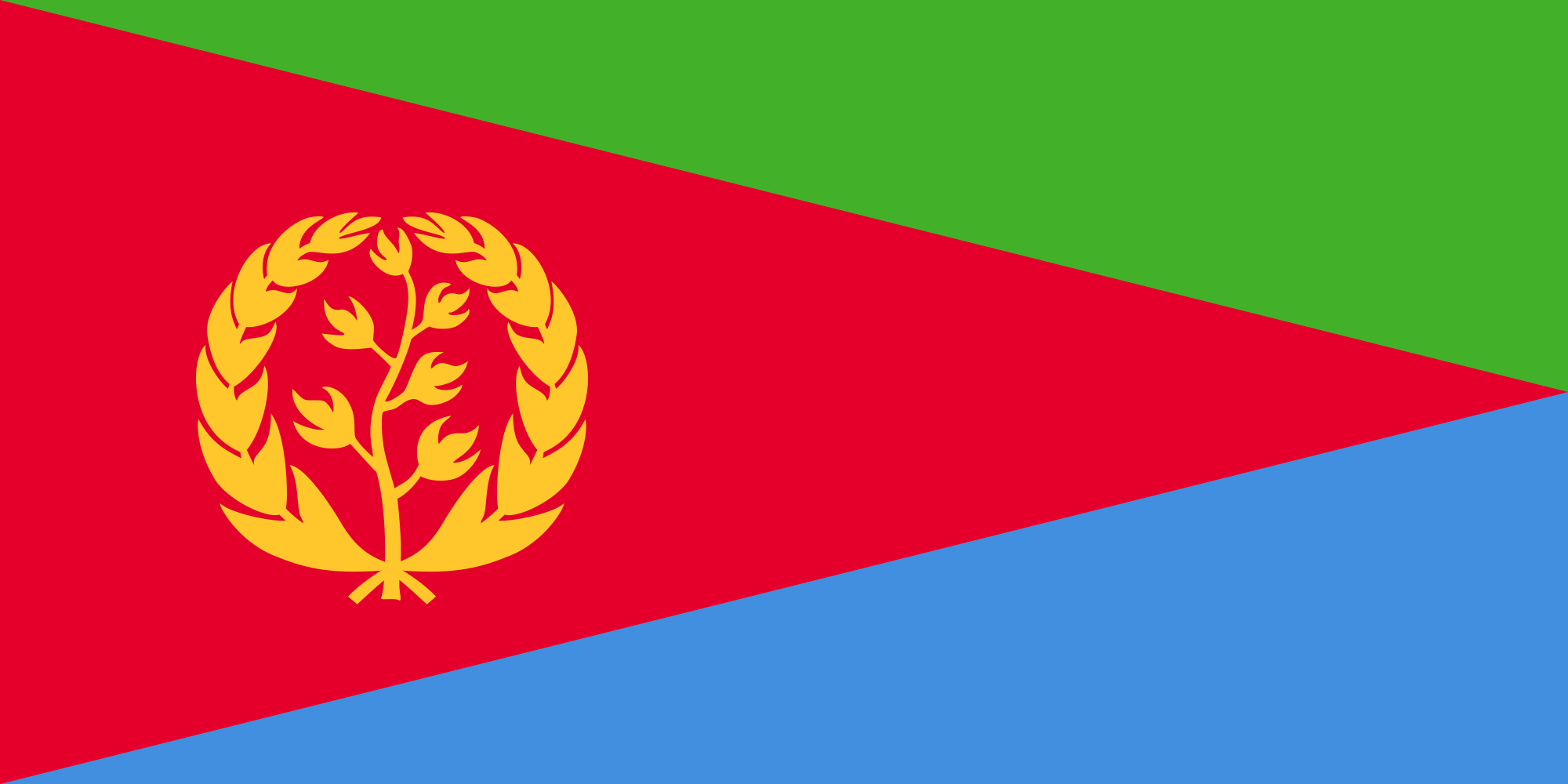
Eritrea, officially the State of Eritrea, is a country in the Horn of Africa region of East Africa. Its capital and largest city is Asmara. The country is bordered by Ethiopia to the south, Sudan to the west, and Djibouti to the southeast. The northeastern and eastern parts of Eritrea have an extensive coastline along the Red Sea. The country has a total area of approximately 117,600 km2 (45,406 sq mi), and includes the Dahlak Archipelago and several of the Hanish Islands.
Hominid remains found in Eritrea have been dated to 1 million years old and anthropological research indicates that the area may contain significant records related to the evolution of humans. The Kingdom of Aksum, covering much of modern-day Eritrea and northern Ethiopia, was established during the first or second century AD. It adopted Christianity around the middle of the fourth century. Beginning in the 12th century, the Ethiopian Zagwe and Solomonid dynasties held fluctuating control over the entire plateau and the Red Sea coast. Eritrea's central highlands, known as Mereb Melash ("Beyond the Mereb"), were the northern frontier region of the Ethiopian kingdoms and were ruled by a governor titled the Bahr Negus ("King of the Sea").
In the 16th century, the Ottomans conquered the Eritrean coastline; then in May 1865, much of the coastal lowlands came under the rule of the Khedivate of Egypt, until it was transferred to Italy in February 1885. Beginning in 1885–1890, Italian troops systematically spread out from Massawa toward the highlands, eventually resulting in the formation of the colony of Italian Eritrea in 1889, establishing the present-day boundaries of the country. Italian rule continued until 1942 when Eritrea was placed under British Military Administration during World War II; following a UN General Assembly decision in 1952, Eritrea would govern itself with a local Eritrean parliament, but for foreign affairs and defense, it would enter into a federal status with Ethiopia for ten years. However, in 1962, the government of Ethiopia annulled the Eritrean parliament and formally annexed Eritrea. The Eritrean secessionist movement organized the Eritrean Liberation Front in 1961 and fought the Eritrean War of Independence until Eritrea gained de facto independence in 1991. Eritrea gained de jure independence in 1993 after an independence referendum.
Contemporary Eritrea is a multi-ethnic country with nine recognized ethnic groups, each of which has a distinct language. The most widely spoken language is Tigrinya. The others are Tigre, Saho, Kunama, Nara, Afar, Beja, Bilen, Arabic and English. Tigrinya, Arabic and English serve as the three working languages. Most residents speak languages from the Afroasiatic family, either of the Ethiopian Semitic languages or Cushitic branches. In Eritrea, ethnic Tigrinyas make up about 50% of the population, with the Tigre people constituting around 30% of inhabitants. In addition, there are several Nilo-Saharan-speaking Nilotic ethnic groups. Most people in the country adhere to Christianity or Islam, with a small minority adhering to traditional faiths.
Eritrea is one of the world's least developed countries. It is a unitary one-party presidential republic and a de facto totalitarian dictatorship, in which national legislative and presidential elections have never been held. Isaias Afwerki has served as president since its official independence in 1993. The country's human rights record is among the worst in the world. The Eritrean government has dismissed these allegations as politically motivated. Eritrea is a member of the African Union, the United Nations, and the Intergovernmental Authority on Development, and is an observer state in the Arab League alongside Brazil and Venezuela.
The name Eritrea is derived from the ancient (originally Greek) name for the Red Sea, the Erythraean Sea (Ἐρυθρὰ Θάλασσα Erythra Thalassa, based on the adjective ἐρυθρός erythros "red"). It was first formally adopted in 1890, with the formation of Italian Eritrea (Colonia Eritrea). The name persisted throughout subsequent British and Ethiopian occupation, and was reaffirmed by the 1993 independence referendum and 1997 constitution.
Madam Buya is the name of a fossil found at an archaeological site in Eritrea by Italian anthropologists. She has been identified as among the oldest hominid fossils found to date that reveal significant stages in the evolution of humans and to represent a possible link between the earlier Homo erectus and an archaic Homo sapiens. Her remains have been dated to 1 million years old. She is the oldest skeletal find of her kind and provides a link between earlier hominids and the earliest anatomically modern humans. It is believed that the section of the Danakil Depression in Eritrea was a major site in terms of human evolution and may contain other traces of evolution from Homo erectus hominids to anatomically modern humans.
During the last interglacial period, the Red Sea coast of Eritrea was occupied by early anatomically modern humans. It is believed that the area was on the route out of Africa that some scholars suggest was used by early humans to colonize the rest of the Old World. In 1999, the Eritrean Research Project Team composed of Eritrean, Canadian, American, Dutch, and French scientists discovered a Paleolithic site with stone and obsidian tools dated to more than 125,000 years old near the Gulf of Zula south of Massawa, along the Red Sea littoral. The tools are believed to have been used by early humans to harvest marine resources such as clams and oysters.
Hub AI
Eritrea AI simulator
(@Eritrea_simulator)
Eritrea
Eritrea, officially the State of Eritrea, is a country in the Horn of Africa region of East Africa. Its capital and largest city is Asmara. The country is bordered by Ethiopia to the south, Sudan to the west, and Djibouti to the southeast. The northeastern and eastern parts of Eritrea have an extensive coastline along the Red Sea. The country has a total area of approximately 117,600 km2 (45,406 sq mi), and includes the Dahlak Archipelago and several of the Hanish Islands.
Hominid remains found in Eritrea have been dated to 1 million years old and anthropological research indicates that the area may contain significant records related to the evolution of humans. The Kingdom of Aksum, covering much of modern-day Eritrea and northern Ethiopia, was established during the first or second century AD. It adopted Christianity around the middle of the fourth century. Beginning in the 12th century, the Ethiopian Zagwe and Solomonid dynasties held fluctuating control over the entire plateau and the Red Sea coast. Eritrea's central highlands, known as Mereb Melash ("Beyond the Mereb"), were the northern frontier region of the Ethiopian kingdoms and were ruled by a governor titled the Bahr Negus ("King of the Sea").
In the 16th century, the Ottomans conquered the Eritrean coastline; then in May 1865, much of the coastal lowlands came under the rule of the Khedivate of Egypt, until it was transferred to Italy in February 1885. Beginning in 1885–1890, Italian troops systematically spread out from Massawa toward the highlands, eventually resulting in the formation of the colony of Italian Eritrea in 1889, establishing the present-day boundaries of the country. Italian rule continued until 1942 when Eritrea was placed under British Military Administration during World War II; following a UN General Assembly decision in 1952, Eritrea would govern itself with a local Eritrean parliament, but for foreign affairs and defense, it would enter into a federal status with Ethiopia for ten years. However, in 1962, the government of Ethiopia annulled the Eritrean parliament and formally annexed Eritrea. The Eritrean secessionist movement organized the Eritrean Liberation Front in 1961 and fought the Eritrean War of Independence until Eritrea gained de facto independence in 1991. Eritrea gained de jure independence in 1993 after an independence referendum.
Contemporary Eritrea is a multi-ethnic country with nine recognized ethnic groups, each of which has a distinct language. The most widely spoken language is Tigrinya. The others are Tigre, Saho, Kunama, Nara, Afar, Beja, Bilen, Arabic and English. Tigrinya, Arabic and English serve as the three working languages. Most residents speak languages from the Afroasiatic family, either of the Ethiopian Semitic languages or Cushitic branches. In Eritrea, ethnic Tigrinyas make up about 50% of the population, with the Tigre people constituting around 30% of inhabitants. In addition, there are several Nilo-Saharan-speaking Nilotic ethnic groups. Most people in the country adhere to Christianity or Islam, with a small minority adhering to traditional faiths.
Eritrea is one of the world's least developed countries. It is a unitary one-party presidential republic and a de facto totalitarian dictatorship, in which national legislative and presidential elections have never been held. Isaias Afwerki has served as president since its official independence in 1993. The country's human rights record is among the worst in the world. The Eritrean government has dismissed these allegations as politically motivated. Eritrea is a member of the African Union, the United Nations, and the Intergovernmental Authority on Development, and is an observer state in the Arab League alongside Brazil and Venezuela.
The name Eritrea is derived from the ancient (originally Greek) name for the Red Sea, the Erythraean Sea (Ἐρυθρὰ Θάλασσα Erythra Thalassa, based on the adjective ἐρυθρός erythros "red"). It was first formally adopted in 1890, with the formation of Italian Eritrea (Colonia Eritrea). The name persisted throughout subsequent British and Ethiopian occupation, and was reaffirmed by the 1993 independence referendum and 1997 constitution.
Madam Buya is the name of a fossil found at an archaeological site in Eritrea by Italian anthropologists. She has been identified as among the oldest hominid fossils found to date that reveal significant stages in the evolution of humans and to represent a possible link between the earlier Homo erectus and an archaic Homo sapiens. Her remains have been dated to 1 million years old. She is the oldest skeletal find of her kind and provides a link between earlier hominids and the earliest anatomically modern humans. It is believed that the section of the Danakil Depression in Eritrea was a major site in terms of human evolution and may contain other traces of evolution from Homo erectus hominids to anatomically modern humans.
During the last interglacial period, the Red Sea coast of Eritrea was occupied by early anatomically modern humans. It is believed that the area was on the route out of Africa that some scholars suggest was used by early humans to colonize the rest of the Old World. In 1999, the Eritrean Research Project Team composed of Eritrean, Canadian, American, Dutch, and French scientists discovered a Paleolithic site with stone and obsidian tools dated to more than 125,000 years old near the Gulf of Zula south of Massawa, along the Red Sea littoral. The tools are believed to have been used by early humans to harvest marine resources such as clams and oysters.
Recent media