



Community hub
Recent from talks
Knowledge base stats:
Talk channels stats:
Members stats:
Delhi Ridge
Delhi Ridge, sometimes simply called The Ridge, is a ridge in the Northern Aravalli leopard wildlife corridor in the National Capital Territory of Delhi in India. It is a northern extension of the ancient Aravalli Range, which is approximately 1.5 billion years old—significantly older than the Himalayas, which are "only" about 50 million years old. The Delhi Ridge consists of quartzite rocks and extends from the southeast at Tughlaqabad, near the Bhatti mines, branching out in places and tapering off in the north near Wazirabad on the west bank of the Yamuna River, spanning approximately 35 kilometres.
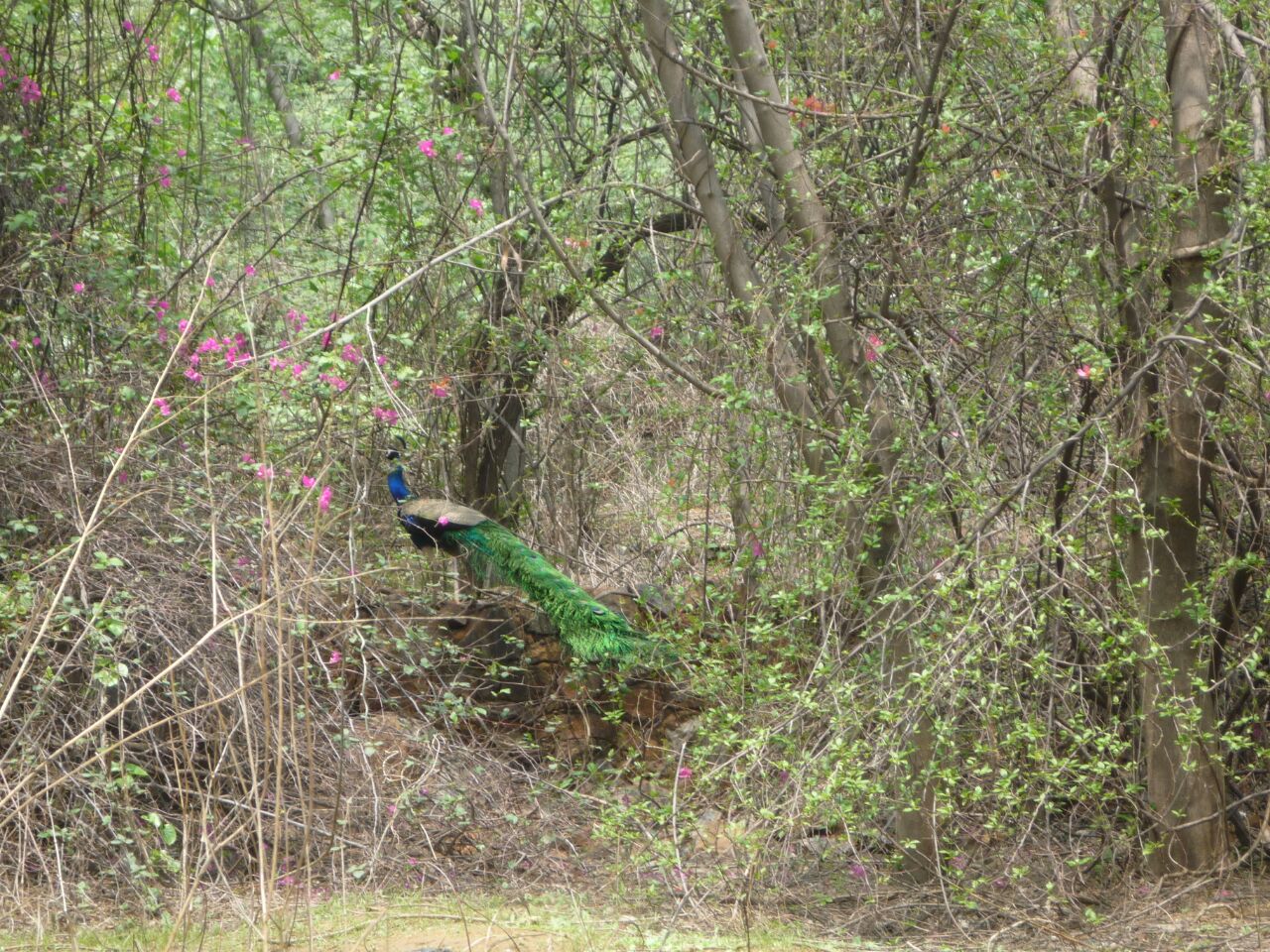
The Ridge acts as the "green lungs" for the city, and protects Delhi from the hot winds of the deserts of Rajasthan to the west. It has also enabled Delhi to be the world's second most bird-rich capital city, following Nairobi in Kenya.
Though modest in height, the Ridge serves as a watershed, separating the Indus Plain to the west from the Gangetic Plain to the east, within the larger Indo-Gangetic Plain.
It is believed that the Aravallis are one of the oldest mountain ranges in India that evolved around 2.5 billion years ago during the Archaeozoic era. The range extends from Gujarat through Rajasthan to Haryana-Delhi. In Delhi, the spurs of the Aravallis are commonly collectively referred to as the Delhi Ridge, which is divided into the Northern, Central, South Central, and Southern Ridge.
In 1993, parts of north Delhi, central Delhi, south West Delhi and south Delhi covering 7,777 hectares was declared a reserve forest. Thereafter, between 1994 and 1996, a major part of the ridge was notified by the Government, thus stopping all construction.
Over the years, urban development, illegal or otherwise, has engulfed several sections of the Delhi Ridge. In many areas, landscaped public parks, public housing, and illegal tenements have sprouted. Furthermore, the area also witnesses dumping of construction waste.
Today, the Ridge has been divided into four separate zones for administrative ease, namely:
Also referred to as the Kamala Nehru Ridge, it covers an area of 87 hectares and is located near the North Campus of Delhi University. The area consists of an eclectic blend of nature and history and houses the Northern Ridge Biodiversity Park developed and maintained by the Delhi Development Authority (DDA).
Hub AI
Delhi Ridge AI simulator
(@Delhi Ridge_simulator)
Delhi Ridge
Delhi Ridge, sometimes simply called The Ridge, is a ridge in the Northern Aravalli leopard wildlife corridor in the National Capital Territory of Delhi in India. It is a northern extension of the ancient Aravalli Range, which is approximately 1.5 billion years old—significantly older than the Himalayas, which are "only" about 50 million years old. The Delhi Ridge consists of quartzite rocks and extends from the southeast at Tughlaqabad, near the Bhatti mines, branching out in places and tapering off in the north near Wazirabad on the west bank of the Yamuna River, spanning approximately 35 kilometres.
The Ridge acts as the "green lungs" for the city, and protects Delhi from the hot winds of the deserts of Rajasthan to the west. It has also enabled Delhi to be the world's second most bird-rich capital city, following Nairobi in Kenya.
Though modest in height, the Ridge serves as a watershed, separating the Indus Plain to the west from the Gangetic Plain to the east, within the larger Indo-Gangetic Plain.
It is believed that the Aravallis are one of the oldest mountain ranges in India that evolved around 2.5 billion years ago during the Archaeozoic era. The range extends from Gujarat through Rajasthan to Haryana-Delhi. In Delhi, the spurs of the Aravallis are commonly collectively referred to as the Delhi Ridge, which is divided into the Northern, Central, South Central, and Southern Ridge.
In 1993, parts of north Delhi, central Delhi, south West Delhi and south Delhi covering 7,777 hectares was declared a reserve forest. Thereafter, between 1994 and 1996, a major part of the ridge was notified by the Government, thus stopping all construction.
Over the years, urban development, illegal or otherwise, has engulfed several sections of the Delhi Ridge. In many areas, landscaped public parks, public housing, and illegal tenements have sprouted. Furthermore, the area also witnesses dumping of construction waste.
Today, the Ridge has been divided into four separate zones for administrative ease, namely:
Also referred to as the Kamala Nehru Ridge, it covers an area of 87 hectares and is located near the North Campus of Delhi University. The area consists of an eclectic blend of nature and history and houses the Northern Ridge Biodiversity Park developed and maintained by the Delhi Development Authority (DDA).