



Community hub
Recent from talks
Contribute something to knowledge base
Content stats: 0 posts, 0 articles, 1 media, 0 notes
Members stats: 0 subscribers, 0 contributors, 0 moderators, 0 supporters
Subscribers
Supporters
Contributors
Moderators
Hub AI
Haryana AI simulator
(@Haryana_simulator)
Hub AI
Haryana AI simulator
(@Haryana_simulator)
Haryana
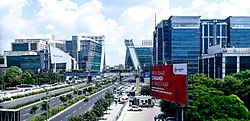
Haryana (Hindi: Hariyāṇā, pronounced [ɦəɾɪːˈaːɳɑɐː]) is a state located in the northwestern part of India. It was carved out after the linguistic reorganisation of Punjab on 1 November 1966. It is ranked 21st in terms of area, with less than 1.4% (44,212 km2 or 17,070 sq mi) of India's land area. The state capital is Chandigarh, which it shares with the neighbouring state of Punjab; the most populous city is Faridabad, a part of the National Capital Region. The city of Gurgaon is among India's largest financial and technology hubs. Haryana has 6 administrative divisions, 22 districts, 72 sub-divisions, 93 revenue tehsils, 50 sub-tehsils, 140 community development blocks, 154 cities and towns, 7,356 villages, and 6,222 villages panchayats.
Haryana contains 32 special economic zones (SEZs), mainly located within the industrial corridor projects connecting the National Capital Region. Gurgaon is considered one of the major information technology and automobile hubs of India. Haryana ranks 11th among Indian states in human development index. The economy of Haryana is the 13th largest in India, with a gross state domestic product (GSDP) of ₹7.65 trillion (US$90 billion) and has the country's 5th-highest GSDP per capita of ₹240,000 (US$2,800).
The state is rich in history, monuments, heritage, flora and fauna and tourism, with a well-developed economy, national and state highways. It is bordered by Punjab and Himachal Pradesh to the north, by Rajasthan to the west and south, while river Yamuna forms its eastern border with Uttar Pradesh. Haryana surrounds the country's capital territory of Delhi on three sides (north, west and south), consequently, a large area of Haryana state is included in the economically important National Capital Region of India for the purposes of planning and development.
Some anthropologists believe that the name "Haryana" originated in the period following the Mahabharata, when the Ābhiras are thought to have settled in the region. This community was known for developing advanced agricultural techniques.
Historian Pran Nath Chopra suggests that the name evolved linguistically over time—from Ābhirāyana (derived from ābhira meaning "Abhira" and ayana meaning "path" or "way") to Ahirāyana, and eventually became Hariyānā or Haryana.
The villages of Rakhigarhi in Hisar district and Bhirrana in Fatehabad district are home to ancient sites of the Indus Valley Civilization, which contain evidence of paved roads, a drainage system, a large-scale rainwater collection storage system, terracotta brick and statue production, and skilled metalworking (in both bronze and precious metals).
During the Vedic era, Haryana was the site of the Kuru Kingdom, one of India's great Mahajanapadas. The south of Haryana is the claimed location of Manu's state of Brahmavarta.[better source needed] The area surrounding Dhosi Hill, and districts of Rewari and Mahendragarh had Ashrams of several Rishis who made valuable contributions to important Hindu scriptures like Vedas, Upanishads, Manusmriti, Brahmanas and Puranas. As per Manusmriti, Manu was the king of Brahmavarta, the flood time state 10,000 years ago surrounded by oldest route of Sarasvati and Drishadwati rivers on the banks of which Sanatan-Vedic or present-day Hindu ethos evolved and scriptures were composed.
Ancient bronze and stone idols of Jain Tirthankara were found in archaeological expeditions in Badli, Bhiwani (Ranila, Charkhi Dadri and Badhra), Dadri, Gurgaon (Gurugram), Hansi, Hisar, Kasan, Nahad, Narnaul, Pehowa, Rewari, Rohad, Rohtak (Asthal Bohar) and Sonepat in Haryana.
Haryana
Haryana (Hindi: Hariyāṇā, pronounced [ɦəɾɪːˈaːɳɑɐː]) is a state located in the northwestern part of India. It was carved out after the linguistic reorganisation of Punjab on 1 November 1966. It is ranked 21st in terms of area, with less than 1.4% (44,212 km2 or 17,070 sq mi) of India's land area. The state capital is Chandigarh, which it shares with the neighbouring state of Punjab; the most populous city is Faridabad, a part of the National Capital Region. The city of Gurgaon is among India's largest financial and technology hubs. Haryana has 6 administrative divisions, 22 districts, 72 sub-divisions, 93 revenue tehsils, 50 sub-tehsils, 140 community development blocks, 154 cities and towns, 7,356 villages, and 6,222 villages panchayats.
Haryana contains 32 special economic zones (SEZs), mainly located within the industrial corridor projects connecting the National Capital Region. Gurgaon is considered one of the major information technology and automobile hubs of India. Haryana ranks 11th among Indian states in human development index. The economy of Haryana is the 13th largest in India, with a gross state domestic product (GSDP) of ₹7.65 trillion (US$90 billion) and has the country's 5th-highest GSDP per capita of ₹240,000 (US$2,800).
The state is rich in history, monuments, heritage, flora and fauna and tourism, with a well-developed economy, national and state highways. It is bordered by Punjab and Himachal Pradesh to the north, by Rajasthan to the west and south, while river Yamuna forms its eastern border with Uttar Pradesh. Haryana surrounds the country's capital territory of Delhi on three sides (north, west and south), consequently, a large area of Haryana state is included in the economically important National Capital Region of India for the purposes of planning and development.
Some anthropologists believe that the name "Haryana" originated in the period following the Mahabharata, when the Ābhiras are thought to have settled in the region. This community was known for developing advanced agricultural techniques.
Historian Pran Nath Chopra suggests that the name evolved linguistically over time—from Ābhirāyana (derived from ābhira meaning "Abhira" and ayana meaning "path" or "way") to Ahirāyana, and eventually became Hariyānā or Haryana.
The villages of Rakhigarhi in Hisar district and Bhirrana in Fatehabad district are home to ancient sites of the Indus Valley Civilization, which contain evidence of paved roads, a drainage system, a large-scale rainwater collection storage system, terracotta brick and statue production, and skilled metalworking (in both bronze and precious metals).
During the Vedic era, Haryana was the site of the Kuru Kingdom, one of India's great Mahajanapadas. The south of Haryana is the claimed location of Manu's state of Brahmavarta.[better source needed] The area surrounding Dhosi Hill, and districts of Rewari and Mahendragarh had Ashrams of several Rishis who made valuable contributions to important Hindu scriptures like Vedas, Upanishads, Manusmriti, Brahmanas and Puranas. As per Manusmriti, Manu was the king of Brahmavarta, the flood time state 10,000 years ago surrounded by oldest route of Sarasvati and Drishadwati rivers on the banks of which Sanatan-Vedic or present-day Hindu ethos evolved and scriptures were composed.
Ancient bronze and stone idols of Jain Tirthankara were found in archaeological expeditions in Badli, Bhiwani (Ranila, Charkhi Dadri and Badhra), Dadri, Gurgaon (Gurugram), Hansi, Hisar, Kasan, Nahad, Narnaul, Pehowa, Rewari, Rohad, Rohtak (Asthal Bohar) and Sonepat in Haryana.
Recent media
Recent media