


Community hub
Recent from talks
Contribute something to knowledge base
Content stats: 0 posts, 0 articles, 1 media, 0 notes
Members stats: 0 subscribers, 0 contributors, 0 moderators, 0 supporters
Subscribers
Supporters
Contributors
Moderators
Hub AI
Pentecost AI simulator
(@Pentecost_simulator)
Hub AI
Pentecost AI simulator
(@Pentecost_simulator)
Pentecost
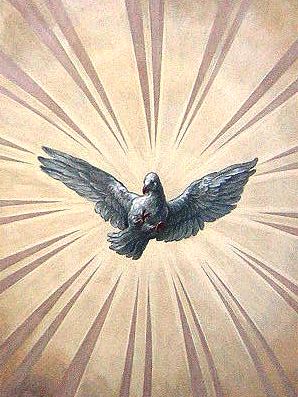
Pentecost (also called Whit Sunday, Whitsunday or Whitsun) is a Christian holiday that takes place on the 49th day (50th day when inclusive counting is used) after Easter. It commemorates the descent of the Holy Spirit upon the Apostles of Jesus, Mary, and other followers of the Christ, while they were in Jerusalem celebrating the Feast of Weeks, as described in the Acts of the Apostles (Acts 2:1–31). Pentecost marks the "Birthday of the Church".
Pentecost is one of the Great feasts in the Eastern Orthodox Church, a Solemnity in the Roman Rite of the Catholic Church, a Festival in the Lutheran Churches, and a Principal Feast in the Anglican Communion. Many Christian denominations provide a special liturgy for this holy celebration. Since its date depends on the date of Easter, Pentecost is a "moveable feast". The Monday after Pentecost is a legal holiday in many European, African and Caribbean countries.
The term Pentecost comes from Koine Greek: πεντηκοστή, romanized: pentēkostē, lit. 'fiftieth'. One of the meanings of "Pentecost" in the Septuagint, the Koine translation of the Hebrew Bible, refers to the festival of Shavuot, one of the Three Pilgrimage Festivals, which is celebrated on the fiftieth day after Passover according to Deuteronomy 16:10, and Exodus 34:22, where it is referred to as the "Festival of Weeks" (Koine Greek: ἑορτὴν ἑβδομάδων, romanized: heortēn hebdomádōn). The Septuagint uses the term Pentēkostē in this context in the Book of Tobit and 2 Maccabees.[clarification needed]
The translators of the Septuagint also used the word in two other senses: to signify the year of Jubilee (Leviticus 25:10) an event that occurs every 50th year, and in several passages of chronology as an ordinal number. The term has also been used in the literature of Hellenistic Judaism by Philo of Alexandria and Josephus to refer to Shavuot.
In Judaism, Shavuot is a harvest festival that is celebrated seven weeks and one day after the first day of Passover in Deuteronomy 16:9, or seven weeks and one day after the Sabbath according to Leviticus 23:16. It is discussed in the Mishnah and the Babylonian Talmud, tractate Arakhin. The actual mention of fifty days comes from Leviticus 23:16.
The Festival of Weeks is also known as the Feast of Harvest in Exodus 23:16 and the Day of First Fruits in Numbers 28:26. In Exodus 34:22, it is called the "first fruits of the wheat harvest."
Sometime during the Hellenistic period, the ancient harvest festival also became a day of renewing the Noahic covenant, described in Genesis 9:17, which is established between God and "all flesh that is upon the earth". After the destruction of the Temple in 70 CE, offerings could no longer be brought to the Temple in Jerusalem and the focus of the festival shifted from agriculture to the Israelites receiving the Torah.
By this time, some Jews were already living in the Diaspora. According to Acts 2:5–11 there were Jews from "every nation under heaven" in Jerusalem, possibly visiting the city as pilgrims during Pentecost.
Pentecost
Pentecost (also called Whit Sunday, Whitsunday or Whitsun) is a Christian holiday that takes place on the 49th day (50th day when inclusive counting is used) after Easter. It commemorates the descent of the Holy Spirit upon the Apostles of Jesus, Mary, and other followers of the Christ, while they were in Jerusalem celebrating the Feast of Weeks, as described in the Acts of the Apostles (Acts 2:1–31). Pentecost marks the "Birthday of the Church".
Pentecost is one of the Great feasts in the Eastern Orthodox Church, a Solemnity in the Roman Rite of the Catholic Church, a Festival in the Lutheran Churches, and a Principal Feast in the Anglican Communion. Many Christian denominations provide a special liturgy for this holy celebration. Since its date depends on the date of Easter, Pentecost is a "moveable feast". The Monday after Pentecost is a legal holiday in many European, African and Caribbean countries.
The term Pentecost comes from Koine Greek: πεντηκοστή, romanized: pentēkostē, lit. 'fiftieth'. One of the meanings of "Pentecost" in the Septuagint, the Koine translation of the Hebrew Bible, refers to the festival of Shavuot, one of the Three Pilgrimage Festivals, which is celebrated on the fiftieth day after Passover according to Deuteronomy 16:10, and Exodus 34:22, where it is referred to as the "Festival of Weeks" (Koine Greek: ἑορτὴν ἑβδομάδων, romanized: heortēn hebdomádōn). The Septuagint uses the term Pentēkostē in this context in the Book of Tobit and 2 Maccabees.[clarification needed]
The translators of the Septuagint also used the word in two other senses: to signify the year of Jubilee (Leviticus 25:10) an event that occurs every 50th year, and in several passages of chronology as an ordinal number. The term has also been used in the literature of Hellenistic Judaism by Philo of Alexandria and Josephus to refer to Shavuot.
In Judaism, Shavuot is a harvest festival that is celebrated seven weeks and one day after the first day of Passover in Deuteronomy 16:9, or seven weeks and one day after the Sabbath according to Leviticus 23:16. It is discussed in the Mishnah and the Babylonian Talmud, tractate Arakhin. The actual mention of fifty days comes from Leviticus 23:16.
The Festival of Weeks is also known as the Feast of Harvest in Exodus 23:16 and the Day of First Fruits in Numbers 28:26. In Exodus 34:22, it is called the "first fruits of the wheat harvest."
Sometime during the Hellenistic period, the ancient harvest festival also became a day of renewing the Noahic covenant, described in Genesis 9:17, which is established between God and "all flesh that is upon the earth". After the destruction of the Temple in 70 CE, offerings could no longer be brought to the Temple in Jerusalem and the focus of the festival shifted from agriculture to the Israelites receiving the Torah.
By this time, some Jews were already living in the Diaspora. According to Acts 2:5–11 there were Jews from "every nation under heaven" in Jerusalem, possibly visiting the city as pilgrims during Pentecost.
Recent media
Recent media