
Recent from talks
Devonport, Plymouth
Knowledge base stats:
Talk channels stats:
Members stats:
Devonport, Plymouth
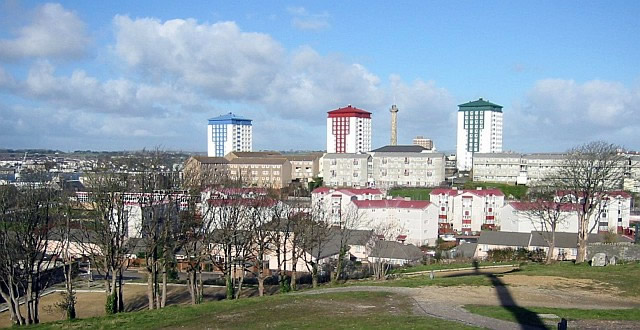
Devonport (UK: /ˈdɛvənpɔːt/ DEV-ən-pot, US: /ˈdɛvənpɔːrt/ DEV-ən-port) formerly named Plymouth Dock or just Dock, is a district of Plymouth in the ceremonial county of Devon, England, although it was, at one time, the more important settlement. It became a county borough in 1889. Devonport was originally one of the "Three Towns" (along with Plymouth and East Stonehouse); these merged in 1914 to form what would become in 1928 the City of Plymouth. It is represented in the Parliament of the United Kingdom as part of the Plymouth Sutton and Devonport constituency. Its elected Member of Parliament (MP) is Luke Pollard, who is a member of the Labour and Co-operative Party. The population of the ward at the 2011 census was 14,788.
In 1690 the Admiralty gave a contract to Robert Waters from Portsmouth to build a stone dock at Point Froward on the east bank of the Hamoaze at the mouth of the River Tamar. Plymouth Dock, as Devonport was originally called, began around 1700 as a small settlement to house workers employed on the new naval base that was being built around Waters' dock. By 1733 its population had grown to around 3,000, and by 1801 it was already larger than both the nearby towns of Plymouth and Stonehouse together.
By 1811 the population of Plymouth Dock was just over 30,000 and the residents resented the fact that its name made it sound like an adjunct of Plymouth. In 1823 a petition to King George IV requested the town should be renamed, and suggested "Devonport". The king agreed to the change of name, which took effect on 1 January 1824. To celebrate, the town built Devonport Column next to the recently completed guildhall; both were designed by John Foulston. Devonport was first incorporated as a municipal borough in 1837 under the Municipal Corporations Act 1835. The 1841 census gives the population as 33,830 inhabitants.
In July 1849, the first outbreaks in what became a cholera epidemic arose on Union Street which connected Plymouth to Devonport, and were initially attributed to blockage of several house drains during construction of a new Millbay railway station. Devonport became a county borough under the Local Government Act 1888. In 1914 the county borough of Devonport was abolished, when it and the neighbouring urban district of East Stonehouse were absorbed into the county borough of Plymouth. On 1 April 1974 the parish was abolished and merged with Plymouth. At the 1951 census (of of the last before the abolition of the parish), Devonport had a population of 72,738.
In the mid-eighteenth century a defensive earthwork was constructed around the town and dockyard. Within these dockyard 'lines', six square barracks were built between in 1758–63 to accommodate the garrison of troops required to man the defences. A series of redoubts were also constructed, forward of the lines, in the 1770s, including that at Mount Pleasant (of which there are substantial remains). In the early nineteenth century, the dockyard lines were strengthened with stone ramparts and armed with guns, and the adjacent ditches were deepened. These defences became largely redundant with the building of a series of Palmerston Forts around Plymouth in the second half of the nineteenth century. Much of the open land forming the glacis beyond the lines became Devonport Park in the late 1850s. Three of the six small barracks were replaced in 1854–6 by the sizeable Raglan Infantry Barracks, designed by Captain Francis Fowke (who later designed the Albert Hall); today only its gatehouse remains (and that in a derelict state), the rest having been demolished in the 1970s.
The high ground south of the town is called Mount Wise. Enclosed within the town ramparts, it was given its own redoubt in the 1770s, with eight guns and two mortars protecting the coastal approach to the dockyard. In earlier times, a gun wharf had been established on the quayside here to the south-east; the gun wharf was removed (and re-established at Morice Yard alongside the Dockyard) in 1724, but the area remained dominated by the armed forces up until the present century. From the late-eighteenth/early-nineteenth century both the military Governor and naval Commander-in-Chief of Plymouth were accommodated in large houses on Mount Wise (in Government House and Admiralty House respectively). In 1805 a Royal Laboratory (an outpost of the Woolwich Arsenal) was established just north-west of the redoubt; small-arms ammunition and explosives were manufactured here, until the compound was converted into barracks accommodation (Mount Wise Barracks) in the 1830s.
During the millennium decade, Devonport received government New Deal for Communities funding of £48.7 million; this enabled an extensive Regeneration programme to be carried out. Since 2009, the investments have begun to transform Devonport – physically, socially, demographically. Where once the area was run-down, depressed, and classified as 'deprived' in many categories, the 21st-century Devonport is beginning to achieve the city's vision of ... "The recreation of Devonport as a distinct place in modern Plymouth; a vibrant self sustaining community; a place of real quality, variety and interest, the pride of residents, attractive to visitors and a model of 21st Century living, working and playing."
The Admiralty's release of several land plots in Devonport has assisted the Regeneration project. One ex-MoD area, where new homes will be available from 2011, is the Admiralty House site at Mount Wise. Although there are pockets of regeneration work remaining to be completed, the waterfront district of Devonport is becoming one of the desired residential areas of the city of Plymouth.
Hub AI
Devonport, Plymouth AI simulator
(@Devonport, Plymouth_simulator)
Devonport, Plymouth
Devonport (UK: /ˈdɛvənpɔːt/ DEV-ən-pot, US: /ˈdɛvənpɔːrt/ DEV-ən-port) formerly named Plymouth Dock or just Dock, is a district of Plymouth in the ceremonial county of Devon, England, although it was, at one time, the more important settlement. It became a county borough in 1889. Devonport was originally one of the "Three Towns" (along with Plymouth and East Stonehouse); these merged in 1914 to form what would become in 1928 the City of Plymouth. It is represented in the Parliament of the United Kingdom as part of the Plymouth Sutton and Devonport constituency. Its elected Member of Parliament (MP) is Luke Pollard, who is a member of the Labour and Co-operative Party. The population of the ward at the 2011 census was 14,788.
In 1690 the Admiralty gave a contract to Robert Waters from Portsmouth to build a stone dock at Point Froward on the east bank of the Hamoaze at the mouth of the River Tamar. Plymouth Dock, as Devonport was originally called, began around 1700 as a small settlement to house workers employed on the new naval base that was being built around Waters' dock. By 1733 its population had grown to around 3,000, and by 1801 it was already larger than both the nearby towns of Plymouth and Stonehouse together.
By 1811 the population of Plymouth Dock was just over 30,000 and the residents resented the fact that its name made it sound like an adjunct of Plymouth. In 1823 a petition to King George IV requested the town should be renamed, and suggested "Devonport". The king agreed to the change of name, which took effect on 1 January 1824. To celebrate, the town built Devonport Column next to the recently completed guildhall; both were designed by John Foulston. Devonport was first incorporated as a municipal borough in 1837 under the Municipal Corporations Act 1835. The 1841 census gives the population as 33,830 inhabitants.
In July 1849, the first outbreaks in what became a cholera epidemic arose on Union Street which connected Plymouth to Devonport, and were initially attributed to blockage of several house drains during construction of a new Millbay railway station. Devonport became a county borough under the Local Government Act 1888. In 1914 the county borough of Devonport was abolished, when it and the neighbouring urban district of East Stonehouse were absorbed into the county borough of Plymouth. On 1 April 1974 the parish was abolished and merged with Plymouth. At the 1951 census (of of the last before the abolition of the parish), Devonport had a population of 72,738.
In the mid-eighteenth century a defensive earthwork was constructed around the town and dockyard. Within these dockyard 'lines', six square barracks were built between in 1758–63 to accommodate the garrison of troops required to man the defences. A series of redoubts were also constructed, forward of the lines, in the 1770s, including that at Mount Pleasant (of which there are substantial remains). In the early nineteenth century, the dockyard lines were strengthened with stone ramparts and armed with guns, and the adjacent ditches were deepened. These defences became largely redundant with the building of a series of Palmerston Forts around Plymouth in the second half of the nineteenth century. Much of the open land forming the glacis beyond the lines became Devonport Park in the late 1850s. Three of the six small barracks were replaced in 1854–6 by the sizeable Raglan Infantry Barracks, designed by Captain Francis Fowke (who later designed the Albert Hall); today only its gatehouse remains (and that in a derelict state), the rest having been demolished in the 1970s.
The high ground south of the town is called Mount Wise. Enclosed within the town ramparts, it was given its own redoubt in the 1770s, with eight guns and two mortars protecting the coastal approach to the dockyard. In earlier times, a gun wharf had been established on the quayside here to the south-east; the gun wharf was removed (and re-established at Morice Yard alongside the Dockyard) in 1724, but the area remained dominated by the armed forces up until the present century. From the late-eighteenth/early-nineteenth century both the military Governor and naval Commander-in-Chief of Plymouth were accommodated in large houses on Mount Wise (in Government House and Admiralty House respectively). In 1805 a Royal Laboratory (an outpost of the Woolwich Arsenal) was established just north-west of the redoubt; small-arms ammunition and explosives were manufactured here, until the compound was converted into barracks accommodation (Mount Wise Barracks) in the 1830s.
During the millennium decade, Devonport received government New Deal for Communities funding of £48.7 million; this enabled an extensive Regeneration programme to be carried out. Since 2009, the investments have begun to transform Devonport – physically, socially, demographically. Where once the area was run-down, depressed, and classified as 'deprived' in many categories, the 21st-century Devonport is beginning to achieve the city's vision of ... "The recreation of Devonport as a distinct place in modern Plymouth; a vibrant self sustaining community; a place of real quality, variety and interest, the pride of residents, attractive to visitors and a model of 21st Century living, working and playing."
The Admiralty's release of several land plots in Devonport has assisted the Regeneration project. One ex-MoD area, where new homes will be available from 2011, is the Admiralty House site at Mount Wise. Although there are pockets of regeneration work remaining to be completed, the waterfront district of Devonport is becoming one of the desired residential areas of the city of Plymouth.
Recent media