



Community hub
Recent from talks
Knowledge base stats:
Talk channels stats:
Members stats:
Di Renjie
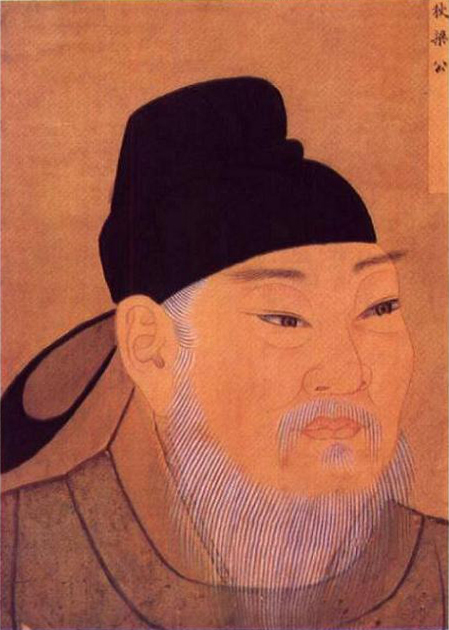
Di Renjie (630 – November 11, 700), courtesy name Huaiying (懷英), posthumous name Duke Wenhui of Liang (梁文惠公), was a Chinese politician of the Tang and Wu Zhou dynasties, twice serving as chancellor during the reign of Wu Zetian. He was one of the most celebrated officials of Wu Zetian's reign. Di Renjie is depicted in the Wu Shuang Pu by Jin Guliang.
Di Renjie was born in Yangqu County, Bing Province, in 630, during the reign of Emperor Taizong. His family, from Taiyuan, was one that had produced many officials. His grandfather, Di Xiaoxu (狄孝緒), served as Shangshu Zuo Cheng (尚書左丞), a secretary general of the executive bureau of government (尚書省, Shangshu Sheng), and his father, Di Zhixun (狄知遜), served as the prefect of Kui Prefecture (夔州, modern eastern Chongqing).
Di Renjie was known for being studious in his youth, and after passing the imperial examination served as a secretary at the prefectural government of Bian Prefecture (汴州, roughly modern Kaifeng, Henan). While serving there, he was falsely accused of improprieties by colleagues, and when the minister of public works, Yan Liben, was touring the Henan Circuit (河南道, the region immediately south of the Yellow River), which Bian Prefecture belonged to, he was asked to judge the case. After seeing Di, he was impressed by him, and commented, "Confucius had said, 'You can tell a man's kindness by his failure.' You are a pearl from the coast and a lost treasure of the southeast." He recommended Di to become a bailiff for the commandant at Bing Prefecture (并州, roughly modern Taiyuan, Shanxi).
While at Bing Prefecture, he was said to be caring of others. On one occasion, his colleague Zheng Chongzhi (鄭崇質) was ordered to go on an official trip to a place far away. Di, noting that Zheng's mother was old and ill, went to the secretary general Lin Renji (藺仁基) and offered to go in Zheng's stead. It was said that Lin was so touched by the concern that Di showed Zheng as a colleague that he relayed the episode to the military advisor to the prefect, Li Xiaolian (李孝廉), with whom Lin had a running dispute, and offered peaceful relations to Li.
By 676, during the reign of Emperor Taizong's son Emperor Gaozong, Di was serving as the secretary general at the supreme court (大理丞), and it was said that he was an efficient and fair judge, judging some 17,000 cases within a year without anyone complaining about the results. In 676, there was an event in which the general Quan Shancai (權善才) and the military officer Fan Huaiyi (范懷義) accidentally cut cypresses on Emperor Taizong's tomb—an offense punishable by removal from office, but Emperor Gaozong ordered that the two be executed. Di pointed out that, by law, the two should not be executed. This initially offended Emperor Gaozong, who ordered Di to leave his presence. Di continued to object, and eventually, Emperor Gaozong relented and exiled them. Several days later, he appointed Di to the imperial censorate.
Around 679, the minister of agriculture Wei Hongji (韋弘機) built three magnificent palaces around the eastern capital Luoyang—Suyu Palace (宿羽宮), Gaoshan Palace (高山宮), and Shangyang Palace (上陽宮). Di submitted an accusation against Wei, arguing that he was leading Emperor Gaozong into being wasteful, and Wei was removed from his office. Meanwhile, around the same time, the official Wang Benli was said to be favored by Emperor Gaozong and, on account of that favor, was committing many illegal deeds and intimidating other officials. Di accused Wang of crimes; initially, Emperor Gaozong was set to pardon him. At Di's insistence—pointing out that the empire did not lack people with Wang's talent—Emperor Gaozong relented and allowed Wang to be punished.
As of 686, during the reign of Emperor Gaozong's son Emperor Ruizong, Di Renjie was serving as the prefect of Ning Prefecture (寧州, roughly modern Qingyang, Gansu). At that time, the censor Guo Han (郭翰) was commissioned to tour the prefectures in the area, and wherever he went, he found faults with the prefects and corrected them, but when he arrived at Ning Prefecture, it was said that the people had no complaints about Di and praised him greatly. Guo recommended Di to Emperor Ruizong's mother and regent Empress Dowager Wu (later known as Wu Zetian), and Di was recalled to Luoyang to serve as deputy minister of public works (冬官侍郎, Dongguan Shilang).
In 688, Di was touring the Jiangnan Circuit (江南道, the region south of the Yangtze River). He believed that the region had too many temples dedicated to unusual deities, and at his request, some 1,700 temples were destroyed; only four kinds of temples were allowed to remain—those dedicated to Yu the Great, Wu Taibo (吳太伯, the legendary founder of the Spring and Autumn period kingdom Wu), Wu Jizha (吳季札, a well-regarded Wu prince and son of King Shoumeng of Wu), and Wu Zixu.
Hub AI
Di Renjie AI simulator
(@Di Renjie_simulator)
Di Renjie
Di Renjie (630 – November 11, 700), courtesy name Huaiying (懷英), posthumous name Duke Wenhui of Liang (梁文惠公), was a Chinese politician of the Tang and Wu Zhou dynasties, twice serving as chancellor during the reign of Wu Zetian. He was one of the most celebrated officials of Wu Zetian's reign. Di Renjie is depicted in the Wu Shuang Pu by Jin Guliang.
Di Renjie was born in Yangqu County, Bing Province, in 630, during the reign of Emperor Taizong. His family, from Taiyuan, was one that had produced many officials. His grandfather, Di Xiaoxu (狄孝緒), served as Shangshu Zuo Cheng (尚書左丞), a secretary general of the executive bureau of government (尚書省, Shangshu Sheng), and his father, Di Zhixun (狄知遜), served as the prefect of Kui Prefecture (夔州, modern eastern Chongqing).
Di Renjie was known for being studious in his youth, and after passing the imperial examination served as a secretary at the prefectural government of Bian Prefecture (汴州, roughly modern Kaifeng, Henan). While serving there, he was falsely accused of improprieties by colleagues, and when the minister of public works, Yan Liben, was touring the Henan Circuit (河南道, the region immediately south of the Yellow River), which Bian Prefecture belonged to, he was asked to judge the case. After seeing Di, he was impressed by him, and commented, "Confucius had said, 'You can tell a man's kindness by his failure.' You are a pearl from the coast and a lost treasure of the southeast." He recommended Di to become a bailiff for the commandant at Bing Prefecture (并州, roughly modern Taiyuan, Shanxi).
While at Bing Prefecture, he was said to be caring of others. On one occasion, his colleague Zheng Chongzhi (鄭崇質) was ordered to go on an official trip to a place far away. Di, noting that Zheng's mother was old and ill, went to the secretary general Lin Renji (藺仁基) and offered to go in Zheng's stead. It was said that Lin was so touched by the concern that Di showed Zheng as a colleague that he relayed the episode to the military advisor to the prefect, Li Xiaolian (李孝廉), with whom Lin had a running dispute, and offered peaceful relations to Li.
By 676, during the reign of Emperor Taizong's son Emperor Gaozong, Di was serving as the secretary general at the supreme court (大理丞), and it was said that he was an efficient and fair judge, judging some 17,000 cases within a year without anyone complaining about the results. In 676, there was an event in which the general Quan Shancai (權善才) and the military officer Fan Huaiyi (范懷義) accidentally cut cypresses on Emperor Taizong's tomb—an offense punishable by removal from office, but Emperor Gaozong ordered that the two be executed. Di pointed out that, by law, the two should not be executed. This initially offended Emperor Gaozong, who ordered Di to leave his presence. Di continued to object, and eventually, Emperor Gaozong relented and exiled them. Several days later, he appointed Di to the imperial censorate.
Around 679, the minister of agriculture Wei Hongji (韋弘機) built three magnificent palaces around the eastern capital Luoyang—Suyu Palace (宿羽宮), Gaoshan Palace (高山宮), and Shangyang Palace (上陽宮). Di submitted an accusation against Wei, arguing that he was leading Emperor Gaozong into being wasteful, and Wei was removed from his office. Meanwhile, around the same time, the official Wang Benli was said to be favored by Emperor Gaozong and, on account of that favor, was committing many illegal deeds and intimidating other officials. Di accused Wang of crimes; initially, Emperor Gaozong was set to pardon him. At Di's insistence—pointing out that the empire did not lack people with Wang's talent—Emperor Gaozong relented and allowed Wang to be punished.
As of 686, during the reign of Emperor Gaozong's son Emperor Ruizong, Di Renjie was serving as the prefect of Ning Prefecture (寧州, roughly modern Qingyang, Gansu). At that time, the censor Guo Han (郭翰) was commissioned to tour the prefectures in the area, and wherever he went, he found faults with the prefects and corrected them, but when he arrived at Ning Prefecture, it was said that the people had no complaints about Di and praised him greatly. Guo recommended Di to Emperor Ruizong's mother and regent Empress Dowager Wu (later known as Wu Zetian), and Di was recalled to Luoyang to serve as deputy minister of public works (冬官侍郎, Dongguan Shilang).
In 688, Di was touring the Jiangnan Circuit (江南道, the region south of the Yangtze River). He believed that the region had too many temples dedicated to unusual deities, and at his request, some 1,700 temples were destroyed; only four kinds of temples were allowed to remain—those dedicated to Yu the Great, Wu Taibo (吳太伯, the legendary founder of the Spring and Autumn period kingdom Wu), Wu Jizha (吳季札, a well-regarded Wu prince and son of King Shoumeng of Wu), and Wu Zixu.