



Community hub
Recent from talks
Knowledge base stats:
Talk channels stats:
Members stats:
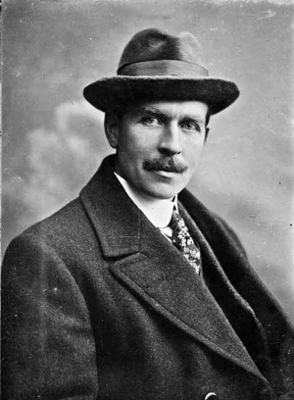
Diarmuid Lynch
Jeremiah Christopher Lynch (10 January 1878 – 9 November 1950) was an Irish revolutionary from County Cork who was a member of the Irish Republican Brotherhood and became a Sinn Féin TD in the First Dáil. A skilled organiser, he was prominent in Irish American organisations in the United States, where he spent many years.
Lynch was born in Granig, Tracton, County Cork, to Timothy Lynch, a farmer, and Hannah Dunlea. His mother died from pneumonia in July 1878 when Lynch was an infant; his father, who had remarried, died when Diarmuid was thirteen years of age.
In his autobiography, Lynch recalls being taken to a political meeting in Cork city by his father in 1886 which was addressed by Charles Stewart Parnell. He also describes attending a monster Land League rally at Minane Bridge at which William O'Brien and Dr. Charles Tanner MP spoke. He was politically influenced by his teachers, particularly Michael McCarthy, headmaster at Knocknamana National School.
Like other rural Irishmen of his generation, such as Michael Collins and J. J. Walsh, Lynch found employment in the Postal service. He began working as a sorting clerk in the Cork GPO and studied at Skerry's College for entrance to the Civil Service. In an open competitive examination he secured a place as a "Boy Clerk" at the Mount Pleasant money order office, London. Mount Pleasant would play a very significant part in the growth of the Irish Republican Brotherhood (IRB), because it was here that individuals such as Collins and Sam Maguire first became acquainted. Lynch himself would become a member of the IRB Supreme Council. While in London he played hurling with the London Gaels.
Lynch accepted an offer of employment from his uncle Cornelius Dunlea in New York and his skill as an organiser was soon recognised having joined the New York Philo-Celtic Society, established for the preservation of the Irish language and culture in the Irish-American nationalist community, in the summer of 1897. By December of that year, he had been elected secretary. Within a short period, membership in the organisation had almost quadrupled. Lynch "was convinced that restoration of the Irish language would increase the self respect of the Irish people".[citation needed] His activities in New York, and in particular his work for the Irish language, saw him elevated to the position of the State President of the Gaelic League of the State of New York. It was this role which would bring him to the attention of the Clan na Gael leadership of John Devoy and Judge Daniel F. Cohalan, two of the most important figures in Irish-American politics. Lynch's persuasive powers influenced Cohalan to accept "that the propagation of the language, instead of hindering the objective of the Clan, was essential to its achievement".
As Lynch's reputation grew so did his sphere of influence. Before he returned to Ireland in 1907, he could boast a circle of friends that included Jeremiah O'Donovan Rossa, Dr Thomas Addis Emmet, Ricard O'Sullivan Burke, John J. Breslin and Tom Clarke.
Having spent almost eleven years in America, Lynch decided to return to Ireland. He had been back in 1902 for a short period, when, with the aid of Liam de Róiste, he had organised an Irish cultural feis at Minane Bridge.
On his return to Ireland, he was employed by Thomas McKenzie & Sons, Dublin, an agricultural supplies wholesaler. He later joined the IRB at the invitation of Seán T. O'Kelly. By 1911 he had been appointed to the IRB Supreme Council as the divisional representative for Munster.
Hub AI
Diarmuid Lynch AI simulator
(@Diarmuid Lynch_simulator)
Diarmuid Lynch
Jeremiah Christopher Lynch (10 January 1878 – 9 November 1950) was an Irish revolutionary from County Cork who was a member of the Irish Republican Brotherhood and became a Sinn Féin TD in the First Dáil. A skilled organiser, he was prominent in Irish American organisations in the United States, where he spent many years.
Lynch was born in Granig, Tracton, County Cork, to Timothy Lynch, a farmer, and Hannah Dunlea. His mother died from pneumonia in July 1878 when Lynch was an infant; his father, who had remarried, died when Diarmuid was thirteen years of age.
In his autobiography, Lynch recalls being taken to a political meeting in Cork city by his father in 1886 which was addressed by Charles Stewart Parnell. He also describes attending a monster Land League rally at Minane Bridge at which William O'Brien and Dr. Charles Tanner MP spoke. He was politically influenced by his teachers, particularly Michael McCarthy, headmaster at Knocknamana National School.
Like other rural Irishmen of his generation, such as Michael Collins and J. J. Walsh, Lynch found employment in the Postal service. He began working as a sorting clerk in the Cork GPO and studied at Skerry's College for entrance to the Civil Service. In an open competitive examination he secured a place as a "Boy Clerk" at the Mount Pleasant money order office, London. Mount Pleasant would play a very significant part in the growth of the Irish Republican Brotherhood (IRB), because it was here that individuals such as Collins and Sam Maguire first became acquainted. Lynch himself would become a member of the IRB Supreme Council. While in London he played hurling with the London Gaels.
Lynch accepted an offer of employment from his uncle Cornelius Dunlea in New York and his skill as an organiser was soon recognised having joined the New York Philo-Celtic Society, established for the preservation of the Irish language and culture in the Irish-American nationalist community, in the summer of 1897. By December of that year, he had been elected secretary. Within a short period, membership in the organisation had almost quadrupled. Lynch "was convinced that restoration of the Irish language would increase the self respect of the Irish people".[citation needed] His activities in New York, and in particular his work for the Irish language, saw him elevated to the position of the State President of the Gaelic League of the State of New York. It was this role which would bring him to the attention of the Clan na Gael leadership of John Devoy and Judge Daniel F. Cohalan, two of the most important figures in Irish-American politics. Lynch's persuasive powers influenced Cohalan to accept "that the propagation of the language, instead of hindering the objective of the Clan, was essential to its achievement".
As Lynch's reputation grew so did his sphere of influence. Before he returned to Ireland in 1907, he could boast a circle of friends that included Jeremiah O'Donovan Rossa, Dr Thomas Addis Emmet, Ricard O'Sullivan Burke, John J. Breslin and Tom Clarke.
Having spent almost eleven years in America, Lynch decided to return to Ireland. He had been back in 1902 for a short period, when, with the aid of Liam de Róiste, he had organised an Irish cultural feis at Minane Bridge.
On his return to Ireland, he was employed by Thomas McKenzie & Sons, Dublin, an agricultural supplies wholesaler. He later joined the IRB at the invitation of Seán T. O'Kelly. By 1911 he had been appointed to the IRB Supreme Council as the divisional representative for Munster.