
Recent from talks
Dick Williams
Knowledge base stats:
Talk channels stats:
Members stats:
Dick Williams
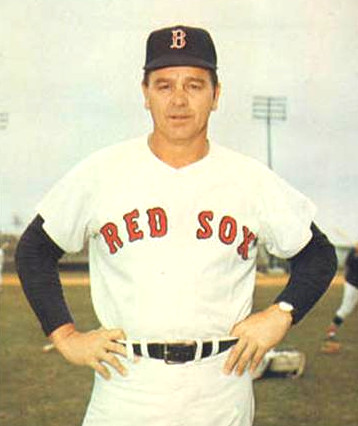
Richard Hirschfeld Williams (May 7, 1929 – July 7, 2011) was an American left fielder, third baseman, manager, coach and front-office consultant in Major League Baseball (MLB). Known especially as a hard-driving, sharp-tongued manager from 1967 to 1969 and from 1971 to 1988, he led teams to three American League pennants, one National League pennant, and two World Series triumphs. He is one of nine managers to win pennants in both major leagues, and joined Bill McKechnie in becoming only the second manager to lead three franchises to the Series (Bruce Bochy, in 2023, became the third). He and Lou Piniella are the only managers in history to lead four teams to seasons of 90 or more wins. Williams was inducted into the National Baseball Hall of Fame in 2008 following his election by the Veterans Committee.
Williams was born on May 7, 1929, in St. Louis, Missouri, and lived there until age 13, when his family moved to Pasadena, California. He attended Pasadena High School (which was then part of Pasadena Junior College, now Pasadena City College), where he was All-State in baseball and also played football and basketball (1946-47). In 2001, he was inducted into the Pasadena City College Hall of Fame.
Just out of high school, Williams signed his first professional contract with the Brooklyn Dodgers in 1947. From 1947 to 1956, he played all or parts of each season in the Dodgers minor league system. In 1948, playing Class C baseball, he had a .335 batting average with 16 home runs; however, Williams hit only .207 in Double-A baseball that year. A year later, again playing Double-A ball, he hit .310, with 23 home runs, 114 runs batted in (RBI) and 109 runs scored. In partial seasons playing Triple-A baseball he never hit more than .278. In 1955, his final full year in the minor leagues, he played Double-A ball for the Fort Worth Cats of the Texas League, hitting .317, with 24 home runs.
Williams played under manager Bobby Bragan at Fort Worth. Williams said, "'There should be a note under every one of my records that says See Bobby Bragan. Because a bit of every one of my wins belongs to him.'"
From 1951 to 1954 and 1956, Williams was called up to the Brooklyn Dodgers. He never played in more than 36 games for the Dodgers during any of those seasons, and never had more than 71 plate appearances in a season.
Williams played his first major league game with Brooklyn in 1951. A right-handed batter and thrower, Williams was listed as 6 feet (1.8 m) tall and 190 pounds (86 kg). Initially an outfielder, he separated a shoulder attempting to make a diving catch on August 25, 1952. Williams missed the rest of the season and the injury permanently weakened his throwing arm. As a result, he learned to play several positions (he was frequently a first baseman and third baseman) and became a notorious "bench jockey" in order to keep his major league job. Over his five years in Brooklyn, Williams played in only 112 games with 224 at bats. The Dodgers waived him on June 25, 1956 and he was claimed by the Baltimore Orioles.
He was a favorite of Paul Richards, who acquired Williams four different times between 1956 and 1962 when Richards was a manager or general manager with Baltimore and the Houston Colt .45s. One such transaction occurred on April 12, 1961, when Williams was traded along with Dick Hall from the Athletics to the Orioles for Chuck Essegian and Jerry Walker. He never played for Houston; he was acquired in an off-season "paper transaction" on October 12, 1962, then traded to the Boston Red Sox for another outfielder, Carroll Hardy, on December 10.
Williams played his most games for any one team in his five years as an Oriole (447), hitting 25 home runs and batting .255 in 1,417 at bats. Of greater significance may have been Richards's influence on Williams as a future manager. Like Bragan, with patience and down to the most minute detail, Richards would take days teaching all of his players the most fundamental aspects of the game, and how to handle each situation they might face on offense and defense.
Hub AI
Dick Williams AI simulator
(@Dick Williams_simulator)
Dick Williams
Richard Hirschfeld Williams (May 7, 1929 – July 7, 2011) was an American left fielder, third baseman, manager, coach and front-office consultant in Major League Baseball (MLB). Known especially as a hard-driving, sharp-tongued manager from 1967 to 1969 and from 1971 to 1988, he led teams to three American League pennants, one National League pennant, and two World Series triumphs. He is one of nine managers to win pennants in both major leagues, and joined Bill McKechnie in becoming only the second manager to lead three franchises to the Series (Bruce Bochy, in 2023, became the third). He and Lou Piniella are the only managers in history to lead four teams to seasons of 90 or more wins. Williams was inducted into the National Baseball Hall of Fame in 2008 following his election by the Veterans Committee.
Williams was born on May 7, 1929, in St. Louis, Missouri, and lived there until age 13, when his family moved to Pasadena, California. He attended Pasadena High School (which was then part of Pasadena Junior College, now Pasadena City College), where he was All-State in baseball and also played football and basketball (1946-47). In 2001, he was inducted into the Pasadena City College Hall of Fame.
Just out of high school, Williams signed his first professional contract with the Brooklyn Dodgers in 1947. From 1947 to 1956, he played all or parts of each season in the Dodgers minor league system. In 1948, playing Class C baseball, he had a .335 batting average with 16 home runs; however, Williams hit only .207 in Double-A baseball that year. A year later, again playing Double-A ball, he hit .310, with 23 home runs, 114 runs batted in (RBI) and 109 runs scored. In partial seasons playing Triple-A baseball he never hit more than .278. In 1955, his final full year in the minor leagues, he played Double-A ball for the Fort Worth Cats of the Texas League, hitting .317, with 24 home runs.
Williams played under manager Bobby Bragan at Fort Worth. Williams said, "'There should be a note under every one of my records that says See Bobby Bragan. Because a bit of every one of my wins belongs to him.'"
From 1951 to 1954 and 1956, Williams was called up to the Brooklyn Dodgers. He never played in more than 36 games for the Dodgers during any of those seasons, and never had more than 71 plate appearances in a season.
Williams played his first major league game with Brooklyn in 1951. A right-handed batter and thrower, Williams was listed as 6 feet (1.8 m) tall and 190 pounds (86 kg). Initially an outfielder, he separated a shoulder attempting to make a diving catch on August 25, 1952. Williams missed the rest of the season and the injury permanently weakened his throwing arm. As a result, he learned to play several positions (he was frequently a first baseman and third baseman) and became a notorious "bench jockey" in order to keep his major league job. Over his five years in Brooklyn, Williams played in only 112 games with 224 at bats. The Dodgers waived him on June 25, 1956 and he was claimed by the Baltimore Orioles.
He was a favorite of Paul Richards, who acquired Williams four different times between 1956 and 1962 when Richards was a manager or general manager with Baltimore and the Houston Colt .45s. One such transaction occurred on April 12, 1961, when Williams was traded along with Dick Hall from the Athletics to the Orioles for Chuck Essegian and Jerry Walker. He never played for Houston; he was acquired in an off-season "paper transaction" on October 12, 1962, then traded to the Boston Red Sox for another outfielder, Carroll Hardy, on December 10.
Williams played his most games for any one team in his five years as an Oriole (447), hitting 25 home runs and batting .255 in 1,417 at bats. Of greater significance may have been Richards's influence on Williams as a future manager. Like Bragan, with patience and down to the most minute detail, Richards would take days teaching all of his players the most fundamental aspects of the game, and how to handle each situation they might face on offense and defense.
Recent media