
Recent from talks
Dictator
Knowledge base stats:
Talk channels stats:
Members stats:
Dictator
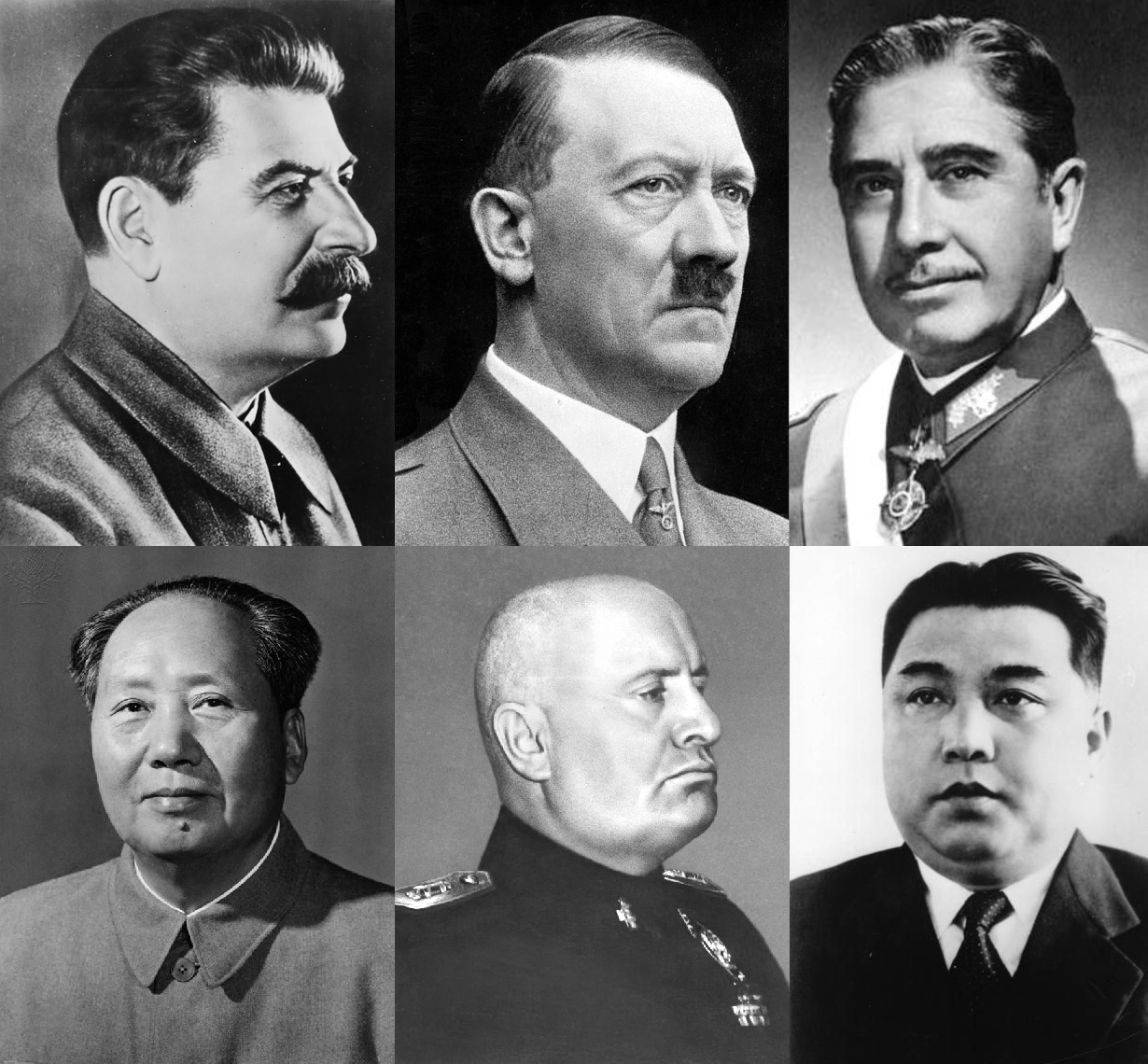
A dictator is a political leader who possesses absolute power. A dictatorship is a state ruled by one dictator or by a polity. The word originated as the title of a Roman dictator elected by the Roman Senate to rule the republic in times of emergency. Like the terms "tyrant" and "autocrat", dictator came to be used almost exclusively as a non-titular term for oppressive rule. In modern usage, the term dictator is generally used to describe a leader who holds or abuses an extraordinary amount of personal power.
Dictatorships are often characterised by some of the following: suspension of elections and civil liberties; proclamation of a state of emergency; rule by decree; repression of political opponents; not abiding by the procedures of the rule of law; and the existence of a cult of personality centered on the leader. Dictatorships are often one-party or dominant-party states. A wide variety of leaders coming to power in different kinds of regimes, such as one-party or dominant-party states and civilian governments under a personal rule, have been described as dictators.
The word dictator comes from the Latin word dictātor, agent noun from dictare (say repeatedly, assert, order). A dictator was a Roman magistrate given sole power for a limited duration. Originally an emergency legal appointment in the Roman Republic and the Etruscan culture, the term dictator did not have the negative meaning it has now. It started to get its modern negative meaning with Cornelius Sulla's ascension to the dictatorship following Sulla's civil war, making himself the first Dictator in Rome in more than a century (during which the office was ostensibly abolished) as well as de facto eliminating the time limit and need of senatorial acclamation.
He avoided a major constitutional crisis by resigning the office after about one year, dying a few years later. Julius Caesar followed Sulla's example in 49 BC and in February 44 BC was proclaimed Dictator perpetuo, "Dictator in perpetuity", officially doing away with any limitations on his power, which he kept until his assassination the following month. Following Caesar's assassination, his heir Augustus was offered the title of dictator, but he declined it. Later successors also declined the title of dictator, and usage of the title soon diminished among Roman rulers.
As late as the second half of the 19th century, the term dictator had occasional positive implications. For example, during the Hungarian Revolution of 1848, the national leader Lajos Kossuth was often referred to as dictator, without any negative connotations, by his supporters and detractors alike, although his official title was that of regent-president. When creating a provisional executive in Sicily during the Expedition of the Thousand in 1860, Giuseppe Garibaldi officially assumed the title of "dictator" (see Dictatorship of Garibaldi). Shortly afterwards, during the 1863 January uprising in Poland, "Dictator" was also the official title of four leaders, the first being Ludwik Mierosławski.
Past that time, however, the term dictator assumed an invariably negative connotation. In popular usage, a dictatorship is often associated with brutality and oppression. As a result, it is often also used as a term of abuse against political opponents. Many dictators create a cult of personality around themselves and they have also come to grant themselves increasingly grandiloquent titles and honours. For instance, Idi Amin Dada, who had been a British army lieutenant prior to Uganda's independence from Britain in October 1962, subsequently styled himself "His Excellency, President for Life, Field Marshal Al Hadji Doctor[A] Idi Amin Dada, VC,[B] DSO, MC, Conqueror of the British Empire in Africa in General and Uganda in Particular". In the movie The Great Dictator (1940), Charlie Chaplin satirized not only Adolf Hitler but the institution of dictatorship itself.
A benevolent dictatorship refers to a government in which an authoritarian leader exercises absolute political power over the state but is perceived to do so with regard for the benefit of the population as a whole, standing in contrast to the decidedly malevolent stereotype of a dictator. A benevolent dictator may allow for some civil liberties or democratic decision-making to exist, such as through public referendums or elected representatives with limited power, and often makes preparations for a transition to genuine democracy during or after their term. The label has been applied to leaders such as Mustafa Kemal Atatürk of Turkey (1923–38), Josip Broz Tito of SFR Yugoslavia (1953–80), and Lee Kuan Yew of Singapore (1959–90).
The association between a dictator and the military is a common one. Many dictators take great pains to emphasize their connections with the military and they often wear military uniforms. In some cases, this is perfectly legitimate; for instance, Francisco Franco was a general in the Spanish Army before he became Chief of State of Spain, and Manuel Noriega was officially commander of the Panamanian Defense Forces.
Hub AI
Dictator AI simulator
(@Dictator_simulator)
Dictator
A dictator is a political leader who possesses absolute power. A dictatorship is a state ruled by one dictator or by a polity. The word originated as the title of a Roman dictator elected by the Roman Senate to rule the republic in times of emergency. Like the terms "tyrant" and "autocrat", dictator came to be used almost exclusively as a non-titular term for oppressive rule. In modern usage, the term dictator is generally used to describe a leader who holds or abuses an extraordinary amount of personal power.
Dictatorships are often characterised by some of the following: suspension of elections and civil liberties; proclamation of a state of emergency; rule by decree; repression of political opponents; not abiding by the procedures of the rule of law; and the existence of a cult of personality centered on the leader. Dictatorships are often one-party or dominant-party states. A wide variety of leaders coming to power in different kinds of regimes, such as one-party or dominant-party states and civilian governments under a personal rule, have been described as dictators.
The word dictator comes from the Latin word dictātor, agent noun from dictare (say repeatedly, assert, order). A dictator was a Roman magistrate given sole power for a limited duration. Originally an emergency legal appointment in the Roman Republic and the Etruscan culture, the term dictator did not have the negative meaning it has now. It started to get its modern negative meaning with Cornelius Sulla's ascension to the dictatorship following Sulla's civil war, making himself the first Dictator in Rome in more than a century (during which the office was ostensibly abolished) as well as de facto eliminating the time limit and need of senatorial acclamation.
He avoided a major constitutional crisis by resigning the office after about one year, dying a few years later. Julius Caesar followed Sulla's example in 49 BC and in February 44 BC was proclaimed Dictator perpetuo, "Dictator in perpetuity", officially doing away with any limitations on his power, which he kept until his assassination the following month. Following Caesar's assassination, his heir Augustus was offered the title of dictator, but he declined it. Later successors also declined the title of dictator, and usage of the title soon diminished among Roman rulers.
As late as the second half of the 19th century, the term dictator had occasional positive implications. For example, during the Hungarian Revolution of 1848, the national leader Lajos Kossuth was often referred to as dictator, without any negative connotations, by his supporters and detractors alike, although his official title was that of regent-president. When creating a provisional executive in Sicily during the Expedition of the Thousand in 1860, Giuseppe Garibaldi officially assumed the title of "dictator" (see Dictatorship of Garibaldi). Shortly afterwards, during the 1863 January uprising in Poland, "Dictator" was also the official title of four leaders, the first being Ludwik Mierosławski.
Past that time, however, the term dictator assumed an invariably negative connotation. In popular usage, a dictatorship is often associated with brutality and oppression. As a result, it is often also used as a term of abuse against political opponents. Many dictators create a cult of personality around themselves and they have also come to grant themselves increasingly grandiloquent titles and honours. For instance, Idi Amin Dada, who had been a British army lieutenant prior to Uganda's independence from Britain in October 1962, subsequently styled himself "His Excellency, President for Life, Field Marshal Al Hadji Doctor[A] Idi Amin Dada, VC,[B] DSO, MC, Conqueror of the British Empire in Africa in General and Uganda in Particular". In the movie The Great Dictator (1940), Charlie Chaplin satirized not only Adolf Hitler but the institution of dictatorship itself.
A benevolent dictatorship refers to a government in which an authoritarian leader exercises absolute political power over the state but is perceived to do so with regard for the benefit of the population as a whole, standing in contrast to the decidedly malevolent stereotype of a dictator. A benevolent dictator may allow for some civil liberties or democratic decision-making to exist, such as through public referendums or elected representatives with limited power, and often makes preparations for a transition to genuine democracy during or after their term. The label has been applied to leaders such as Mustafa Kemal Atatürk of Turkey (1923–38), Josip Broz Tito of SFR Yugoslavia (1953–80), and Lee Kuan Yew of Singapore (1959–90).
The association between a dictator and the military is a common one. Many dictators take great pains to emphasize their connections with the military and they often wear military uniforms. In some cases, this is perfectly legitimate; for instance, Francisco Franco was a general in the Spanish Army before he became Chief of State of Spain, and Manuel Noriega was officially commander of the Panamanian Defense Forces.
Recent media