
Recent from talks
Dikir barat
Knowledge base stats:
Talk channels stats:
Members stats:
Dikir barat
Dikir barat, dikir hulu or lebe ulu is a musical form, native to the northeastern coastal region of Malay Peninsula, that involves singing in groups—often in a competitive setting. Dikir barat may be performed either with a percussion instrumental accompaniment, or with no instruments at all.
The art originated among the peasantry of Patani who would incant verses back and forth with each other (dikir, from Arabic: ذِكْر, romanized: dzikr) as a form of entertainment while harvesting their paddy fields; this would be later be developed to be performed in functions for guests from faraway lands (jamuan lebe ulu, 'banquet of inland/upstream imams') hence the art would be known as lebe ulu. It was only the spread to Kelantan in the 1930s where it is given the popular name dikir barat– barat ('west') referring to the location in relation to Kelantan.
It is still performed in both modern nation-states of Malaysia and Thailand, the former's National Department for Culture and Arts actively promotes it as an important part of Malaysian national culture. Since the mid-1970s, the art form has also gained popularity among the Malays of Singapore, who have adapted it into a distinctive style known as Dikir Barat Singapura, also referred to as Dikir Singapura.
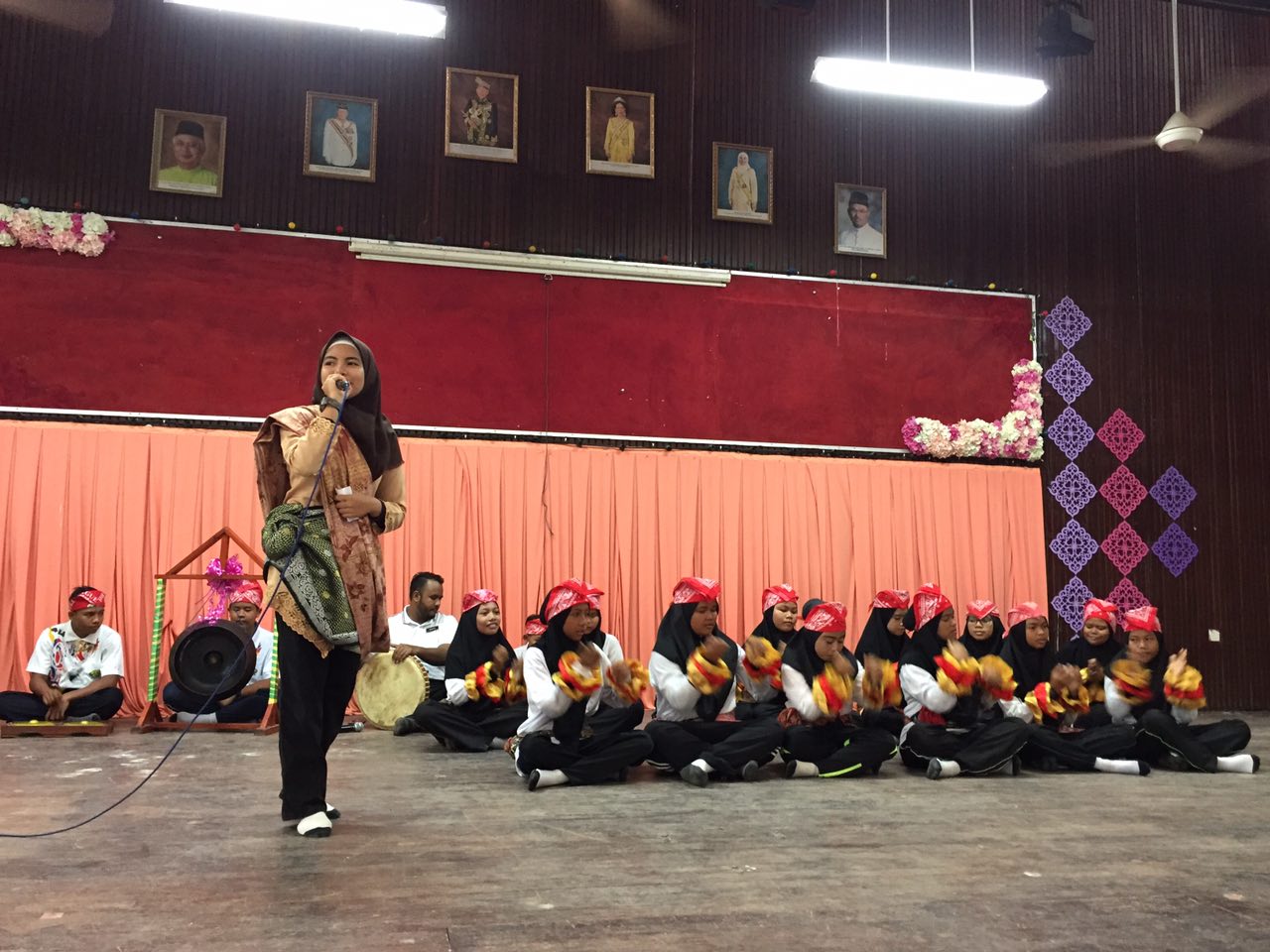
Dikir barat is typically performed by groups of ten to fifteen members, though there is no actual set size, even in competitive environments. A group usually sits cross-legged on a platform, sometimes surrounded by the audience. Where the dikir barat is performed competitively, the two competing groups will both be on the stage at the same time.
In a typical dikir barat performance, the group will perform two segments. The first is led by the tok juara ('master trainer'), who is often the person in charge of the musical training of the group. This first segment usually contains the more complex musical arrangements, and will likely feature the awak-awak (lit. 'crew', chorus) singing in unison with the tok juara, as well as responsorial segments of singing, similar to what the tukang karut ('weaving master') does with the awak-awak, later in the performance. Though musically more complex than what will follow, the first segment is seen as the "low-key" segment of the performance.
The creative leader of a dikir barat group is the tukang karut. The tukang karut (who is often himself a former tok juara) is expected in his performance to utilise current social and political issues which will be relevant to the audience. His ability to do this helps to uphold the reputation of the dikir barat group. Leading the awok-awok during the second and concluding segment of the performance, the tukang karut sings pantuns—most of which are likely original and improvised on the occasion of the performance, but some which may be known to the audience. (Pantuns are an oral poetry form indigenous to the Malay region, and are not exclusive to the dikir barat.) That the dikir barat uses pantuns does not mean that it is a performance of poetry. Like any poet, the tukang karut is expected to create lyrics that touch upon everyday life, but he can also address social issues, legal matters, politics, government regulations, and human foibles. The tone can be satirical, sarcastic, or simply humorous, but above all it is expected that it be clever. The tukang karut makes up and sings lyrics on the topic of the performance (which may be pre-established or simply the choice of the tukang karut), and the awok-awok sings the same lyrics back to him. During the performance, members of the awok-awok clap and perform rhythmic body movements, which bring energy to the performance.
Historically, dikir barat performances have been all-male. However, in recent years, especially with groups based in urban areas, female performers are beginning to appear.
While most musical instruments are excluded from dikir barat, some groups employ percussion instruments, including the rebana, maracas, or a shallow gong.
Hub AI
Dikir barat AI simulator
(@Dikir barat_simulator)
Dikir barat
Dikir barat, dikir hulu or lebe ulu is a musical form, native to the northeastern coastal region of Malay Peninsula, that involves singing in groups—often in a competitive setting. Dikir barat may be performed either with a percussion instrumental accompaniment, or with no instruments at all.
The art originated among the peasantry of Patani who would incant verses back and forth with each other (dikir, from Arabic: ذِكْر, romanized: dzikr) as a form of entertainment while harvesting their paddy fields; this would be later be developed to be performed in functions for guests from faraway lands (jamuan lebe ulu, 'banquet of inland/upstream imams') hence the art would be known as lebe ulu. It was only the spread to Kelantan in the 1930s where it is given the popular name dikir barat– barat ('west') referring to the location in relation to Kelantan.
It is still performed in both modern nation-states of Malaysia and Thailand, the former's National Department for Culture and Arts actively promotes it as an important part of Malaysian national culture. Since the mid-1970s, the art form has also gained popularity among the Malays of Singapore, who have adapted it into a distinctive style known as Dikir Barat Singapura, also referred to as Dikir Singapura.
Dikir barat is typically performed by groups of ten to fifteen members, though there is no actual set size, even in competitive environments. A group usually sits cross-legged on a platform, sometimes surrounded by the audience. Where the dikir barat is performed competitively, the two competing groups will both be on the stage at the same time.
In a typical dikir barat performance, the group will perform two segments. The first is led by the tok juara ('master trainer'), who is often the person in charge of the musical training of the group. This first segment usually contains the more complex musical arrangements, and will likely feature the awak-awak (lit. 'crew', chorus) singing in unison with the tok juara, as well as responsorial segments of singing, similar to what the tukang karut ('weaving master') does with the awak-awak, later in the performance. Though musically more complex than what will follow, the first segment is seen as the "low-key" segment of the performance.
The creative leader of a dikir barat group is the tukang karut. The tukang karut (who is often himself a former tok juara) is expected in his performance to utilise current social and political issues which will be relevant to the audience. His ability to do this helps to uphold the reputation of the dikir barat group. Leading the awok-awok during the second and concluding segment of the performance, the tukang karut sings pantuns—most of which are likely original and improvised on the occasion of the performance, but some which may be known to the audience. (Pantuns are an oral poetry form indigenous to the Malay region, and are not exclusive to the dikir barat.) That the dikir barat uses pantuns does not mean that it is a performance of poetry. Like any poet, the tukang karut is expected to create lyrics that touch upon everyday life, but he can also address social issues, legal matters, politics, government regulations, and human foibles. The tone can be satirical, sarcastic, or simply humorous, but above all it is expected that it be clever. The tukang karut makes up and sings lyrics on the topic of the performance (which may be pre-established or simply the choice of the tukang karut), and the awok-awok sings the same lyrics back to him. During the performance, members of the awok-awok clap and perform rhythmic body movements, which bring energy to the performance.
Historically, dikir barat performances have been all-male. However, in recent years, especially with groups based in urban areas, female performers are beginning to appear.
While most musical instruments are excluded from dikir barat, some groups employ percussion instruments, including the rebana, maracas, or a shallow gong.
Recent media