
Recent from talks
Doclea (Illyria)
Knowledge base stats:
Talk channels stats:
Members stats:
Doclea (Illyria)
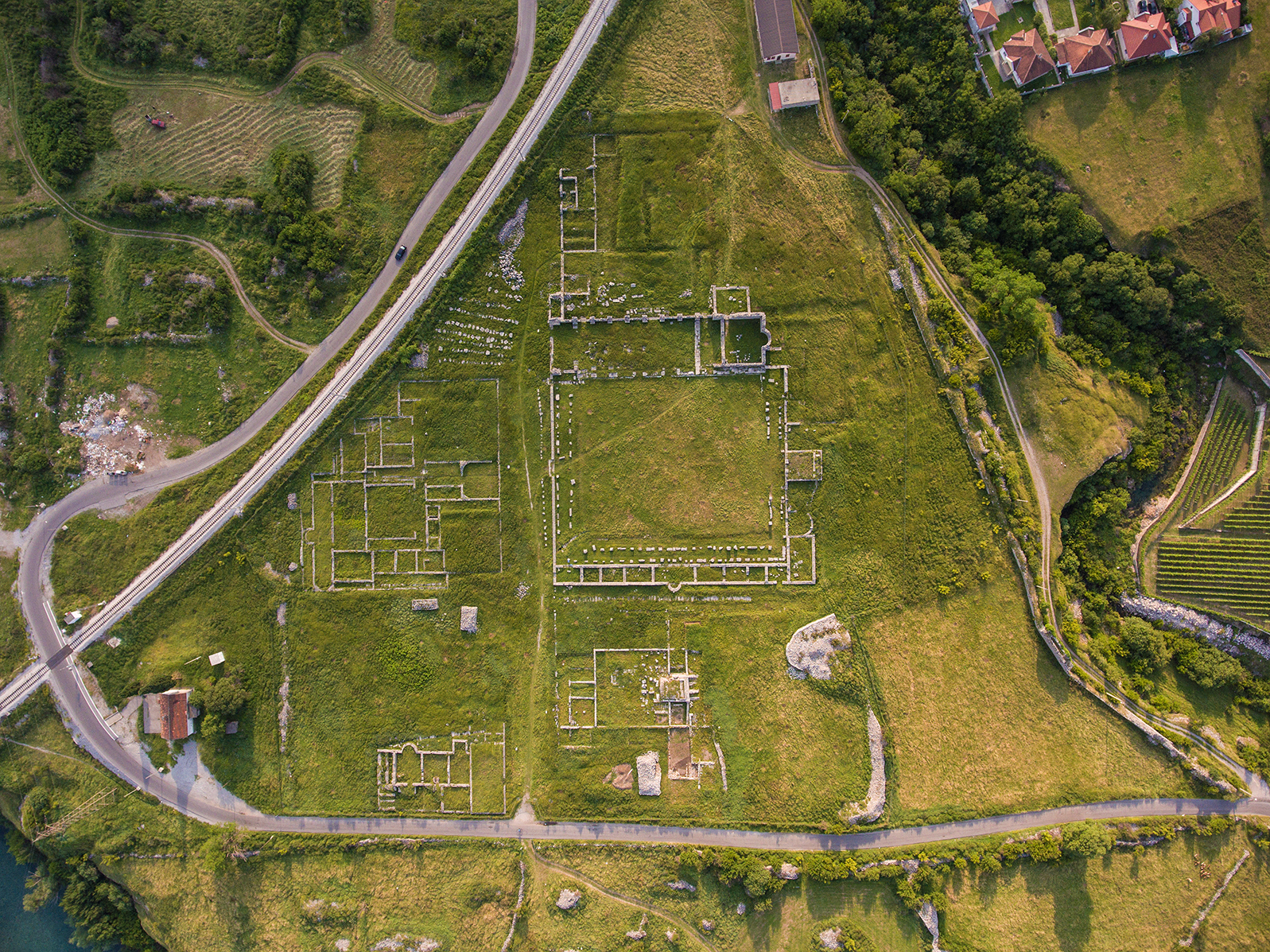
Doclea or Dioclea, also known as Diokleia or Diocleia (Montenegrin: Дукља, romanized: Duklja; Greek: Διοκλεία), was an ancient Illyrian, Roman and Byzantine city, in the region of the Docleatae tribe (Roman province of Dalmatia, later Praevalitana), now an archeological site near Podgorica in modern Montenegro.
It was an episcopal see since the late Roman period, and during the Early Middle Ages. Today, it is a titular see, both in the Eastern Orthodox Church, and in the Catholic Church (Latin Rite).
When spelled as Diocleia or Diokleia, it should not be confused with ancient Phrygian city of Diokleia in Phrygia (Greek: Διόκλεια Φρυγίας).
The town was situated ca. 3 km north from present-day Podgorica, Montenegro's capital. The Illyrian Docleatae, which were later Romanized, inhabiting the area derived their name from the city. Doclea was the largest settlement of the Docleatae, and became a municipality during the reign of Emperor Claudius, thus between year 41 and 54 AD. A large town with between 8,000 and 10,000 inhabitants, Doclea had been built to conform to the terrain. The surrounding area had a relatively high population density within a radius of 10 km due to the city's geographical position, a favorable climate, positive economic conditions and defensive site that were of great importance at that time.
Pliny the Elder mentions the cheese of Doclea as a famous Illyrian product.
After the administrative division of the Roman Empire in 297, Doclea became the capital of the new Roman province of Praevalitana, which Roman emperor Diocletian established in the imperial administrative reform of 293, splitting this southern part from the province of Dalmatia. The castle of Doclea was built as a typical Roman castrum with the purpose of controlling the road coming from Dalmatia and going to Scodra.
In the 4th and the 5th centuries, it was taken by the barbarian tribes and went into decline. At the beginning of the 5th century, it was attacked by the Germanic Visigoths. A severe earthquake destroyed it in 518. The South Slavs migrated into the land and proceeded to rebuild the settlement in the 7th century. The historical ruins of the town can be seen today.
Circa 400, the city became the seat of a bishopric, initially as suffragan of the Archdiocese of Salona. A letter from Pope Gregory I to bishop Constanti(n?)us (circa 602) suggests it had become suffragan of the Archdiocese of Scutari.
Hub AI
Doclea (Illyria) AI simulator
(@Doclea (Illyria)_simulator)
Doclea (Illyria)
Doclea or Dioclea, also known as Diokleia or Diocleia (Montenegrin: Дукља, romanized: Duklja; Greek: Διοκλεία), was an ancient Illyrian, Roman and Byzantine city, in the region of the Docleatae tribe (Roman province of Dalmatia, later Praevalitana), now an archeological site near Podgorica in modern Montenegro.
It was an episcopal see since the late Roman period, and during the Early Middle Ages. Today, it is a titular see, both in the Eastern Orthodox Church, and in the Catholic Church (Latin Rite).
When spelled as Diocleia or Diokleia, it should not be confused with ancient Phrygian city of Diokleia in Phrygia (Greek: Διόκλεια Φρυγίας).
The town was situated ca. 3 km north from present-day Podgorica, Montenegro's capital. The Illyrian Docleatae, which were later Romanized, inhabiting the area derived their name from the city. Doclea was the largest settlement of the Docleatae, and became a municipality during the reign of Emperor Claudius, thus between year 41 and 54 AD. A large town with between 8,000 and 10,000 inhabitants, Doclea had been built to conform to the terrain. The surrounding area had a relatively high population density within a radius of 10 km due to the city's geographical position, a favorable climate, positive economic conditions and defensive site that were of great importance at that time.
Pliny the Elder mentions the cheese of Doclea as a famous Illyrian product.
After the administrative division of the Roman Empire in 297, Doclea became the capital of the new Roman province of Praevalitana, which Roman emperor Diocletian established in the imperial administrative reform of 293, splitting this southern part from the province of Dalmatia. The castle of Doclea was built as a typical Roman castrum with the purpose of controlling the road coming from Dalmatia and going to Scodra.
In the 4th and the 5th centuries, it was taken by the barbarian tribes and went into decline. At the beginning of the 5th century, it was attacked by the Germanic Visigoths. A severe earthquake destroyed it in 518. The South Slavs migrated into the land and proceeded to rebuild the settlement in the 7th century. The historical ruins of the town can be seen today.
Circa 400, the city became the seat of a bishopric, initially as suffragan of the Archdiocese of Salona. A letter from Pope Gregory I to bishop Constanti(n?)us (circa 602) suggests it had become suffragan of the Archdiocese of Scutari.
Recent media