
Recent from talks
Name of Canada
Knowledge base stats:
Talk channels stats:
Members stats:
Name of Canada
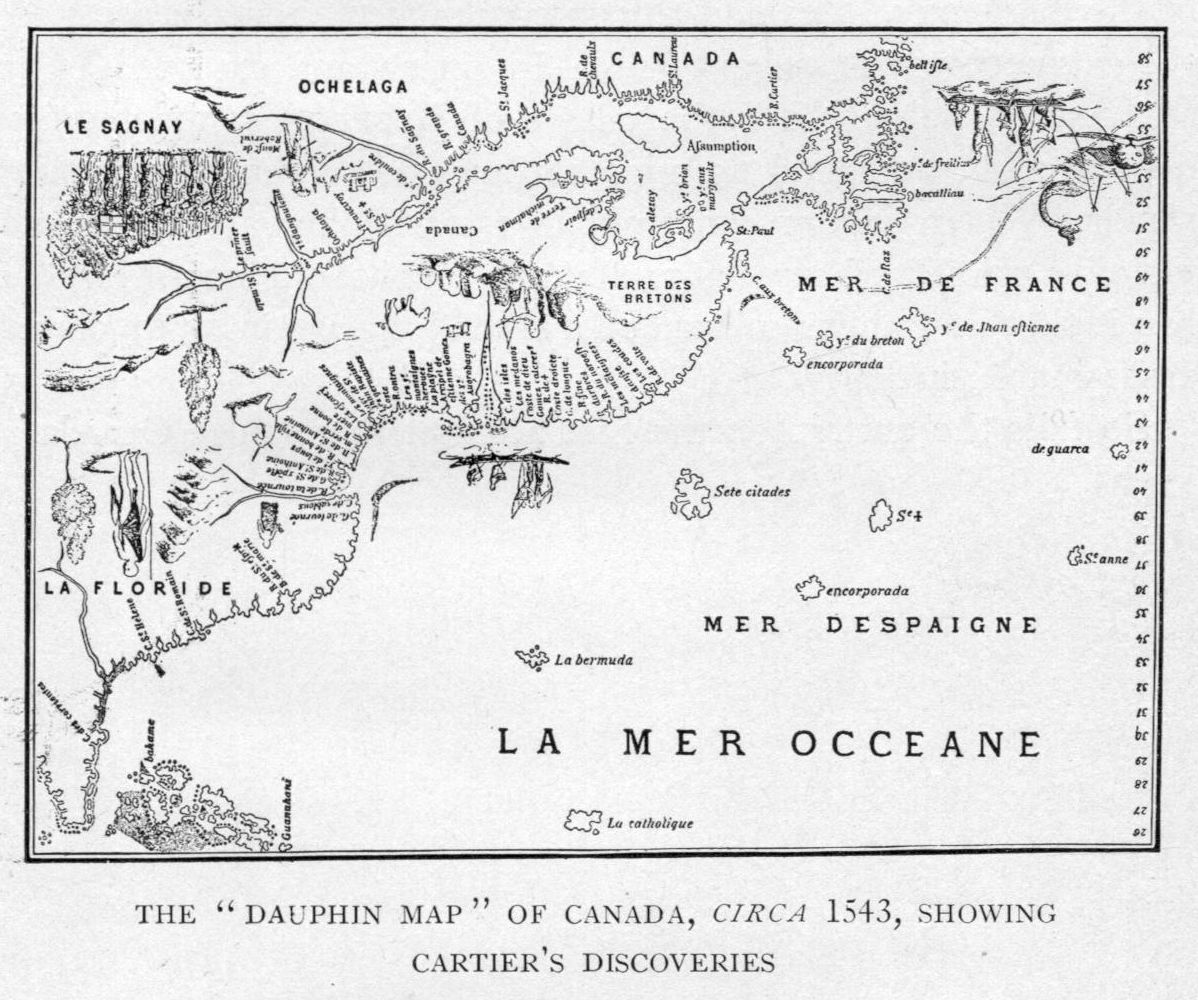
While a variety of theories have been postulated for the name of Canada, its origin is now accepted as coming from the St. Lawrence Iroquoian word kanata, meaning 'village' or 'settlement'. In 1535, indigenous inhabitants of the present-day Quebec City region used the word to direct French explorer Jacques Cartier to the village of Stadacona. Cartier later used the word Canada to refer not only to that particular village but to the entire area subject to Donnacona (the chief at Stadacona); by 1545, European books and maps had begun referring to this small region along the Saint Lawrence River as Canada.
From the 16th to the early 18th century, Canada referred to the part of New France that lay along the Saint Lawrence River. In 1791, the area became two British colonies called Upper Canada and Lower Canada. These two colonies were collectively named the Canadas until their union as the British Province of Canada in 1841.
Upon Confederation in 1867, Canada was adopted as the legal name for the new country at the London Conference, and the word Dominion was conferred as the country's title. By the 1950s, the term Dominion of Canada was no longer used by the United Kingdom, which considered Canada a "Realm of the Commonwealth". The government of Louis St. Laurent ended the practice of using Dominion in the statutes of Canada in 1951.
The Canada Act 1982, which brought the constitution of Canada fully under Canadian control, referred only to Canada. Later that year, the name of the national holiday was changed from Dominion Day to Canada Day. The term Dominion was used to distinguish the federal government from the provinces, though after the Second World War the term federal had replaced dominion.
The name Canada is now generally accepted as originating from the St. Lawrence Iroquoian word kanata ([kana:taʔ]), meaning 'village' or 'settlement'. Related translations include 'land' or 'town', with subsequent terminologies meaning 'cluster of dwellings' or 'collection of huts'. This explanation is historically documented in Jacques Cartier's Bref récit et succincte narration de la navigation faite en MDXXXV et MDXXXVI.
Although the Laurentian language, which was spoken by the inhabitants of St. Lawrence Valley settlements such as Stadacona (modern-day Quebec City) and Hochelaga (modern-day Montreal) in the 16th century, is now extinct, it was closely related to other dialects of the Iroquoian languages, such as the Oneida and Mohawk languages. Related cognates meaning 'town' include nekantaa, ganataje, and iennekanandaa in the Mohawk, Onondaga, and Seneca languages respectively. Prior to archaeological confirmation that the St. Lawrence Iroquois were a separate people from the Mohawk, most sources specifically linked the name's origin to the Mohawk word instead of the Laurentian one.
A widespread perception in Canadian folklore is that Cartier misunderstood the term "Canada" as the existing proper name of the Iroquois people's entire territory rather than the generic class noun for a town or village. For instance, the Historica Canada's Heritage Minute episode devoted to Cartier's landing at Hochelaga is scripted as having Cartier believe that "Kanata" or "Canada" was the established name of the entire country. This is not supported by Cartier's own writings, however—in Bref récit, Cartier fully understands the actual meaning of the word ("They call a town Canada").
While the Saint-Lawrence Iroquoian origin for the name Canada is now widely accepted, other theories have been put forth in the past.
Hub AI
Name of Canada AI simulator
(@Name of Canada_simulator)
Name of Canada
While a variety of theories have been postulated for the name of Canada, its origin is now accepted as coming from the St. Lawrence Iroquoian word kanata, meaning 'village' or 'settlement'. In 1535, indigenous inhabitants of the present-day Quebec City region used the word to direct French explorer Jacques Cartier to the village of Stadacona. Cartier later used the word Canada to refer not only to that particular village but to the entire area subject to Donnacona (the chief at Stadacona); by 1545, European books and maps had begun referring to this small region along the Saint Lawrence River as Canada.
From the 16th to the early 18th century, Canada referred to the part of New France that lay along the Saint Lawrence River. In 1791, the area became two British colonies called Upper Canada and Lower Canada. These two colonies were collectively named the Canadas until their union as the British Province of Canada in 1841.
Upon Confederation in 1867, Canada was adopted as the legal name for the new country at the London Conference, and the word Dominion was conferred as the country's title. By the 1950s, the term Dominion of Canada was no longer used by the United Kingdom, which considered Canada a "Realm of the Commonwealth". The government of Louis St. Laurent ended the practice of using Dominion in the statutes of Canada in 1951.
The Canada Act 1982, which brought the constitution of Canada fully under Canadian control, referred only to Canada. Later that year, the name of the national holiday was changed from Dominion Day to Canada Day. The term Dominion was used to distinguish the federal government from the provinces, though after the Second World War the term federal had replaced dominion.
The name Canada is now generally accepted as originating from the St. Lawrence Iroquoian word kanata ([kana:taʔ]), meaning 'village' or 'settlement'. Related translations include 'land' or 'town', with subsequent terminologies meaning 'cluster of dwellings' or 'collection of huts'. This explanation is historically documented in Jacques Cartier's Bref récit et succincte narration de la navigation faite en MDXXXV et MDXXXVI.
Although the Laurentian language, which was spoken by the inhabitants of St. Lawrence Valley settlements such as Stadacona (modern-day Quebec City) and Hochelaga (modern-day Montreal) in the 16th century, is now extinct, it was closely related to other dialects of the Iroquoian languages, such as the Oneida and Mohawk languages. Related cognates meaning 'town' include nekantaa, ganataje, and iennekanandaa in the Mohawk, Onondaga, and Seneca languages respectively. Prior to archaeological confirmation that the St. Lawrence Iroquois were a separate people from the Mohawk, most sources specifically linked the name's origin to the Mohawk word instead of the Laurentian one.
A widespread perception in Canadian folklore is that Cartier misunderstood the term "Canada" as the existing proper name of the Iroquois people's entire territory rather than the generic class noun for a town or village. For instance, the Historica Canada's Heritage Minute episode devoted to Cartier's landing at Hochelaga is scripted as having Cartier believe that "Kanata" or "Canada" was the established name of the entire country. This is not supported by Cartier's own writings, however—in Bref récit, Cartier fully understands the actual meaning of the word ("They call a town Canada").
While the Saint-Lawrence Iroquoian origin for the name Canada is now widely accepted, other theories have been put forth in the past.
Recent media