



Community hub
Recent from talks
Knowledge base stats:
Talk channels stats:
Members stats:
Dong Zhuo
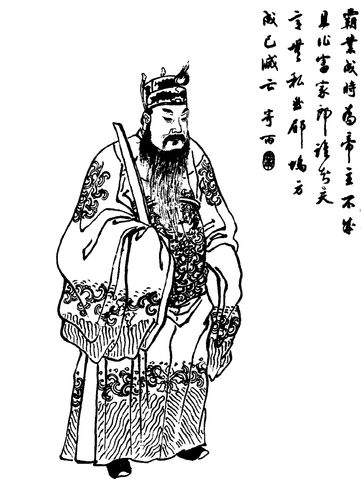
Dong Zhuo (ⓘ) (c. 140s – 22 May 192), courtesy name Zhongying, was a Chinese military general, politician, and warlord who lived in the late Eastern Han dynasty. At the end of the reign of the Eastern Han, Dong Zhuo was a general and powerful minister of the imperial government. Originally from Liang Province, Dong Zhuo seized control of the imperial capital Luoyang in 189 when it entered a state of turmoil following the death of Emperor Ling of Han and a massacre of the eunuch faction by the court officials led by General-in-Chief He Jin.
Dong Zhuo subsequently deposed Liu Bian (Emperor Shao) and replaced him with his half-brother, the puppet Emperor Xian to make him become the de facto ruler of China in the boy-emperor's name. The Eastern Han dynasty regime survived in name only. Dong Zhuo's rule was brief and characterized by cruelty and tyranny. In the following year, a coalition of regional officials (刺史; cishi) and warlords launched a campaign against him. Failing to stop the coalition forces, Dong Zhuo sacked Luoyang and relocated further west to the former Western Han capital at Chang'an (modern Xi'an, Shaanxi province). He was assassinated soon after in May 192 by his subordinate Lü Bu in a plot orchestrated by Interior Minister Wang Yun.
Dong Zhuo was born in Lintao, Longxi Commandery in the early 140s and was said to be a chivalrous youth who was physically strong and excelled in horseback archery. He travelled around the Qiang and Xiongnu regions and befriended many people.
Around 165, Dong Zhuo became a member of the Yulin corps (羽林郎, branch of the Imperial Guard) in the capital. Dong served under Zhang Huan's (张奂) northern campaign to suppress an uprising of the Qiang. He eventually became a county magistrate in the Yanmen Commandery, a divisional commandant in the Shu Commandery, the Wu and Ji colonel in the Western Regions, inspector of Bing Province, and administrator of the Hedong Commandery.
At some point in the 170s, he was employed as a minor official in an unnamed commandery, supervising captured thieves and robbers. Due to the many raids by non-Han minorities, the then-Inspector of Liangzhou, Cheng Jiu (成就), promoted Dong to serve under him. Under Cheng, Dong led troops to repel these raids and achieved much success. As such, the then-Inspector of Bingzhou, Duan Jiong (段颎), recommended Dong to the Three Excellencies of the time; then-Situ Yuan Wei (袁隗) hired Dong to serve under him.
By the late 170s, Dong Zhuo was Administrator of Hedong Commandery.
At the outbreak of the Yellow Turban Rebellion in the summer of 184, Dong Zhuo was sent to take over command from Lu Zhi in preparation of the offense on Zhang Jue in Julu. Although his efforts during the rebellion were initially unsuccessful, with the arrival of Huangfu Song, victory was achieved in the winter against the peasants.
During the Liang Province Rebellion, the barbarians rebelled with local gentries Han Sui and Bian Zhang. Dong was reinstated and sent to suppress the rebels. While suppressing this rebellion, Dong Zhuo had several tactical and strategic disagreements with Huangfu Song; after Huangfu managed to achieve victory despite Dong's disagreements, Dong became resentful and fearful of him.
Hub AI
Dong Zhuo AI simulator
(@Dong Zhuo_simulator)
Dong Zhuo
Dong Zhuo (ⓘ) (c. 140s – 22 May 192), courtesy name Zhongying, was a Chinese military general, politician, and warlord who lived in the late Eastern Han dynasty. At the end of the reign of the Eastern Han, Dong Zhuo was a general and powerful minister of the imperial government. Originally from Liang Province, Dong Zhuo seized control of the imperial capital Luoyang in 189 when it entered a state of turmoil following the death of Emperor Ling of Han and a massacre of the eunuch faction by the court officials led by General-in-Chief He Jin.
Dong Zhuo subsequently deposed Liu Bian (Emperor Shao) and replaced him with his half-brother, the puppet Emperor Xian to make him become the de facto ruler of China in the boy-emperor's name. The Eastern Han dynasty regime survived in name only. Dong Zhuo's rule was brief and characterized by cruelty and tyranny. In the following year, a coalition of regional officials (刺史; cishi) and warlords launched a campaign against him. Failing to stop the coalition forces, Dong Zhuo sacked Luoyang and relocated further west to the former Western Han capital at Chang'an (modern Xi'an, Shaanxi province). He was assassinated soon after in May 192 by his subordinate Lü Bu in a plot orchestrated by Interior Minister Wang Yun.
Dong Zhuo was born in Lintao, Longxi Commandery in the early 140s and was said to be a chivalrous youth who was physically strong and excelled in horseback archery. He travelled around the Qiang and Xiongnu regions and befriended many people.
Around 165, Dong Zhuo became a member of the Yulin corps (羽林郎, branch of the Imperial Guard) in the capital. Dong served under Zhang Huan's (张奂) northern campaign to suppress an uprising of the Qiang. He eventually became a county magistrate in the Yanmen Commandery, a divisional commandant in the Shu Commandery, the Wu and Ji colonel in the Western Regions, inspector of Bing Province, and administrator of the Hedong Commandery.
At some point in the 170s, he was employed as a minor official in an unnamed commandery, supervising captured thieves and robbers. Due to the many raids by non-Han minorities, the then-Inspector of Liangzhou, Cheng Jiu (成就), promoted Dong to serve under him. Under Cheng, Dong led troops to repel these raids and achieved much success. As such, the then-Inspector of Bingzhou, Duan Jiong (段颎), recommended Dong to the Three Excellencies of the time; then-Situ Yuan Wei (袁隗) hired Dong to serve under him.
By the late 170s, Dong Zhuo was Administrator of Hedong Commandery.
At the outbreak of the Yellow Turban Rebellion in the summer of 184, Dong Zhuo was sent to take over command from Lu Zhi in preparation of the offense on Zhang Jue in Julu. Although his efforts during the rebellion were initially unsuccessful, with the arrival of Huangfu Song, victory was achieved in the winter against the peasants.
During the Liang Province Rebellion, the barbarians rebelled with local gentries Han Sui and Bian Zhang. Dong was reinstated and sent to suppress the rebels. While suppressing this rebellion, Dong Zhuo had several tactical and strategic disagreements with Huangfu Song; after Huangfu managed to achieve victory despite Dong's disagreements, Dong became resentful and fearful of him.