



Community hub
Recent from talks
Knowledge base stats:
Talk channels stats:
Members stats:
Dover Priory
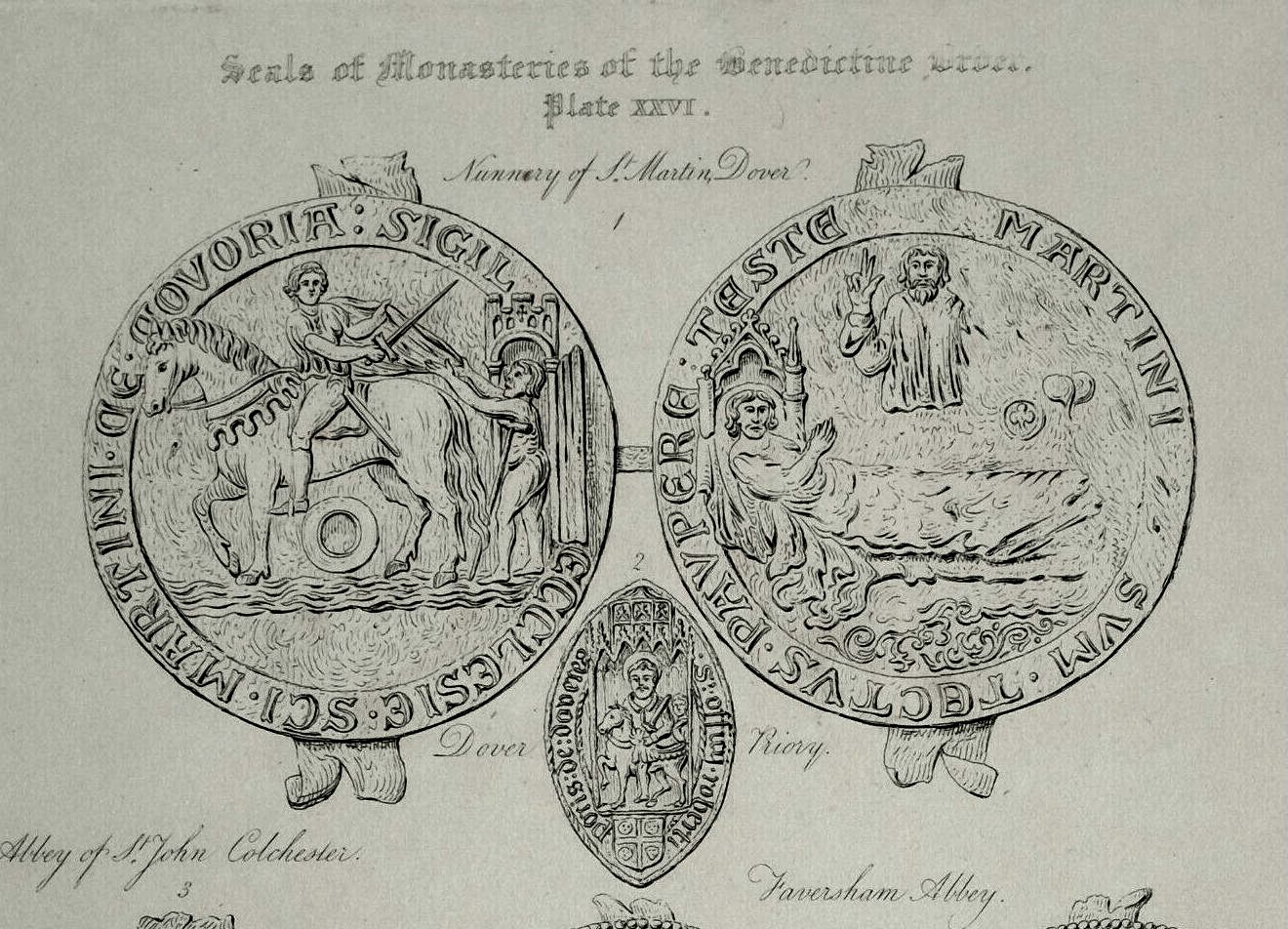
The Priory of St. Mary the Virgin and St. Martin of the New Work, or Newark, commonly called Dover Priory, was a priory at Dover in southeast England. It was variously independent in rule, then occupied by canons regular of the Augustinian rule, then finally monks of the Benedictine rule as a cell of Christchurch Monastery, Canterbury.
The priory was located just east of what is now Dover Priory railway station, in fact the railway was built on the western part of the site. Housing has been built on the eastern part of the site where the church once stood, between Priory Road and the later Effingham Street in the area of Norman Street and Saxon Street. Dover College, a private boarding school, occupies the land between the station and Effingham Street and has rescued some of the medieval buildings for use by its pupils. The 12th-century Strangers' Refectory on Effingham Street retains its function and is also used for concerts; the gateway to the priory is now the college archives and the priory guesthouse has been consecrated as the school chapel.
In the early 7th century, a community of 22 secular canons was instituted in the Saxon burgh at Dover Castle by King Eadbald of Kent (616-640), possibly related to the Saxon church of St Mary de Castro there. Taking their existing rights and privileges with them, these canons were transferred to a new small church dedicated to St Martin in the land now occupied by Market Square towards the end of the 7th century, by King Wihtred in fulfilment of a vow to that saint. Their living was dependent on land and tithe grants, and the grant of half of some of the dues levied at the port, held in common.
The original small church at Market Square was granted to Odo, Bishop of Bayeux upon the Norman Conquest. He rebuilt it on a grander scale, probably on or near the same site, and so was henceforth known as St. Martin's Le Grand (the Great). It was built above the much earlier foundations of Roman baths, with its churchyard covering most of the present Market Square.
Since the Castle church, which had been their original Saxon home, was in some sense a Royal Chapel, the canons had always been a Royal peculiar, outside any episcopal control and only recognising the authority of the King, and later the Pope. The then Archbishop of Canterbury, William de Corbeil, wanted to bring an end to this and extend his influence to Dover. Therefore, in 1130, using the canons' behaviour as a pretext, he persuaded Henry I to give him a charter allowing him to transfer their assets to a new Priory of St Martin in Dover, whilst leaving their Market Square church to be used as the principal parish church of the town for the use of the townsfolk. The parish church remained dedicated to St Martin—the new priory was called "St. Martin's of the New Work", or "Newark", to distinguish it from the parish church—and under the new Priory's control (its few remains can now be seen on the western side of Market Square, near Dover Museum.)
A site having been secured (probably from land that belonged to the former canons of St. Martin's le Grand), building began there in 1131, and within five years it was partially occupied by 12 canons regular as a Priory dedicated to the Blessed Virgin Mary and St. Martin. Archbishop Theobald completed the buildings in about 1140 and in 1143 confirmed the transfer of the assets of St Martin le Grand and established that thereafter the new priory would follow the Benedictine Rule and remain in possession of the Cathedral church at Canterbury as a mere "cell", at the disposition of the Archbishop. Much controversy thus ensued over the following two centuries between the monks of the cathedral and the canons of Dover Priory.
King Stephen was said to have died on a journey whilst staying at the Priory in 1154. Repaired and extended in 1231 after much damage in a fire of 1201, it was pillaged by the French in a raid in August 1295, during which a monk called Thomas de la Hale was murdered. Extensive repairs were made in the 1480s.
The abbey's church seems to have been a very large one—the King's Commissioner sent to assess it by Thomas Cromwell (just prior to its dissolution) described it to him in a letter as "the fairest church in all that quarter of Kent." It was probably three times as long as St. Mary's Church in Dover, with a general plan perhaps comparable to Repton Priory, or to the Cistercian Stanley Abbey in Wiltshire. Its tower would have stood almost at the present junction of Effingham and Saxon Streets. Of its estimated area of about 25,000 square feet (2,300 m2), about 110 feet (34 m) square of this were its cloisters, with a chapter house joined to the church's transept's north wall, and about an eighth was a refectory.
Hub AI
Dover Priory AI simulator
(@Dover Priory_simulator)
Dover Priory
The Priory of St. Mary the Virgin and St. Martin of the New Work, or Newark, commonly called Dover Priory, was a priory at Dover in southeast England. It was variously independent in rule, then occupied by canons regular of the Augustinian rule, then finally monks of the Benedictine rule as a cell of Christchurch Monastery, Canterbury.
The priory was located just east of what is now Dover Priory railway station, in fact the railway was built on the western part of the site. Housing has been built on the eastern part of the site where the church once stood, between Priory Road and the later Effingham Street in the area of Norman Street and Saxon Street. Dover College, a private boarding school, occupies the land between the station and Effingham Street and has rescued some of the medieval buildings for use by its pupils. The 12th-century Strangers' Refectory on Effingham Street retains its function and is also used for concerts; the gateway to the priory is now the college archives and the priory guesthouse has been consecrated as the school chapel.
In the early 7th century, a community of 22 secular canons was instituted in the Saxon burgh at Dover Castle by King Eadbald of Kent (616-640), possibly related to the Saxon church of St Mary de Castro there. Taking their existing rights and privileges with them, these canons were transferred to a new small church dedicated to St Martin in the land now occupied by Market Square towards the end of the 7th century, by King Wihtred in fulfilment of a vow to that saint. Their living was dependent on land and tithe grants, and the grant of half of some of the dues levied at the port, held in common.
The original small church at Market Square was granted to Odo, Bishop of Bayeux upon the Norman Conquest. He rebuilt it on a grander scale, probably on or near the same site, and so was henceforth known as St. Martin's Le Grand (the Great). It was built above the much earlier foundations of Roman baths, with its churchyard covering most of the present Market Square.
Since the Castle church, which had been their original Saxon home, was in some sense a Royal Chapel, the canons had always been a Royal peculiar, outside any episcopal control and only recognising the authority of the King, and later the Pope. The then Archbishop of Canterbury, William de Corbeil, wanted to bring an end to this and extend his influence to Dover. Therefore, in 1130, using the canons' behaviour as a pretext, he persuaded Henry I to give him a charter allowing him to transfer their assets to a new Priory of St Martin in Dover, whilst leaving their Market Square church to be used as the principal parish church of the town for the use of the townsfolk. The parish church remained dedicated to St Martin—the new priory was called "St. Martin's of the New Work", or "Newark", to distinguish it from the parish church—and under the new Priory's control (its few remains can now be seen on the western side of Market Square, near Dover Museum.)
A site having been secured (probably from land that belonged to the former canons of St. Martin's le Grand), building began there in 1131, and within five years it was partially occupied by 12 canons regular as a Priory dedicated to the Blessed Virgin Mary and St. Martin. Archbishop Theobald completed the buildings in about 1140 and in 1143 confirmed the transfer of the assets of St Martin le Grand and established that thereafter the new priory would follow the Benedictine Rule and remain in possession of the Cathedral church at Canterbury as a mere "cell", at the disposition of the Archbishop. Much controversy thus ensued over the following two centuries between the monks of the cathedral and the canons of Dover Priory.
King Stephen was said to have died on a journey whilst staying at the Priory in 1154. Repaired and extended in 1231 after much damage in a fire of 1201, it was pillaged by the French in a raid in August 1295, during which a monk called Thomas de la Hale was murdered. Extensive repairs were made in the 1480s.
The abbey's church seems to have been a very large one—the King's Commissioner sent to assess it by Thomas Cromwell (just prior to its dissolution) described it to him in a letter as "the fairest church in all that quarter of Kent." It was probably three times as long as St. Mary's Church in Dover, with a general plan perhaps comparable to Repton Priory, or to the Cistercian Stanley Abbey in Wiltshire. Its tower would have stood almost at the present junction of Effingham and Saxon Streets. Of its estimated area of about 25,000 square feet (2,300 m2), about 110 feet (34 m) square of this were its cloisters, with a chapter house joined to the church's transept's north wall, and about an eighth was a refectory.