



Community hub
Recent from talks
Knowledge base stats:
Talk channels stats:
Members stats:
Dunderland Line
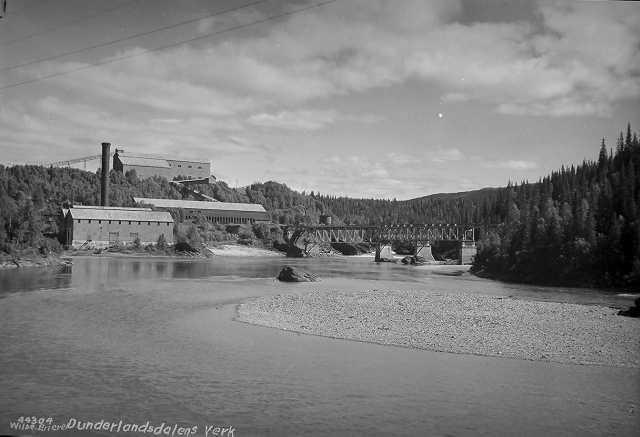
The Dunderland Line (Norwegian: Dunderlandsbanen) was a 23.7 km (14.7 mi) railway line between Gullsmedvik in the town of Mo i Rana and the village of Storforshei in Rana Municipality in Nordland county, Norway. Since 1942 the line has been part of the Nordland Line. The line was originally built and owned by Dunderland Iron Ore Company, which used it to freight iron ore from their mine at Storforshei to the port at Gullsmedvik.
The line was built to exploit iron ore which had been discovered by Nils Persson and later sold to Edison Ore-Milling Company. Construction of the line started in 1902, it was completed two years later and revenue services started in 1906. The mine had many operating difficulties, and operations fell to a halt several times for years. With the German occupation of Norway in 1940, the Wehrmacht and Organisation Todt started building the Nordland Line, with the Dunderland Line being upgraded and connected to the mainline on 15 May 1942. After the war, the Norwegian State Railways had to carry out extensive upgrades to the line for it to meet modern standards.
The Dunderland Line was a single track, standard gauge 23.7 km (14.7 mi) railway between Gullsmedvik and Storforshei. It started at Mo i Rana Port at Gullsmedvik and ran up the Dunderland Valley until it reached Rena Mine at Storforshei, following the south shore of the river Ranaelva. After the assimilation with the Nordland Line, the sections to Gullsmedvik and Storfoshei became branch lines of the main line.
The line starts at Gullsmedvik, which is currently located 500.85 km (311.21 mi) from Oslo Central Station. It crosses the river of Tverråga after 0.74 km (0.46 mi) and had a bridge over Plura. After NSB rebuilt the line it received a series of tunnels. Starting at 8.75 km (5.44 mi), the line runs through three tunnels in rapid succession: the 174 m (571 ft) Trolldalen Tunnel, the 616 m (2,021 ft) Reinfossen Tunnel and the 125 m (410 ft) Kalvhaugen Tunnel. At 15.65 km (9.72 mi) the line passes through the 1,760 m (5,770 ft) Illhullia Tunnel. It passes through two last tunnels, the 156 m (512 ft) Gomea Tunnel at 18.9 km (11.7 mi) and the 198 m (650 ft) Smånesli Tunnel before reaching the mine at Storforshei.
Mining in Rana has taken place since it was established at Ormlia in 1799. Ole Tobias Olsen discovered iron ore on his farm of Nord-Dunderland, for which he registered a mining claim in 1879. Since 1872, Olsen had been working on promoting the construction of the Nordland Line northwards from Trondheim. In 1891, he petitioned the government to look at his claim as a source of national wealth and requested that the Nordland Line be built via the Dunderland Valley to allow shipment of the ore to the coastal port of Mo. He received a grant to carry out technical investigations for a railway.
A Swedish investor took initiative to build a line up the Dunderland Valley as a private railway. Olsen was opposed to this and instead wanted a state railway. As a member of Nordland County Council, he gained the council's support to ask Parliament to finance a state-owned 47 km (29 mi) railway from Mo up the Dunderland Valley. The council alternatively asked for a private railway which the state had unlimited rights to redeem. The line was presumed built in such a way that would make up part of the Nordland Line when it reached Rana.
Based on the redeemable private alternative, Olsen applied in 1896 for concession to build the railway. The application was supported by the municipal council, and the application emphasized that the line would be built with Norwegian capital, Norwegian management and by Norwegian workers. The county council also recommended the concession, although they asked that it be operated as a state railway. However, the concession was rejected by the state.
During the 1880s, Swedish industrialist Nils Persson and his engineer Alfred Hasselbom found large deposits of ore in the Dunderland Valley. Persson secured the mining claims at and also bought land to build a railway and land to build a plant at port at Gullsmedvik. He sold the rights and land for £199,000 to Edison Ore-Milling Company, who established the subsidiary Dunderland Iron Ore Company in 1902 to build and operate the mines and facilities.
Hub AI
Dunderland Line AI simulator
(@Dunderland Line_simulator)
Dunderland Line
The Dunderland Line (Norwegian: Dunderlandsbanen) was a 23.7 km (14.7 mi) railway line between Gullsmedvik in the town of Mo i Rana and the village of Storforshei in Rana Municipality in Nordland county, Norway. Since 1942 the line has been part of the Nordland Line. The line was originally built and owned by Dunderland Iron Ore Company, which used it to freight iron ore from their mine at Storforshei to the port at Gullsmedvik.
The line was built to exploit iron ore which had been discovered by Nils Persson and later sold to Edison Ore-Milling Company. Construction of the line started in 1902, it was completed two years later and revenue services started in 1906. The mine had many operating difficulties, and operations fell to a halt several times for years. With the German occupation of Norway in 1940, the Wehrmacht and Organisation Todt started building the Nordland Line, with the Dunderland Line being upgraded and connected to the mainline on 15 May 1942. After the war, the Norwegian State Railways had to carry out extensive upgrades to the line for it to meet modern standards.
The Dunderland Line was a single track, standard gauge 23.7 km (14.7 mi) railway between Gullsmedvik and Storforshei. It started at Mo i Rana Port at Gullsmedvik and ran up the Dunderland Valley until it reached Rena Mine at Storforshei, following the south shore of the river Ranaelva. After the assimilation with the Nordland Line, the sections to Gullsmedvik and Storfoshei became branch lines of the main line.
The line starts at Gullsmedvik, which is currently located 500.85 km (311.21 mi) from Oslo Central Station. It crosses the river of Tverråga after 0.74 km (0.46 mi) and had a bridge over Plura. After NSB rebuilt the line it received a series of tunnels. Starting at 8.75 km (5.44 mi), the line runs through three tunnels in rapid succession: the 174 m (571 ft) Trolldalen Tunnel, the 616 m (2,021 ft) Reinfossen Tunnel and the 125 m (410 ft) Kalvhaugen Tunnel. At 15.65 km (9.72 mi) the line passes through the 1,760 m (5,770 ft) Illhullia Tunnel. It passes through two last tunnels, the 156 m (512 ft) Gomea Tunnel at 18.9 km (11.7 mi) and the 198 m (650 ft) Smånesli Tunnel before reaching the mine at Storforshei.
Mining in Rana has taken place since it was established at Ormlia in 1799. Ole Tobias Olsen discovered iron ore on his farm of Nord-Dunderland, for which he registered a mining claim in 1879. Since 1872, Olsen had been working on promoting the construction of the Nordland Line northwards from Trondheim. In 1891, he petitioned the government to look at his claim as a source of national wealth and requested that the Nordland Line be built via the Dunderland Valley to allow shipment of the ore to the coastal port of Mo. He received a grant to carry out technical investigations for a railway.
A Swedish investor took initiative to build a line up the Dunderland Valley as a private railway. Olsen was opposed to this and instead wanted a state railway. As a member of Nordland County Council, he gained the council's support to ask Parliament to finance a state-owned 47 km (29 mi) railway from Mo up the Dunderland Valley. The council alternatively asked for a private railway which the state had unlimited rights to redeem. The line was presumed built in such a way that would make up part of the Nordland Line when it reached Rana.
Based on the redeemable private alternative, Olsen applied in 1896 for concession to build the railway. The application was supported by the municipal council, and the application emphasized that the line would be built with Norwegian capital, Norwegian management and by Norwegian workers. The county council also recommended the concession, although they asked that it be operated as a state railway. However, the concession was rejected by the state.
During the 1880s, Swedish industrialist Nils Persson and his engineer Alfred Hasselbom found large deposits of ore in the Dunderland Valley. Persson secured the mining claims at and also bought land to build a railway and land to build a plant at port at Gullsmedvik. He sold the rights and land for £199,000 to Edison Ore-Milling Company, who established the subsidiary Dunderland Iron Ore Company in 1902 to build and operate the mines and facilities.