



Community hub
Recent from talks
Knowledge base stats:
Talk channels stats:
Members stats:
Dust explosion
A dust explosion is the rapid combustion of fine particles suspended in the air within an enclosed location. Dust explosions can occur where any dispersed powdered combustible material is present in high-enough concentrations in the atmosphere or other oxidizing gaseous medium, such as pure oxygen. In cases when fuel plays the role of a combustible material, the explosion is known as a fuel-air explosion.
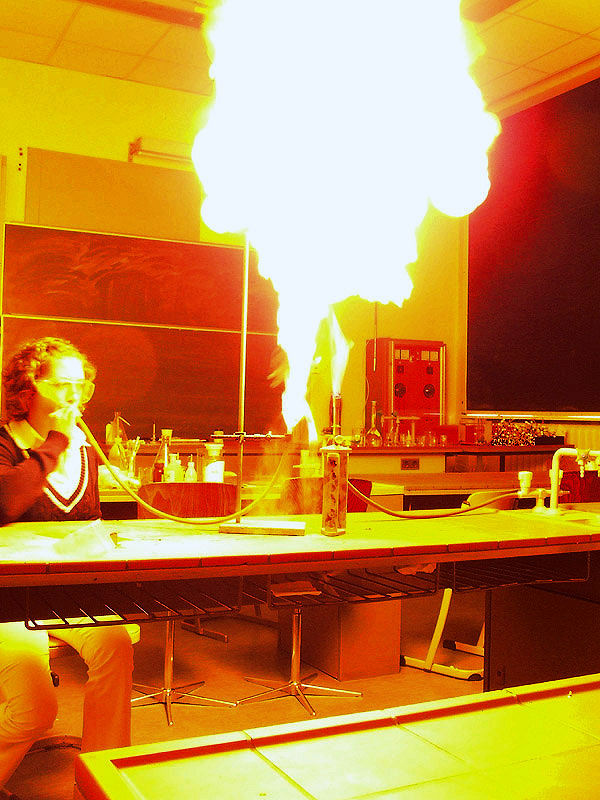
Dust explosions are a frequent hazard in coal mines, grain elevators and silos, and other industrial environments. They are also commonly used by special effects artists, filmmakers, and pyrotechnicians, given their spectacular appearance and ability to be safely contained under certain carefully controlled conditions.
Thermobaric weapons exploit this principle by rapidly saturating an area with an easily combustible material and then igniting it to produce explosive force. These weapons are the most powerful non-nuclear explosives in existence.
If rapid combustion occurs in a confined space, enormous overpressures can build up, causing major structural damage and flying debris. The sudden release of energy from a "detonation" can produce a shockwave, either in open air or in a confined space. If the spread of flame is at subsonic speed, the phenomenon is sometimes called a "deflagration", although looser usage calls both phenomena "explosions".[citation needed]
Dust explosions may be classified as being either "primary" or "secondary" in nature. Primary dust explosions may occur inside process equipment or similar enclosures, and are generally controlled by pressure relief through purpose-built ducting to the external atmosphere. Secondary dust explosions are the result of dust accumulation inside a building being disturbed and ignited by the primary explosion, resulting in a much more dangerous uncontrolled explosion that can affect the entire structure. Historically, fatalities from dust explosions have largely been the result of secondary dust explosions.
There are five necessary conditions for a dust explosion:
Many common materials which are known to burn can generate a dust explosion, such as coal dust and sawdust. In addition, many otherwise mundane organic materials can also be dispersed into a dangerous dust cloud, such as grain, flour, starch, sugar, powdered milk, cocoa, coffee, and pollen. Powdered metals (such as aluminum, magnesium, and titanium) can form explosive suspensions in air, if finely divided.
A gigantic explosion of flour dust destroyed a mill in Minnesota on May 2, 1878, killing 14 workers at the Washburn A Mill and another four in adjacent buildings. A similar problem occurs in sawmills and other places dedicated to woodworking.
Hub AI
Dust explosion AI simulator
(@Dust explosion_simulator)
Dust explosion
A dust explosion is the rapid combustion of fine particles suspended in the air within an enclosed location. Dust explosions can occur where any dispersed powdered combustible material is present in high-enough concentrations in the atmosphere or other oxidizing gaseous medium, such as pure oxygen. In cases when fuel plays the role of a combustible material, the explosion is known as a fuel-air explosion.
Dust explosions are a frequent hazard in coal mines, grain elevators and silos, and other industrial environments. They are also commonly used by special effects artists, filmmakers, and pyrotechnicians, given their spectacular appearance and ability to be safely contained under certain carefully controlled conditions.
Thermobaric weapons exploit this principle by rapidly saturating an area with an easily combustible material and then igniting it to produce explosive force. These weapons are the most powerful non-nuclear explosives in existence.
If rapid combustion occurs in a confined space, enormous overpressures can build up, causing major structural damage and flying debris. The sudden release of energy from a "detonation" can produce a shockwave, either in open air or in a confined space. If the spread of flame is at subsonic speed, the phenomenon is sometimes called a "deflagration", although looser usage calls both phenomena "explosions".[citation needed]
Dust explosions may be classified as being either "primary" or "secondary" in nature. Primary dust explosions may occur inside process equipment or similar enclosures, and are generally controlled by pressure relief through purpose-built ducting to the external atmosphere. Secondary dust explosions are the result of dust accumulation inside a building being disturbed and ignited by the primary explosion, resulting in a much more dangerous uncontrolled explosion that can affect the entire structure. Historically, fatalities from dust explosions have largely been the result of secondary dust explosions.
There are five necessary conditions for a dust explosion:
Many common materials which are known to burn can generate a dust explosion, such as coal dust and sawdust. In addition, many otherwise mundane organic materials can also be dispersed into a dangerous dust cloud, such as grain, flour, starch, sugar, powdered milk, cocoa, coffee, and pollen. Powdered metals (such as aluminum, magnesium, and titanium) can form explosive suspensions in air, if finely divided.
A gigantic explosion of flour dust destroyed a mill in Minnesota on May 2, 1878, killing 14 workers at the Washburn A Mill and another four in adjacent buildings. A similar problem occurs in sawmills and other places dedicated to woodworking.