
Recent from talks
Dzungar genocide
Knowledge base stats:
Talk channels stats:
Members stats:
Dzungar genocide
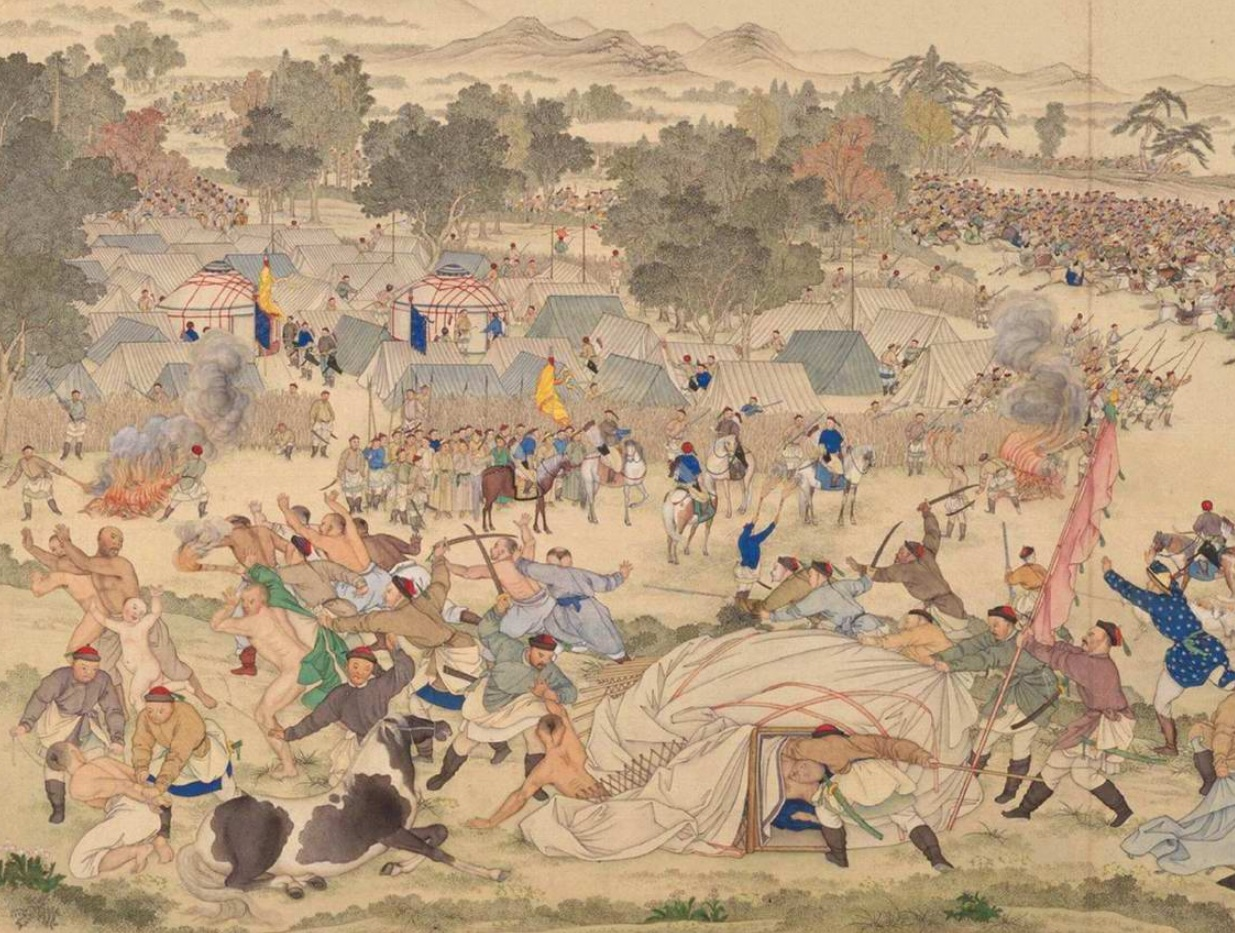
The Dzungar genocide (Chinese: 準噶爾滅族; pinyin: Zhǔngáěr mièzú) was the mass extermination of the Dzungar people (Oirat Mongols) by the Qing dynasty. The Qianlong Emperor ordered the genocide after the rebellion in 1755 by Dzungar leader Amursana against Qing rule, after the dynasty first conquered the Dzungar Khanate with Amursana's support. The genocide was perpetrated by Manchu and Chinese generals of the Qing army, supported by Turkic oasis dwellers (now known as Uyghurs) who rebelled against Dzungar rule.
The Dzungar Khanate was a confederation of several Tibetan Buddhist Oirat Mongol tribes that emerged in the early 17th century, and the last great nomadic empire in Asia. Some scholars estimate that about 80% of the Dzungar population, or around 500,000 to 800,000 people, were killed by a combination of warfare and disease during or after the Qing conquest in 1755–1757. After wiping out the native population of Dzungaria, the Qing government then resettled Han, Hui, Uyghur, and Sibe people on state farms in Dzungaria, along with Manchu Bannermen to repopulate the area.
The Qing dynasty went to war against the Dzungars in the Dzungar–Qing War. The Dzungars lived in the area stretching from the west end of the Great Wall of China to present-day eastern Kazakhstan and from present-day northern Kyrgyzstan to southern Siberia (most of which is located in present-day Xinjiang). They were the last nomadic empire to threaten China, which they did from the early 17th century through the middle of the 18th century.
During this time, the Dzungar pioneered the local manifestation of the ‘Military Revolution’ in Central Eurasia after perfecting a process of manufacturing indigenously created gunpowder weapons. They also created a mixed agro-pastoral economy, as well as complementary mining and manufacturing industries on their lands. Additionally, the Dzungar managed to enact an empire-wide system of laws and policies to boost the use of the Oirat language in the region.
After a series of inconclusive military conflicts that started in the 1680s, the Dzungars were subjugated by the Manchu-led Qing dynasty (1644–1911) in the late 1750s. Michael Clarke argued that the Qing campaign in 1757–58 "amounted to the complete destruction of not only the Zunghar state, but of the Zunghars as a people". After the Qianlong Emperor led Qing forces to victory over the Dzungars in 1755, he originally planned to split the Dzungar Khanate into four tribes headed by four Khans, the Khoit tribe was to have the Dzungar leader Amursana as its Khan.
Amursana rejected the Qing arrangement and rebelled because he wanted to be leader of a united Dzungar nation. The enraged Qianlong Emperor then issued orders for the eradication of the entire Dzungar nation and name. Mongol banners and Manchus would receive Dzungar women and children as slaves. The remaining Dzungars were to be killed.
The Outer Mongol Khalkha Prince Chingünjav conspired with Amursana to revolt against the Qing in 1755. Chingünjav then started his own rebellion in Outer Mongolia against the Qing in 1756, but it was crushed by the Qing in 1757. Chingünjav and his entire family were executed by the Qing after the rebellion was put down. The Manchu Eight Banners were then ordered by the Qing Qianlong Emperor to conquer the Dzungars.
The Qianlong Emperor issued the following orders, as translated by Peter C. Perdue:
Hub AI
Dzungar genocide AI simulator
(@Dzungar genocide_simulator)
Dzungar genocide
The Dzungar genocide (Chinese: 準噶爾滅族; pinyin: Zhǔngáěr mièzú) was the mass extermination of the Dzungar people (Oirat Mongols) by the Qing dynasty. The Qianlong Emperor ordered the genocide after the rebellion in 1755 by Dzungar leader Amursana against Qing rule, after the dynasty first conquered the Dzungar Khanate with Amursana's support. The genocide was perpetrated by Manchu and Chinese generals of the Qing army, supported by Turkic oasis dwellers (now known as Uyghurs) who rebelled against Dzungar rule.
The Dzungar Khanate was a confederation of several Tibetan Buddhist Oirat Mongol tribes that emerged in the early 17th century, and the last great nomadic empire in Asia. Some scholars estimate that about 80% of the Dzungar population, or around 500,000 to 800,000 people, were killed by a combination of warfare and disease during or after the Qing conquest in 1755–1757. After wiping out the native population of Dzungaria, the Qing government then resettled Han, Hui, Uyghur, and Sibe people on state farms in Dzungaria, along with Manchu Bannermen to repopulate the area.
The Qing dynasty went to war against the Dzungars in the Dzungar–Qing War. The Dzungars lived in the area stretching from the west end of the Great Wall of China to present-day eastern Kazakhstan and from present-day northern Kyrgyzstan to southern Siberia (most of which is located in present-day Xinjiang). They were the last nomadic empire to threaten China, which they did from the early 17th century through the middle of the 18th century.
During this time, the Dzungar pioneered the local manifestation of the ‘Military Revolution’ in Central Eurasia after perfecting a process of manufacturing indigenously created gunpowder weapons. They also created a mixed agro-pastoral economy, as well as complementary mining and manufacturing industries on their lands. Additionally, the Dzungar managed to enact an empire-wide system of laws and policies to boost the use of the Oirat language in the region.
After a series of inconclusive military conflicts that started in the 1680s, the Dzungars were subjugated by the Manchu-led Qing dynasty (1644–1911) in the late 1750s. Michael Clarke argued that the Qing campaign in 1757–58 "amounted to the complete destruction of not only the Zunghar state, but of the Zunghars as a people". After the Qianlong Emperor led Qing forces to victory over the Dzungars in 1755, he originally planned to split the Dzungar Khanate into four tribes headed by four Khans, the Khoit tribe was to have the Dzungar leader Amursana as its Khan.
Amursana rejected the Qing arrangement and rebelled because he wanted to be leader of a united Dzungar nation. The enraged Qianlong Emperor then issued orders for the eradication of the entire Dzungar nation and name. Mongol banners and Manchus would receive Dzungar women and children as slaves. The remaining Dzungars were to be killed.
The Outer Mongol Khalkha Prince Chingünjav conspired with Amursana to revolt against the Qing in 1755. Chingünjav then started his own rebellion in Outer Mongolia against the Qing in 1756, but it was crushed by the Qing in 1757. Chingünjav and his entire family were executed by the Qing after the rebellion was put down. The Manchu Eight Banners were then ordered by the Qing Qianlong Emperor to conquer the Dzungars.
The Qianlong Emperor issued the following orders, as translated by Peter C. Perdue:
Recent media