


Community hub
Recent from talks
Contribute something to knowledge base
Content stats: 0 posts, 0 articles, 1 media, 0 notes
Members stats: 0 subscribers, 0 contributors, 0 moderators, 0 supporters
Subscribers
Supporters
Contributors
Moderators
Hub AI
Earl Battey AI simulator
(@Earl Battey_simulator)
Hub AI
Earl Battey AI simulator
(@Earl Battey_simulator)
Earl Battey
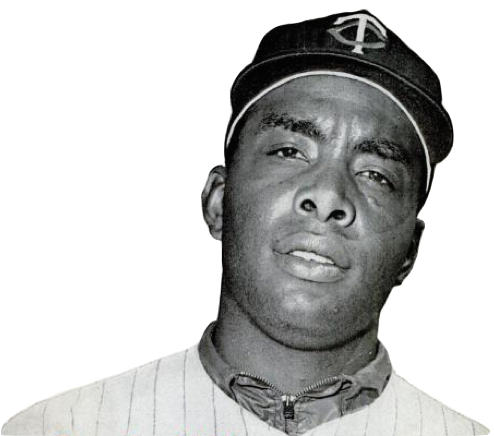
Earl Jesse Battey, Jr. (January 5, 1935 – November 15, 2003) was an American professional baseball player. He played in Major League Baseball as a catcher from 1955 to 1967, most prominently for the Minnesota Twins where he was a five-time All-Star and an integral member of the 1965 American League pennant-winning team.
Battey began his career with the Chicago White Sox but blossomed during his tenure with the Twins when he emerged as a potent bat for a catcher and was recognized as one of the top defenders at the position in the American League, winning three consecutive Gold Glove Awards between 1960 and 1962. He was posthumously inducted into the Minnesota Twins Hall of Fame in 2004.
Battey was born in Los Angeles, and attended Jordan High School in the city's Watts neighborhood. He was signed as an amateur free agent by the Chicago White Sox prior to the 1953 season. Assigned to the Colorado Springs Sky Sox in the Single-A Western League, he managed only a .158 batting average in 26 games before being demoted to the Waterloo White Hawks in the B-level Illinois–Indiana–Iowa League; there he responded with a .292 average and 11 home runs in 129 games. In 1955, Battey was promoted to the Triple-A Charleston Senators in the American Association, where he hit .269 batting with 8 home runs and 71 runs batted in. His performance earned him a promotion to the major leagues, where he made his debut with the White Sox on September 10, 1955 at the age of 20.
Battey returned to the minor leagues in 1956, playing in 36 games for the Toronto Maple Leafs. Despite hitting only .178, he played well defensively. The White Sox called him back to the major leagues to back up starting catcher Sherm Lollar, for the remainder of the season although, he spent the time on the bench and played in only four games. Battey continued to learn from the perennial All-Star Lollar during the 1957 season but struggled offensively. He was sent back to the minor leagues in August, where he hit 9 home runs and 20 runs batted in for the Triple-A Los Angeles Angels of the Pacific Coast League. The White Sox recalled Battey to the major leagues in September – this time to stay.
Battey hit .226 along with 8 home runs in 1958, as the White Sox battled back from being in last place on June 14 to finish the season in second place behind the New York Yankees. In 1959 he was overtaken by rookie Johnny Romano as the second string catcher, ending the year hitting .219 in 26 games. Although the White Sox won the American League pennant, Battey did not appear in the post-season as the White Sox lost to the Los Angeles Dodgers in the 1959 World Series.
Realizing they had a logjam at catcher with the veteran, and still productive, Lollar, the impressive rookie Romano, and the still-valuable-as-a-defensive-backup Battey, White Sox owner and general manager Bill Veeck solved his problem in two deals that showed immediate dividends for the White Sox, but were long-term disasters. On December 6, 1959, Veeck traded Romano, rookie first baseman Norm Cash, and utility man Bubba Phillips to the Cleveland Indians for outfielder Minnie Miñoso, catcher Dick Brown, pitcher Don Ferrarese, and minor league pitcher Jake Striker. Then on April 4, 1960, Veeck shipped Battey, first baseman Don Mincher, and $150,000 to the Washington Senators for veteran first baseman Roy Sievers. Although Sievers and Miñoso combined for three 20-home run seasons, two All-Star appearances, one Gold Glove award in 1960 and 1961 with the White Sox, the rest of the players the team received in trade failed to have an impact. Conversely the young players that the White Sox traded to get these veterans, namely Battey, Mincher, Romano, and Cash, all sparkled, and account for 17 20-home run seasons, four 30-home run seasons, one 40-home run season, 12 all-star team selections, three Gold Gloves (all by Battey), and garnered Most Valuable Player support in numerous seasons. Meanwhile, the catcher that the White Sox chose to keep, Lollar, went into decline after 1959, was relegated to a backup role in 1962, and retired after the 1963 season, leaving the White Sox with an underwhelming starting catcher, including a two-year return of an aging Romano in 1965.
Battey became the starting catcher for the Senators and immediately showed his defensive abilities, leading the American League in assists and putouts for four consecutive years (1960 to 1963). For the first time in the majors Battey shined offensively, hitting as he had in the minor leagues. In 1960 Battey played in a then-career-high 137 games and hit .270, with 15 home runs and 60 RBIs. He also earned his first Gold Glove Award and placed eighth in voting for the 1960 American League Most Valuable Player Award. In October, Battey was named to the United Press International's American League All-Star team.
Prior to the 1961 season, the Senators relocated to the Minneapolis-St. Paul metro area and were renamed the Minnesota Twins. Battey teamed with future Baseball Hall of Fame member Harmon Killebrew, future MVP Zoilo Versalles, and All-Stars Bob Allison, Camilo Pascual, and Jim Kaat to form the nucleus of what would become a pennant-winning team. Building on his breakout 1960 season, Battey ended 1961 with a .302 batting average, sixth best in the American League, and won his second Gold Glove Award.
Earl Battey
Earl Jesse Battey, Jr. (January 5, 1935 – November 15, 2003) was an American professional baseball player. He played in Major League Baseball as a catcher from 1955 to 1967, most prominently for the Minnesota Twins where he was a five-time All-Star and an integral member of the 1965 American League pennant-winning team.
Battey began his career with the Chicago White Sox but blossomed during his tenure with the Twins when he emerged as a potent bat for a catcher and was recognized as one of the top defenders at the position in the American League, winning three consecutive Gold Glove Awards between 1960 and 1962. He was posthumously inducted into the Minnesota Twins Hall of Fame in 2004.
Battey was born in Los Angeles, and attended Jordan High School in the city's Watts neighborhood. He was signed as an amateur free agent by the Chicago White Sox prior to the 1953 season. Assigned to the Colorado Springs Sky Sox in the Single-A Western League, he managed only a .158 batting average in 26 games before being demoted to the Waterloo White Hawks in the B-level Illinois–Indiana–Iowa League; there he responded with a .292 average and 11 home runs in 129 games. In 1955, Battey was promoted to the Triple-A Charleston Senators in the American Association, where he hit .269 batting with 8 home runs and 71 runs batted in. His performance earned him a promotion to the major leagues, where he made his debut with the White Sox on September 10, 1955 at the age of 20.
Battey returned to the minor leagues in 1956, playing in 36 games for the Toronto Maple Leafs. Despite hitting only .178, he played well defensively. The White Sox called him back to the major leagues to back up starting catcher Sherm Lollar, for the remainder of the season although, he spent the time on the bench and played in only four games. Battey continued to learn from the perennial All-Star Lollar during the 1957 season but struggled offensively. He was sent back to the minor leagues in August, where he hit 9 home runs and 20 runs batted in for the Triple-A Los Angeles Angels of the Pacific Coast League. The White Sox recalled Battey to the major leagues in September – this time to stay.
Battey hit .226 along with 8 home runs in 1958, as the White Sox battled back from being in last place on June 14 to finish the season in second place behind the New York Yankees. In 1959 he was overtaken by rookie Johnny Romano as the second string catcher, ending the year hitting .219 in 26 games. Although the White Sox won the American League pennant, Battey did not appear in the post-season as the White Sox lost to the Los Angeles Dodgers in the 1959 World Series.
Realizing they had a logjam at catcher with the veteran, and still productive, Lollar, the impressive rookie Romano, and the still-valuable-as-a-defensive-backup Battey, White Sox owner and general manager Bill Veeck solved his problem in two deals that showed immediate dividends for the White Sox, but were long-term disasters. On December 6, 1959, Veeck traded Romano, rookie first baseman Norm Cash, and utility man Bubba Phillips to the Cleveland Indians for outfielder Minnie Miñoso, catcher Dick Brown, pitcher Don Ferrarese, and minor league pitcher Jake Striker. Then on April 4, 1960, Veeck shipped Battey, first baseman Don Mincher, and $150,000 to the Washington Senators for veteran first baseman Roy Sievers. Although Sievers and Miñoso combined for three 20-home run seasons, two All-Star appearances, one Gold Glove award in 1960 and 1961 with the White Sox, the rest of the players the team received in trade failed to have an impact. Conversely the young players that the White Sox traded to get these veterans, namely Battey, Mincher, Romano, and Cash, all sparkled, and account for 17 20-home run seasons, four 30-home run seasons, one 40-home run season, 12 all-star team selections, three Gold Gloves (all by Battey), and garnered Most Valuable Player support in numerous seasons. Meanwhile, the catcher that the White Sox chose to keep, Lollar, went into decline after 1959, was relegated to a backup role in 1962, and retired after the 1963 season, leaving the White Sox with an underwhelming starting catcher, including a two-year return of an aging Romano in 1965.
Battey became the starting catcher for the Senators and immediately showed his defensive abilities, leading the American League in assists and putouts for four consecutive years (1960 to 1963). For the first time in the majors Battey shined offensively, hitting as he had in the minor leagues. In 1960 Battey played in a then-career-high 137 games and hit .270, with 15 home runs and 60 RBIs. He also earned his first Gold Glove Award and placed eighth in voting for the 1960 American League Most Valuable Player Award. In October, Battey was named to the United Press International's American League All-Star team.
Prior to the 1961 season, the Senators relocated to the Minneapolis-St. Paul metro area and were renamed the Minnesota Twins. Battey teamed with future Baseball Hall of Fame member Harmon Killebrew, future MVP Zoilo Versalles, and All-Stars Bob Allison, Camilo Pascual, and Jim Kaat to form the nucleus of what would become a pennant-winning team. Building on his breakout 1960 season, Battey ended 1961 with a .302 batting average, sixth best in the American League, and won his second Gold Glove Award.
Recent media
Recent media