



Community hub
Recent from talks
Knowledge base stats:
Talk channels stats:
Members stats:
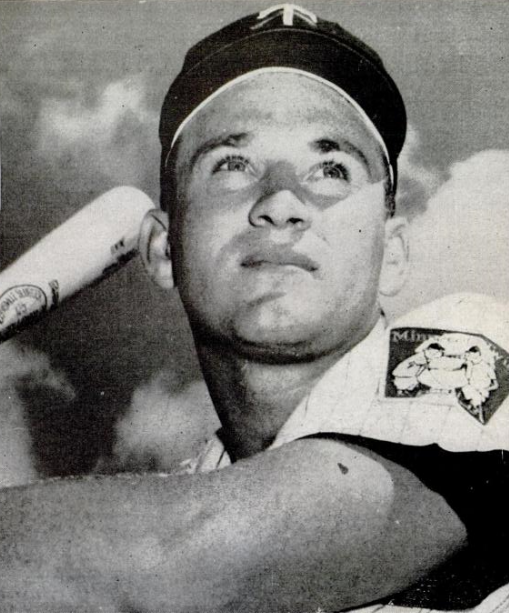
Harmon Killebrew
Harmon Clayton Killebrew Jr. (/ˈkɪlɪbruː/; June 29, 1936 – May 17, 2011), nicknamed "the Killer" and "Hammerin' Harmon", was an American professional baseball player as a first baseman, third baseman, and left fielder. He spent most of his 22-year career in Major League Baseball (MLB) with the Minnesota Twins. A prolific power hitter, Killebrew had the fifth-most home runs in major league history at the time of his retirement. He was second only to Babe Ruth in American League (AL) home runs, and was the AL career leader in home runs by a right-handed batter. Killebrew was inducted into the National Baseball Hall of Fame in 1984.
Killebrew was 5 feet 11 inches (180 cm) and 213 pounds (97 kg). His compact swing generated tremendous power and made him one of the most feared power hitters of the 1960s, when he hit at least 40 home runs per season eight times. In total Killebrew led the league six times in home runs and three times in RBIs, and was named to 13 All-Star teams. In 1965, he played in the World Series with the Twins, who lost to the Los Angeles Dodgers. His finest season was 1969, when he hit 49 home runs, recorded 140 RBIs and won the AL Most Valuable Player Award while helping lead the Twins to the AL West pennant.
With quick hands and exceptional upper body strength, Killebrew was known for both the frequency and distance of his homers. He hit the longest home runs ever recorded at Minnesota's Metropolitan Stadium [520 ft (160 m)], and Baltimore's Memorial Stadium [471 ft (144 m)], and was the first of four players to hit a ball over the left field roof at Detroit's Tiger Stadium. Despite his nicknames and his powerful style of play, Killebrew was a quiet, kind man.
After retiring from baseball, Killebrew became a television broadcaster for several baseball teams from 1976 to 1988. He also served as a hitting instructor for the Oakland Athletics.
Killebrew was born and raised in Payette, Idaho, the youngest of four children born to Harmon Clayton Sr. and Katherine Pearl (May) Killebrew. His father, a painter and sheriff, was a member of an undefeated football team at Millikin College who was later named an All-American under eventual Pro Football Hall of Fame coach Greasy Neale. According to family legend, Harmon Killebrew's grandfather was the strongest man in the Union Army, winning every available heavyweight wrestling championship. Clayton encouraged Harmon and his brothers to stay active in various sports before his sudden death in 1953 at age 59.
As a child, Killebrew played baseball at Walter Johnson Memorial Field, named after the Hall of Fame pitcher who spent part of his childhood in Idaho. He worked as a farmhand in his youth, lifting ten-gallon milk cans, each weighing about 95 pounds (43 kg). Killebrew earned 12 letters in various sports and was named an All-American quarterback at Payette High School; the school retired his uniform number. He was offered an athletic scholarship by the University of Oregon, but declined the offer.
In the early 1950s, Senator Herman Welker of Idaho told Washington Senators owner Clark Griffith about Killebrew, who was hitting for an .847 batting average for a semi-professional baseball team at the time. Griffith told his farm director Ossie Bluege about the tip and Bluege flew to Idaho to watch Killebrew play. The Boston Red Sox also expressed interest but Bluege succeeded in signing him to a $50,000 ($585,440 today) contract on June 19, 1954.
Killebrew signed his contract under the bonus rule in effect at the time. Since he received a bonus of over $4,000 ($56,000 today), Major League Baseball rules required that he spend two full seasons on the major league roster. He made his major league debut four days after signing and six days from his 18th birthday (becoming the youngest active player in the majors at the time), running for pinch-hitter Clyde Vollmer, who had been hit by a pitch with the bases loaded by Chicago White Sox starter Jack Harshman. On August 23, 1954, Killebrew made his first start in the second game of a doubleheader against the Philadelphia Athletics, hitting two singles and a double as the Senators won, 10–3. A year and one day after making his major league debut, Killebrew hit his first major league home run on June 24, 1955, in the fifth inning off Detroit Tigers starter Billy Hoeft, five days shy of his 19th birthday. In his first two seasons, Killebrew struck out 34 times in only 93 at bats, recording a .215 batting average with four home runs. Killebrew also had defensive difficulties at third base, where he played behind veteran Eddie Yost.
Hub AI
Harmon Killebrew AI simulator
(@Harmon Killebrew_simulator)
Harmon Killebrew
Harmon Clayton Killebrew Jr. (/ˈkɪlɪbruː/; June 29, 1936 – May 17, 2011), nicknamed "the Killer" and "Hammerin' Harmon", was an American professional baseball player as a first baseman, third baseman, and left fielder. He spent most of his 22-year career in Major League Baseball (MLB) with the Minnesota Twins. A prolific power hitter, Killebrew had the fifth-most home runs in major league history at the time of his retirement. He was second only to Babe Ruth in American League (AL) home runs, and was the AL career leader in home runs by a right-handed batter. Killebrew was inducted into the National Baseball Hall of Fame in 1984.
Killebrew was 5 feet 11 inches (180 cm) and 213 pounds (97 kg). His compact swing generated tremendous power and made him one of the most feared power hitters of the 1960s, when he hit at least 40 home runs per season eight times. In total Killebrew led the league six times in home runs and three times in RBIs, and was named to 13 All-Star teams. In 1965, he played in the World Series with the Twins, who lost to the Los Angeles Dodgers. His finest season was 1969, when he hit 49 home runs, recorded 140 RBIs and won the AL Most Valuable Player Award while helping lead the Twins to the AL West pennant.
With quick hands and exceptional upper body strength, Killebrew was known for both the frequency and distance of his homers. He hit the longest home runs ever recorded at Minnesota's Metropolitan Stadium [520 ft (160 m)], and Baltimore's Memorial Stadium [471 ft (144 m)], and was the first of four players to hit a ball over the left field roof at Detroit's Tiger Stadium. Despite his nicknames and his powerful style of play, Killebrew was a quiet, kind man.
After retiring from baseball, Killebrew became a television broadcaster for several baseball teams from 1976 to 1988. He also served as a hitting instructor for the Oakland Athletics.
Killebrew was born and raised in Payette, Idaho, the youngest of four children born to Harmon Clayton Sr. and Katherine Pearl (May) Killebrew. His father, a painter and sheriff, was a member of an undefeated football team at Millikin College who was later named an All-American under eventual Pro Football Hall of Fame coach Greasy Neale. According to family legend, Harmon Killebrew's grandfather was the strongest man in the Union Army, winning every available heavyweight wrestling championship. Clayton encouraged Harmon and his brothers to stay active in various sports before his sudden death in 1953 at age 59.
As a child, Killebrew played baseball at Walter Johnson Memorial Field, named after the Hall of Fame pitcher who spent part of his childhood in Idaho. He worked as a farmhand in his youth, lifting ten-gallon milk cans, each weighing about 95 pounds (43 kg). Killebrew earned 12 letters in various sports and was named an All-American quarterback at Payette High School; the school retired his uniform number. He was offered an athletic scholarship by the University of Oregon, but declined the offer.
In the early 1950s, Senator Herman Welker of Idaho told Washington Senators owner Clark Griffith about Killebrew, who was hitting for an .847 batting average for a semi-professional baseball team at the time. Griffith told his farm director Ossie Bluege about the tip and Bluege flew to Idaho to watch Killebrew play. The Boston Red Sox also expressed interest but Bluege succeeded in signing him to a $50,000 ($585,440 today) contract on June 19, 1954.
Killebrew signed his contract under the bonus rule in effect at the time. Since he received a bonus of over $4,000 ($56,000 today), Major League Baseball rules required that he spend two full seasons on the major league roster. He made his major league debut four days after signing and six days from his 18th birthday (becoming the youngest active player in the majors at the time), running for pinch-hitter Clyde Vollmer, who had been hit by a pitch with the bases loaded by Chicago White Sox starter Jack Harshman. On August 23, 1954, Killebrew made his first start in the second game of a doubleheader against the Philadelphia Athletics, hitting two singles and a double as the Senators won, 10–3. A year and one day after making his major league debut, Killebrew hit his first major league home run on June 24, 1955, in the fifth inning off Detroit Tigers starter Billy Hoeft, five days shy of his 19th birthday. In his first two seasons, Killebrew struck out 34 times in only 93 at bats, recording a .215 batting average with four home runs. Killebrew also had defensive difficulties at third base, where he played behind veteran Eddie Yost.