
Recent from talks
Ebbets Field
Knowledge base stats:
Talk channels stats:
Members stats:
Ebbets Field
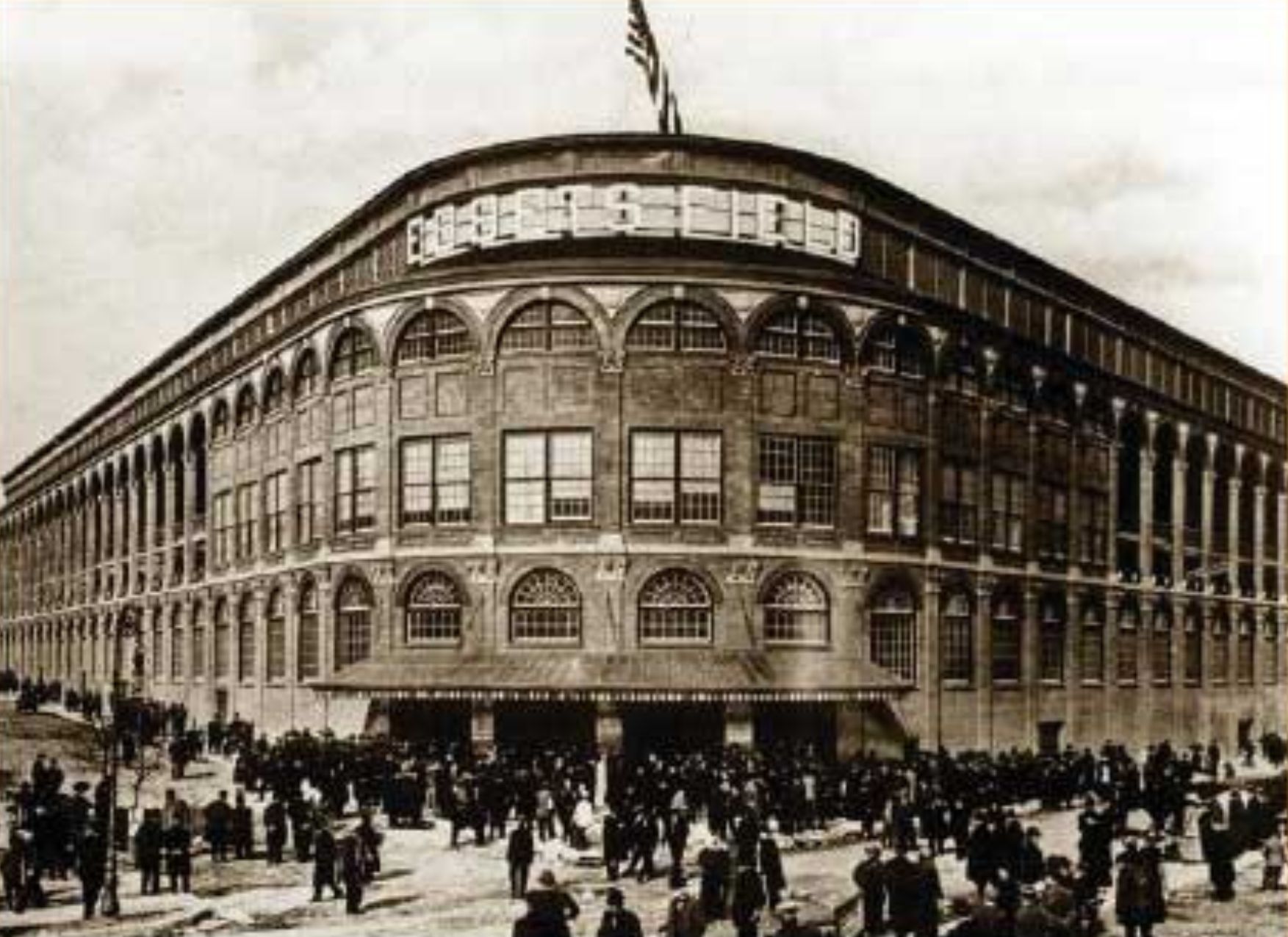
Ebbets Field was a Major League Baseball stadium in the Flatbush section of Brooklyn, New York. It is mainly known for having been the home of the Brooklyn Dodgers baseball team of the National League (1913–1957). It was also home to Negro league baseball's Brooklyn Eagles of the Negro National League II and to six gridiron football teams, five of which were professional and one of which was collegiate. The professional football teams consisted of three NFL teams (1921–1948), one AFL team (1936), and one AAFC team (1946–1948); Long Island University's football team (whose nickname was the "blackbirds" at the time) used Ebbets Field in 1939 and 1940. The stadium was demolished in 1960 and replaced by the Ebbets Field Apartments, the site's current occupant. It was located east of the Brooklyn Botanic Garden and Washington Avenue, north of Empire Boulevard, west of Bedford Avenue.
After locating the prospective new site to build a permanent stadium to replace the old wooden Washington Park, Dodgers' owner Charles Ebbets acquired the property over several years, starting in 1908, by buying lots until he owned the entire block. Ebbets Field was bounded by Bedford Avenue to the east, Sullivan Place to the South, Cedar Street (renamed McKeever Place in 1932) to the west, and Montgomery Street to the north.
The land included the site of a garbage dump called Pigtown, so named because of the pigs that once ate their fill there and the stench that filled the air. At the groundbreaking, the site was described as containing several old houses, shanties, goats, and tomato cans, and although the streets bordering the field were mapped, two of them had not been built yet.
Construction began on March 4, 1912. The cornerstone, a piece of Connecticut granite that held newspapers, pictures of baseball players, cards, telegrams, and almanacs, was laid on July 6, 1912. At the laying ceremony, Ebbets said that the ballpark was going to be ready for play on September 1, and that Brooklyn was going to win the National League pennant in 1913.
Neither of Ebbets' predictions was correct: on August 29, 1912, as the deadline drew near and it was obvious that due to an ironworker's strike the ballpark was not even close to being finished, it was announced that Ebbets had sold a 50% interest in the team to brothers Stephen W. and Edward J. McKeever, who had built their fortune in contracting and were able to speed along the construction. Though the sale led to management troubles years later, by early 1913 Ebbets Field was ready, and would become the home of some of baseball's greatest dramas.
Newspaper coverage in the spring of 1913 was filled with glowing praise about the new park, calling it "A Monument to the National Game" and predicting it could last 200 years: in the end it only lasted 47 years, failing to survive the exit of the Dodgers for Los Angeles in 1957.
The first game played was an inter-league exhibition game against the New York Yankees on April 5, 1913, played before an overcapacity of 30,000 fans, with 5,000 more who had arrived but were not able to get in. After a loss against the Yankees in another exhibition game on April 7 in front of about 1,000 fans on a very cold day, the first regular season game was played on April 9 against the Philadelphia Phillies, with Brooklyn losing, 1–0.
When the park was opened it was discovered that an American flag, keys to the bleachers, and a press box had all been forgotten. The press box level was not added until 1929. The original double-decked seating covered all of right field, rounded home plate, and extended past third base, with an open concrete bleacher stand continuing to the left field wall.
Hub AI
Ebbets Field AI simulator
(@Ebbets Field_simulator)
Ebbets Field
Ebbets Field was a Major League Baseball stadium in the Flatbush section of Brooklyn, New York. It is mainly known for having been the home of the Brooklyn Dodgers baseball team of the National League (1913–1957). It was also home to Negro league baseball's Brooklyn Eagles of the Negro National League II and to six gridiron football teams, five of which were professional and one of which was collegiate. The professional football teams consisted of three NFL teams (1921–1948), one AFL team (1936), and one AAFC team (1946–1948); Long Island University's football team (whose nickname was the "blackbirds" at the time) used Ebbets Field in 1939 and 1940. The stadium was demolished in 1960 and replaced by the Ebbets Field Apartments, the site's current occupant. It was located east of the Brooklyn Botanic Garden and Washington Avenue, north of Empire Boulevard, west of Bedford Avenue.
After locating the prospective new site to build a permanent stadium to replace the old wooden Washington Park, Dodgers' owner Charles Ebbets acquired the property over several years, starting in 1908, by buying lots until he owned the entire block. Ebbets Field was bounded by Bedford Avenue to the east, Sullivan Place to the South, Cedar Street (renamed McKeever Place in 1932) to the west, and Montgomery Street to the north.
The land included the site of a garbage dump called Pigtown, so named because of the pigs that once ate their fill there and the stench that filled the air. At the groundbreaking, the site was described as containing several old houses, shanties, goats, and tomato cans, and although the streets bordering the field were mapped, two of them had not been built yet.
Construction began on March 4, 1912. The cornerstone, a piece of Connecticut granite that held newspapers, pictures of baseball players, cards, telegrams, and almanacs, was laid on July 6, 1912. At the laying ceremony, Ebbets said that the ballpark was going to be ready for play on September 1, and that Brooklyn was going to win the National League pennant in 1913.
Neither of Ebbets' predictions was correct: on August 29, 1912, as the deadline drew near and it was obvious that due to an ironworker's strike the ballpark was not even close to being finished, it was announced that Ebbets had sold a 50% interest in the team to brothers Stephen W. and Edward J. McKeever, who had built their fortune in contracting and were able to speed along the construction. Though the sale led to management troubles years later, by early 1913 Ebbets Field was ready, and would become the home of some of baseball's greatest dramas.
Newspaper coverage in the spring of 1913 was filled with glowing praise about the new park, calling it "A Monument to the National Game" and predicting it could last 200 years: in the end it only lasted 47 years, failing to survive the exit of the Dodgers for Los Angeles in 1957.
The first game played was an inter-league exhibition game against the New York Yankees on April 5, 1913, played before an overcapacity of 30,000 fans, with 5,000 more who had arrived but were not able to get in. After a loss against the Yankees in another exhibition game on April 7 in front of about 1,000 fans on a very cold day, the first regular season game was played on April 9 against the Philadelphia Phillies, with Brooklyn losing, 1–0.
When the park was opened it was discovered that an American flag, keys to the bleachers, and a press box had all been forgotten. The press box level was not added until 1929. The original double-decked seating covered all of right field, rounded home plate, and extended past third base, with an open concrete bleacher stand continuing to the left field wall.
Recent media