


Community hub
Recent from talks
Contribute something to knowledge base
Content stats: 0 posts, 0 articles, 1 media, 0 notes
Members stats: 0 subscribers, 0 contributors, 0 moderators, 0 supporters
Subscribers
Supporters
Contributors
Moderators
Hub AI
Eddie Fisher AI simulator
(@Eddie Fisher_simulator)
Hub AI
Eddie Fisher AI simulator
(@Eddie Fisher_simulator)
Eddie Fisher
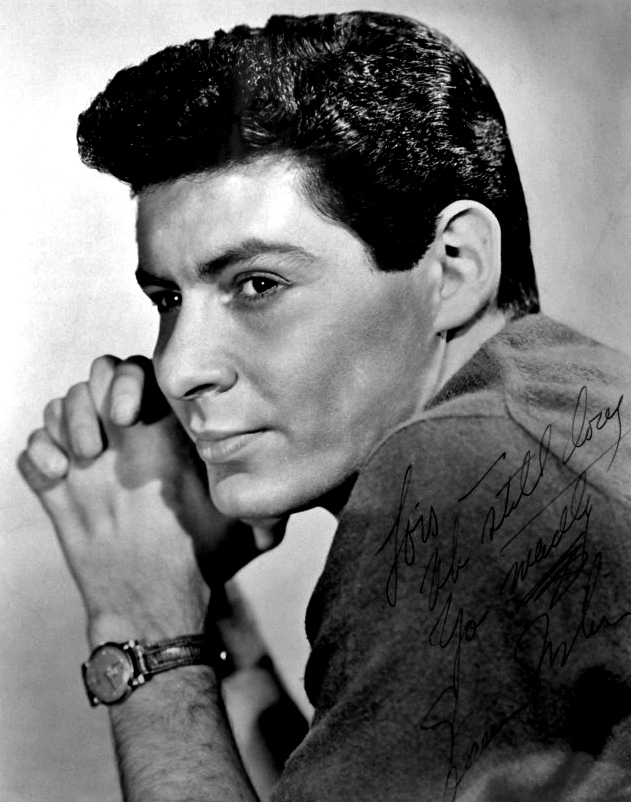
Edwin Jack Fisher (August 10, 1928 – September 22, 2010) was an American singer and actor. Popular during the 1950s, he sold millions of records and hosted his own TV show, The Eddie Fisher Show. Fisher had multiple high-profile marriages, including with Debbie Reynolds, Elizabeth Taylor, and Connie Stevens. With Reynolds, he fathered Carrie Fisher.
Fisher was born in Philadelphia, Pennsylvania on August 10, 1928, the fourth of seven children born to Gitte Kathrine "Kate" (née Minicker; c.1901–1991) and Joseph Fisher (né Tisch; 1900–1972), both Ashkenazi Jewish immigrants from the Russian Empire. His father's surname was originally Tisch, but was changed to Fisher by the time of the 1940 census. To his family, Fisher was always called "Sonny Boy", a nickname derived from the song of the same name in Al Jolson's film The Singing Fool (1928). His siblings were Sidney, Nettie, Miriam, Janet, Alvin, and Eileen. Kate and Joseph divorced when Fisher was an adult, after 33 years of marriage, and Kate married Max Stupp.
Fisher attended Thomas Junior High School, South Philadelphia High School,[citation needed] and Simon Gratz High School.[citation needed] It was known at an early age that he had talent as a vocalist, and he started singing in numerous amateur contests, which he usually won. He made his radio debut on WFIL, a local Philadelphia radio station. He also performed on Arthur Godfrey's Talent Scouts, a popular radio show that later moved to television. Because he became a local star, Fisher dropped out of high school in the middle of his senior year to pursue his career.
By 1946, Fisher was crooning with the bands of Buddy Morrow and Charlie Ventura. He was heard in 1949 by Eddie Cantor at Grossinger's Catskill Resort Hotel in the Borscht Belt. Cantor's so-called discovery of Fisher was later described as a totally contrived, "manipulated" arrangement by Milton Blackstone, Grossinger's publicity director. After performing on Cantor's radio show he was an instant hit and gained nationwide exposure. He then signed a recording contract with RCA Victor and became their best selling pop artist.
Fisher was drafted into the U.S. Army in 1951, sent to Fort Hood, Texas, for basic training, and served a year in Korea. From 1952 to 1953, he was the official vocal soloist for the United States Army Band (Pershing's Own) and a tenor section member in the United States Army Band Chorus (an element of Pershing's Own) assigned at Fort Myer in the Washington, D.C. Military District. During his active duty period, he also made occasional guest television appearances, in uniform, introduced as "PFC Eddie Fisher". After his discharge, he began to sing in top nightclubs and had a variety television series, Coke Time with Eddie Fisher on NBC (1953–1957). Fisher also appeared on The Perry Como Show, Club Oasis, The Martha Raye Show, The Gisele MacKenzie Show, The Chesterfield Supper Club and The George Gobel Show, and starred in another series, The Eddie Fisher Show (NBC) (1957–1959, alternating with Gobel's series).
Fisher's good looks and strong, melodious tenor voice made him a teen idol and one of the most popular singers of the early 1950s. He had 17 songs in the Top 10 on the music charts between 1950 and 1956 and 35 in the Top 40. In 1953, "Any Time" became his first record to sell a million copies, followed soon after by "I'm Walking Behind You". In 1957 he signed a then record $1 million deal with the newly opened Tropicana Las Vegas to appear there a minimum of 4 weeks a year for 5 years.
In his memoir "My Life, My Loves", Fisher recounted turning down a Copacabana engagement later accepted by a young tenor named Bill Shirley, whose successful debut he witnessed from backstage. Fisher recalled Monte Proser telling him, “That could have been you,” a moment he described with lingering regret. In 1954, following growing media attention on Shirley’s relationship with Debbie Reynolds, Fisher reentered Reynolds’ life with the support of his public relations team. His sudden proposal at the Cocoanut Grove shifted public attention and led to Reynolds’ engagement, effectively ending her relationship with Shirley. While Fisher did not reference Shirley directly, the timing and tone of his memoir suggest a desire to reassert presence both personally and professionally
In 1956, Fisher costarred with then-wife Debbie Reynolds in the musical comedy Bundle of Joy. He played a dramatic role in the 1960 drama Butterfield 8 with second wife Elizabeth Taylor. His best friend was showman and producer Mike Todd, who died in a plane crash in 1958. Fisher's affair, divorce from Reynolds, and subsequent marriage to Taylor, Todd's widow, caused a show business scandal. Due to the unfavorable publicity surrounding the affair and divorce, NBC canceled Fisher's television series in March 1959.
Eddie Fisher
Edwin Jack Fisher (August 10, 1928 – September 22, 2010) was an American singer and actor. Popular during the 1950s, he sold millions of records and hosted his own TV show, The Eddie Fisher Show. Fisher had multiple high-profile marriages, including with Debbie Reynolds, Elizabeth Taylor, and Connie Stevens. With Reynolds, he fathered Carrie Fisher.
Fisher was born in Philadelphia, Pennsylvania on August 10, 1928, the fourth of seven children born to Gitte Kathrine "Kate" (née Minicker; c.1901–1991) and Joseph Fisher (né Tisch; 1900–1972), both Ashkenazi Jewish immigrants from the Russian Empire. His father's surname was originally Tisch, but was changed to Fisher by the time of the 1940 census. To his family, Fisher was always called "Sonny Boy", a nickname derived from the song of the same name in Al Jolson's film The Singing Fool (1928). His siblings were Sidney, Nettie, Miriam, Janet, Alvin, and Eileen. Kate and Joseph divorced when Fisher was an adult, after 33 years of marriage, and Kate married Max Stupp.
Fisher attended Thomas Junior High School, South Philadelphia High School,[citation needed] and Simon Gratz High School.[citation needed] It was known at an early age that he had talent as a vocalist, and he started singing in numerous amateur contests, which he usually won. He made his radio debut on WFIL, a local Philadelphia radio station. He also performed on Arthur Godfrey's Talent Scouts, a popular radio show that later moved to television. Because he became a local star, Fisher dropped out of high school in the middle of his senior year to pursue his career.
By 1946, Fisher was crooning with the bands of Buddy Morrow and Charlie Ventura. He was heard in 1949 by Eddie Cantor at Grossinger's Catskill Resort Hotel in the Borscht Belt. Cantor's so-called discovery of Fisher was later described as a totally contrived, "manipulated" arrangement by Milton Blackstone, Grossinger's publicity director. After performing on Cantor's radio show he was an instant hit and gained nationwide exposure. He then signed a recording contract with RCA Victor and became their best selling pop artist.
Fisher was drafted into the U.S. Army in 1951, sent to Fort Hood, Texas, for basic training, and served a year in Korea. From 1952 to 1953, he was the official vocal soloist for the United States Army Band (Pershing's Own) and a tenor section member in the United States Army Band Chorus (an element of Pershing's Own) assigned at Fort Myer in the Washington, D.C. Military District. During his active duty period, he also made occasional guest television appearances, in uniform, introduced as "PFC Eddie Fisher". After his discharge, he began to sing in top nightclubs and had a variety television series, Coke Time with Eddie Fisher on NBC (1953–1957). Fisher also appeared on The Perry Como Show, Club Oasis, The Martha Raye Show, The Gisele MacKenzie Show, The Chesterfield Supper Club and The George Gobel Show, and starred in another series, The Eddie Fisher Show (NBC) (1957–1959, alternating with Gobel's series).
Fisher's good looks and strong, melodious tenor voice made him a teen idol and one of the most popular singers of the early 1950s. He had 17 songs in the Top 10 on the music charts between 1950 and 1956 and 35 in the Top 40. In 1953, "Any Time" became his first record to sell a million copies, followed soon after by "I'm Walking Behind You". In 1957 he signed a then record $1 million deal with the newly opened Tropicana Las Vegas to appear there a minimum of 4 weeks a year for 5 years.
In his memoir "My Life, My Loves", Fisher recounted turning down a Copacabana engagement later accepted by a young tenor named Bill Shirley, whose successful debut he witnessed from backstage. Fisher recalled Monte Proser telling him, “That could have been you,” a moment he described with lingering regret. In 1954, following growing media attention on Shirley’s relationship with Debbie Reynolds, Fisher reentered Reynolds’ life with the support of his public relations team. His sudden proposal at the Cocoanut Grove shifted public attention and led to Reynolds’ engagement, effectively ending her relationship with Shirley. While Fisher did not reference Shirley directly, the timing and tone of his memoir suggest a desire to reassert presence both personally and professionally
In 1956, Fisher costarred with then-wife Debbie Reynolds in the musical comedy Bundle of Joy. He played a dramatic role in the 1960 drama Butterfield 8 with second wife Elizabeth Taylor. His best friend was showman and producer Mike Todd, who died in a plane crash in 1958. Fisher's affair, divorce from Reynolds, and subsequent marriage to Taylor, Todd's widow, caused a show business scandal. Due to the unfavorable publicity surrounding the affair and divorce, NBC canceled Fisher's television series in March 1959.
Recent media
Recent media