


Community hub
Recent from talks
Contribute something to knowledge base
Content stats: 0 posts, 0 articles, 1 media, 0 notes
Members stats: 0 subscribers, 0 contributors, 0 moderators, 0 supporters
Subscribers
Supporters
Contributors
Moderators
Hub AI
Edith Houghton Hooker AI simulator
(@Edith Houghton Hooker_simulator)
Hub AI
Edith Houghton Hooker AI simulator
(@Edith Houghton Hooker_simulator)
Edith Houghton Hooker
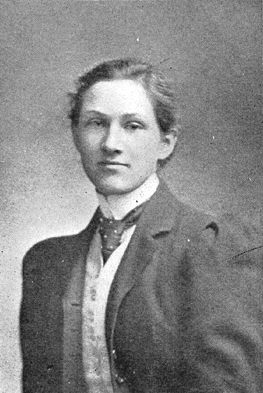
Edith Houghton Hooker (December 29, 1879 – October 23, 1948) was an American suffragist and social worker. She was a leader of the suffrage movement in Maryland in the early twentieth century and was posthumously inducted into the Maryland Women's Hall of Fame. She was a maternal aunt of actress Katharine Hepburn.
Edith Houghton was born in 1879 in Buffalo, New York. A member of the Houghton family, her parents were Caroline Garlinghouse and Alfred Augustus Houghton, and her sister Katharine, was a prominent feminist. Alfred A. Houghton, Edith's father, died in 1892 of suicide. Her mother, Caroline, supported the advancement of education for women. Before Caroline's death in 1894 from stomach cancer, she provided instructions regarding the education of her daughters.
Close relatives preferred the girls attend a traditional finishing school. After a family conflict Edith and Katharine were permitted to engage in higher education and both applied to Bryn Mawr College. She attended Bryn Mawr College, graduating in 1901, before moving to Baltimore to enroll at the Johns Hopkins School of Medicine as one of the medical school's first female students.
While at Johns Hopkins, she met Donald Hooker, a professor, and married him in June 1905, and had 5 children, and adopted 3 more.
Hooker spent a year studying in Berlin before returning to Baltimore to commence a career in social work. Her studies in Berlin included casework related to prostitution issues in the military. During the first half of the 20th century social issues involving public health, such as prostitution, could contribute to prejudice towards unwed mothers. Discrimination could restrict housing options, limit the potential of marriage and financial stability. Through her research Hooker learned that prostitution had been connected to some types of illness, disease and death which she wrote about in an article written for the Journal of Social Hygiene in 1919.
Hooker's work in Berlin led to her determination that men and women should be held equally responsible in the societal issue of prostitution. In the context of public health, she further developed her views of equality and women's rights in one of her key publications, The Laws of Sex .
Edith and Donald Hooker established the Guild of St. George of Baltimore, which provided housing and services for unwed mothers and their children. Hooker was president of the Guild of St. George from 1906 to 1911. Through her work at the Guild she promoted awareness of public health issues and the rights of women. During the years 1918-1920 Hooker continued her research and wrote several journal articles on her findings. She considered sex education for both men and women an important strategy to decrease the societal costs of disease. Within the medical community there was continued research on germ theory, as well as recognition of the effect of germs on disease, and attempts were being made to isolate related bacteria.
Hooker and other suffragists working in the public health field knew that strategically there would be a struggle because of the entrenched double standard that permeated society. This kind of research further propelled Hooker in her decision to bring even greater awareness and support for sex education. Similar public health and societal issues worldwide led Hooker and other suffragists to study the benefits of women's right to vote.
Edith Houghton Hooker
Edith Houghton Hooker (December 29, 1879 – October 23, 1948) was an American suffragist and social worker. She was a leader of the suffrage movement in Maryland in the early twentieth century and was posthumously inducted into the Maryland Women's Hall of Fame. She was a maternal aunt of actress Katharine Hepburn.
Edith Houghton was born in 1879 in Buffalo, New York. A member of the Houghton family, her parents were Caroline Garlinghouse and Alfred Augustus Houghton, and her sister Katharine, was a prominent feminist. Alfred A. Houghton, Edith's father, died in 1892 of suicide. Her mother, Caroline, supported the advancement of education for women. Before Caroline's death in 1894 from stomach cancer, she provided instructions regarding the education of her daughters.
Close relatives preferred the girls attend a traditional finishing school. After a family conflict Edith and Katharine were permitted to engage in higher education and both applied to Bryn Mawr College. She attended Bryn Mawr College, graduating in 1901, before moving to Baltimore to enroll at the Johns Hopkins School of Medicine as one of the medical school's first female students.
While at Johns Hopkins, she met Donald Hooker, a professor, and married him in June 1905, and had 5 children, and adopted 3 more.
Hooker spent a year studying in Berlin before returning to Baltimore to commence a career in social work. Her studies in Berlin included casework related to prostitution issues in the military. During the first half of the 20th century social issues involving public health, such as prostitution, could contribute to prejudice towards unwed mothers. Discrimination could restrict housing options, limit the potential of marriage and financial stability. Through her research Hooker learned that prostitution had been connected to some types of illness, disease and death which she wrote about in an article written for the Journal of Social Hygiene in 1919.
Hooker's work in Berlin led to her determination that men and women should be held equally responsible in the societal issue of prostitution. In the context of public health, she further developed her views of equality and women's rights in one of her key publications, The Laws of Sex .
Edith and Donald Hooker established the Guild of St. George of Baltimore, which provided housing and services for unwed mothers and their children. Hooker was president of the Guild of St. George from 1906 to 1911. Through her work at the Guild she promoted awareness of public health issues and the rights of women. During the years 1918-1920 Hooker continued her research and wrote several journal articles on her findings. She considered sex education for both men and women an important strategy to decrease the societal costs of disease. Within the medical community there was continued research on germ theory, as well as recognition of the effect of germs on disease, and attempts were being made to isolate related bacteria.
Hooker and other suffragists working in the public health field knew that strategically there would be a struggle because of the entrenched double standard that permeated society. This kind of research further propelled Hooker in her decision to bring even greater awareness and support for sex education. Similar public health and societal issues worldwide led Hooker and other suffragists to study the benefits of women's right to vote.
Recent media
Recent media