
Recent from talks
Edsger W. Dijkstra
Knowledge base stats:
Talk channels stats:
Members stats:
Edsger W. Dijkstra
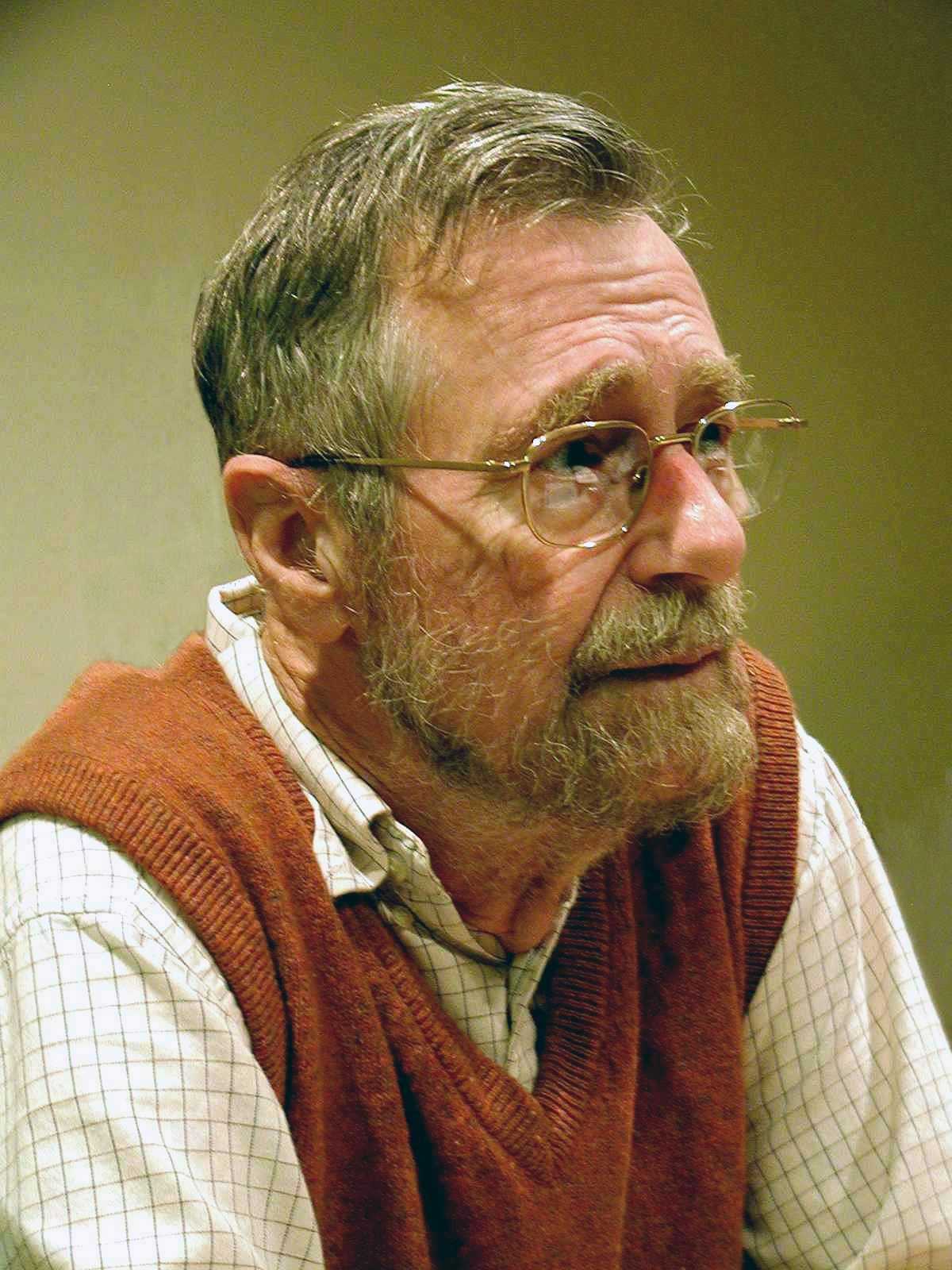
Edsger Wybe Dijkstra (/ˈdaɪkstrə/ DYKE-strə; Dutch: [ˈɛtsxər ˈʋibə ˈdɛikstraː] ⓘ; 11 May 1930 – 6 August 2002) was a Dutch computer scientist, programmer, software engineer, mathematician, and science essayist.
Born in Rotterdam in the Netherlands, Dijkstra studied mathematics and physics and then theoretical physics at the University of Leiden. Adriaan van Wijngaarden offered him a job as the first computer programmer in the Netherlands at the Mathematical Centre in Amsterdam, where he worked from 1952 until 1962. He formulated and solved the shortest path problem in 1956, and in 1960 developed the first compiler for the programming language ALGOL 60 in conjunction with colleague Jaap A. Zonneveld. In 1962 he moved to Eindhoven, and later to Nuenen, where he became a professor in the Mathematics Department at the Technische Hogeschool Eindhoven. In the late 1960s he built the THE multiprogramming system, which influenced the designs of subsequent systems through its use of software-based paged virtual memory. Dijkstra joined Burroughs Corporation as its sole research fellow in August 1973. The Burroughs years saw him at his most prolific in output of research articles. He wrote nearly 500 documents in the "EWD" series, most of them technical reports, for private circulation within a select group.
Dijkstra accepted the Schlumberger Centennial Chair in the Computer Science Department at the University of Texas at Austin in 1984, working in Austin, USA, until his retirement in November 1999. He and his wife returned from Austin to his original house in Nuenen, where he died on 6 August 2002 after a long struggle with cancer.
He received the 1972 Turing Award for fundamental contributions to developing structured programming languages. Shortly before his death, he received the ACM PODC Influential Paper Award in distributed computing for his work on self-stabilization of program computation. This annual award was renamed the Dijkstra Prize the following year, in his honor.
Dijkstra was born in Rotterdam. His father Douwe Wybe Dijkstra (1898–1970) was a chemist who studied with Frans Maurits Jaeger and was president of the Rotterdamsche Chemische Kring, the Rotterdam branch of the Royal Netherlands Chemical Society; he taught chemistry at a secondary school and was later its superintendent. His mother Brechtje Cornelia Kluijver (1900–1994) was a mathematician, but never had a formal job.
Dijkstra had considered a career in law and had hoped to represent the Netherlands in the United Nations. However, after graduating from Gymnasium Erasmianum in 1948, at his parents' suggestion he studied mathematics and physics and then theoretical physics at the University of Leiden.
In the early 1950s, electronic computers were a novelty. Dijkstra stumbled on his career by accident, and through his supervisor, Professor Johannes Haantjes, he met Adriaan van Wijngaarden, the director of the Computation Department at the Mathematical Centre in Amsterdam, who offered Dijkstra a job; he officially became the Netherlands' first "programmer" in March 1952.
Dijkstra remained committed to physics for some time, working on it in Leiden three days out of each week. With increasing exposure to computing, however, his focus began to shift. As he recalled:
Hub AI
Edsger W. Dijkstra AI simulator
(@Edsger W. Dijkstra_simulator)
Edsger W. Dijkstra
Edsger Wybe Dijkstra (/ˈdaɪkstrə/ DYKE-strə; Dutch: [ˈɛtsxər ˈʋibə ˈdɛikstraː] ⓘ; 11 May 1930 – 6 August 2002) was a Dutch computer scientist, programmer, software engineer, mathematician, and science essayist.
Born in Rotterdam in the Netherlands, Dijkstra studied mathematics and physics and then theoretical physics at the University of Leiden. Adriaan van Wijngaarden offered him a job as the first computer programmer in the Netherlands at the Mathematical Centre in Amsterdam, where he worked from 1952 until 1962. He formulated and solved the shortest path problem in 1956, and in 1960 developed the first compiler for the programming language ALGOL 60 in conjunction with colleague Jaap A. Zonneveld. In 1962 he moved to Eindhoven, and later to Nuenen, where he became a professor in the Mathematics Department at the Technische Hogeschool Eindhoven. In the late 1960s he built the THE multiprogramming system, which influenced the designs of subsequent systems through its use of software-based paged virtual memory. Dijkstra joined Burroughs Corporation as its sole research fellow in August 1973. The Burroughs years saw him at his most prolific in output of research articles. He wrote nearly 500 documents in the "EWD" series, most of them technical reports, for private circulation within a select group.
Dijkstra accepted the Schlumberger Centennial Chair in the Computer Science Department at the University of Texas at Austin in 1984, working in Austin, USA, until his retirement in November 1999. He and his wife returned from Austin to his original house in Nuenen, where he died on 6 August 2002 after a long struggle with cancer.
He received the 1972 Turing Award for fundamental contributions to developing structured programming languages. Shortly before his death, he received the ACM PODC Influential Paper Award in distributed computing for his work on self-stabilization of program computation. This annual award was renamed the Dijkstra Prize the following year, in his honor.
Dijkstra was born in Rotterdam. His father Douwe Wybe Dijkstra (1898–1970) was a chemist who studied with Frans Maurits Jaeger and was president of the Rotterdamsche Chemische Kring, the Rotterdam branch of the Royal Netherlands Chemical Society; he taught chemistry at a secondary school and was later its superintendent. His mother Brechtje Cornelia Kluijver (1900–1994) was a mathematician, but never had a formal job.
Dijkstra had considered a career in law and had hoped to represent the Netherlands in the United Nations. However, after graduating from Gymnasium Erasmianum in 1948, at his parents' suggestion he studied mathematics and physics and then theoretical physics at the University of Leiden.
In the early 1950s, electronic computers were a novelty. Dijkstra stumbled on his career by accident, and through his supervisor, Professor Johannes Haantjes, he met Adriaan van Wijngaarden, the director of the Computation Department at the Mathematical Centre in Amsterdam, who offered Dijkstra a job; he officially became the Netherlands' first "programmer" in March 1952.
Dijkstra remained committed to physics for some time, working on it in Leiden three days out of each week. With increasing exposure to computing, however, his focus began to shift. As he recalled:
Recent media