


Community hub
Recent from talks
Contribute something to knowledge base
Content stats: 0 posts, 0 articles, 1 media, 0 notes
Members stats: 0 subscribers, 0 contributors, 0 moderators, 0 supporters
Subscribers
Supporters
Contributors
Moderators
Hub AI
Edward Coke AI simulator
(@Edward Coke_simulator)
Hub AI
Edward Coke AI simulator
(@Edward Coke_simulator)
Edward Coke
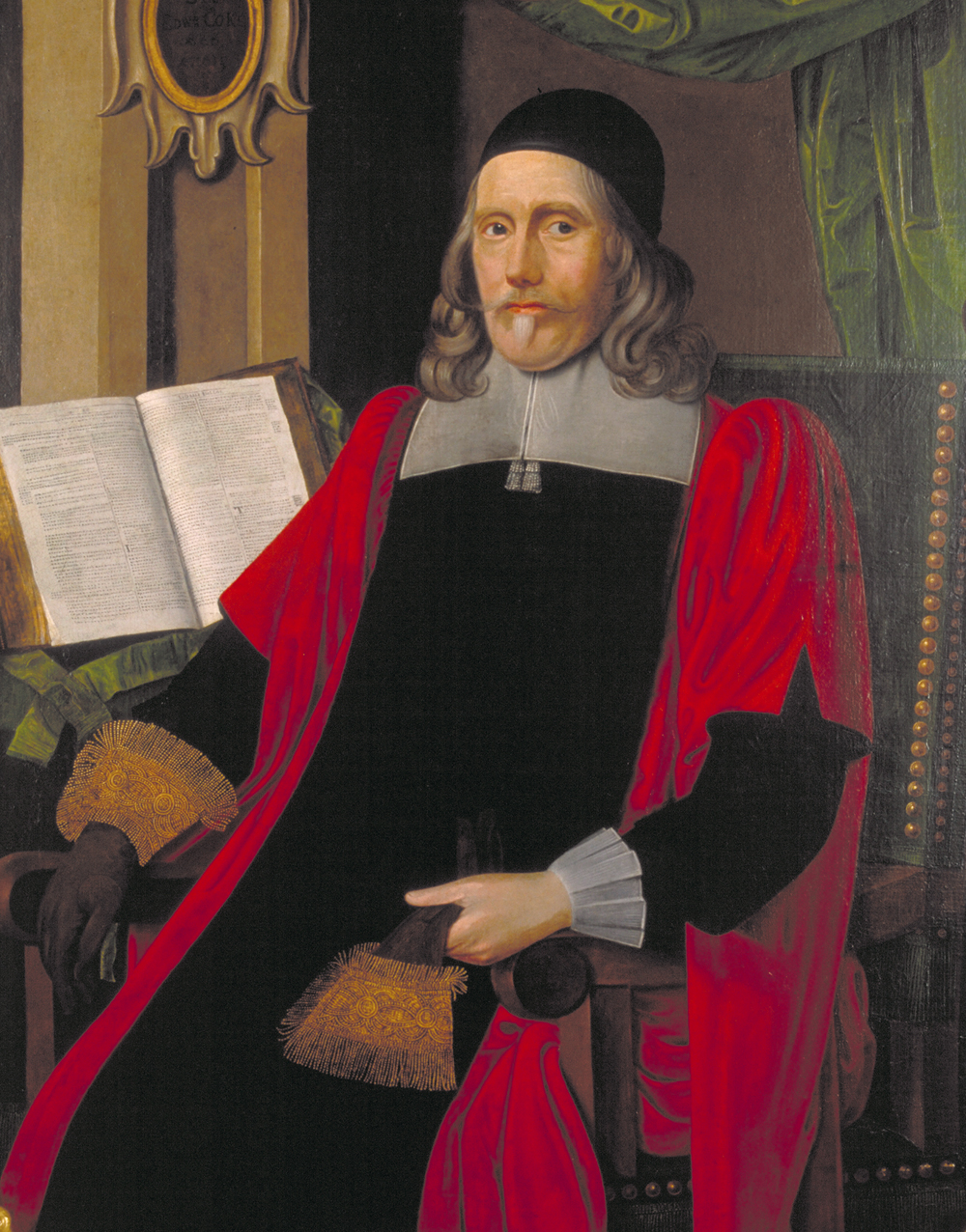
Sir Edward Coke (/kʊk/ CUUK, formerly /kuːk/; 1 February 1552 – 3 September 1634) was an English barrister, judge, and politician. He is often considered the greatest jurist of the Elizabethan and Jacobean eras.
Born into an upper-class family, Coke was educated at Trinity College, Cambridge, before leaving to study at the Inner Temple, where he was called to the Bar on 20 April 1578. As a barrister, he took part in several notable cases, including Slade's Case, before earning enough political favour to be elected to Parliament, where he served first as Solicitor General and then as Speaker of the House of Commons. Following a promotion to Attorney General he led the prosecution in several notable cases, including those against Robert Devereux, Sir Walter Raleigh, and the Gunpowder Plot conspirators. As a reward for his services he was first knighted and then made Chief Justice of the Common Pleas.
As Chief Justice, Coke restricted the use of the ex officio (Star Chamber) oath and, in the Case of Proclamations and Dr. Bonham's Case, declared the King to be subject to the law, and the laws of Parliament to be void if in violation of "common right and reason". These actions eventually led to his transfer to the Chief Justiceship of the King's Bench, where it was felt he could do less damage. Coke then successively restricted the definition of treason and declared a royal letter illegal, leading to his dismissal from the bench on 14 November 1616. With no chance of regaining his judicial posts, he instead returned to Parliament, where he swiftly became a leading member of the opposition. During his time as a Member of Parliament he wrote and campaigned for the Statute of Monopolies, which substantially restricted the ability of the monarch to grant patents, and authored and was instrumental in the passage of the Petition of Right, a document considered one of the three crucial constitutional documents of England, along with Magna Carta and the Bill of Rights 1689.
Coke is best known in modern times for his Institutes, described by John Rutledge as "almost the foundations of our law", and his Reports, which have been called "perhaps the single most influential series of named reports". Historically, he was a highly influential judge; within England and Wales, his statements and works were used to justify the right to silence, while the Statute of Monopolies is considered to be one of the first actions in the conflict between Parliament and monarch that led to the English Civil War. In America, Coke's decision in Dr. Bonham's Case was used to justify the voiding of both the Stamp Act 1765 and writs of assistance, which led to the American War of Independence; after the establishment of the United States his decisions and writings profoundly influenced the Third and Fourth amendments to the United States Constitution while necessitating the Sixteenth.
The surname "Coke", or "Cocke", can be traced back to a William Coke in the hundred of South Greenhoe, now the Norfolk town of Swaffham, in around 1150. The family was relatively prosperous and influential – members from the 14th century onwards included an Under-Sheriff, a Knight Banneret, a barrister and a merchant. The name "Coke" was pronounced /ˈkuːk/ during the Elizabethan age, although it is now pronounced /ˈkʊk/. The origin of the name is uncertain: it has been suggested that "Coke" or "Cock" was a word meaning "river" or "chief" among the early Britons, but a more likely hypothesis is that the spelling arose from an attempt to disguise the word "cook". That "cook" and "coke" were homonyms at this time is shown by the fact that Coke's second wife, Elizabeth Hatton, regularly spelt his name "Cook" when writing to him.
Coke's father, Robert Coke, was a barrister and Bencher of Lincoln's Inn who built up a strong practice representing clients from his home area of Norfolk. Over time, he bought several manors at Congham, West Acre and Happisburgh, all in Norfolk, and was granted a coat of arms, becoming a minor member of the gentry. Coke's mother, Winifred Knightley, came from a family even more intimately linked with the law than her husband. Her father and grandfather had practised law in the Norfolk area, and her sister Audrey was married to Thomas Gawdy, a lawyer and Justice of the Court of King's Bench with links to the Earl of Arundel. This connection later served Edward well. Winifred's father later married Agnes, the sister of Nicholas Hare.
Edward Coke was born on 1 February 1552 in his father's manor of Mileham in Norfolk (acquired by him in 1553) one of eight children. The other seven were daughters – Winifred, Dorothy, Elizabeth, Ursula, Anna, Margaret and Ethelreda – although it is not known in which order the children were born. Two years after Robert Coke died on 15 November 1561, his widow married Robert Bozoun, a property trader noted for his piety and strong business acumen (once forcing Nicholas Bacon to pay an exorbitant amount of money for a piece of property). He had a tremendous influence on the Coke children: from Bozoun Coke learnt to "loathe concealers, prefer godly men and briskly do business with any willing client", something that shaped his future conduct as a lawyer, politician, and judge.
At the age of eight in 1560, Coke began studying at the Norwich Free Grammar School. The education there was based on erudition, the eventual goal being that by the age of 18 the students would have learned "to vary one sentence diversely, to make a verse exactly, to endight an epistle eloquently and learnedly, to declaim of a theme simple, and last of all to attain some competent knowledge of the Greek tongue". The students were taught rhetoric based on the Rhetorica ad Herennium, and Greek centred on the works of Homer and Virgil. Coke was taught at Norwich to value the "forcefulness of freedom of speech", something he later applied as a judge. Some accounts relate that he was a diligent student who applied himself well.
Edward Coke
Sir Edward Coke (/kʊk/ CUUK, formerly /kuːk/; 1 February 1552 – 3 September 1634) was an English barrister, judge, and politician. He is often considered the greatest jurist of the Elizabethan and Jacobean eras.
Born into an upper-class family, Coke was educated at Trinity College, Cambridge, before leaving to study at the Inner Temple, where he was called to the Bar on 20 April 1578. As a barrister, he took part in several notable cases, including Slade's Case, before earning enough political favour to be elected to Parliament, where he served first as Solicitor General and then as Speaker of the House of Commons. Following a promotion to Attorney General he led the prosecution in several notable cases, including those against Robert Devereux, Sir Walter Raleigh, and the Gunpowder Plot conspirators. As a reward for his services he was first knighted and then made Chief Justice of the Common Pleas.
As Chief Justice, Coke restricted the use of the ex officio (Star Chamber) oath and, in the Case of Proclamations and Dr. Bonham's Case, declared the King to be subject to the law, and the laws of Parliament to be void if in violation of "common right and reason". These actions eventually led to his transfer to the Chief Justiceship of the King's Bench, where it was felt he could do less damage. Coke then successively restricted the definition of treason and declared a royal letter illegal, leading to his dismissal from the bench on 14 November 1616. With no chance of regaining his judicial posts, he instead returned to Parliament, where he swiftly became a leading member of the opposition. During his time as a Member of Parliament he wrote and campaigned for the Statute of Monopolies, which substantially restricted the ability of the monarch to grant patents, and authored and was instrumental in the passage of the Petition of Right, a document considered one of the three crucial constitutional documents of England, along with Magna Carta and the Bill of Rights 1689.
Coke is best known in modern times for his Institutes, described by John Rutledge as "almost the foundations of our law", and his Reports, which have been called "perhaps the single most influential series of named reports". Historically, he was a highly influential judge; within England and Wales, his statements and works were used to justify the right to silence, while the Statute of Monopolies is considered to be one of the first actions in the conflict between Parliament and monarch that led to the English Civil War. In America, Coke's decision in Dr. Bonham's Case was used to justify the voiding of both the Stamp Act 1765 and writs of assistance, which led to the American War of Independence; after the establishment of the United States his decisions and writings profoundly influenced the Third and Fourth amendments to the United States Constitution while necessitating the Sixteenth.
The surname "Coke", or "Cocke", can be traced back to a William Coke in the hundred of South Greenhoe, now the Norfolk town of Swaffham, in around 1150. The family was relatively prosperous and influential – members from the 14th century onwards included an Under-Sheriff, a Knight Banneret, a barrister and a merchant. The name "Coke" was pronounced /ˈkuːk/ during the Elizabethan age, although it is now pronounced /ˈkʊk/. The origin of the name is uncertain: it has been suggested that "Coke" or "Cock" was a word meaning "river" or "chief" among the early Britons, but a more likely hypothesis is that the spelling arose from an attempt to disguise the word "cook". That "cook" and "coke" were homonyms at this time is shown by the fact that Coke's second wife, Elizabeth Hatton, regularly spelt his name "Cook" when writing to him.
Coke's father, Robert Coke, was a barrister and Bencher of Lincoln's Inn who built up a strong practice representing clients from his home area of Norfolk. Over time, he bought several manors at Congham, West Acre and Happisburgh, all in Norfolk, and was granted a coat of arms, becoming a minor member of the gentry. Coke's mother, Winifred Knightley, came from a family even more intimately linked with the law than her husband. Her father and grandfather had practised law in the Norfolk area, and her sister Audrey was married to Thomas Gawdy, a lawyer and Justice of the Court of King's Bench with links to the Earl of Arundel. This connection later served Edward well. Winifred's father later married Agnes, the sister of Nicholas Hare.
Edward Coke was born on 1 February 1552 in his father's manor of Mileham in Norfolk (acquired by him in 1553) one of eight children. The other seven were daughters – Winifred, Dorothy, Elizabeth, Ursula, Anna, Margaret and Ethelreda – although it is not known in which order the children were born. Two years after Robert Coke died on 15 November 1561, his widow married Robert Bozoun, a property trader noted for his piety and strong business acumen (once forcing Nicholas Bacon to pay an exorbitant amount of money for a piece of property). He had a tremendous influence on the Coke children: from Bozoun Coke learnt to "loathe concealers, prefer godly men and briskly do business with any willing client", something that shaped his future conduct as a lawyer, politician, and judge.
At the age of eight in 1560, Coke began studying at the Norwich Free Grammar School. The education there was based on erudition, the eventual goal being that by the age of 18 the students would have learned "to vary one sentence diversely, to make a verse exactly, to endight an epistle eloquently and learnedly, to declaim of a theme simple, and last of all to attain some competent knowledge of the Greek tongue". The students were taught rhetoric based on the Rhetorica ad Herennium, and Greek centred on the works of Homer and Virgil. Coke was taught at Norwich to value the "forcefulness of freedom of speech", something he later applied as a judge. Some accounts relate that he was a diligent student who applied himself well.
Recent media
Recent media