Hubbry Logo
SwaffhamSwaffhamMain
Open search
Swaffham
Community hub
Swaffham
logo
8 pages, 0 posts
0 subscribers
Be the first to start a discussion here.
Swaffham
Swaffham
from Wikipedia

Swaffham (/ˈswɒfəm/) is a market town and civil parish in the Breckland District and English county of Norfolk. It is situated 12 miles (19 kilometres) east of King's Lynn and 31 miles (50 kilometres) west of Norwich.

Key Information

The civil parish has an area of 11.42 sq mi (29.6 km2) and in the 2001 census had a population of 6,935 in 3,130 households, which increased to 7,258, in 3,258 households, at the 2011 census. For the purposes of local government, the parish falls within the district of Breckland.[3]

Correct pronunciation

[edit]

"Swoffum"[4]

History

[edit]
Swaffham Town Hall

The name of the town derives from the Old English Swǣfa hām = "the homestead of the Swabians"; some of them presumably came with the Angles and Saxons.[5]

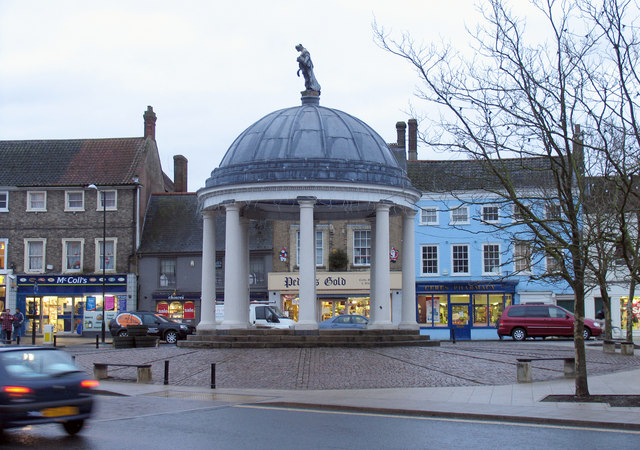
By the 14th and 15th centuries Swaffham had an emerging sheep and wool industry.[6] As a result of this prosperity, the town has a large market place. The market cross here was built by George Walpole, 3rd Earl of Orford and presented to the town in 1783.[7] On the top is the statue of Ceres, the Roman goddess of the harvest. The former Corn Hall, which was designed by Mathias Goggs, was completed in 1858.[8]

About 8 km to the north of Swaffham can be found the ruins of the formerly important Castle Acre Priory and Castle Acre Castle.

On the west side of Swaffham Market Place are several old buildings which for many years housed the historic Hamond's Grammar School, as a plaque on the wall of the main building explains. The Hamond's Grammar School building latterly came to serve as the sixth form for the Hamond's High School, but that use has since ceased. Harry Carter, the grammar school's art teacher of the 1960s, was responsible for a great number of the carved village signs that are now found in many of Norfolk's towns and villages, including Swaffham's own sign commemorating the legendary Pedlar of Swaffham,[9][10][11] which is in the corner of the market place just opposite the old school's gates.[12] Carter was a distant cousin of the archaeologist and egyptologist Howard Carter[13] who spent much of his childhood in the town.[14]

The Swaffham Museum is a small, independent social history museum for Swaffham and the surrounding villages in Norfolk from the Stone Age to the modern. It has five galleries exhibiting local history and local geology as well as an Egyptology room about Howard Carter and the Ancient Egyptians, celebrating the centenary year of Howard Carter discovering the Tomb of Tutankhamun in 1922.[15]

Swaffham was struck by a tornado measuring F1 on the Fujita scale and T2 on the TORRO scale on 23 November 1981 during the 1981 United Kingdom tornado outbreak.[16]

Folklore

[edit]
A map of Swaffham from 1946

Swaffham is one of the many locations for The Man Who Became Rich through a Dream folk tale (Aarne-Thompson type 1645). The tale tells of a pedlar from Swaffham who dreamed for several consecutive nights that if he waited on London Bridge he would eventually hear good news. He travelled to London, and waited for several days on the bridge. Eventually a shopkeeper asked him why he was waiting, and the man told of his dream. The shopkeeper laughed, and replied that he often dreamed that if he went to a certain orchard in Swaffham and started digging, he would find buried treasure. The pedlar returned to Swaffham, and found the treasure.[17]

In medieval folklore, a black, hairy dog called the Black Shuck was rumoured to have wandered the three settlements of Swaffham, Castle Acre, and Great Cressingham, ambushing merchants who were on their way to large towns to sell their goods. There are still rumours of a puma-like black cat wandering around Norfolk[18] and Cambridgeshire.[19]

Parish church

[edit]

The church of Saint Peter and Saint Paul is one of only a few churches that have angels carved in wood instead of stone around the top of the walls. The current building, dating from 1454, is built on the foundation of the original church.[20] A wood carving of the "Pedlar of Swaffham" is also in the church.

Transport

[edit]
Swaffham railway station, when part of the Eastern Region of British Rail

The nearest railway stations to Swaffham are at King's Lynn and Downham Market, on the Fen line. There are regular services to Ely, Cambridge and London King's Cross, operated by Great Northern.

Until 1968, the town was served by Swaffham railway station on the Great Eastern Railway line from King's Lynn. Just after Swaffham, the line split into two: one branch headed south to Thetford and the other east towards Dereham. The lines were all closed as part of the Beeching cuts, though the possibility of rebuilding a direct rail link from Norwich to King's Lynn, via Swaffham, is raised occasionally.

The east–west A47 Birmingham to Great Yarmouth road now bypasses the town, using a northerly bypass opened in 1981. The A1065 Mildenhall to Fakenham road still passes through the centre of the town on its north–south route, intersecting with the A47 at a grade separated junction north of the town.[21]

First Eastern Counties' Excel bus routes provide a regular public transport link through Swaffham between Dereham and King's Lynn.[22] Most services continue east to Norwich and west to Peterborough.

Media

[edit]

Local news and television programmes are provided by BBC East and ITV Anglia. Television signals are received from either the Tacolneston or Sandy Heath TV transmitters[23][24]

Local radio stations are BBC Radio Norfolk on 104.4 FM, Heart East on 102.4 FM, Greatest Hits Radio Norfolk & North Suffolk on 96.7 FM, Amber Radio, Radio West Norfolk and KL1 Radio.

The town's local newspaper is the Watton and Swaffham Times.[25]

Sport and leisure

[edit]

Swaffham has a Non-League football club, Swaffham Town, which plays at Shoemakers Lane.

Swaffham Raceway, a former greyhound track, hosts stock car racing.

Wind turbines and Green Britain Centre

[edit]
The Green Britain Centre in 2006

Today the town is known for the presence of two large Enercon E-66 wind turbines. The first of these began operation in 1999[26] and the second in 2003.[27] Together they generate more than three megawatts.[28] The first of the wind turbines to be constructed was an Enercon E66/1500 with 1.5 MW generation capacity, 67 metres nacelle height and 66 metres rotor diameter.[29] It was also built with an observation deck just below the nacelle which was open for the public to climb during the 2000s and 2010s, the only wind turbine in the world to have such a facility. These two turbines have since been joined by an independent development of a further eight turbines at the village of North Pickenham, three miles from Swaffham.

The turbines were originally associated with the EcoTech Centre, a visitor centre which was opened in 1999.[30] The centre hosted the 2008 British BASE jumping championships; contestants jumped from the roof of the observation deck.[31] In 2008 the energy company Ecotricity took over the management of the site[32] and in 2012 the visitor centre was renamed the Green Britain Centre. The centre provided a venue for school trips and event hire, and had educational displays focussing on sustainability in food, energy and transport.[30] The height of the attraction's popularity was in 2016, when 22,000 people visited the centre and 8,000 climbed the turbine.[33]

In June 2018 it was announced that the centre had closed for financial reasons and that Ecotricity intended to hand the building back to Breckland District Council (BDC).[30] The council subsequently put it up for rent or sale and discussed exchanging it with Swaffham Town Council in return for 5 acres (2.0 ha) of building land.[32] A proposal to convert the building into a leisure centre was considered by BDC but ultimately abandoned.[34] In 2021 the building was sold to manufacturer Flexion Global for use as their headquarters.[35] Shortly after the sale, Swaffham Town Council gave BCD a parcel of land next to the centre on which BDC intends to build a leisure centre.[33]

Climate

[edit]

As with the rest of the British Isles and East Anglia, Swaffham experiences a maritime climate with cool summers and mild winters. The nearest Met Office weather station to provide local climate data is RAF Marham, about 5+12 miles (9 km) west of the town centre. Temperature extremes in the Swaffham-Marham area range from 34.8 °C (94.6 °F) in August 1990, down to −16.7 °C (1.9 °F) during February 1956.[36] The highest and lowest temperatures reported in the past decade are 34.6 °C (94.3 °F) during August 2003,[37] and −10.3 °C (13.5 °F) during January 2010.[38]

Climate data for RAF Marham (1991–2020)
Month Jan Feb Mar Apr May Jun Jul Aug Sep Oct Nov Dec Year
Mean daily maximum °C (°F) 7.2
(45.0)
8.0
(46.4)
10.7
(51.3)
13.9
(57.0)
17.1
(62.8)
19.9
(67.8)
22.5
(72.5)
22.3
(72.1)
19.2
(66.6)
14.9
(58.8)
10.4
(50.7)
7.5
(45.5)
14.5
(58.1)
Mean daily minimum °C (°F) 1.1
(34.0)
1.1
(34.0)
2.6
(36.7)
4.5
(40.1)
7.4
(45.3)
10.4
(50.7)
12.4
(54.3)
12.3
(54.1)
10.1
(50.2)
7.3
(45.1)
3.7
(38.7)
1.4
(34.5)
6.2
(43.2)
Average rainfall mm (inches) 55.3
(2.18)
43.2
(1.70)
43.5
(1.71)
43.5
(1.71)
48.2
(1.90)
62.4
(2.46)
57.8
(2.28)
62.1
(2.44)
55.4
(2.18)
66.4
(2.61)
63.3
(2.49)
59.3
(2.33)
660.3
(26.00)
Average rainy days (≥ 1 mm) 11.6 10.3 9.4 9.1 8.6 10.0 9.3 9.4 8.9 11.0 12.3 11.7 121.6
Mean monthly sunshine hours 56.9 78.2 112.0 169.1 209.4 194.0 211.3 192.2 145.2 107.6 68.9 51.5 1,596.1
Source: Met Office[39]

Kingdom (TV series)

[edit]

In the summer of 2006, location filming was done in the town for the ITV1 series Kingdom, starring Stephen Fry. In Kingdom the town is called Market Shipborough. The pub the Startled Duck in the TV series is better known as the Greyhound Inn, in which the Earl of Orford created the first coursing club open to the public, in 1776.[40] Peter Kingdom's office is Oakleigh House, near the town square (formerly the house of the Head Master of Hamond's Grammar School), with the coastal scenes filmed at Wells-next-the-Sea on the north Norfolk coast.

Notable people

[edit]

References

[edit]
[edit]
Revisions and contributorsEdit on WikipediaRead on Wikipedia
from Grokipedia
Swaffham is a historic and in the of , , situated in the Northern Brecks region approximately 12 miles (19 km) east of and 25 miles (40 km) west of . With a population of 8,568 as recorded in the 2021 census, it serves as a vibrant community hub known for its well-preserved and weekly Saturday market. The town's origins trace back to Saxon times following the Roman withdrawal, evolving into a prosperous medieval settlement driven by the wool trade during the 14th and 15th centuries. A defining landmark is the Church of St Peter and St Paul, rebuilt in the 15th century in Perpendicular Gothic style and completed by 1533, featuring an early 16th-century double hammerbeam oak roof carved with 192 angels in chestnut. The 18th-century Buttercross, a distinctive market cross with a cupola, stands at the heart of the market square and symbolizes Swaffham's enduring role as a trading center. Swaffham is internationally recognized as the birthplace of (1874–1939), the British archaeologist whose 1922 discovery of Tutankhamun's tomb in revolutionized and brought global attention to the town. Local folklore adds cultural depth, including the legend of the Pedlar of Swaffham—John Chapman, a 15th-century figure said to have unearthed treasure that funded the church—commemorated on the town sign and in various artworks. Today, the economy blends agriculture with tourism, supported by attractions like the Howard Carter Museum and proximity to sites such as and the Norfolk Broads, making Swaffham a gateway for exploring East Anglia's heritage.

Geography

Location and Topography

Swaffham is a and located in the of , , at Ordnance Survey grid reference TF815095, covering an area of 29.6 km². The parish lies within the broader Breckland landscape region, characterized by sandy, free-draining soils and heathland terrain formed from glacial drift deposits over chalk bedrock, which contribute to its distinctive open and erosion-prone environment. Positioned approximately 12 miles (19 km) east of and 25 miles (40 km) west of , Swaffham serves as a central hub in this rural expanse of . The of Swaffham features a flat to gently undulating typical of the , with elevations ranging from 20 to 80 meters above across surrounding plateaus and shallow valleys. This terrain is influenced by nearby watercourses, including the River Wissey, a meandering chalk-fed river that rises south-east of the town near Bradenham and flows westward, forming part of the southern boundary of the parish, shaping floodplains and pastoral wetlands. To the south, the expansive , a large coniferous plantation on former Breckland heath, borders the area, adding to the mix of arable fields, remnant heathlands, and woodland blocks that define the local setting.

Climate

Swaffham, located in , , features a maritime temperate classified as Cfb under the Köppen-Geiger system, marked by mild winters, cool summers, and relatively consistent throughout the year. This classification reflects the influence of the , which moderates temperatures and contributes to frequent cloudy conditions and moderate humidity levels. Winters are rarely severe, with average highs around 7°C and lows near 1°C, while summers peak in with highs of about 21°C and lows of 12°C, avoiding prolonged . Historical weather observations from the nearby station, approximately 15 km southwest of Swaffham, provide key metrics for the area. The annual average maximum temperature is 14.5°C, and the minimum is 6.2°C, based on long-term data spanning 1981–2010. Extreme temperatures include a record high of 37.1 °C (99 °F) recorded on 19 July 2022, during a widespread European heatwave. The lowest recorded temperature in the region reached -17°C during the harsh winter of 1947, exemplifying occasional outbreaks. averages 660 mm annually, distributed fairly evenly but with the wettest months in autumn—October and November often seeing over 60 mm each—due to Atlantic storm tracks. Recent climatic trends indicate slight warming, with the , including , experiencing an average temperature increase of about 0.25°C per decade since the , leading to more frequent events such as heatwaves and heavy rainfall episodes. Data up to 2025 show 2024 as the fourth-warmest year on record and summer 2025 as the warmest overall, with increased variability in patterns exacerbating risks in low-lying areas. These shifts, driven by broader , have begun to influence local by extending growing seasons but heightening vulnerability to droughts and storms.

History

Origins and Medieval Period

Archaeological evidence indicates early settlement in the Swaffham area predating the , with finds spanning prehistoric, Roman, and Saxon periods. Neolithic flint tools and core stones have been discovered on Swaffham Heath, while nearby , a major flint mining site dating back over 4,600 years, supplied materials used in the region. Roman artifacts, such as a ring found near the adjacent village of Houghton-on-the-Hill, suggest Roman presence or influence in the vicinity. More directly, a pagan Saxon unearthed in Swaffham during excavations in the 1970s provides clear evidence of Anglo-Saxon occupation, with burial goods on display at the local museum highlighting the community's early Christian transition and daily life. By 1086, as recorded in the , Swaffham had emerged as a prosperous manor within the hundred of South Greenhoe in , held primarily by Count Alan of Brittany and Walter Giffard. The survey documents 49 households—comprising 8 villagers, 12 freemen, 26 smallholders, and 3 slaves—along with 4 lord's plough teams, 8 men's plough teams, 1.5 mills, a , and supporting 13 pigs. The manor's value had risen from £8 in to £17 by 1086, reflecting and stability under Norman rule, with livestock including 200 sheep underscoring early pastoral wealth. Swaffham's medieval development accelerated in the 13th century with the establishment of market rights, granted as part of the Honour of Richmond, which conferred trading privileges and led to a weekly market that bolstered local commerce. This period laid the foundation for greater prosperity in the 14th and 15th centuries, driven by the booming sheep and in Norfolk's Breckland region, where expansive commons supported large flocks and export-oriented production. The resulting wealth accumulation funded significant civic improvements, including the construction of the Church of St. Peter and St. Paul, which began in 1454 on the site of a 12th- or 13th-century predecessor that had partially collapsed. Completed around 1465 with a tower added later, the Perpendicular-style structure exemplifies the era's architectural ambition, featuring an ornate adorned with over 190 carved angels.

Modern Era

In the 19th century, Swaffham underwent notable expansion as a , with key infrastructure enhancing its role in regional trade. The , also known as the Butter Cross, was erected between 1781 and 1783 on the initiative of George Walpole, the third , likely to a by architect , serving as a central hub for local commerce. The Corn Hall, a in Italianate style, was constructed in 1858 by local builder and architect Matthias Goggs to accommodate corn sales on market days and host social events, reflecting the town's agricultural prosperity. The arrival of the railway in 1847, marked by the opening of Swaffham station on 10 August by the Lynn and Dereham Railway, significantly boosted trade by improving connections to and , allowing easier transport of goods and contributing to the market's flourishing with up to 3,000 attendees on busy days. The 20th century brought transformative changes, including the decline of rail services and the impacts of global conflict. Swaffham railway station, a vital junction for lines to , , and , closed to passengers on 9 September 1968 under the , ending over a century of rail connectivity and shifting reliance to . During , the town experienced direct effects from nearby RAF bases, such as RAF Bodney—home to the USAAF's —and RAF Methwold, a satellite of , which hosted American bomber squadrons as part of Norfolk's "friendly invasion" of over 50,000 US personnel; Swaffham itself endured bombing raids, including an incident that wounded the station master. Post-war developments focused on modernization and preserving heritage. The bypass, opened on 22 June 1981 at a cost of £5 million, diverted through-traffic north of the town center, reducing congestion and supporting urban growth. , the archaeologist born on 9 May 1874 and raised in his family's home on Sporle Road in Swaffham, developed an early interest in there; his legacy endures through the Swaffham Museum's Carter Centenary Gallery, established to highlight his childhood connections and refurbished in 2022 for the centenary of discovering Tutankhamun's tomb. From the late to 2025, Swaffham has seen steady , rising from 6,935 residents in the 2001 to 7,258 in 2011 and 8,568 in 2021, driven by Norfolk's overall 6.8% increase over the decade and appeal as a rural commuter hub. In response, efforts have emphasized amid rising , including the community-led Swaffham Neighbourhood Plan, adopted to guide , , and heritage preservation. Recent initiatives, such as the Zone launched in 2024 with over £1 million in investment, aim to revitalize the town center, enhance visitor attractions like the museum and market, and foster community pride through skills training and asset restoration.

Demographics and Governance

Population and Demographics

According to the 2021 United Kingdom Census, Swaffham's had a of 8,568, representing an 18.0% increase from the 7,258 residents recorded in the 2011 . The town's is 290 inhabitants per , reflecting its mix of urban and rural land use within the parish boundaries. The age distribution in 2021 showed 17% of residents under 18 years old, 50% in working age (16–64 years), and 32% aged 65 and over, indicating a demographic with a skew toward older residents compared to national averages. Ethnically, the is predominantly White at 96.5%, consistent with broader patterns in rural where minority ethnic groups comprise a small proportion of residents. Socioeconomic indicators support a stable local . The employment rate stands at 75% among working-age adults, with common sectors including retail, , and public services. Swaffham has seen a net influx of migrants from surrounding rural areas, driven by its amenities and proximity to larger cities like and , fueling recent growth. Based on county-wide trends, the is projected to grow moderately by 2030.

Local Government

Swaffham operates within England's three-tier local government system, with oversight from at the upper level, Breckland District Council as the middle-tier authority, and Swaffham Town Council managing parish-level affairs. Norfolk County Council handles county-wide services such as education, social care, and major transport infrastructure, while Breckland District Council addresses district-specific responsibilities including housing, environmental health, and leisure facilities across its area, which encompasses Swaffham. Swaffham Town Council, comprising 13 elected councillors led by a , focuses on hyper-local issues to represent resident interests and enhance community cohesion. Key responsibilities are divided among these bodies, with Breckland District Council managing waste collection, recycling services, and planning permissions for developments in Swaffham, ensuring compliance with local and national regulations. Swaffham organizes community events, maintains public spaces like the Saturday market, and supports initiatives to promote town heritage and vibrancy. In its 2025/26 budget, allocated resources for highway improvements in Swaffham, including a 20 mph order on various roads to enhance safety, while Breckland's emphasized efficiency savings and investments in green spaces to support environmental sustainability. Electorally, Swaffham forms part of Breckland's 12 divisions, with councillors elected every four years to represent the ward at level; elections follow a similar cycle, ensuring local voices in . These bodies contribute to 's Together for Norfolk plan (2019-2025), which drives economic delivery through coordinated strategies on and growth, with Swaffham's representatives participating in county-wide implementation. A prominent community initiative is the Swaffham Town Delivery Plan, developed in collaboration with Breckland and councils, which prioritizes a thriving local via business diversification and infrastructure enhancements like pedestrianized town centers and active travel routes. The plan identifies interventions such as revitalizing the market place and building a new leisure center to boost and connectivity, aligning with broader regeneration goals under Breckland's Future Breckland programme.

Economy

Historical Economy

Swaffham's economy in the medieval period was predominantly driven by the wool and sheep trade, which positioned the town as a significant market center in Norfolk by the 14th and 15th centuries. The region's vast heathlands and open fields supported large-scale sheep farming, with local flocks contributing to England's dominant wool export industry that fueled national prosperity. Swaffham's market, which predated the 13th century, received a royal charter around 1215, enabling regular trade in wool staples and live animals, while medieval guilds in the town regulated commerce, ensured quality standards, and supported communal economic activities through their resources in the parish church. This wool-centric economy tied into broader medieval developments in East Anglia, where sheep rearing transformed rural landscapes and generated wealth for local landowners. By the 18th and 19th centuries, Swaffham's economy shifted toward mixed , with corn and markets becoming central to its role as a regional hub. The sandy, light soils of the Breckland area, including Swaffham, proved ideal for arable farming, leading to increased cultivation of grains like and alongside continued sheep and rearing. acts in the late 18th and early 19th centuries consolidated common lands into private fields, boosting productivity but displacing smallholders and intensifying commercial farming; in Breckland, this piecemeal process expanded arable acreage while preserving some heath for grazing. The weekly Saturday market, held toll-free and renowned as one of 's finest for corn and sales, had been a fixture since at least the , drawing farmers from surrounding parishes and supporting the West Norfolk Agricultural Association's annual meetings from 1834 onward. The decline of the wool trade after marked a pivotal early industrial shift, as competition from imported cottons and mechanized textiles in eroded Norfolk's cloth sector, reducing local demand for raw . In response, Swaffham's farmers pivoted to arable dominance, leveraging soil suitability for systems that enhanced yields of corn and crops to sustain integration. The arrival of in the mid-19th century, connecting Swaffham to and , dramatically increased trade volumes by facilitating faster transport of grain and animals to urban markets, while improved roads and further amplified output. These changes solidified Swaffham's position as an agricultural powerhouse, with its markets handling substantial volumes of produce that underpinned the local economy through the .

Contemporary Economy and Tourism

Swaffham's contemporary economy is characterized by a mix of service-oriented sectors, with public administration, education, and health comprising ~36% of employment (2021 data), followed by retail at ~23%, and hospitality, leisure, and recreation at ~10%; agriculture remains significant though not quantified in recent local data. Unemployment in Breckland district, which includes Swaffham, stands at approximately 3.3% as of the year ending December 2024. As a traditional , Swaffham hosts a weekly Saturday market in the historic marketplace, featuring around 25 stalls offering local produce such as fresh meat, fruits, vegetables, cheeses, and eggs, alongside housewares and collectibles. This market supports local farmers and artisans, fostering community ties and providing an authentic showcase of Norfolk's rural bounty. plays a key role in the , driven by the town's heritage sites including the Grade I listed St. Peter and St. Paul Church and the nearby Brecks landscape; visitor spending contributes significantly to the local . In August 2025, the Heritage Regeneration Project received an additional £56,000 in funding to boost and commercial revitalization. The business landscape includes a vibrant array of independent shops along the , small-scale in areas like advanced at nearby sites, and a notable uptick in opportunities following the in 2020, which has attracted professionals to the town's and . Recent investments, such as those in the Swaffham Heritage Action Zone, aim to revitalize commercial spaces and support business growth. Challenges in the rural include the need for diversification to build resilience, as outlined in the Norfolk Economic Strategy 2024-2029, which emphasizes transitioning to clean energy jobs through initiatives like the Norfolk Offshore Wind Zone and support for green skills training. These efforts aim to create sustainable employment while leveraging the town's position in 's agri-food and visitor sectors. Renewable energy projects in the region contribute to this outlook by offering localized opportunities in operations and maintenance.

Culture and Heritage

Folklore and Legends

One of the most enduring legends associated with Swaffham is that of the Pedlar of Swaffham, a 15th-century folktale recounting the fortunes of John Chapman, a humble trader who rose to wealth through a prophetic dream. According to the story, Chapman, struggling to support his family by peddling wares with his faithful dog at his heels, experienced a instructing him to seek his fortune at . After traveling there and lingering for days without success, he overheard a jesting about his own dream of beneath an oak tree behind a pedlar's house in Swaffham. Returning home, Chapman dug at the spot and unearthed two pots of gold, which he used to fund significant renovations to the local church, including the north aisle and south porch. This narrative aligns with Aarne-Thompson-Uther folktale type 1645, "The Man Who Became Rich Through a Dream," a motif common in European oral traditions where fortune is revealed through ironic exchanges of dreams. Historical records confirm the existence of a John Chapman in Swaffham during the mid-15th century, serving as in 1462 and financing the north aisle's construction, including , roof, and marble floor around that time—contributions that echo the legend's details. The tale's canine companion, often depicted as a loyal black dog in local retellings, ties into broader of spectral , though the pedlar's dog symbolizes fidelity rather than omen. Swaffham's folklore also intersects with regional tales of the , a 16th-century ghostly black dog reported across , including , as a harbinger of death with fiery eyes and shaggy fur. Accounts from the era describe the creature invading churches during storms, such as the 1577 incident at St. Mary's in nearby , where it reportedly mauled congregants before vanishing—stories that resonate with Swaffham's ecclesiastical heritage and the pedlar legend's church-centric resolution. In the , modern myths emerged in the Breckland area surrounding Swaffham, with reports of puma-like black cats prowling forests and fields, fueling speculation about escaped exotic animals. Eyewitness accounts from the 1990s onward describe sleek, jet-black felines larger than domestic breeds, tracked progressing through toward Swaffham and Watton, often sighted at dusk near rural paths—phenomena attributed to potential releases from private collections post-1976 Dangerous Wild Animals Act. These legends endure through cultural representations, including intricate 15th-century carvings on the nave's pew-end finials at St. Peter and St. Paul Church, depicting the pedlar with his pack and dog, and effigies of Chapman and his wife in the chancel stalls. Annually, Swaffham celebrates the Pedlar of Swaffham via Pedlar Day, a free event at the church featuring , storytelling sessions—such as those by local historians—and craft activities reenacting the tale, drawing visitors to honor the town's mythical benefactor.

Parish Church and Museum

The Church of St Peter and St Paul in Swaffham exemplifies late medieval architecture, constructed primarily from between 1454 and 1490 on the site of an earlier 12th-century structure. The features a soaring double hammerbeam oak roof, covered in lead, adorned with 192 intricately carved chestnut angels—88 on the hammerbeams bearing shields with instruments of the Passion and 104 along the wall plates—representing one of East Anglia's most elaborate angel roofs from the period. Designated as a Grade I listed building since 1951, the church benefits from ongoing preservation efforts to maintain its structural integrity and historical features, supported by the parish and heritage organizations. Adjacent to the church, the Swaffham Museum occupies an 18th-century Georgian building in the town center, serving as an independent social history institution dedicated to the area's past from the to the present. Its exhibits prominently feature the Carter Centenary Gallery, which explores archaeologist Howard Carter's Swaffham roots and his 1922 discovery of Tutankhamun's tomb, including diary readings, Egyptian artifacts on loan from the , and personal connections to the town where Carter spent his early years. The museum also houses a dedicated project gallery documenting Swaffham's experiences from 1914 to 1919, drawing on local stories of soldiers, civilian life, and incomplete records for approximately 200 of the 600 men who served, sourced from archives and community contributions. Swaffham's heritage landscape includes the , also known as the Butter Cross, a Georgian-style octagonal structure built between 1781 and 1783 and gifted to the town by George Walpole, 3rd Earl of Orford, likely designed by to shelter market traders. Nearby, the Corn Hall, an Italianate Grade II listed building erected in 1858 by local Matthias Goggs as a , has been repurposed as a community venue for events, performances, and gatherings. These sites, alongside the church and , form the core of Swaffham's preserved architectural heritage, emphasizing the town's medieval and Georgian legacies through careful conservation by local authorities and .

Community and Leisure

Media

Swaffham receives regional television coverage primarily through East's Look East programme, which broadcasts local news, weather, and features relevant to , including segments on the town's heritage events such as market town restoration projects. also provides dedicated news updates for the area, with reports on Swaffham-specific stories like historical building preservation efforts. For radio, delivers daily local bulletins covering news, traffic, and community matters across , ensuring residents stay informed on town developments. The community station KL1 Radio, based in nearby , broadcasts via DAB digital radio and is receivable in Swaffham, offering music, talk shows, and local announcements tailored to West . The primary print outlet is the Watton & Swaffham Times, a weekly newspaper published by (formerly under the group), which reports on local news, events, and features for Swaffham and surrounding areas. Digital media includes active online platforms such as the Swaffham Town Council's website and channels for official updates, alongside community groups like the Swaffham Community Notice Board and Swaffham Residents Page, where locals share news, events, and discussions as of 2025. These outlets occasionally cover local sports, such as community football matches, integrating them into broader news feeds.

Sport and Recreation

Swaffham Town F.C. competes in the Anglian Combination Premier Division, the eleventh tier of the , and plays its home matches at Shoemakers Lane, a ground with a capacity of 1,000 spectators. The club, affiliated with the , fields teams across various age groups and supports community engagement through local matches and youth development programs. Swaffham Raceway hosts stock car and events on its 370-yard tarmac track, attracting competitors and spectators for contact and non-contact formulas including hot rods and junior rods. The venue has operated since 1975, with regular race meetings and championships drawing families for high-energy motorsport entertainment. Other recreational facilities include Swaffham Golf Club, an 18-hole heathland course established in 1922 and expanded in 2001, set amid the Breckland landscape two miles from the town center. The Swaffham provides a 34-station , four-court sports hall, squash court, spin studio, and fitness classes to support general fitness and indoor activities. Outdoor pursuits feature walking trails across the Breckland area, offering routes through heathland and countryside for hikers exploring the region's natural paths. Community sports events, such as annual raceway championships and weekly 5k runs, foster local involvement alongside clubs for activities like and . In Breckland, adult participation in stands at 57.8% for at least 150 minutes per week, based on the 2022-2023 Active Lives Survey, reflecting moderate engagement in organized and recreational pursuits.

Infrastructure

Transport

Swaffham's primary road connection is the A47 trunk road, which features a bypass constructed in to alleviate traffic through the town center. The bypass links Swaffham eastward to (approximately 28 miles or 45 km away) and westward to (about 16 miles or 26 km away), serving as a key corridor for regional travel. on the A47 at Swaffham was recorded at 20,642 vehicles in 2017, reflecting its role in handling substantial regional flow. Public bus services in Swaffham are operated by First Bus (formerly First Eastern Counties) under the Excel brand, providing frequent connections along the A47 corridor. These include routes to and (up to every 30 minutes on weekdays during the day) and extensions to and (up to every 30 minutes on weekdays, less frequent on evenings and Sundays). The town lacks a local railway station, with the former Swaffham station having closed to passengers on 9 September 1968 as part of broader network rationalizations. Nearest active stations are at (16 miles west) and (15 miles southwest), both on the with services to , , and . As of 2025, no specific plans exist for reopening the Swaffham station, though regional campaigns have called for restoring nearby lines like to without dedicated funding commitment from . Cycling infrastructure in Swaffham is supported by through the Local Cycling and Walking Infrastructure Plan, which proposes networks of dedicated paths and routes to enhance local connectivity and integration with regional trails like . For air travel, the nearest airport is International Airport, located 35 miles east.

Environmental Initiatives

Swaffham has been a pioneer in since the late 1990s, with two prominent wind turbines installed by at the edge of town. The first, an E-66 model with a capacity of 1.8 MW, was erected in 1999 and became one of the UK's earliest commercial onshore wind projects, generating sufficient to power around 1,000 local homes annually. A second identical turbine followed in 2003, prompted by community support, increasing the site's total output to approximately 10 GWh per year—enough to supply to about 4,000 households and offsetting over 5,000 tonnes of CO2 emissions annually. These turbines, visible from the , continue to operate under maintenance by Natural Power, contributing reliably to the national grid despite occasional blade inspections. Adjacent to the turbines, the Green Britain Centre—originally launched as the EcoTech Centre in 1999—functioned as a key educational facility focused on sustainable technologies, attracting visitors with exhibits on , energy efficiency, and environmental conservation. The site featured public access to the first turbine's for educational climbs, emphasizing hands-on learning about . Facing financial difficulties, the centre closed to visitors in June 2018, though the turbines remained active. In July 2021, the property was acquired by Flexion Global Ltd (trading as Arbortec Forestwear), which established its international there; while primary operations shifted to , the site retains elements of green technology demonstrations tied to its renewable infrastructure. Swaffham's environmental efforts extend to community-driven solar initiatives and , aligning with Council's net-zero ambitions by 2035. Proposed projects like the Droves Solar Farm, spanning 2,800 acres between Swaffham and , and the High Grove Solar Farm, covering areas southwest of the town, aim as of 2025 to generate hundreds of megawatts of clean energy from local farmland, powering thousands of homes while supporting enhancements such as corridors. remains a strong local focus, with Swaffham households participating in Norfolk County Council's kerbside collections and nearby recycling centres, contributing to the county's rate of 44.8% in 2023/24. As of 2025, plans for a new on land adjacent to the former Green Britain Centre incorporate green features, including energy-efficient building designs, solar-ready roofing, and integration with existing renewable infrastructure to minimize carbon footprint.

Notable People

Historical Figures

John Chapman (died c. 1490s) was a prominent 15th-century resident of Swaffham, serving as in 1462 and achieving considerable wealth through trade, possibly in local goods like or small wares. He resided on the west side of (now part of the market area) with his wife Kateryne and their three children, and records indicate he financed major expansions to St. Peter and St. Paul's Church, including the north aisle and contributions to the south porch. Chapman's tied into the town's burgeoning medieval economy, where he exemplified the rising merchant class that funded communal structures. Swaffham's medieval prosperity stemmed from its wool trade, with local merchants playing a pivotal role in the town's development during the 14th and 15th centuries. These figures, often unnamed in surviving records, amassed fortunes through and exporting , enabling investments in grand like the , rebuilt under rector John Botright (d. 1475) with support. While specific biographical details are sparse, their collective wealth transformed Swaffham into a key market hub, funding features such as the church's and tower, which symbolized the era's economic boom. Edmund Nelson (1722–1802), an Anglican clergyman and father of Admiral Horatio Nelson, maintained strong ties to Swaffham in the mid-18th century before relocating to . Educated locally at schools in Swaffham, he lived on London Street with his wife Catherine Suckling, where three of their children were baptized, including an infant Horatio who died young and is buried there. As curate in nearby Sporle and later rector of Burnham Thorpe from 1755, Nelson's family favored Swaffham for social gatherings, including and events at venues like Strattons Inn. His connections briefly referenced the area's church history, as his father had also served in local ecclesiastical roles. George Walpole, 3rd Earl of Orford (1730–1791), was a British peer, politician, and administrator who left a lasting architectural legacy in Swaffham through his patronage. In 1783, he commissioned and gifted the town's iconic (also known as the Butter Cross) to the community, designed in neoclassical style by architect and topped with a of Ceres, the Roman goddess of . Walpole, grandson of Sir , resided periodically in and founded England's first formal hare-coursing club, the Swaffham Coursing Club, in 1776, reflecting his enthusiasm for rural sports. Known for his extravagant lifestyle, he served as a Lord of the Treasury and later Governor of , blending aristocratic influence with local benefaction.

Modern Figures

Howard Carter (1874–1939), renowned Egyptologist, spent much of his childhood in Swaffham after being brought there as a baby by his family of artists based in the town. Raised in due to health issues that limited formal schooling, Carter developed his artistic skills under his father Samuel's guidance before pursuing in , where he led the 1922 discovery of Tutankhamun's intact tomb in the Valley of the Kings—a find that revolutionized understanding of ancient Egyptian burial practices and artifacts. His early years in Swaffham, including time at the local , fostered the drawing talents essential to his later career in excavating and documenting pharaonic sites. Sir Arthur Knyvet Wilson (1842–1921), in the Royal Navy, was born and died in Swaffham, where his family had deep roots. He earned the in 1882 during the for single-handedly capturing three enemy gunboats on the near , demonstrating exceptional bravery under fire. Wilson's innovations, including the development of double-barreled tubes, advanced naval weaponry, and he rose to become a key advisor during despite initial retirement. Stephen Fry (born 1957), acclaimed actor, comedian, and author, grew up partly in Norfolk and has maintained strong ties to the region, including a longtime residence near Swaffham in West Bilney. Best known for roles in Blackadder and Jeeves and Wooster, as well as hosting QI, Fry's association with Swaffham deepened through filming the ITV series Kingdom (2007–2009) entirely in the town, portraying a local solicitor and highlighting its Georgian architecture. Harry Carter (1906–1983), a prominent local artist and educator from the Carter family, served as art and woodwork master at Hamond's in Swaffham for over three decades, influencing generations during and after . As a of , he specialized in carving intricate wooden village signs across , including Swaffham's iconic Tinker sign depicting the legendary pedlar John Chapman, preserving regional folklore through craftsmanship. Dorothy Smith (1895–1991), a nursing leader born in Swaffham, began her career as a volunteer at Swaffham Cottage Hospital in 1909. She later became matron at major London hospitals and served as Chairman of the General Nursing Council from 1944 to 1955, overseeing key reforms during the establishment of the National Health Service. In more recent years, Michael Carroll (born 1983), a Swaffham native, gained international attention as a lottery winner, securing £9.7 million in the UK National Lottery in 2002 at age 19 while working as a refuse collector. Though his windfall led to a tumultuous period of high-profile spending and legal issues, Carroll's story underscored the challenges of sudden wealth in a small-town context.

References

Add your contribution
Related Hubs
User Avatar
No comments yet.