



Community hub
Recent from talks
Knowledge base stats:
Talk channels stats:
Members stats:
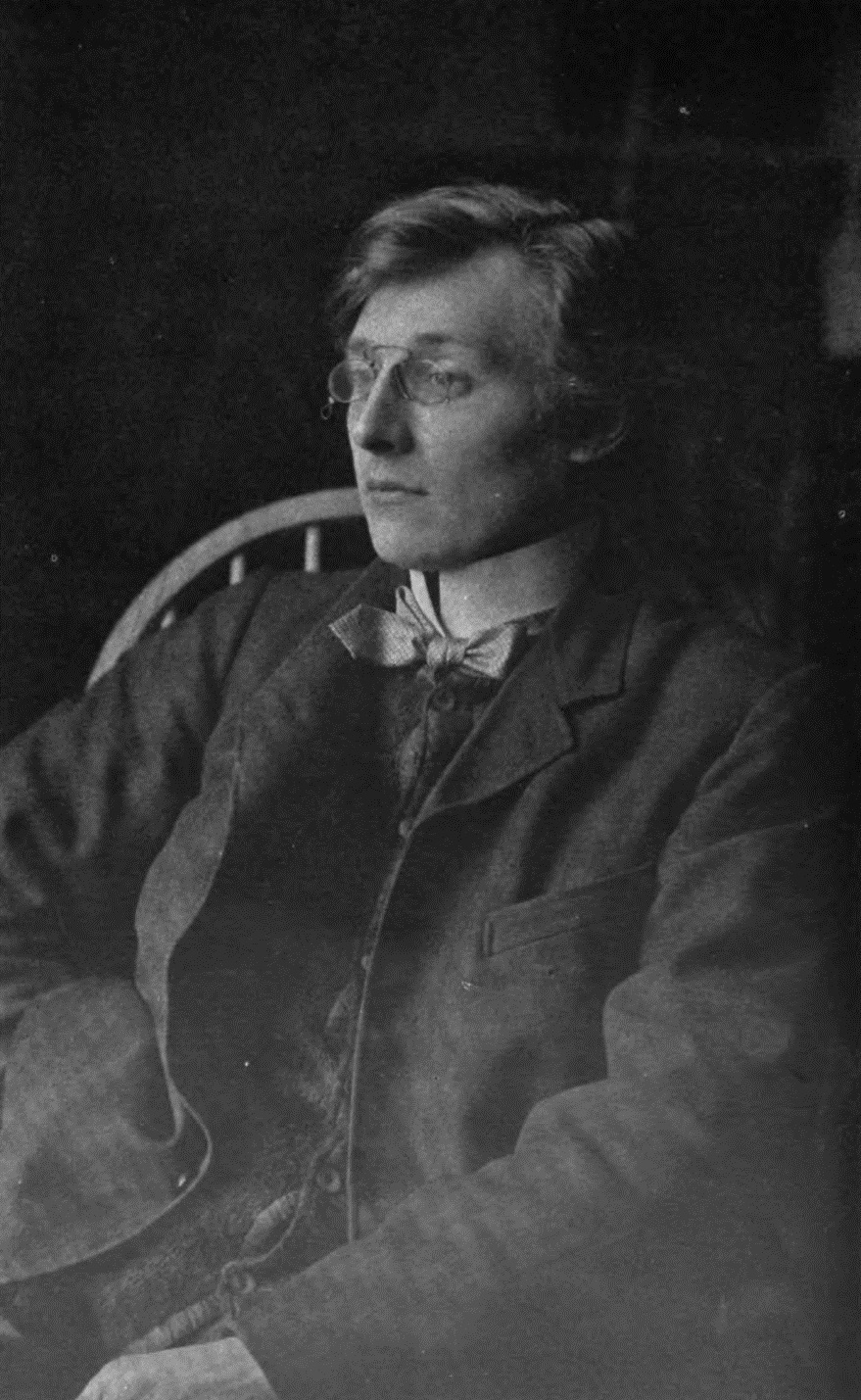
Edward Gordon Craig
Edward Henry Gordon Craig CH OBE (born Edward Godwin; 16 January 1872 – 29 July 1966), was an English modernist theatre practitioner; Part of the Terry family and son of the actress Ellen Terry, he worked as an actor in his youth before becoming a director and scenic designer, and he developed an influential body of theoretical writings.
The Gordon Craig Theatre, built in Stevenage, England (the town of his birth), was named in his honour in 1975.
The illegitimate son of the architect Edward Godwin and the actress Ellen Terry, Craig was born Edward, after his father, on 16 January 1872 in Railway Street, Stevenage, in Hertfordshire, England. Nicknamed Ted, he was not officially given a surname; he was baptised at age 16 as Edward Henry Gordon, after his godparents Sir Henry Irving and Lady Gordon. He and his sister Edith each chose the surname Craig by 1888 after admiring Ailsa Craig, an island off the coast of Scotland, while there on holiday; he finalised it officially by deed poll at age 21.
Unlike his sister, Craig was not fond of their stepfather, from 1877 to 1881, the actor Charles Clavering Wardell, although he was a kind to them. The children used the surname Wardell during that time, however, to deflect the stigma of illegitimacy. From 1879, Craig spent much of his childhood backstage at the Lyceum Theatre, where his mother was the leading lady to Henry Irving from 1878. Irving was fond of Terry's children, and in 1930 Craig wrote a book-length tribute to Irving. He attended [[Bradfield College in Berkshire from May 1886 to July 1887 He later attended Heidelberg University but was also expelled there.
Craig asserted that the director was "the true artist of the theatre" and, controversially, suggested viewing actors as no more important than marionettes. He designed and built elaborately symbolic sets; for instance, a set composed of his patented movable screens for the Moscow Art Theatre production of Hamlet. He was also the editor and chief writer for the first international theatre magazine, The Mask.
He worked as an actor in the company of Henry Irving from 1889, making his stage debut as Arthur de St. Valery in The Dead Heart at the Lyceum Theatre on 28 September 1889 (his real mother played his character's mother). He subsequently played Romeo, Macbeth and Hamlet with other companies, but comparing himself with Irving, he candidly admitted that he was not destined to be a great actor. He became more interested in art, learning to carve wood under the tutelage of James Pryde and William Nicholson. His acting career ended in 1897, when he went into theatrical design.
Craig's first productions as a scenic designer were, Purcell's Dido and Aeneas, Handel's Acis and Galatea (both inspired and conducted by his lifelong friend Martin Shaw, who founded the Purcell Operatic Society with him to produce them), and Ibsen's The Vikings at Helgeland, were produced in London. The production of Dido and Aeneas was a considerable success and highly influential in reviving interest in the music of Purcell, then so little known that three copies of The Times review were delivered to the theatre: one addressed to Mr Shaw, one to Mr Craig, and one to Mr Purcell. Craig concentrated on keeping his designs simple, so as to set-off the movements of the actors and of light, and introduced the idea of a "unified stage picture" that covered all the elements of design.
After finding little financial success in Britain, Craig set out for Germany in 1904. While there, he wrote one of his most famous works, the essay The Art of the Theatre (later reprinted with the title On the Art of the Theatre). In 1908, the dancer Isadora Duncan introduced Craig to Konstantin Stanislavski, the founder of the Moscow Art Theatre, who invited him to direct their popular production of Hamlet with the company, which opened in December 1911. After settling in Italy, Craig created a school of theatrical design with support from Lord Howard de Walden, the Arena Goldoni in Florence. During World War I, he wrote a cycle of puppet plays, the Drama for Fools and published a theatre magazine, The Marionnette (1918).
Hub AI
Edward Gordon Craig AI simulator
(@Edward Gordon Craig_simulator)
Edward Gordon Craig
Edward Henry Gordon Craig CH OBE (born Edward Godwin; 16 January 1872 – 29 July 1966), was an English modernist theatre practitioner; Part of the Terry family and son of the actress Ellen Terry, he worked as an actor in his youth before becoming a director and scenic designer, and he developed an influential body of theoretical writings.
The Gordon Craig Theatre, built in Stevenage, England (the town of his birth), was named in his honour in 1975.
The illegitimate son of the architect Edward Godwin and the actress Ellen Terry, Craig was born Edward, after his father, on 16 January 1872 in Railway Street, Stevenage, in Hertfordshire, England. Nicknamed Ted, he was not officially given a surname; he was baptised at age 16 as Edward Henry Gordon, after his godparents Sir Henry Irving and Lady Gordon. He and his sister Edith each chose the surname Craig by 1888 after admiring Ailsa Craig, an island off the coast of Scotland, while there on holiday; he finalised it officially by deed poll at age 21.
Unlike his sister, Craig was not fond of their stepfather, from 1877 to 1881, the actor Charles Clavering Wardell, although he was a kind to them. The children used the surname Wardell during that time, however, to deflect the stigma of illegitimacy. From 1879, Craig spent much of his childhood backstage at the Lyceum Theatre, where his mother was the leading lady to Henry Irving from 1878. Irving was fond of Terry's children, and in 1930 Craig wrote a book-length tribute to Irving. He attended [[Bradfield College in Berkshire from May 1886 to July 1887 He later attended Heidelberg University but was also expelled there.
Craig asserted that the director was "the true artist of the theatre" and, controversially, suggested viewing actors as no more important than marionettes. He designed and built elaborately symbolic sets; for instance, a set composed of his patented movable screens for the Moscow Art Theatre production of Hamlet. He was also the editor and chief writer for the first international theatre magazine, The Mask.
He worked as an actor in the company of Henry Irving from 1889, making his stage debut as Arthur de St. Valery in The Dead Heart at the Lyceum Theatre on 28 September 1889 (his real mother played his character's mother). He subsequently played Romeo, Macbeth and Hamlet with other companies, but comparing himself with Irving, he candidly admitted that he was not destined to be a great actor. He became more interested in art, learning to carve wood under the tutelage of James Pryde and William Nicholson. His acting career ended in 1897, when he went into theatrical design.
Craig's first productions as a scenic designer were, Purcell's Dido and Aeneas, Handel's Acis and Galatea (both inspired and conducted by his lifelong friend Martin Shaw, who founded the Purcell Operatic Society with him to produce them), and Ibsen's The Vikings at Helgeland, were produced in London. The production of Dido and Aeneas was a considerable success and highly influential in reviving interest in the music of Purcell, then so little known that three copies of The Times review were delivered to the theatre: one addressed to Mr Shaw, one to Mr Craig, and one to Mr Purcell. Craig concentrated on keeping his designs simple, so as to set-off the movements of the actors and of light, and introduced the idea of a "unified stage picture" that covered all the elements of design.
After finding little financial success in Britain, Craig set out for Germany in 1904. While there, he wrote one of his most famous works, the essay The Art of the Theatre (later reprinted with the title On the Art of the Theatre). In 1908, the dancer Isadora Duncan introduced Craig to Konstantin Stanislavski, the founder of the Moscow Art Theatre, who invited him to direct their popular production of Hamlet with the company, which opened in December 1911. After settling in Italy, Craig created a school of theatrical design with support from Lord Howard de Walden, the Arena Goldoni in Florence. During World War I, he wrote a cycle of puppet plays, the Drama for Fools and published a theatre magazine, The Marionnette (1918).