



Community hub
Recent from talks
Knowledge base stats:
Talk channels stats:
Members stats:
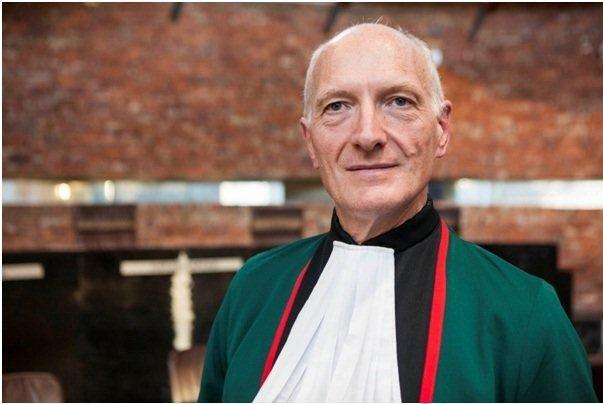
Edwin Cameron
Edwin Cameron SCOB (born 15 February 1953 in Pretoria) is a retired judge who served as a Justice of the Constitutional Court of South Africa. He is well known for his HIV/AIDS and gay-rights activism and was hailed by Nelson Mandela as "one of South Africa's new heroes". President Ramaphosa appointed him as Inspecting Judge of Correctional Services from 1 January 2020 and in October 2019 he was elected Chancellor of Stellenbosch University.
Cameron was born in Pretoria. His father was imprisoned for car theft and his mother did not have the means to support him. He therefore spent much of his childhood in an orphanage in Queenstown. His elder sister was killed when Cameron was seven.
Cameron won a scholarship to attend Pretoria Boys High School, one of South Africa's best state schools, and reinvented himself, he says, "in the guise of a clever schoolboy". Thereafter he went to Stellenbosch University, studying Latin and classics. While studying here, he resided at Wilgenhof Mens Residence. After this he attended Oxford University as a Rhodes Scholar. There he switched to law and earned a BA in Jurisprudence and the Bachelor of Civil Law, winning the Vinerian Scholarship. When he returned to South Africa he completed an LLB at the University of South Africa and was its best law graduate.
Cameron's early career combined academia and legal practice. In 1982, he famously wrote a scathing critique of the late Chief Justice L. C. Steyn, then a darling of the apartheid establishment. And, in 1987, Cameron argued that three senior South African judges, including its former Chief Justice, Pierre Rabie, ought to resign to preserve the legitimacy of the judiciary. Cameron practised at the Johannesburg Bar from 1983 to 1994. From 1986 he was a human rights lawyer at Wits's Centre for Applied Legal Studies, where in 1989 he was awarded a personal professorship in law. Cameron's practice included labour and employment law; defence of African National Congress fighters charged with treason; conscientious and religious objection; land tenure and forced removals; and gay and lesbian equality. In 1992 he became a co-author (with Tony Honoré, one of his mentors at Oxford) of Honoré's South African Law of Trusts. Cameron took silk in 1994.
In October 1994, President Nelson Mandela appointed Cameron as an acting judge of the High Court to chair a commission of inquiry into illegal arms sales by Armscor, operating as the sales arm of the SANDF, to Yemen. Cameron's report was described as a "hard-hitting" critique of Armscor's conduct, but was quickly eclipsed by myriad other allegations about the South African government's illegal arms trades.
Cameron was appointed permanently to the Witwatersrand Local Division in 1995. His best-known judgment in this capacity is Holomisa v Argus Newspapers Ltd, where Bantu Holomisa had brought a defamation suit against The Star for alleging that he had been "directly involved" in the infiltration into South Africa of an Azanian People's Liberation Army "hit squad" aimed at "killing whites". Cameron's judgment was described as a "most rigorous exposition" of the Constitution's application to private disputes and a "landmark" defence of free speech. Others, while acknowledging the judgment had departed importantly from apartheid-era law, said it should have gone further in protecting journalists. Cameron's position was substantially confirmed, in subsequent cases, by the Supreme Court of Appeal.
In 1999, Cameron was given an acting stint on the Constitutional Court, during which he partook in its seminal judgments in Pharmaceutical Manufacturers and Grootboom and wrote the Liquor Bill judgment on provincial legislative powers — the first, and still the only, case to be referred to the Court by the President of South Africa under section 79 of the Constitution. The Judicial Service Commission had recommended that Cameron be permanently appointed, but Sandile Ngcobo was ultimately preferred due to the late intercession of Thabo Mbeki, then Deputy President, who felt the appointee should be black. Cameron has said there is "no doubt" this was the correct decision.
Cameron was instead appointed to the Supreme Court of Appeal (at the same time as Mahomed Navsa and Robert Nugent), where he served for eight years. There he wrote leading judgments on legal causation, hearsay evidence, public contracts and contempt of court. In Minister of Finance v Gore, Cameron co-authored a judgment with Fritz Brand that held the state could be delictually liable for causing pure economic loss by fraud.
Hub AI
Edwin Cameron AI simulator
(@Edwin Cameron_simulator)
Edwin Cameron
Edwin Cameron SCOB (born 15 February 1953 in Pretoria) is a retired judge who served as a Justice of the Constitutional Court of South Africa. He is well known for his HIV/AIDS and gay-rights activism and was hailed by Nelson Mandela as "one of South Africa's new heroes". President Ramaphosa appointed him as Inspecting Judge of Correctional Services from 1 January 2020 and in October 2019 he was elected Chancellor of Stellenbosch University.
Cameron was born in Pretoria. His father was imprisoned for car theft and his mother did not have the means to support him. He therefore spent much of his childhood in an orphanage in Queenstown. His elder sister was killed when Cameron was seven.
Cameron won a scholarship to attend Pretoria Boys High School, one of South Africa's best state schools, and reinvented himself, he says, "in the guise of a clever schoolboy". Thereafter he went to Stellenbosch University, studying Latin and classics. While studying here, he resided at Wilgenhof Mens Residence. After this he attended Oxford University as a Rhodes Scholar. There he switched to law and earned a BA in Jurisprudence and the Bachelor of Civil Law, winning the Vinerian Scholarship. When he returned to South Africa he completed an LLB at the University of South Africa and was its best law graduate.
Cameron's early career combined academia and legal practice. In 1982, he famously wrote a scathing critique of the late Chief Justice L. C. Steyn, then a darling of the apartheid establishment. And, in 1987, Cameron argued that three senior South African judges, including its former Chief Justice, Pierre Rabie, ought to resign to preserve the legitimacy of the judiciary. Cameron practised at the Johannesburg Bar from 1983 to 1994. From 1986 he was a human rights lawyer at Wits's Centre for Applied Legal Studies, where in 1989 he was awarded a personal professorship in law. Cameron's practice included labour and employment law; defence of African National Congress fighters charged with treason; conscientious and religious objection; land tenure and forced removals; and gay and lesbian equality. In 1992 he became a co-author (with Tony Honoré, one of his mentors at Oxford) of Honoré's South African Law of Trusts. Cameron took silk in 1994.
In October 1994, President Nelson Mandela appointed Cameron as an acting judge of the High Court to chair a commission of inquiry into illegal arms sales by Armscor, operating as the sales arm of the SANDF, to Yemen. Cameron's report was described as a "hard-hitting" critique of Armscor's conduct, but was quickly eclipsed by myriad other allegations about the South African government's illegal arms trades.
Cameron was appointed permanently to the Witwatersrand Local Division in 1995. His best-known judgment in this capacity is Holomisa v Argus Newspapers Ltd, where Bantu Holomisa had brought a defamation suit against The Star for alleging that he had been "directly involved" in the infiltration into South Africa of an Azanian People's Liberation Army "hit squad" aimed at "killing whites". Cameron's judgment was described as a "most rigorous exposition" of the Constitution's application to private disputes and a "landmark" defence of free speech. Others, while acknowledging the judgment had departed importantly from apartheid-era law, said it should have gone further in protecting journalists. Cameron's position was substantially confirmed, in subsequent cases, by the Supreme Court of Appeal.
In 1999, Cameron was given an acting stint on the Constitutional Court, during which he partook in its seminal judgments in Pharmaceutical Manufacturers and Grootboom and wrote the Liquor Bill judgment on provincial legislative powers — the first, and still the only, case to be referred to the Court by the President of South Africa under section 79 of the Constitution. The Judicial Service Commission had recommended that Cameron be permanently appointed, but Sandile Ngcobo was ultimately preferred due to the late intercession of Thabo Mbeki, then Deputy President, who felt the appointee should be black. Cameron has said there is "no doubt" this was the correct decision.
Cameron was instead appointed to the Supreme Court of Appeal (at the same time as Mahomed Navsa and Robert Nugent), where he served for eight years. There he wrote leading judgments on legal causation, hearsay evidence, public contracts and contempt of court. In Minister of Finance v Gore, Cameron co-authored a judgment with Fritz Brand that held the state could be delictually liable for causing pure economic loss by fraud.