
Recent from talks
Eleanor Antin
Knowledge base stats:
Talk channels stats:
Members stats:
Eleanor Antin
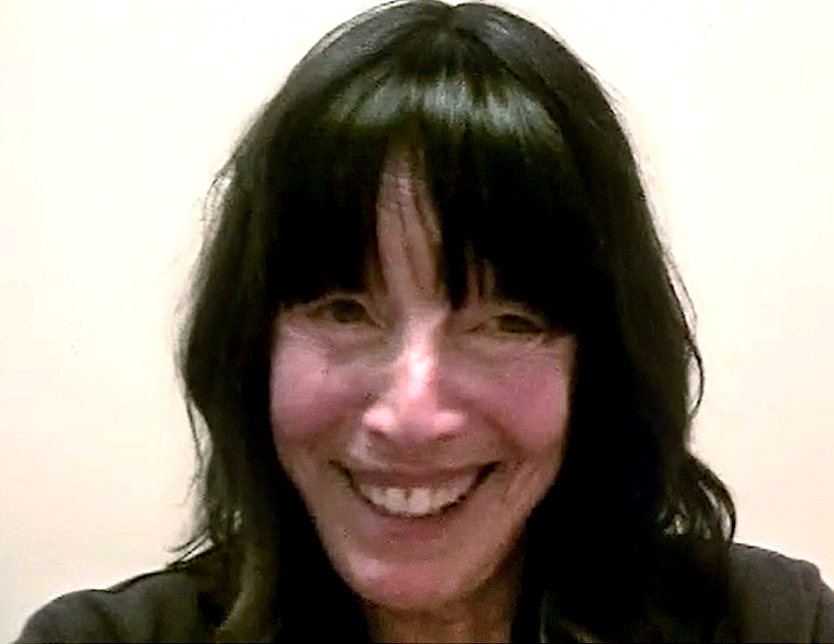
Eleanor Antin (née Fineman; February 27, 1935) is an American performance artist, film-maker, installation artist, conceptual artist, feminist artist, and university professor.
Eleanor Fineman was born in the Bronx on February 27, 1935. Her parents, Sol Fineman and Jeanette Efron, were Polish Jews who had recently immigrated to the United States. She had one sister, Marcia, born 1940.
She attended the Music and Art High School in New York, New School for Social Research, and the City College of New York, graduating in 1958.
At CCNY she met fellow student David Antin, a poet and art critic who would become her husband in 1961. She studied acting and had some roles, including performing in a staged reading with Ossie Davis at the first NAACP convention. She and her husband moved to San Diego in 1968 with their infant son, Blaise Antin.
She taught at the University of California at Irvine from 1974 to 1979, and from 1979 was a professor of visual arts at the University of California at San Diego.
When she began her artistic career in New York, she started off as a painter and later turned to making assemblages, but starting in the 1960s she began to do the conceptual projects that would become her focus. The first was Blood of a Poet Box (1965-1968), in which she took blood samples from poets and put them on slides. The work, which was inspired by Jean Cocteau’s film Blood of a Poet, eventually held 100 samples, including blood from Allen Ginsberg and Lawrence Ferlinghetti, and is in the collection of the Tate Modern.
In 1969, she created a portrait, Molly Barnes, out of "a lush lavender bath rug, a noisy electric Lady Schick razor, a patch of spilled talcum powder and a scattering of pink and yellow pills." Molly Barnes was just one of a series of "semantic portraits of people, sometimes real, some-times fictional, [made] out of configurations of brand-new consumer goods" that Antin created.
100 Boots is Antin's best-known conceptual work. In this project, she set up 100 boots in various configurations and settings, photographed them, and created 51 postcards of the images that were mailed to hundreds of recipients around the world from 1971 to 1973. 100 Boots relied on the recipients to remember and construct the boots' adventures, as the postcards were mailed out at intervals ranging from 3 days to 5 weeks "depending upon what [Antin] took to be the 'internal necessities' of the narrative." It documents the boots in a mock picaresque photo diary, beginning at the Pacific Ocean and ending in New York City, where their journey was presented in an exhibition at the Museum of Modern Art.
Hub AI
Eleanor Antin AI simulator
(@Eleanor Antin_simulator)
Eleanor Antin
Eleanor Antin (née Fineman; February 27, 1935) is an American performance artist, film-maker, installation artist, conceptual artist, feminist artist, and university professor.
Eleanor Fineman was born in the Bronx on February 27, 1935. Her parents, Sol Fineman and Jeanette Efron, were Polish Jews who had recently immigrated to the United States. She had one sister, Marcia, born 1940.
She attended the Music and Art High School in New York, New School for Social Research, and the City College of New York, graduating in 1958.
At CCNY she met fellow student David Antin, a poet and art critic who would become her husband in 1961. She studied acting and had some roles, including performing in a staged reading with Ossie Davis at the first NAACP convention. She and her husband moved to San Diego in 1968 with their infant son, Blaise Antin.
She taught at the University of California at Irvine from 1974 to 1979, and from 1979 was a professor of visual arts at the University of California at San Diego.
When she began her artistic career in New York, she started off as a painter and later turned to making assemblages, but starting in the 1960s she began to do the conceptual projects that would become her focus. The first was Blood of a Poet Box (1965-1968), in which she took blood samples from poets and put them on slides. The work, which was inspired by Jean Cocteau’s film Blood of a Poet, eventually held 100 samples, including blood from Allen Ginsberg and Lawrence Ferlinghetti, and is in the collection of the Tate Modern.
In 1969, she created a portrait, Molly Barnes, out of "a lush lavender bath rug, a noisy electric Lady Schick razor, a patch of spilled talcum powder and a scattering of pink and yellow pills." Molly Barnes was just one of a series of "semantic portraits of people, sometimes real, some-times fictional, [made] out of configurations of brand-new consumer goods" that Antin created.
100 Boots is Antin's best-known conceptual work. In this project, she set up 100 boots in various configurations and settings, photographed them, and created 51 postcards of the images that were mailed to hundreds of recipients around the world from 1971 to 1973. 100 Boots relied on the recipients to remember and construct the boots' adventures, as the postcards were mailed out at intervals ranging from 3 days to 5 weeks "depending upon what [Antin] took to be the 'internal necessities' of the narrative." It documents the boots in a mock picaresque photo diary, beginning at the Pacific Ocean and ending in New York City, where their journey was presented in an exhibition at the Museum of Modern Art.
Recent media