
Recent from talks
Eleanor of England, Queen of Castile
Knowledge base stats:
Talk channels stats:
Members stats:
Eleanor of England, Queen of Castile
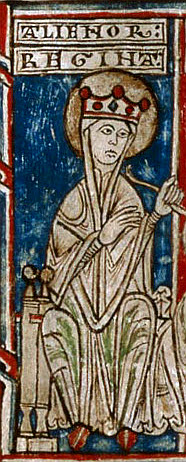
Eleanor of England (Spanish: Leonor; c. 1161 – 31 October 1214), was Queen of Castile and Toledo as the wife of Alfonso VIII of Castile. She was the sixth child and second daughter of Henry II, King of England, and Eleanor of Aquitaine. She served as Regent of Castile during the minority of her son Henry I for 26 days between the death of her husband and her own death in 1214. Her great-granddaughter and namesake, Eleanor of Castile, married the future Edward I of England in 1254.
Eleanor was born in the castle at Domfront, Normandy c. 1161, as the second daughter of King Henry II of England and his wife Eleanor, Duchess of Aquitaine, who she was named after. She was baptised by Henry of Marcy and her godparents at her baptism were Achard, bishop of Avranches, and the abbot of Le Mont Saint Michel, Robert of Torigni.
Her full siblings were Henry the Young King, Duchess Matilda of Saxony, King Richard I, Duke Geoffrey II of Brittany, Queen Joan of Sicily and King John. Her half-siblings were Countess Marie of Champagne and Countess Alix of Blois. Eleanor had an older brother, William (17 August 1153 – April 1156), the first son of Henry II, and Eleanor of Aquitaine, who died of a seizure at Wallingford Castle, and was buried in Reading Abbey at the feet of his great-grandfather Henry I.
In 1165 her marriage was arranged to Frederick V, Duke of Swabia, the oldest son of the Holy Roman Emperor Frederick I Barbarossa and Beatrice I, Countess of Burgundy, but he died before the marriage was able to take place.
In 1170 Eleanor married King Alfonso VIII of Castile in Burgos at the age of 9. Her parents' purpose in arranging the marriage was to secure Aquitaine's Pyrenean border, while Alfonso sought an ally in his struggles with Sancho VI of Navarre. In 1177, this led to Henry overseeing arbitration of the border dispute.
Around 1200, Alfonso began to claim that the duchy of Gascony was part of Eleanor's dowry, but there is no documented foundation for that claim. It is highly unlikely that Henry II would have parted with so significant a portion of his domains. At most, Gascony may have been pledged as security for the full payment of his daughter's dowry. Her husband went so far on this claim as to invade Gascony in her name in 1205. In 1206, her brother John granted her safe passage to visit him, perhaps to try opening peace negotiations. In 1208, Alfonso yielded on the claim. Decades later, their great-grandson Alfonso X of Castile would claim the duchy on the grounds that her dowry had never been fully paid.
Of all Eleanor of Aquitaine's daughters, her namesake was the only one who was enabled, by political circumstances, to wield the kind of influence her mother had exercised. In her marriage treaty, and in the first marriage treaty for her daughter Berengaria, Eleanor was given direct control of many lands, towns, and castles throughout the kingdom, including major towns like Aguilar de Campóo, Logroño, and Calahorra. She was almost as powerful as Alfonso, who specified in his will in 1204 that she was to rule alongside their son in the event of his death, including taking responsibility for paying his debts and executing his will. It was she who persuaded him to marry their daughter Berengaria to Alfonso IX of León.
Troubadours and sages were regularly present in Alfonso VIII's court due to Eleanor's patronage. The Catalan poet, Ramon Vidal de Besalu, wrote about Eleanor and described her as wrapped in a red silk mantle with Angevin lions, and Guillem de Bergued addressed a poem to her.
Hub AI
Eleanor of England, Queen of Castile AI simulator
(@Eleanor of England, Queen of Castile_simulator)
Eleanor of England, Queen of Castile
Eleanor of England (Spanish: Leonor; c. 1161 – 31 October 1214), was Queen of Castile and Toledo as the wife of Alfonso VIII of Castile. She was the sixth child and second daughter of Henry II, King of England, and Eleanor of Aquitaine. She served as Regent of Castile during the minority of her son Henry I for 26 days between the death of her husband and her own death in 1214. Her great-granddaughter and namesake, Eleanor of Castile, married the future Edward I of England in 1254.
Eleanor was born in the castle at Domfront, Normandy c. 1161, as the second daughter of King Henry II of England and his wife Eleanor, Duchess of Aquitaine, who she was named after. She was baptised by Henry of Marcy and her godparents at her baptism were Achard, bishop of Avranches, and the abbot of Le Mont Saint Michel, Robert of Torigni.
Her full siblings were Henry the Young King, Duchess Matilda of Saxony, King Richard I, Duke Geoffrey II of Brittany, Queen Joan of Sicily and King John. Her half-siblings were Countess Marie of Champagne and Countess Alix of Blois. Eleanor had an older brother, William (17 August 1153 – April 1156), the first son of Henry II, and Eleanor of Aquitaine, who died of a seizure at Wallingford Castle, and was buried in Reading Abbey at the feet of his great-grandfather Henry I.
In 1165 her marriage was arranged to Frederick V, Duke of Swabia, the oldest son of the Holy Roman Emperor Frederick I Barbarossa and Beatrice I, Countess of Burgundy, but he died before the marriage was able to take place.
In 1170 Eleanor married King Alfonso VIII of Castile in Burgos at the age of 9. Her parents' purpose in arranging the marriage was to secure Aquitaine's Pyrenean border, while Alfonso sought an ally in his struggles with Sancho VI of Navarre. In 1177, this led to Henry overseeing arbitration of the border dispute.
Around 1200, Alfonso began to claim that the duchy of Gascony was part of Eleanor's dowry, but there is no documented foundation for that claim. It is highly unlikely that Henry II would have parted with so significant a portion of his domains. At most, Gascony may have been pledged as security for the full payment of his daughter's dowry. Her husband went so far on this claim as to invade Gascony in her name in 1205. In 1206, her brother John granted her safe passage to visit him, perhaps to try opening peace negotiations. In 1208, Alfonso yielded on the claim. Decades later, their great-grandson Alfonso X of Castile would claim the duchy on the grounds that her dowry had never been fully paid.
Of all Eleanor of Aquitaine's daughters, her namesake was the only one who was enabled, by political circumstances, to wield the kind of influence her mother had exercised. In her marriage treaty, and in the first marriage treaty for her daughter Berengaria, Eleanor was given direct control of many lands, towns, and castles throughout the kingdom, including major towns like Aguilar de Campóo, Logroño, and Calahorra. She was almost as powerful as Alfonso, who specified in his will in 1204 that she was to rule alongside their son in the event of his death, including taking responsibility for paying his debts and executing his will. It was she who persuaded him to marry their daughter Berengaria to Alfonso IX of León.
Troubadours and sages were regularly present in Alfonso VIII's court due to Eleanor's patronage. The Catalan poet, Ramon Vidal de Besalu, wrote about Eleanor and described her as wrapped in a red silk mantle with Angevin lions, and Guillem de Bergued addressed a poem to her.
Recent media