
Recent from talks
Alfonso X of Castile
Knowledge base stats:
Talk channels stats:
Members stats:
Alfonso X of Castile
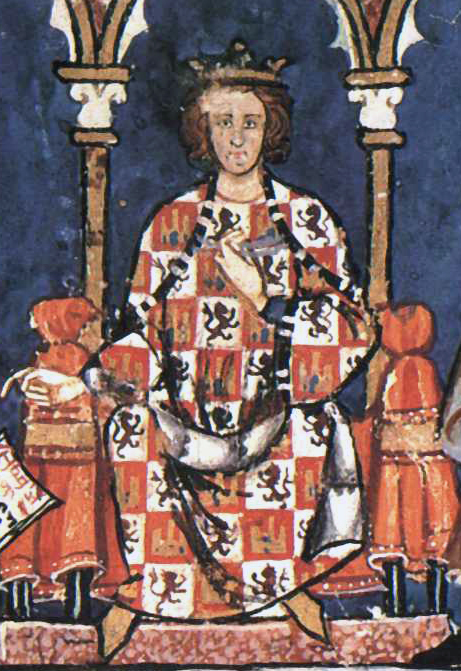
Alfonso X (also known as the Wise, Spanish: el Sabio; 23 November 1221 – 4 April 1284) was King of Castile, León and Galicia from 1 June 1252 until his death in 1284. During the election of 1257, a dissident faction chose him to be king of Germany on 1 April. He renounced his claim to Germany in 1275, and in creating an alliance with the Kingdom of England in 1254, his claim on the Duchy of Gascony as well.
Alfonso's scientific interests—he is sometimes nicknamed the Astrologer (el Astrólogo)—led him to sponsor the creation of the Alfonsine tables, and the Alphonsus crater on the Moon is named after him. He also sponsored the work of historians who, for the first time since Isidore of Seville in c. 600, placed Spain in the context of world history. As a lawmaker he introduced the first vernacular law code in Castile, the Siete Partidas. He created the Mesta, an association of sheep farmers in the central plain, but debased the coinage to finance his claim to the German crown. He fought a successful war with Portugal, but a less successful one with Granada. The end of his reign was marred by a civil war with his eldest surviving son, the future Sancho IV, which continued after his death.
Alfonso was born on 23 November 1221 in Toledo, Kingdom of Castile. He was the eldest son of Ferdinand III and Elizabeth (Beatrice) of Swabia. His mother was the paternal cousin of Holy Roman Emperor Frederick II, to whom Alfonso is often compared. His maternal grandparents were Philip of Swabia and Irene Angelina. Little is known about his upbringing, but he was most likely raised in Toledo. For the first nine years of his life Alfonso was only heir to Castile until his paternal grandfather king Alfonso IX of León died and his father united the kingdoms of Castile and León. He began his career as a soldier, under the command of his father, when he was sixteen years old.
After the accession of King Theobald I of Navarre, Ferdinand tried to arrange a marriage for Alfonso with Theobald's daughter, Blanche, but the move was unsuccessful. At the same time, he had a romantic relationship with Mayor Guillén de Guzmán, who bore him a daughter, Beatrice. In 1240, he married Mayor Guillén de Guzmán, but the marriage was later annulled and their issue declared illegitimate. During the 1240s, alongside his father, he conquered several Muslim strongholds in Al-Andalus, including Murcia, Alicante and Cádiz.
In 1249, Alfonso married Violant, the daughter of King James I of Aragon and Violant of Hungary, although betrothed already in 1246.
Alfonso succeeded his father as King of Castile and León in 1252. The following year he invaded Portugal, capturing the region of the Algarve. King Afonso III of Portugal had to surrender.[citation needed] Despite this Afonso III reached an agreement with Alfonso X that in consenting to marry Alfonso X's daughter, Beatrice of Castile, the captured land would be returned to their heirs. In 1261 Alfonso X captured Jerez. In 1263 he returned Algarve to the King of Portugal and signed the Treaty of Badajoz (1267).
In 1254 Alfonso X signed a treaty of alliance with King Henry III of England, supporting him in the war against King Louis IX of France. In the same year Alfonso's half-sister, Eleanor, married Henry's son Edward: with this act Alfonso renounced forever all claim to the Duchy of Gascony, to which Castile had been a pretender since the marriage of Alfonso VIII of Castile to Eleanor of England.
In 1256, on the death of William II of Holland, Alfonso's descent from the Hohenstaufen through his mother, a daughter of Philip of Swabia, gave him a claim to the German crown through the Hohenstaufen line. Alfonso's election as German king by the prince-electors encouraged him to enter into complicated schemes that involved excessive expenses but never to success. Alfonso never travelled to Germany, and his alliance with the Italian Ghibelline Lord Ezzelino IV da Romano deprived him of the support of Pope Alexander IV. His rival, Richard of Cornwall, went to Germany and was crowned in 1257 at Aachen.
Hub AI
Alfonso X of Castile AI simulator
(@Alfonso X of Castile_simulator)
Alfonso X of Castile
Alfonso X (also known as the Wise, Spanish: el Sabio; 23 November 1221 – 4 April 1284) was King of Castile, León and Galicia from 1 June 1252 until his death in 1284. During the election of 1257, a dissident faction chose him to be king of Germany on 1 April. He renounced his claim to Germany in 1275, and in creating an alliance with the Kingdom of England in 1254, his claim on the Duchy of Gascony as well.
Alfonso's scientific interests—he is sometimes nicknamed the Astrologer (el Astrólogo)—led him to sponsor the creation of the Alfonsine tables, and the Alphonsus crater on the Moon is named after him. He also sponsored the work of historians who, for the first time since Isidore of Seville in c. 600, placed Spain in the context of world history. As a lawmaker he introduced the first vernacular law code in Castile, the Siete Partidas. He created the Mesta, an association of sheep farmers in the central plain, but debased the coinage to finance his claim to the German crown. He fought a successful war with Portugal, but a less successful one with Granada. The end of his reign was marred by a civil war with his eldest surviving son, the future Sancho IV, which continued after his death.
Alfonso was born on 23 November 1221 in Toledo, Kingdom of Castile. He was the eldest son of Ferdinand III and Elizabeth (Beatrice) of Swabia. His mother was the paternal cousin of Holy Roman Emperor Frederick II, to whom Alfonso is often compared. His maternal grandparents were Philip of Swabia and Irene Angelina. Little is known about his upbringing, but he was most likely raised in Toledo. For the first nine years of his life Alfonso was only heir to Castile until his paternal grandfather king Alfonso IX of León died and his father united the kingdoms of Castile and León. He began his career as a soldier, under the command of his father, when he was sixteen years old.
After the accession of King Theobald I of Navarre, Ferdinand tried to arrange a marriage for Alfonso with Theobald's daughter, Blanche, but the move was unsuccessful. At the same time, he had a romantic relationship with Mayor Guillén de Guzmán, who bore him a daughter, Beatrice. In 1240, he married Mayor Guillén de Guzmán, but the marriage was later annulled and their issue declared illegitimate. During the 1240s, alongside his father, he conquered several Muslim strongholds in Al-Andalus, including Murcia, Alicante and Cádiz.
In 1249, Alfonso married Violant, the daughter of King James I of Aragon and Violant of Hungary, although betrothed already in 1246.
Alfonso succeeded his father as King of Castile and León in 1252. The following year he invaded Portugal, capturing the region of the Algarve. King Afonso III of Portugal had to surrender.[citation needed] Despite this Afonso III reached an agreement with Alfonso X that in consenting to marry Alfonso X's daughter, Beatrice of Castile, the captured land would be returned to their heirs. In 1261 Alfonso X captured Jerez. In 1263 he returned Algarve to the King of Portugal and signed the Treaty of Badajoz (1267).
In 1254 Alfonso X signed a treaty of alliance with King Henry III of England, supporting him in the war against King Louis IX of France. In the same year Alfonso's half-sister, Eleanor, married Henry's son Edward: with this act Alfonso renounced forever all claim to the Duchy of Gascony, to which Castile had been a pretender since the marriage of Alfonso VIII of Castile to Eleanor of England.
In 1256, on the death of William II of Holland, Alfonso's descent from the Hohenstaufen through his mother, a daughter of Philip of Swabia, gave him a claim to the German crown through the Hohenstaufen line. Alfonso's election as German king by the prince-electors encouraged him to enter into complicated schemes that involved excessive expenses but never to success. Alfonso never travelled to Germany, and his alliance with the Italian Ghibelline Lord Ezzelino IV da Romano deprived him of the support of Pope Alexander IV. His rival, Richard of Cornwall, went to Germany and was crowned in 1257 at Aachen.
Recent media