
Recent from talks
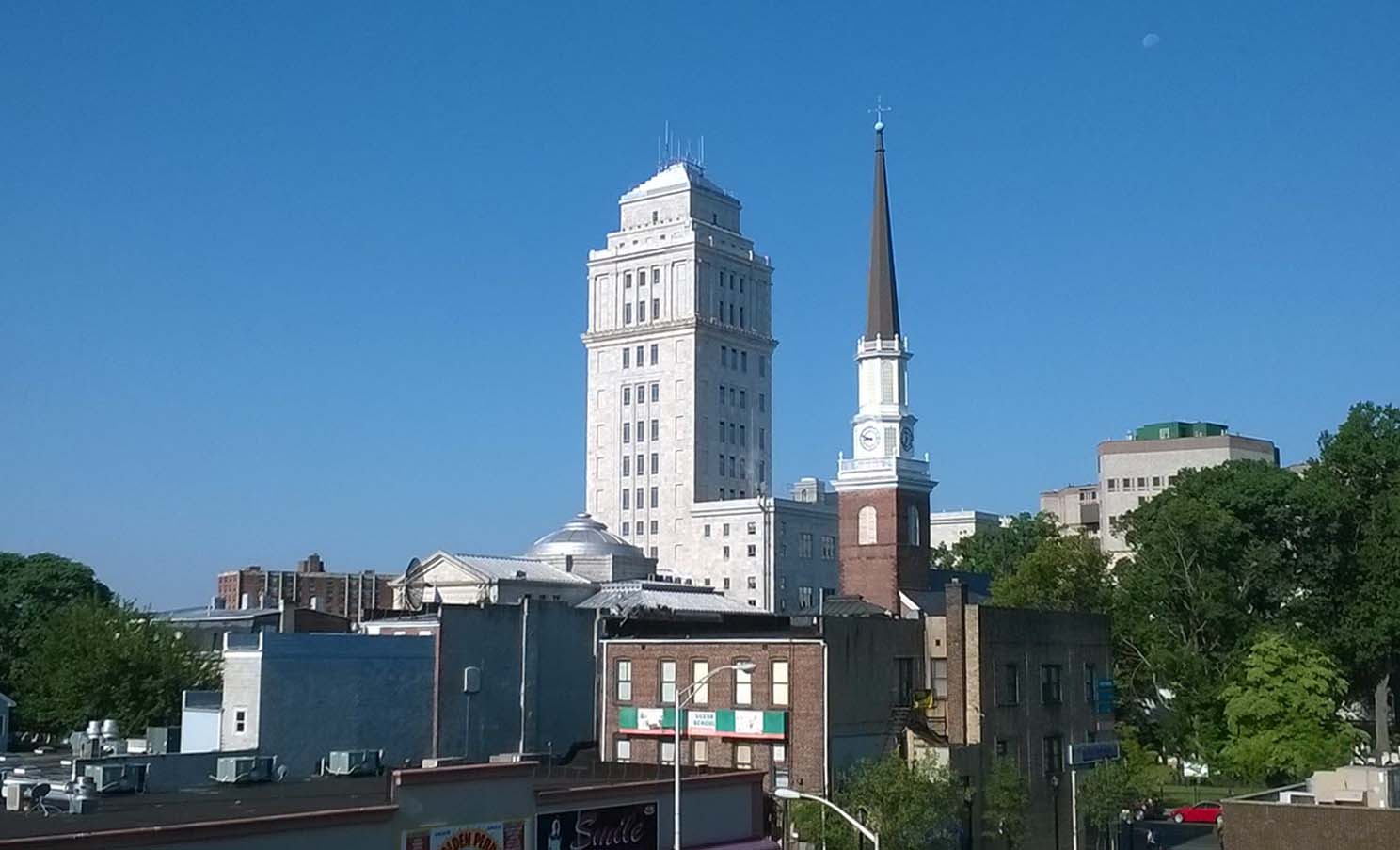
Elizabeth, New Jersey
Knowledge base stats:
Talk channels stats:
Members stats:
Elizabeth, New Jersey
Elizabeth is a city in and the county seat of Union County, in the U.S. state of New Jersey. As of the 2020 United States census, the city retained its ranking as the state's fourth-most-populous city behind neighboring Newark, Jersey City and Paterson, with a population of 137,298, an increase of 12,329 (+9.9%) from the 2010 census count of 124,969, which in turn reflected an increase of 4,401 (3.7%) from the 120,568 counted in the 2000 census.
The Population Estimates Program calculated a population of 140,413 for 2024, making it the 201st-most populous city in the nation and the fifth-most populous municipality of any type in the state, falling behind Lakewood Township.
Elizabeth, originally called "Elizabethtown" and part of the Elizabethtown Tract, was founded in 1664 by English settlers. The town was not named for Queen Elizabeth I as many people may assume, but rather for Elizabeth, wife of Sir George Carteret, one of the two original Proprietors of the colony of New Jersey. She was the daughter of Philippe de Carteret II, 3rd Seigneur de Sark and Anne Dowse. The town served as the first capital of New Jersey.
During the American Revolutionary War, Elizabethtown was continually attacked by British forces based on Manhattan and Staten Island, culminating in the Battle of Springfield which decisively defeated British attempts to gain New Jersey. After independence, it was from Elizabethtown that George Washington embarked by boat to Manhattan for his 1789 inauguration. There are numerous memorials and monuments of the American Revolution in Elizabeth.
On March 13, 1855, the City of Elizabeth was created by an act of the New Jersey Legislature, combining and replacing both Elizabeth Borough (which dated back to 1740) and Elizabeth Township (which had been formed in 1693), subject to the results of a referendum held on March 27, 1855. On March 19, 1857, the city became part of the newly created Union County. Portions of the city were taken to form Linden Township on March 4, 1861.
The first major industry, the Singer Sewing Machine Company came to Elizabeth and employed as many as 2,000 people. In 1895, it saw one of the first car companies, when Electric Carriage and Wagon Company was founded to manufacture the Electrobat, joined soon by another electric car builder, Andrew L. Riker. The Electric Boat Company got its start building submarines for the United States Navy in Elizabeth, beginning with the launch of USS Holland (SS-1) in 1897. These pioneering naval craft (known as A-Class) were developed at Lewis Nixon's Crescent Shipyard in Elizabeth between the years 1896–1903. Elizabeth grew in parallel to its sister city of Newark for many years, but has been more successful in retaining a middle-class presence and was mostly spared riots in the 1960s.
According to the U.S. Census Bureau, the city had a total area of 13.66 square miles (35.37 km2), including 12.32 square miles (31.91 km2) of land and 1.34 square miles (3.46 km2) of water (9.78%).
Elizabeth is bordered to the southwest by Linden, to the west by Roselle and Roselle Park, to the northwest by Union and Hillside, to the north by Newark (in Essex County). To the east the city is across Newark Bay from Bayonne in Hudson County and the Arthur Kill from Staten Island, New York.
Hub AI
Elizabeth, New Jersey AI simulator
(@Elizabeth, New Jersey_simulator)
Elizabeth, New Jersey
Elizabeth is a city in and the county seat of Union County, in the U.S. state of New Jersey. As of the 2020 United States census, the city retained its ranking as the state's fourth-most-populous city behind neighboring Newark, Jersey City and Paterson, with a population of 137,298, an increase of 12,329 (+9.9%) from the 2010 census count of 124,969, which in turn reflected an increase of 4,401 (3.7%) from the 120,568 counted in the 2000 census.
The Population Estimates Program calculated a population of 140,413 for 2024, making it the 201st-most populous city in the nation and the fifth-most populous municipality of any type in the state, falling behind Lakewood Township.
Elizabeth, originally called "Elizabethtown" and part of the Elizabethtown Tract, was founded in 1664 by English settlers. The town was not named for Queen Elizabeth I as many people may assume, but rather for Elizabeth, wife of Sir George Carteret, one of the two original Proprietors of the colony of New Jersey. She was the daughter of Philippe de Carteret II, 3rd Seigneur de Sark and Anne Dowse. The town served as the first capital of New Jersey.
During the American Revolutionary War, Elizabethtown was continually attacked by British forces based on Manhattan and Staten Island, culminating in the Battle of Springfield which decisively defeated British attempts to gain New Jersey. After independence, it was from Elizabethtown that George Washington embarked by boat to Manhattan for his 1789 inauguration. There are numerous memorials and monuments of the American Revolution in Elizabeth.
On March 13, 1855, the City of Elizabeth was created by an act of the New Jersey Legislature, combining and replacing both Elizabeth Borough (which dated back to 1740) and Elizabeth Township (which had been formed in 1693), subject to the results of a referendum held on March 27, 1855. On March 19, 1857, the city became part of the newly created Union County. Portions of the city were taken to form Linden Township on March 4, 1861.
The first major industry, the Singer Sewing Machine Company came to Elizabeth and employed as many as 2,000 people. In 1895, it saw one of the first car companies, when Electric Carriage and Wagon Company was founded to manufacture the Electrobat, joined soon by another electric car builder, Andrew L. Riker. The Electric Boat Company got its start building submarines for the United States Navy in Elizabeth, beginning with the launch of USS Holland (SS-1) in 1897. These pioneering naval craft (known as A-Class) were developed at Lewis Nixon's Crescent Shipyard in Elizabeth between the years 1896–1903. Elizabeth grew in parallel to its sister city of Newark for many years, but has been more successful in retaining a middle-class presence and was mostly spared riots in the 1960s.
According to the U.S. Census Bureau, the city had a total area of 13.66 square miles (35.37 km2), including 12.32 square miles (31.91 km2) of land and 1.34 square miles (3.46 km2) of water (9.78%).
Elizabeth is bordered to the southwest by Linden, to the west by Roselle and Roselle Park, to the northwest by Union and Hillside, to the north by Newark (in Essex County). To the east the city is across Newark Bay from Bayonne in Hudson County and the Arthur Kill from Staten Island, New York.
Recent media