



Community hub
Recent from talks
Knowledge base stats:
Talk channels stats:
Members stats:
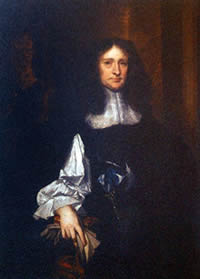
George Carteret
Vice-Admiral Sir George Carteret, 1st Baronet (c. 1610 – 14 January 1680 N.S.) was a Royal Navy officer, politician and courtier who served in the Clarendon ministry as Treasurer of the Navy. He was also one of the original lords proprietor of the English colonies of Carolina and New Jersey. Carteret, New Jersey, and Carteret County, North Carolina are named after him.
Carteret was the son of Elias de Carteret and Elizabeth Dumaresq of Jersey, who both died in 1640. Elias was the son of Philippe de Carteret I, 2nd Seigneur of Sark. With the help of his uncle Philippe de Carteret II, 3rd Seigneur of Sark, George was able to gain a position in the Royal Navy (George dropped the "de" from his surname when he entered the English navy, concerned that it sounded too French).
George Carteret was "bred for the sea" and served as an officer in various naval ships, being commissioned as a Lieutenant of the Garland in 1629. In 1631, he served under Vice-Admiral Sir John Penington on the Bonaventure.
During this time the young Carteret and Admiral Penington became friends. This friendship would serve Carteret well, as when Penington became the Admiral of the Narrow Seas in 1632, Carteret was given prominent positions throughout the 1630s. He was promoted to Captain in 1635, and commanded the Mary Rose and the Happy Entrance. Carteret joined a small group of Naval Captains in presenting a memorial of the Navy to King Charles I. According to Samuel Pepys, Carteret was responsible for presenting and recommending the first use of frigates in the Royal Navy, from blueprints of a Frenchman in Saint-Malo.
In 1637, Carteret became involved in raids in the Pirate Republic of Salé in order to rescue Christian captives who were held there. In 1641, Carteret was a Vice-Admiral in command of the Rainbow. He was given the position of the Comptroller of the Navy in November 1641, for his service to King Charles II.
As a result of his early life at sea, he received little or no formal education. His ignorance was embarrassing and a source of much ridicule in later life. Andrew Marvell mocked his poor command of English, and Samuel Pepys remarked that his ignorance of even the most basic Latin phrases would cause a schoolboy to be whipped. "Such ignorance is not to be borne in a Privy Councillor", wrote Pepys severely.[citation needed]
Carteret quietly tried to carry on his duties at Comptroller of the Navy during the political fallout that had erupted between the supporters of Charles I and the supporters of Parliament. Many within the rank and file of the Royal Navy supported the Parliamentarian cause and the Robert Rich, 2nd Earl of Warwick, a keen parliamentarian, was made the High Lord Admiral of the Royal Navy in 1642 over Carteret's former commanding officer, John Penington, who was a royalist.
On the commencement of the Civil War, he retired from the Navy, and withdrew with his family to Jersey, where his uncle, Sir Philippe de Carteret, was the Bailiff and Lieutenant-Governor. The Island descended into conflict in 1643, with George and his uncle fighting on the side of the Royalists. The Royalists managed to hold onto the twin fortresses of Mont Orgueil and Elizabeth Castle and soon were able to rout the Island's Parliamentarian supporters. Carteret governed Jersey with great severity, imprisoning Parliamentarian supporters and confiscating their property.
Hub AI
George Carteret AI simulator
(@George Carteret_simulator)
George Carteret
Vice-Admiral Sir George Carteret, 1st Baronet (c. 1610 – 14 January 1680 N.S.) was a Royal Navy officer, politician and courtier who served in the Clarendon ministry as Treasurer of the Navy. He was also one of the original lords proprietor of the English colonies of Carolina and New Jersey. Carteret, New Jersey, and Carteret County, North Carolina are named after him.
Carteret was the son of Elias de Carteret and Elizabeth Dumaresq of Jersey, who both died in 1640. Elias was the son of Philippe de Carteret I, 2nd Seigneur of Sark. With the help of his uncle Philippe de Carteret II, 3rd Seigneur of Sark, George was able to gain a position in the Royal Navy (George dropped the "de" from his surname when he entered the English navy, concerned that it sounded too French).
George Carteret was "bred for the sea" and served as an officer in various naval ships, being commissioned as a Lieutenant of the Garland in 1629. In 1631, he served under Vice-Admiral Sir John Penington on the Bonaventure.
During this time the young Carteret and Admiral Penington became friends. This friendship would serve Carteret well, as when Penington became the Admiral of the Narrow Seas in 1632, Carteret was given prominent positions throughout the 1630s. He was promoted to Captain in 1635, and commanded the Mary Rose and the Happy Entrance. Carteret joined a small group of Naval Captains in presenting a memorial of the Navy to King Charles I. According to Samuel Pepys, Carteret was responsible for presenting and recommending the first use of frigates in the Royal Navy, from blueprints of a Frenchman in Saint-Malo.
In 1637, Carteret became involved in raids in the Pirate Republic of Salé in order to rescue Christian captives who were held there. In 1641, Carteret was a Vice-Admiral in command of the Rainbow. He was given the position of the Comptroller of the Navy in November 1641, for his service to King Charles II.
As a result of his early life at sea, he received little or no formal education. His ignorance was embarrassing and a source of much ridicule in later life. Andrew Marvell mocked his poor command of English, and Samuel Pepys remarked that his ignorance of even the most basic Latin phrases would cause a schoolboy to be whipped. "Such ignorance is not to be borne in a Privy Councillor", wrote Pepys severely.[citation needed]
Carteret quietly tried to carry on his duties at Comptroller of the Navy during the political fallout that had erupted between the supporters of Charles I and the supporters of Parliament. Many within the rank and file of the Royal Navy supported the Parliamentarian cause and the Robert Rich, 2nd Earl of Warwick, a keen parliamentarian, was made the High Lord Admiral of the Royal Navy in 1642 over Carteret's former commanding officer, John Penington, who was a royalist.
On the commencement of the Civil War, he retired from the Navy, and withdrew with his family to Jersey, where his uncle, Sir Philippe de Carteret, was the Bailiff and Lieutenant-Governor. The Island descended into conflict in 1643, with George and his uncle fighting on the side of the Royalists. The Royalists managed to hold onto the twin fortresses of Mont Orgueil and Elizabeth Castle and soon were able to rout the Island's Parliamentarian supporters. Carteret governed Jersey with great severity, imprisoning Parliamentarian supporters and confiscating their property.