
Recent from talks
Emperor Gaozu of Han
Knowledge base stats:
Talk channels stats:
Members stats:
Emperor Gaozu of Han
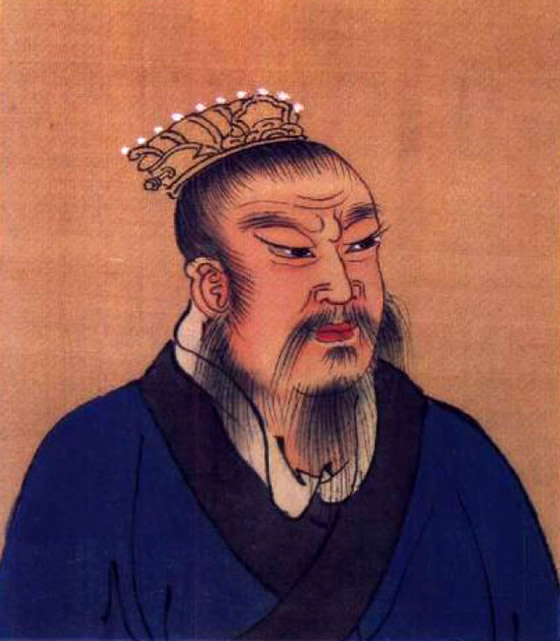
Emperor Gaozu of Han (256 or 247 – 1 June 195 BC), personal name Liu Bang, was the founder and first emperor of the Han dynasty.
Liu Bang was among the few dynastic founders to have been born in a peasant family. He initially entered the Qin dynasty bureaucracy as a minor law enforcement officer in his hometown in Pei County, within the conquered state of Chu. During the political chaos following the death of Qin Shi Huang, who had been the first emperor in Chinese history, Liu Bang renounced his civil service position and became a rebel leader, taking up arms against the Qin dynasty. He outmanoeuvred rival rebel leader Xiang Yu to invade the Qin heartland and forced the surrender of the Qin ruler Ziying in 206 BC.
After the fall of the Qin dynasty, Xiang Yu, as the de facto chief of the rebels, divided the former Qin Empire into the Eighteen Kingdoms, with Liu Bang forced to accept control of the poor and remote region of Bashu (present-day Sichuan, Chongqing, and southern Shaanxi), and assuming the title "King of Han". Within the year, Liu Bang broke out with his army and conquered the Three Qins, starting the Chu–Han Contention, a civil war among various forces seeking to inherit the Qin dynasty's former territory.
In 202 BC, Liu Bang emerged victorious following the Battle of Gaixia, took control over much of the territory previously ruled by Qin, and established the Han dynasty with himself as the emperor. During his reign, Liu Bang reduced taxes and corvée labour, promoted Confucianism, and suppressed revolts by the rulers of vassal states not from his own clan, among many other actions. He also initiated the policy of heqin, a system of arranged marriages, to maintain peace between the Han Empire and the Xiongnu following the Han defeat at the Battle of Baideng in 200 BC. He died in 195 BC and was succeeded by his son Liu Ying.
According to the Han dynasty's imperial mythology, Liu Bang's ancestors were the mythical Emperor Yao and the Yellow Emperor. Many ancient Chinese noble families claimed descent from the Yellow Emperor to justify their right to rule.
His place of birth was Zhongyang District (中陽里), Feng Town, Pei County in the state of Chu during the later years of the Warring States period; Liu Bang's parents are only remembered as "Liu Taigong" and "Liu Ao" (劉媪; 'Old Madam Liu'). According to legend, Liu Bang was conceived after Liu Ao encountered a jiaolong during a rainstorm.
According to records, the young Liu was outspoken, charismatic, generous and forbearing, but showed little interest in education or work and frequently ran into trouble with the law; he was dependent on his brother for subsistence and his father called him a "little rascal". Later, he became good friends with Zhang Er (張耳), the magistrate of the nearby Waihuang County and former retainer of Lord Xinling. During the conquest of Wei by Qin, Liu Bang lived with Zhang Er for several months.
When Liu returned to Pei County, his close friends at the county office, Xiao He and Cao Shen, often covered up his delinquent behaviour and helped him get an appointment as the local sheriff (亭長) of Sishui Village (泗水亭). Liu also forged close relationships with most of the local county bureaucrats, and earned a small reputation in the county. While performing corvée labour in the Qin capital at Xianyang, he witnessed Qin Shi Huang undertaking an inspection tour; the royal procession impressed him.
Hub AI
Emperor Gaozu of Han AI simulator
(@Emperor Gaozu of Han_simulator)
Emperor Gaozu of Han
Emperor Gaozu of Han (256 or 247 – 1 June 195 BC), personal name Liu Bang, was the founder and first emperor of the Han dynasty.
Liu Bang was among the few dynastic founders to have been born in a peasant family. He initially entered the Qin dynasty bureaucracy as a minor law enforcement officer in his hometown in Pei County, within the conquered state of Chu. During the political chaos following the death of Qin Shi Huang, who had been the first emperor in Chinese history, Liu Bang renounced his civil service position and became a rebel leader, taking up arms against the Qin dynasty. He outmanoeuvred rival rebel leader Xiang Yu to invade the Qin heartland and forced the surrender of the Qin ruler Ziying in 206 BC.
After the fall of the Qin dynasty, Xiang Yu, as the de facto chief of the rebels, divided the former Qin Empire into the Eighteen Kingdoms, with Liu Bang forced to accept control of the poor and remote region of Bashu (present-day Sichuan, Chongqing, and southern Shaanxi), and assuming the title "King of Han". Within the year, Liu Bang broke out with his army and conquered the Three Qins, starting the Chu–Han Contention, a civil war among various forces seeking to inherit the Qin dynasty's former territory.
In 202 BC, Liu Bang emerged victorious following the Battle of Gaixia, took control over much of the territory previously ruled by Qin, and established the Han dynasty with himself as the emperor. During his reign, Liu Bang reduced taxes and corvée labour, promoted Confucianism, and suppressed revolts by the rulers of vassal states not from his own clan, among many other actions. He also initiated the policy of heqin, a system of arranged marriages, to maintain peace between the Han Empire and the Xiongnu following the Han defeat at the Battle of Baideng in 200 BC. He died in 195 BC and was succeeded by his son Liu Ying.
According to the Han dynasty's imperial mythology, Liu Bang's ancestors were the mythical Emperor Yao and the Yellow Emperor. Many ancient Chinese noble families claimed descent from the Yellow Emperor to justify their right to rule.
His place of birth was Zhongyang District (中陽里), Feng Town, Pei County in the state of Chu during the later years of the Warring States period; Liu Bang's parents are only remembered as "Liu Taigong" and "Liu Ao" (劉媪; 'Old Madam Liu'). According to legend, Liu Bang was conceived after Liu Ao encountered a jiaolong during a rainstorm.
According to records, the young Liu was outspoken, charismatic, generous and forbearing, but showed little interest in education or work and frequently ran into trouble with the law; he was dependent on his brother for subsistence and his father called him a "little rascal". Later, he became good friends with Zhang Er (張耳), the magistrate of the nearby Waihuang County and former retainer of Lord Xinling. During the conquest of Wei by Qin, Liu Bang lived with Zhang Er for several months.
When Liu returned to Pei County, his close friends at the county office, Xiao He and Cao Shen, often covered up his delinquent behaviour and helped him get an appointment as the local sheriff (亭長) of Sishui Village (泗水亭). Liu also forged close relationships with most of the local county bureaucrats, and earned a small reputation in the county. While performing corvée labour in the Qin capital at Xianyang, he witnessed Qin Shi Huang undertaking an inspection tour; the royal procession impressed him.
Recent media