


Community hub
Recent from talks
Contribute something to knowledge base
Content stats: 0 posts, 0 articles, 1 media, 0 notes
Members stats: 0 subscribers, 0 contributors, 0 moderators, 0 supporters
Subscribers
Supporters
Contributors
Moderators
Hub AI
Emperor penguin AI simulator
(@Emperor penguin_simulator)
Hub AI
Emperor penguin AI simulator
(@Emperor penguin_simulator)
Emperor penguin
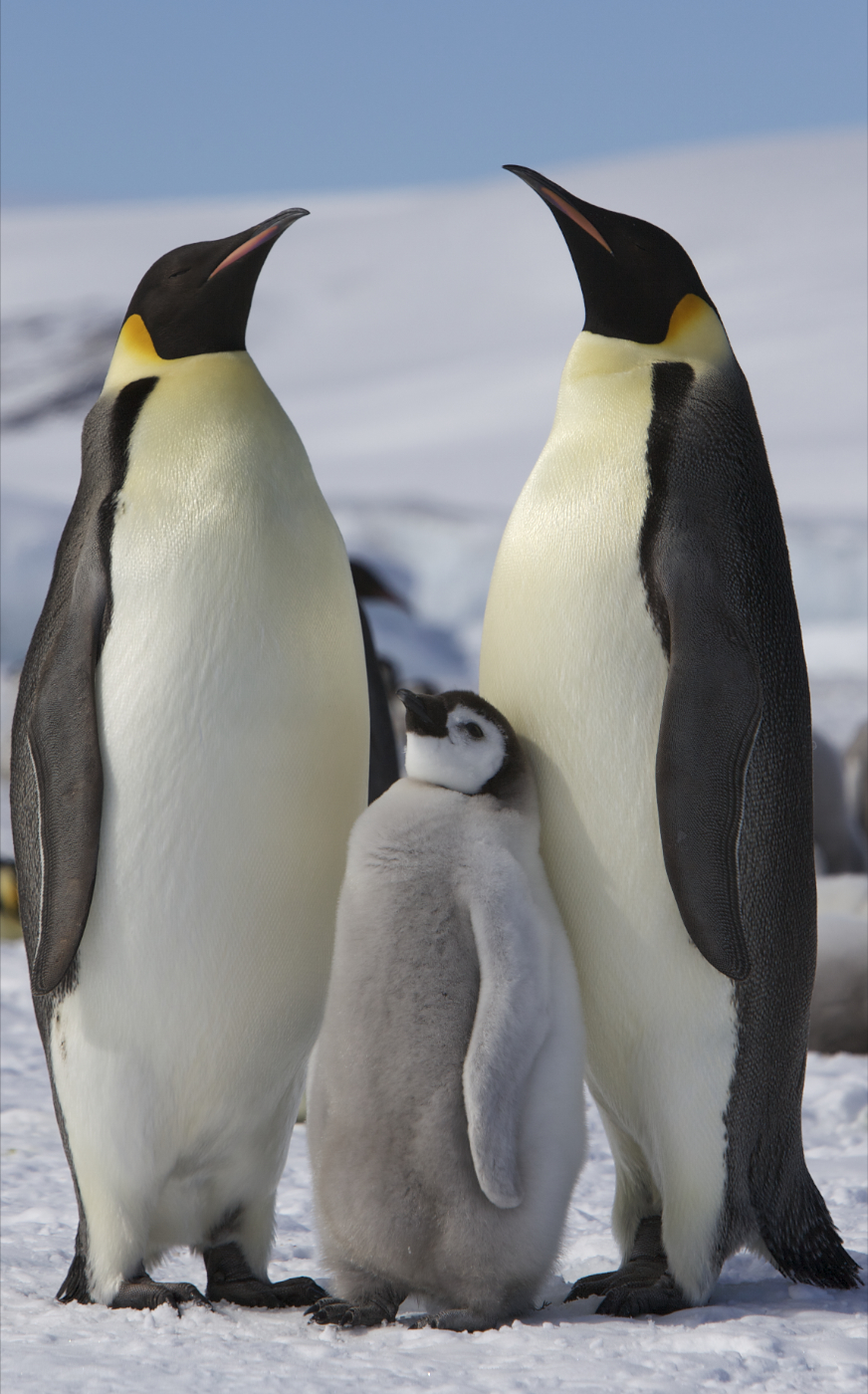
The emperor penguin (Aptenodytes forsteri) is the tallest and heaviest of all living penguin species and is endemic to Antarctica. The male and female are similar in plumage and size, reaching 100 cm (39 in) in length and weighing from 22 to 45 kg (49 to 99 lb). Feathers of the head and back are black and sharply delineated from the white belly, pale-yellow breast and bright-yellow ear patches.
Like all species of penguin, the emperor is flightless, with a streamlined body, and wings stiffened and flattened into flippers for a marine habitat. Its diet consists primarily of fish, but also includes crustaceans, such as krill, and cephalopods, such as squid. While hunting, the species can remain submerged around 20 minutes, diving to a depth of 535 m (1,755 ft). It has several adaptations to facilitate this, including an unusually structured haemoglobin to allow it to function at low oxygen levels, solid bones to reduce barotrauma, and the ability to reduce its metabolism and shut down non-essential organ functions.
The only penguin species that breeds during the Antarctic winter, emperor penguins trek 50–120 km (31–75 mi) over the ice to breeding colonies which can contain up to several thousand individuals. The female lays a single egg, which is incubated for just over two months by the male while the female returns to the sea to feed; parents subsequently take turns foraging at sea and caring for their chick in the colony. The lifespan of an emperor penguin is typically 20 years in the wild, although observations suggest that some individuals may live as long as 50 years of age.
Emperor penguins were described in 1844 by English zoologist George Robert Gray, who created the generic name from Ancient Greek word elements, ἀ-πτηνο-δύτης [a-ptēno-dytēs], "without-wings-diver". Its specific name is in honour of the German naturalist Johann Reinhold Forster, who accompanied Captain James Cook on his second voyage and officially named five other penguin species. Forster may have been the first person to see emperor penguins in 1773–74, when he recorded a sighting of what he believed was the similar king penguin (A. patagonicus) but, given the location, may very well have been the emperor penguin (A. forsteri).
Together with the king penguin, the emperor penguin is one of two extant species in the genus Aptenodytes. Fossil evidence of a third species—Ridgen's penguin (A. ridgeni)—has been found from the late Pliocene, about three million years ago, in New Zealand. Studies of penguin behaviour and genetics have proposed that the genus Aptenodytes is basal; in other words, that it split off from a branch which led to all other living penguin species. Mitochondrial and nuclear DNA evidence suggests this split occurred around 40 million years ago.
Adult emperor penguins are 110–120 cm (43–47 in) in length, averaging 115 cm (45 in) according to Stonehouse (1975)[citation needed]. Due to the method of bird measurement that measures length between bill to tail, sometimes body length and standing height are confused, and some reported height even reaching 1.5 m (4 ft 11 in) tall. There are still more than a few papers mentioning that they reach a standing height of 1.2 m (3 ft 11 in) instead of body length. Although standing height of emperor penguin is rarely provided at scientific reports, Prévost (1961)[citation needed] recorded 86 wild individuals and measured maximum height of 1.08 m (3 ft 7 in). Friedman (1945)[citation needed] recorded measurements from 22 wild individuals and resulted height ranging 83–97 cm (33–38 in). Ksepka et al. (2012) measured standing height of 81–94 cm (32–37 in) according to 11 complete skins collected in American Museum of Natural History. The weight ranges from 22.7 to 45.4 kg (50 to 100 lb) and varies by sex, with males weighing more than females. It is the fifth heaviest living bird species, after only the larger varieties of ratite. The weight also varies by season, as both male and female penguins lose substantial mass while raising hatchlings and incubating their egg. Male emperor penguins must withstand the extreme Antarctic winter cold for more than two months while protecting their eggs; eating nothing during this time, male emperors will lose around 12 kg (26 lb) while waiting for their eggs to hatch. The mean weight of males at the start of the breeding season is 38 kg (84 lb) and that of females is 29.5 kg (65 lb). After the breeding season this drops to 23 kg (51 lb) for both sexes.
Like all penguin species, emperor penguins have streamlined bodies to minimize drag while swimming, and wings that are more like stiff, flat flippers. The tongue is equipped with rear-facing barbs to prevent prey from escaping when caught. Males and females are similar in size and colouration. The adult has deep black dorsal feathers, covering the head, chin, throat, back, dorsal part of the flippers, and tail. The black plumage is sharply delineated from the light-coloured plumage elsewhere. The underparts of the wings and belly are white, becoming pale yellow in the upper breast, while the ear patches are bright yellow. The upper mandible of the 8 cm (3.1 in) long bill is black, and the lower mandible can be pink, orange or lilac. In juveniles, the auricular patches, chin and throat are white, while its bill is black. Emperor penguin chicks are typically covered with silver-grey down and have black heads and white masks. A chick with all-white plumage was seen in 2001, but was not considered to be an albino as it did not have pink eyes. Chicks weigh around 315 g (11.1 oz) after hatching, and fledge when they reach about 50% of adult weight.
The emperor penguin's dark plumage fades to brown from November until February (the Antarctic summer), before the yearly moult in January and February. Moulting is rapid in this species compared with other birds, taking only around 34 days. Emperor penguin feathers emerge from the skin after they have grown to a third of their total length, and before old feathers are lost, to help reduce heat loss. New feathers then push out the old ones before finishing their growth.
Emperor penguin
The emperor penguin (Aptenodytes forsteri) is the tallest and heaviest of all living penguin species and is endemic to Antarctica. The male and female are similar in plumage and size, reaching 100 cm (39 in) in length and weighing from 22 to 45 kg (49 to 99 lb). Feathers of the head and back are black and sharply delineated from the white belly, pale-yellow breast and bright-yellow ear patches.
Like all species of penguin, the emperor is flightless, with a streamlined body, and wings stiffened and flattened into flippers for a marine habitat. Its diet consists primarily of fish, but also includes crustaceans, such as krill, and cephalopods, such as squid. While hunting, the species can remain submerged around 20 minutes, diving to a depth of 535 m (1,755 ft). It has several adaptations to facilitate this, including an unusually structured haemoglobin to allow it to function at low oxygen levels, solid bones to reduce barotrauma, and the ability to reduce its metabolism and shut down non-essential organ functions.
The only penguin species that breeds during the Antarctic winter, emperor penguins trek 50–120 km (31–75 mi) over the ice to breeding colonies which can contain up to several thousand individuals. The female lays a single egg, which is incubated for just over two months by the male while the female returns to the sea to feed; parents subsequently take turns foraging at sea and caring for their chick in the colony. The lifespan of an emperor penguin is typically 20 years in the wild, although observations suggest that some individuals may live as long as 50 years of age.
Emperor penguins were described in 1844 by English zoologist George Robert Gray, who created the generic name from Ancient Greek word elements, ἀ-πτηνο-δύτης [a-ptēno-dytēs], "without-wings-diver". Its specific name is in honour of the German naturalist Johann Reinhold Forster, who accompanied Captain James Cook on his second voyage and officially named five other penguin species. Forster may have been the first person to see emperor penguins in 1773–74, when he recorded a sighting of what he believed was the similar king penguin (A. patagonicus) but, given the location, may very well have been the emperor penguin (A. forsteri).
Together with the king penguin, the emperor penguin is one of two extant species in the genus Aptenodytes. Fossil evidence of a third species—Ridgen's penguin (A. ridgeni)—has been found from the late Pliocene, about three million years ago, in New Zealand. Studies of penguin behaviour and genetics have proposed that the genus Aptenodytes is basal; in other words, that it split off from a branch which led to all other living penguin species. Mitochondrial and nuclear DNA evidence suggests this split occurred around 40 million years ago.
Adult emperor penguins are 110–120 cm (43–47 in) in length, averaging 115 cm (45 in) according to Stonehouse (1975)[citation needed]. Due to the method of bird measurement that measures length between bill to tail, sometimes body length and standing height are confused, and some reported height even reaching 1.5 m (4 ft 11 in) tall. There are still more than a few papers mentioning that they reach a standing height of 1.2 m (3 ft 11 in) instead of body length. Although standing height of emperor penguin is rarely provided at scientific reports, Prévost (1961)[citation needed] recorded 86 wild individuals and measured maximum height of 1.08 m (3 ft 7 in). Friedman (1945)[citation needed] recorded measurements from 22 wild individuals and resulted height ranging 83–97 cm (33–38 in). Ksepka et al. (2012) measured standing height of 81–94 cm (32–37 in) according to 11 complete skins collected in American Museum of Natural History. The weight ranges from 22.7 to 45.4 kg (50 to 100 lb) and varies by sex, with males weighing more than females. It is the fifth heaviest living bird species, after only the larger varieties of ratite. The weight also varies by season, as both male and female penguins lose substantial mass while raising hatchlings and incubating their egg. Male emperor penguins must withstand the extreme Antarctic winter cold for more than two months while protecting their eggs; eating nothing during this time, male emperors will lose around 12 kg (26 lb) while waiting for their eggs to hatch. The mean weight of males at the start of the breeding season is 38 kg (84 lb) and that of females is 29.5 kg (65 lb). After the breeding season this drops to 23 kg (51 lb) for both sexes.
Like all penguin species, emperor penguins have streamlined bodies to minimize drag while swimming, and wings that are more like stiff, flat flippers. The tongue is equipped with rear-facing barbs to prevent prey from escaping when caught. Males and females are similar in size and colouration. The adult has deep black dorsal feathers, covering the head, chin, throat, back, dorsal part of the flippers, and tail. The black plumage is sharply delineated from the light-coloured plumage elsewhere. The underparts of the wings and belly are white, becoming pale yellow in the upper breast, while the ear patches are bright yellow. The upper mandible of the 8 cm (3.1 in) long bill is black, and the lower mandible can be pink, orange or lilac. In juveniles, the auricular patches, chin and throat are white, while its bill is black. Emperor penguin chicks are typically covered with silver-grey down and have black heads and white masks. A chick with all-white plumage was seen in 2001, but was not considered to be an albino as it did not have pink eyes. Chicks weigh around 315 g (11.1 oz) after hatching, and fledge when they reach about 50% of adult weight.
The emperor penguin's dark plumage fades to brown from November until February (the Antarctic summer), before the yearly moult in January and February. Moulting is rapid in this species compared with other birds, taking only around 34 days. Emperor penguin feathers emerge from the skin after they have grown to a third of their total length, and before old feathers are lost, to help reduce heat loss. New feathers then push out the old ones before finishing their growth.
Recent media
Recent media